
Featured Industrial Piping & Flow Control Components
Factory-direct engineering supply matching ASTM/ASME, DIN, JIS, and GB international standards for extreme temperature and pressure environments.
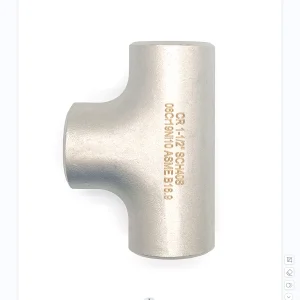
ANSI ASME B16.9 Carbon Steel Elbow & Stainless Equal Tee
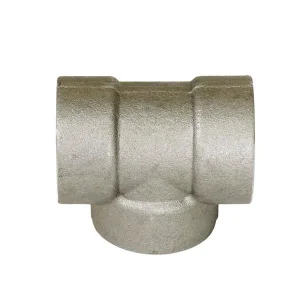
ASTM A234 WPB Forged Carbon Steel Butt Weld Equal Tee (1/2" to 36")
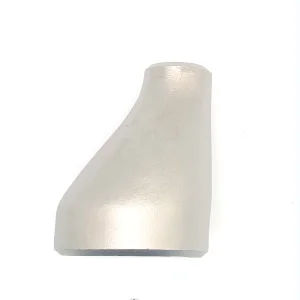
Seamless Butt Weld Eccentric Reducers (ASME B16.9 / EN10253)
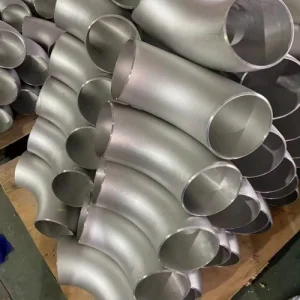
High-Temperature Wholesale SS347 Stainless Steel Pipe Elbow
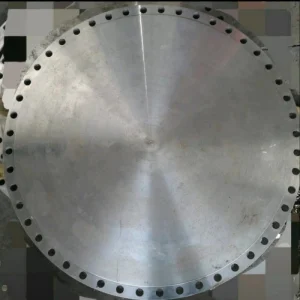
Industrial Heavy-Duty Blind RF Flange Series
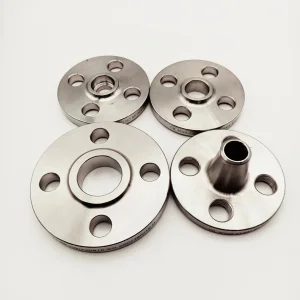
Forged Steel Weld Neck / Slip-On / Blind / Plate Flange (A105 / 316L)
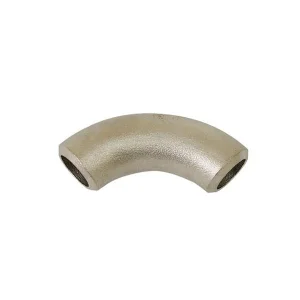
Hot Sale Corrosion-Resistant Stainless Steel Inox Elbow Fitting
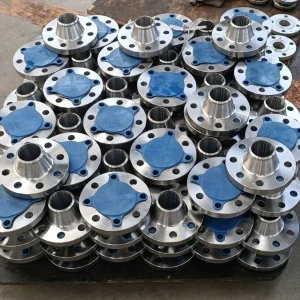
ASME B16.9 Carbon & Stainless Weld Neck Flange
Global Commercial & Industrial State of Hard Seal Gate Valves
An Engineering & Strategic Procurement Analysis of Severe Service Metal-Seated Valve Technologies
In modern industrial process plants, fluid routing demands have expanded far beyond conventional water and steam handling. As refining units push for higher thermal efficiency, petrochemical plants process increasingly corrosive synthesis gases, and power stations transition to supercritical steam cycles, the physical limits of traditional elastomer- and polymer-seated (soft seal) valves are quickly exceeded. Hard seal gate valves—engineered with metallic or ceramic seating interfaces—represent the apex of isolation technology for severe service operating environments.
Hard seal gate valves feature precision-machined metal-to-metal seating surfaces designed to withstand continuous operating temperatures exceeding 550°C (and up to 850°C with custom alloy cladding) while resisting severe abrasive slurries, high differential pressures (ΔP), and thermal shock. According to recent market analysis from global energy equipment research bodies, the global industrial severe-service valve market is expanding at a CAGR of 6.2%, driven primarily by the modernization of aging energy infrastructure, expansion of Liquefied Natural Gas (LNG) processing trains, and the scaling of clean energy biomass and gasification facilities worldwide.
Operational Differentiation: Hard Seal (Metal-Seated) vs. Soft Seal Valves
The selection between hard-sealed and soft-sealed gate valve configurations rests upon three primary mechanical pillars: operating temperature envelope, media solids content, and fire safety compliance.
| Engineering Criteria | Hard Seal (Metal-Seated) Gate Valves | Soft Seal (Resilient) Gate Valves |
|---|---|---|
| Temperature Limit | Cryogenic (-196°C) to Extreme High Temp (>850°C) | Typically capped at 80°C to 200°C (NBR/EPDM/PTFE limits) |
| Slurry & Solids Resistance | Exceptional; hardfaced coatings resist severe erosion & scoring | Poor; particulate trapping causes seat tearing & leakage |
| Fire Safety Compliance | Inherently fire-safe (API 607 / API 6FA certified naturally) | Requires secondary metal backing; soft elements burn off |
| Seat Wear Mechanism | Lapping wear; self-cleaning sliding action maintains seal | Plastic deformation, thermal degradation, chemical swelling |
| Pressure Capability | ASME Class 150 to Class 2500+ (PN10 to PN420) | Generally limited to Class 150 - Class 300 (PN10 to PN40) |
Industry Trends & Advanced Tribology Metallurgies
Next-Generation Coatings, Laser Cladding, and Fugitive Emission Control Standards
High-Velocity Oxygen-Fuel (HVOF) & Laser Cladding
Modern hard seal gate valve exporters rely on automated HVOF thermal spraying and multi-axis laser cladding to deposit ultra-dense layers of Carbide (Tungsten Carbide WC-Co-Cr, Chromium Carbide Cr3C2-NiCr) or Cobalt-based Stellite 6/12 onto valve gates and body seats. This achieves surface hardness up to 68-72 HRC with porosity below 0.5%, preventing micro-abrasion during high cycle operations.
Fugitive Emissions Control (ISO 15848-1 / API 622)
Environmental regulations demand tight leakage containment. Leading exporters integrate live-loaded, die-formed flexible graphite packing rings with anti-extrusion braided carbon wire cups, passing rigorous ISO 15848-1 Class AH thermal cycling tests to ensure under 50 ppmv stem leakage over thousands of mechanical cycles.
Smart Predictive Health Monitoring (IIoT Integration)
Digitalization of severe service valve manifolds incorporates stem torque monitoring sensors, wireless acoustic emission leak detection, and body cavity pressure transducers. This enables continuous real-time health scoring and dynamic maintenance scheduling without interrupting refinery throughput.
Technology Roadmap & Future Outlook (2025–2035)
The industrial valve sector is experiencing a transformation driven by decarbonization, hydrogen-blend pipelines, and extreme pressure deepwater exploration. Below is the technology evolution timeline adopted by tier-one valve manufacturing plants:
Sub-Micron Surface Lapping & Nanocomposite Coatings
Implementation of optical-grade auto-lapping machinery creating surface flatness within 1-2 light bands (0.3 to 0.6 microns). Introduction of nanocomposite ceramic hard coatings reducing operational torque by 30%.
Hydrogen Service & Zero-Permeation Alloys
Engineering specialized nickel-base superalloys (Inconel 718, Monel K-500, Hastelloy C276) tailored to resist Hydrogen Embrittlement (HE) in high-pressure gas transportation networks up to 150 bar.
Autonomous Self-Healing Tribological Interfaces
Development of micro-encapsulating solid lubricant matrices within cobalt hardfacing layers that release low-friction solid films under extreme frictional heat, achieving indefinite zero-leakage lifespans.
Localized Application Scenarios & Heavy Industry Integration
Field-Proven Performance Across Severe Service Process Systems
1. Delayed Coking & FCCU Catalyst Handling
In heavy oil catalytic cracking (FCCU) and delayed coking units, fluid streams carry sharp catalyst fines and petcoke particles at temperatures exceeding 650°C. Hard seal gate valves featuring parallel slide wedge designs with continuous seat contact wipe away particulate deposits upon every stroke, preventing wedge jamming.
2. Supercritical Steam Power Generation
Ultra-supercritical power boilers operate at steam pressures exceeding 30 MPa and steam temperatures of 600°C+. Forged steel hard seal gate valves fabricated from F91, F92, or WB36 alloy steels provide main steam isolation with zero thermal fatigue deformation.
3. Polysilicon & Chemical Slurry Lines
Silane gas and polysilicon production pipelines carry highly abrasive, hazardous slurry mixtures. Precision metal-to-metal seating ensures hermetic bi-directional shut-off, mitigating toxic release risks and resisting aggressive chemical erosion.
4. Cryogenic LNG Regasification Facilities
At cryogenic temperatures (-196°C), standard sealing materials freeze and shatter. Hard seal cryogenic gate valves built with extended bonnets and lip-sealed metal seats maintain structural flexibility and sealing integrity under extreme thermal contraction.
Macro Engineering Solutions: Integrated Piping Packages
Combining Hard Seal Gate Valves with Matched Flanges, Fittings & Pipe Networks
Safe and efficient plant operation requires holistic engineering. Installing a premium hard seal gate valve into a piping network with mismatched flange pressure ratings, improper pipe wall schedules, or low-grade butt-weld fittings creates structural vulnerabilities. As a premier manufacturer and exporter based in the industrial hub of Cangzhou, China, our engineering team provides fully integrated, turnkey piping solutions.
By matching valve end connections (Weld Neck Flanged, Socket Weld, or Butt-Weld Ends) directly to carbon steel, alloy, or stainless piping spools, engineering procurement contractors (EPCs) gain distinct operational advantages:
Metallurgical Compatibility
Matching valve body materials (e.g., ASTM A216 WCB, A351 CF8M, A182 F11) with adjacent pipe fittings (ASTM A234 WPB, A403 WP316) eliminates galvanic corrosion risks and differential thermal expansion stresses across welded joints.
Strict Quality Control & NDT Validation
Every exported valve and piping module undergoes 100% Non-Destructive Testing (NDT), including Radiographic Testing (RT) on pressure-containing welds, Positive Material Identification (PMI), Hydrostatic Pressure Testing per API 598, and Pneumatic Seat Leakage Verification.
Global EPC Freight & Export Compliance
Complete project order consolidation reduces container freight overhead, simplifies customs clearance under unified Harmonized System (HS) codes, and ensures full compliance with EN 10204 3.1/3.2 Inspection Certificates.
Complete Severe-Service Piping & Fitting Catalog
Explore our companion line of butt-weld elbows, flanges, equal tees, and industrial strainers to complete your high-pressure piping system build.
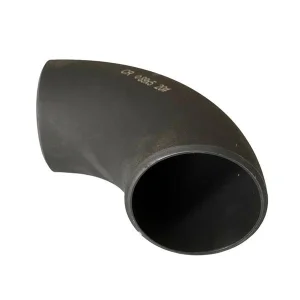
90 Degree & 45 Degree Butt Weld Pipe Fitting Elbows
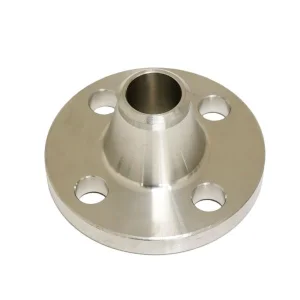
Stainless Steel Forged Weld Neck Pipe Flanges
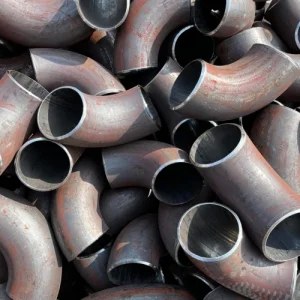
Mild Steel Long Radius 90Deg 1.5D Pipe Elbow
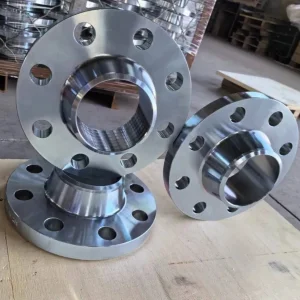
Heavy Industrial Butt Welding Steel Flanges
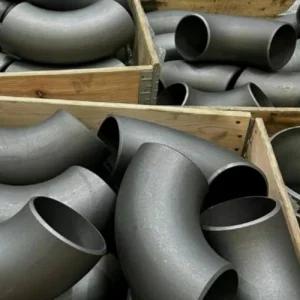
A234WPB Seamless Elbow DN100 SCH STD 90Deg 1.5D
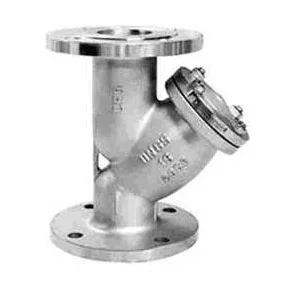
Stainless Steel Y-Strainer Filter GL41W (PN16 / PN25)
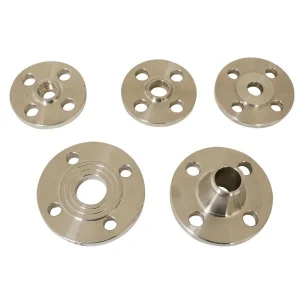
DIN Class150 Stainless Steel Butt Weld & Slip-On Flange
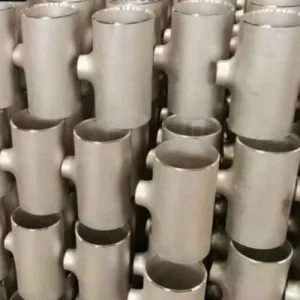
Butt Weld Equal Tee & Unequal Reducing Tee Series
Technical & Procurement FAQ
Expert Answers to Critical Engineering Questions Regarding Hard Seal Gate Valves & Pipeline Exports
What is the primary technical distinction between API 600 and API 6D hard seal gate valves?
API 600 gate valves are specifically engineered for petroleum refinery process piping where high temperature, thermal expansion, and severe thermal cycling dominate. They feature rising stems and flexible wedge geometries. API 6D gate valves (pipeline valves) are designed primarily for long-distance oil and gas transmission pipelines, incorporating slab gate or expanding gate designs with double block and bleed (DBB) capabilities.
How do hardfacing materials like Stellite 6 prevent valve galling during high pressure actuation?
Stellite 6 is a cobalt-chromium-tungsten alloy characterized by excellent resistance to mechanical wear, galling, and cavitation at red heat (up to 760°C). When laser-cladded or HVOF-sprayed onto mating seating faces with a slight hardness differential (typically 3-5 HRC difference between wedge seat and body seat), it eliminates metal transfer (galling) under high compressive contact stresses during valve closure under differential pressure (ΔP).
What leakage rate standards apply to metal-seated hard seal gate valves?
Metal-seated valves are tested under API 598 or ISO 5208 standards. While soft seal valves achieve ISO 5208 Rate A (zero visible leakage), precision metal-to-metal hard seal valves achieve Rate AA or Rate B for liquid testing, and Class IV / Class V / Class VI shutoff per ANSI/FCI 70-2 depending on the specific lapping process, HVOF coating selection, and application requirement.
Can hard seal gate valves be utilized for throttling or flow regulation?
No. Gate valves—whether hard seal or soft seal—are designed strictly for full-open or full-closed isolation service. Operating a gate valve in a partially open position causes high-velocity fluid flow to induce severe flow-induced vibration, localized erosion of the hardfaced seat rings, and premature seat degradation. For throttling severe service media, control globe or chokes should be specified.
How does thermal binding occur in hard seal gate valves, and how can it be mitigated?
Thermal binding occurs when a wedge gate valve is closed while the pipeline is hot. As the valve body cools down, metallic contraction exerts immense pinching forces on the wedge, making reopening impossible or tearing stem threads. Exporters mitigate thermal binding by recommending parallel slide gate valves or flexible wedge geometries with self-adjusting seat angles for high-temperature service.
What documentation and mill certificates accompany exported hard seal gate valve orders?
All international shipments are supplied with complete Quality Dossiers including EN 10204 3.1 Material Test Reports (MTRs) tracing heat numbers of body castings/forgings, NDT examination reports (RT/UT/MT/PT), Pressure & Leak Test Certificates per API 598, Fugitive Emission Test Reports, and Certificate of Origin (CO).