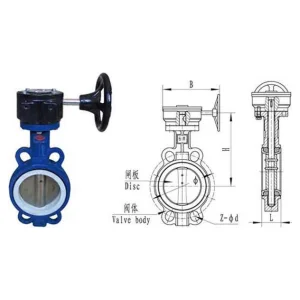
High-Performance Industrial Flanges & Pipeline Components
Engineered to withstand extreme pressure, temperature, and corrosive environments across global infrastructure projects.
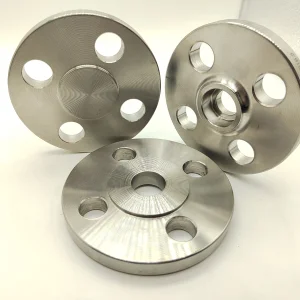
ANSI Stainless Steel Socket Weld Flange
View Product Details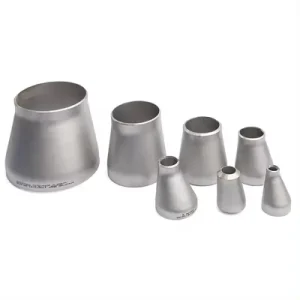
China High Quality 304/316 Steel Pipe Fittings Concentric/Eccentric Reducer
View Product Details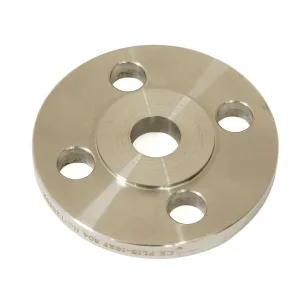
ASME B16.5 Forged 2 Inch Blind ANSI Class 150 Carbon Steel Custom Flange
View Product Details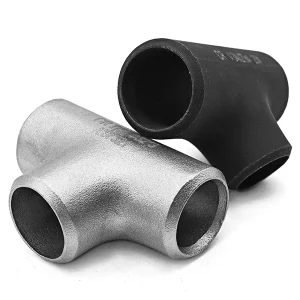
Stainless Steel Equal Tee BW Pipe Fittings SS316L Equal & Reducing Tee
View Product Details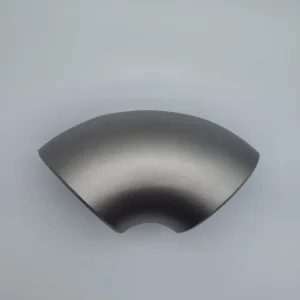
Wholesale Carbon Steel Pipe Fitting Elbow Manufacturer
View Product Details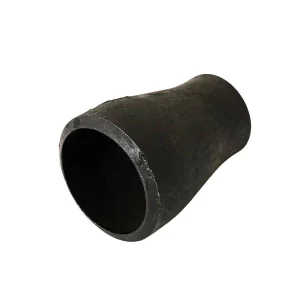
ASME B16.9 Carbon & Stainless Steel Eccentric Butt Weld Reducer
View Product Details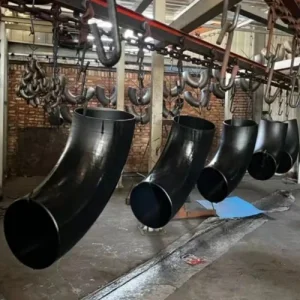
Discount Carbon Steel Pipe Fitting Elbow Supplier
View Product Details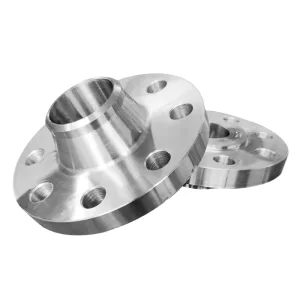
Custom Stainless, Titanium & Carbon Steel Forged Flange DN400
View Product DetailsASME Engineering Standards & Forged Metallurgical Framework
Understanding dimensional integrity, pressure-temperature ratings, and alloy grain structures in critical piping applications.
ASME B16.5 vs. ASME B16.47 Standards
Industrial piping design relies primarily on two core ASME standards for steel pipe flanges. ASME B16.5 covers Pipe Flanges and Flanged Fittings from Nominal Pipe Size (NPS) 1/2" through NPS 24, spanning rating Classes 150, 300, 400, 600, 900, 1500, and 2500. For large-diameter applications, ASME B16.47 governs NPS 26 through NPS 60, split into Series A (MSS SP-44) and Series B (API 605).
- Series A Flanges: Thicker, heavier, and carry higher external piping loads; preferred for pipeline transmission and refinery construction.
- Series B Flanges: Compact, lighter weight, with smaller bolt circles; ideal for space-constrained process piping and heat exchangers.
Metallurgical Chemistry & Heat Treatment
Forged flanges outshine cast components by eliminating internal voids, gas porosity, and micro-segregation. Through closed-die or open-die forging followed by precision heat treatment, optimal grain flow alignment is achieved.
- Carbon Steel (ASTM A105 / A350 LF2): Normalized at 890°C–920°C to refine grain boundaries, ensuring sub-zero impact toughness down to -46°C for LF2 Class 1.
- Alloy Steel (ASTM A182 F11/F22/F91): Normalized and tempered to resist creep deformation under elevated temperatures up to 650°C.
- Stainless Steel (ASTM A182 F304L/F316L): Solution annealed at 1040°C–1150°C followed by rapid water quenching to prevent chromium carbide precipitation at grain boundaries.
Master Technical Matrix: ASME Flange Material & Facing Specifications
Comprehensive engineering reference for material selection, temperature thresholds, and sealing face configurations compliant with ASME B16.5 and international piping codes.
| Standard Grade | Material Type | Temperature Range | Yield Strength (Min) | Primary Application & Sealing Face |
|---|---|---|---|---|
| ASTM A105 | Carbon Steel | -29°C to 425°C | 250 MPa (36 ksi) | General ambient/high-temp process lines. RF, FF, RTJ facing. |
| ASTM A350 LF2 Class 1 | Low-Temp Carbon Steel | -46°C to 345°C | 240 MPa (35 ksi) | Cryogenic gas processing, Arctic onshore systems. RF, RTJ. |
| ASTM A182 F316 / F316L | Austenitic Stainless Steel | -196°C to 815°C | 205 MPa (30 ksi) | Chemical processing, marine environments, sour gas. RF, Tongue & Groove. |
| ASTM A182 F11 Class 2 | 1.25Cr-0.5Mo Alloy Steel | -29°C to 593°C | 275 MPa (40 ksi) | High-pressure power plant steam headers, boiler feedwater. RF, RTJ. |
| ASTM A182 F51 (UNS S31803) | 2205 Duplex Stainless Steel | -50°C to 300°C | 450 MPa (65 ksi) | Offshore oil extraction, seawater cooling lines, chloride environments. RTJ. |
| ASTM A182 F91 | 9Cr-1Mo-V Martensitic Alloy | -29°C to 650°C | 415 MPa (60 ksi) | Ultra-supercritical power plants, high-temp steam loops. RF, RTJ. |
ASME B16.5 specifies a smooth or serrated concentric/spiral finish for Raised Face (RF) flanges. Standard stock finish requires a roughness of 125 to 250 microinches AARH (3.2 to 6.3 micrometers Ra), optimized for spiral wound metallic gaskets. For soft sheet gaskets, a smooth finish of 63 to 125 microinches is recommended to guarantee zero micro-leak paths under dynamic pressure cycling.
China Supply Chain Integration & The Cangzhou Manufacturing Edge
Leveraging China's premier pipeline equipment manufacturing hub for uncompromised quality, volume scalability, and cost efficiency.
Raw Material Synergies
Located in Cangzhou, Hebei Province, our facilities directly tap into China's largest steelmaking corridor. Immediate access to certified forged billets from top steel mills (such as Baosteel, Shougang, and HBIS) eliminates multi-tiered distributor markups and reduces raw material lead times by up to 35%.
End-to-End Precision Forging
Across our group enterprises—including HEBEI CANGRUN PIPELINE EQUIPMENT CO., LTD. and operating units like CANGZHOU FEIWO METAL PRODUCTS CO., LTD. and CANGZHOU FEIXIANG METAL PRODUCTS CO., LTD.—we operate automated ring rolling mills, hydraulic forging presses up to 10,000 tons, and multi-axis CNC machining centers capable of turning flanges up to DN4000 (160 inches).
Cost-Quality Equilibrium
Integrated forging, heat treatment, machining, and NDT testing within a single industrial ecosystem allows us to offer competitive factory-direct pricing while strictly maintaining compliance with ISO 9001, PED 2014/68/EU, and ASME Boiler & Pressure Vessel Code (BPVC) standards.
Single-Source Pipeline Component Consolidation
In mega-scale engineering projects, procurement friction often arises from sourcing pipe fittings, forged flanges, seamless steel pipes, and industrial valves from disparate suppliers. HEBEI CANGRUN PIPELINE EQUIPMENT CO., LTD. solves this by offering complete project packages.
Whether matching ASME B16.5 Weld Neck Flanges with ASME B16.9 Butt-Weld Elbows, Concentric Reducers, and API 6D Gate Valves, our technical team verifies end-prep dimensions, wall thickness schedules (SCH 10 to XXS), and metallurgical heats across the entire bill of materials before shipment.
Global EPC Procurement Needs & Rigorous NDT Protocols
Bridging international engineering expectations with bulletproof quality verification, material traceability, and logistically sound shipping solutions.
Material Traceability & MTR Compliance
Every single ASME flange exported from our facilities is stamped with a unique heat number traceable directly to the raw material melt shop. We issue comprehensive EN 10204 3.1 Material Test Reports (MTR) containing complete chemical analysis, mechanical tension testing, Charpy V-Notch impact testing, and hardness values. Independent third-party inspection (TPI) by SGS, BV, TUV, or Lloyd’s Register for EN 10204 3.2 certification is routinely facilitated for overseas EPC projects.
Advanced Non-Destructive Testing (NDT)
To ensure total reliability in severe service conditions, our internal quality lab performs extensive testing including:
- Positive Material Identification (PMI): XRF spectrographic verification of chemical element percentages.
- Ultrasonic Testing (UT): Volumetric inspection per ASME Section V to detect internal sub-surface laminations or cracks.
- Magnetic Particle (MT) & Liquid Penetrant (PT): Surface anomaly detection on machined seal faces and bevels.
Localized Industrial Applications & Heavy-Duty Use Cases
Precision-engineered piping solutions customized for demanding global environments.
Offshore Oil & Gas (FPSO Platforms)
Offshore topside piping demands compact dimensions and ultimate resistance to marine salt spray corrosion and dynamic fatigue. We supply ASME B16.5 Class 1500 and Class 2500 Ring Type Joint (RTJ) Weld Neck Flanges forged in Duplex F51/UNS S31803 and Super Duplex F53/UNS S32750, eliminating micro-leakage risks under extreme wave motion.
Hydrocarbon Refineries & Chemical Cracking
In high-temperature catalytic cracking units, severe hydrogen attack and sour gas corrosion present major safety hazards. Our ASTM A182 F91 alloy flanges and NACE MR0175 / ISO 15156 compliant carbon steel flanges are heat-treated to maintain strict hardness limits below 22 HRC, preventing Hydrogen-Induced Cracking (HIC) and Stress Corrosion Cracking (SCC).
Cryogenic LNG Processing & Transport
Handling Liquefied Natural Gas at -162°C requires materials that preserve high impact resistance without undergoing ductile-to-brittle transition. We manufacture ASME B16.5 Stainless Steel 316/316L and 304/304L flanges subjected to liquid nitrogen cryogenic testing and full Charpy impact validation down to -196°C.
Future Trends in Piping Systems & Smart Flange Manufacturing
Pioneering green production, hydrogen readiness, and digital inspection systems for tomorrow's energy landscape.
Hydrogen Energy & Clean Transition Compatibility
As global energy infrastructure transitions toward green gaseous hydrogen transport, conventional flange connections face heightened risk of hydrogen permeation and micro-leakage. We are actively developing Hydrogen-Ready Flanges utilizing ultra-low impurity clean steels with modified chemical compositions (minimized sulfur and phosphorus content) and specialized gasket seating configurations designed to prevent micro-channel hydrogen gas migration.
AI-Driven Quality Inspection & Digital Twins
Moving beyond manual measurement, our production lines are integrating 3D optical laser scanners and AI-driven computer vision systems. Flange bolt hole alignment, flange face flatness, bevel angles, and total hub thickness are scanned in real-time, creating a digital twin of each critical component to guarantee 100% dimensional adherence to ASME specifications prior to crating.
Engineering FAQ: ASME Flange Specification & Procurement
Clear, expert answers to key metallurgical, dimensional, and international purchasing questions.
High-Grade Pipe Fittings, Valves & Custom Assemblies
Matching pipe connectors, elbows, tees, and valve units for complete project single-sourcing.
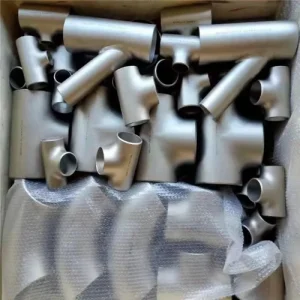
High-Quality Pipe Tees – Equal & Reducing Stainless & Carbon Steel
View Product Details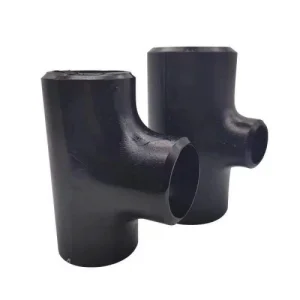
Famous A234WPB Reducing Tee Carbon Steel Pipe Fitting
View Product Details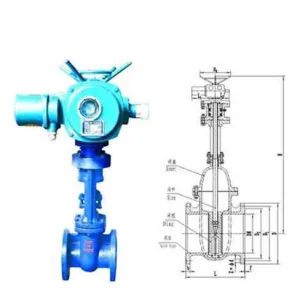
Electric Parallel Double Gate Valve Z944T/W-10/10Q
View Product Details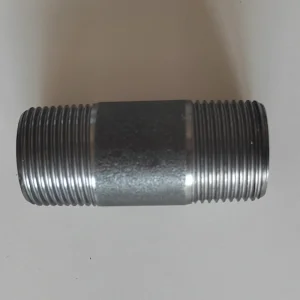
High-Quality 150# Cast Stainless Steel Fittings with Thread
View Product Details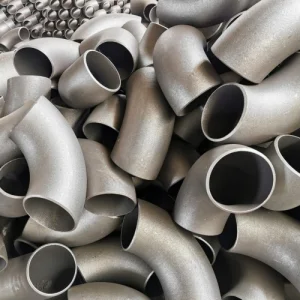
High-Quality Carbon Steel Bend 90Deg Long Radius
View Product Details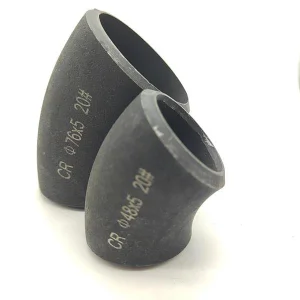
High-Quality Carbon Steel & Stainless Pipe Fitting
View Product Details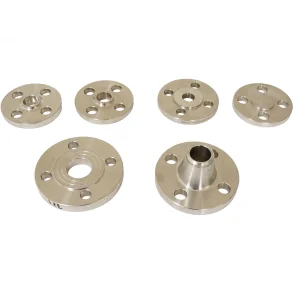
PN 16 Carbon Steel Weld Neck & A105 Blind Threaded Flange
View Product Details