
High-Performance Pipe Tees for Seattle Systems
Immediate procurement options direct from global inventory with certified compliance for ANSI/ASME, ASTM, and MSS standards.
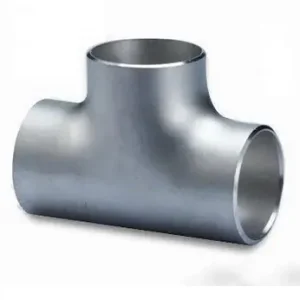
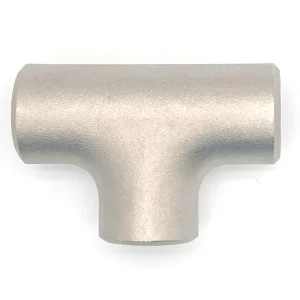
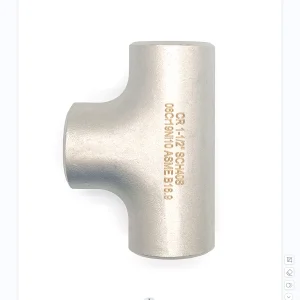
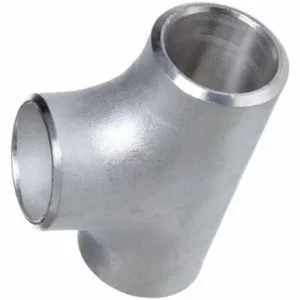
1. Seattle Industrial Reality & Pipe Tee Engineering Demand
Seattle and the greater Puget Sound economic region represent one of North America's most dynamic industrial hubs. From the deep-water maritime infrastructure operated by the Northwest Seaport Alliance (NWSA) to world-class aerospace manufacturing, commercial shipbuilding, and hyper-scale data center infrastructure across Washington state, the demand for high-integrity mechanical piping systems is unparalleled. At the heart of these complex fluid transport systems sits the pipe tee—a foundational butt-weld fitting responsible for branching fluid pathways, maintaining pressure differentials, and enduring extreme operational stress.
In Seattle's maritime sector, shipyards situated along the Duwamish Waterway and Elliott Bay require specialized alloy steel and duplex stainless steel equal and reducing tees certified to withstand severe salt spray, continuous galvanic corrosion, and intense dynamic vibration. Concurrently, regional municipal utilities—such as King County's Wastewater Treatment Division—are undertaking decade-long infrastructure overhauls requiring large-diameter carbon steel seamless and welded tees engineered to ASME B16.9 standards.
Furthermore, the rapid expansion of liquid-cooled server architectures in Pacific Northwest data centers has established a new standard for internal cleanliness, low wall roughness, and zero-defect welded joints. For mechanical contractors, EPC firms, and pipeline engineers operating across Seattle, selecting a reliable Tee Company & Service partner is not merely a matter of material sourcing; it is a critical safeguard against catastrophic pressure loss, environmental contamination, and unplanned facility downtime.
2. Global Pipe Fitting Evolution & Technical Innovations
The global pipeline equipment market is undergoing a seismic shift driven by strict environmental regulations, decarbonization mandates, and the arrival of Industry 4.0 manufacturing methods. Modern industrial applications demand pipe tees that exceed historical baseline requirements. Key technological trends currently reshaping global pipeline engineering include:
Hydrogen-Ready Metallurgical Formulations
As global energy infrastructure transitions toward hydrogen blending and clean LNG, pipe tees must be engineered to prevent hydrogen embrittlement. This requires ultra-low sulfur carbon steels (A234 WPB/WPC) and micro-alloyed stainless grades refined through vacuum degassed steelmaking process.
Advanced Duplex & Super Austenitic Alloys
To overcome severe pitting in saltwater environments like Seattle's marine shoreline, industrial procurement has shifted heavily toward Duplex Steel S31803 (2205) and Super Duplex S32750 (2507). These offer double the mechanical yield strength of traditional 316L stainless steel.
Precision Hydraulic Cold Forming
Legacy hot-forging can induce wall thinning at the tee crotch area. Advanced cold hydro-forming utilizes high-pressure internal liquid media to extrude the branch, guaranteeing uniform wall thickness across both equal and reducing tee profiles.
Engineering Gain Notice: Modern ASME B16.9 standard compliance now mandates complete Non-Destructive Testing (NDT) including Ultrasonic Testing (UT) and Magnetic Particle Inspection (MPI) for all heavy-wall butt-weld tees installed in high-pressure steam and toxic chemical loops.
3. China Industry 4.0: Cangzhou Supply Chain Resilience & Cost Efficiency
For Seattle-based engineering teams and global procurement directors, mitigating supply chain risk while maintaining strict material standards is paramount. Hebei Cangrun Pipeline Equipment Co., Ltd., based in Cangzhou, Hebei—China's global capital for pipe fitting manufacturing—operates at the forefront of China's Industry 4.0 industrial modernizations.
By leveraging automated robotic extrusion lines, 10,000-ton hydraulic press machines, and real-time Spectro-chemical PMI (Positive Material Identification) systems, Cangrun offers Seattle enterprises direct factory pricing without compromising on quality or code compliance.
| Parameter | Standard Specifications | Cangrun Industry 4.0 Precision Guarantee |
|---|---|---|
| Dimensional Standards | ASME/ANSI B16.9, MSS SP-75, JIS B2311, EN 10253-2, GB/T 12459 | Laser-guided automated CNC machining with dimensional tolerances within ±0.5mm. |
| Material Grades | ASTM A234 WPB/WPC, A403 WP304/304L/316/316L, Duplex S31803, WP11/WP22 | 100% Raw material batch heat-traceability with EN 10204 3.1 & 3.2 Inspection Certificates. |
| Size Range | Seamless: 1/2" to 24" (DN15 - DN600) | Welded: 4" to 78" (DN150 - DN1900) | Unified manufacturing across 3 group factories in Cangzhou with zero wall thinning at crotch. |
| Wall Thickness | SCH 10S, SCH 40, SCH 80, SCH 160, STD, XS, XXS (Up to 150 mm) | Integrated ultrasonic wall thickness verification logged digitally per fitting unit. |
| Surface Protection | Black Painting, Anti-Rust Oil, Hot-Dip Galvanizing, Epoxy Coating, 3PE | Eco-friendly automated spray booths ensuring uniform dry film thickness (DFT). |
By establishing direct supply corridors between Cangzhou manufacturing centers and the Port of Seattle, regional contractors reduce procurement lead times by up to 35% compared to conventional middleman distributor channels.
4. Localized Application Scenarios Across Seattle & Pacific Northwest
Piping installations in the Pacific Northwest encounter diverse climatic, oceanographic, and industrial operating parameters. Below are four key engineering scenarios in Seattle where Cangrun's certified pipe tee solutions provide distinct operational advantages:
A. Maritime & Shipyard Overhauls
Location: Duwamish Waterway & Ship Canal Dockyards.
Challenge: High-salinity brackish water exposure causing rapid stress corrosion cracking in auxiliary cooling loops.
Solution: Duplex Stainless Steel S31803 / S32750 Equal Tees providing PREN > 34 and enhanced resistance against marine biofouling and erosion-corrosion.
B. Municipal Wastewater Modernization
Location: Puget Sound Drainage & Treatment Facilities.
Challenge: Large-diameter sewage headers subject to heavy hydraulic surge pressure and hydrogen sulfide gas oxidation.
Solution: Heavy-wall ASTM A234 WPB Butt-Welding Tees (24" to 48") with interior epoxy lining and 100% X-ray seam inspection.
C. High-Tech Fluid Cooling Loops
Location: Commercial Data Centers & Aerospace Facilities.
Challenge: Zero particulate contamination and ultra-low pressure drop for liquid-to-chip cooling systems.
Solution: ASTM A403 WP316L Stainless Steel Tees with electro-polished internal surfaces (Ra < 0.4μm) and orbital weld-end prep.
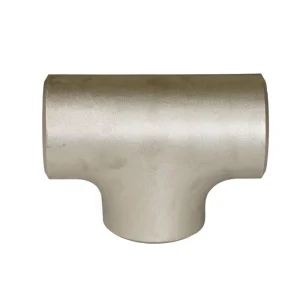
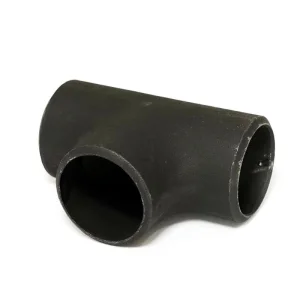
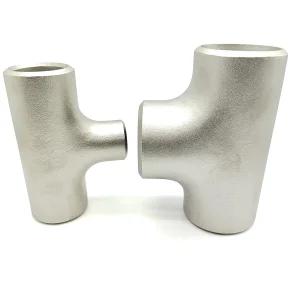
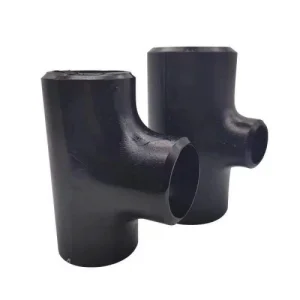
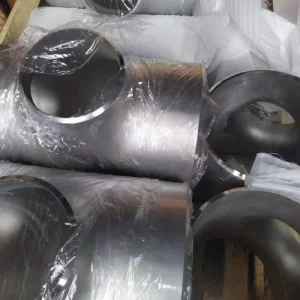
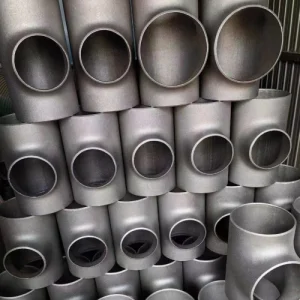
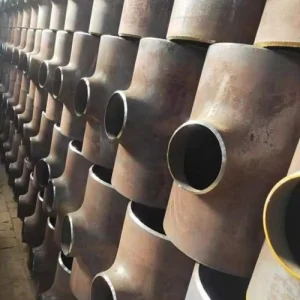
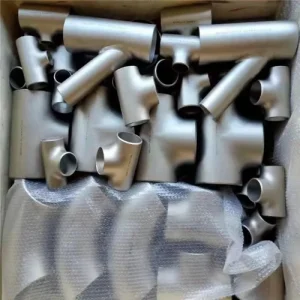
Full Spectrum Pipe Tees for Seattle Buyers
Explore our complete range of carbon, alloy, and stainless steel equal and reducing tees engineered to exact international project requirements.
Seattle Procurement FAQ: Pipe Tee Specifications
Expert engineering answers addressing common questions regarding material standards, shipping logisitics, and quality certification.