
Precision Pipe & Tube Reducer Series
High-integrity butt-weld and seamless reducers manufactured to ASME B16.9, EN 10253, and ISO 3419 standards for high-pressure Omani infrastructure projects.
Oman's Industrial Transformation & Piping Infrastructure
Strategic deployment of piping and tubing fittings across the Sultanate's oil & gas hubs, green hydrogen initiatives, and coastal desalination facilities.
The Sultanate of Oman represents one of the most demanding operational environments for fluid handling systems globally. With key industrial epicenters spanning from the Port of Sohar and Duqm Special Economic Zone (SEZAD) to the oil fields of Block 6 managed by Petroleum Development Oman (PDO), piping systems are subjected to aggressive corrosive soils, high ambient temperatures, hyper-saline atmospheric conditions, and sour oil/gas flows containing significant concentrations of hydrogen sulfide ($H_2S$) and carbon dioxide ($CO_2$).
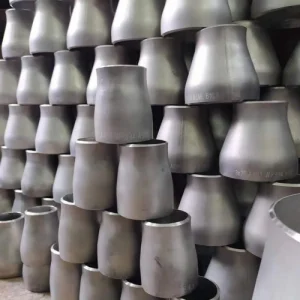
Within this ecosystem, pipe fittings and tube fittings—specifically concentric and eccentric reducers—serve as critical fluid velocity control nodes. Reducers are not merely dimensional adapters; they are precision-engineered components designed to manage dynamic pressure changes, mitigate cavitation risk in centrifugal pump suctions, prevent liquid slugging in gas lines, and maintain structural integrity during extreme thermal cycles.
Engineering Principles of Concentric vs. Eccentric Reducers
Comprehensive fluid dynamic analysis, mechanical design considerations, and international dimensional standard alignments.
Concentric Reducer Dynamics
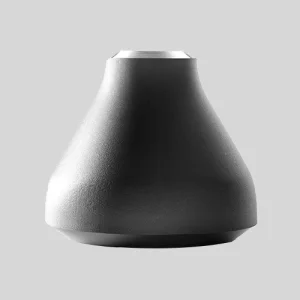
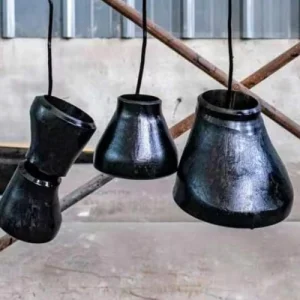
Concentric reducers align along a shared center line. They are primarily utilized in vertical piping systems or straight horizontal liquid runs where air entrapment is non-critical. Under the Bernoulli principle, as diameter decreases from $D_1$ to $D_2$, flow velocity increases proportionally ($V_2 = V_1 \cdot (D_1/D_2)^2$), converting static head into dynamic pressure.
Eccentric Reducer Dynamics
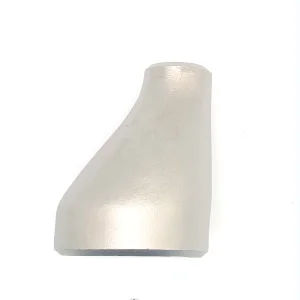
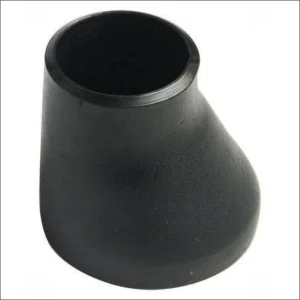
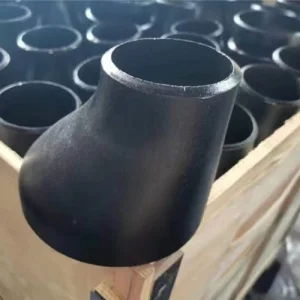
Eccentric reducers feature an offset centerline, creating one flat side and one sloped side. In horizontal pump suction piping, installing an eccentric reducer Flat-Side-Up (FSU) prevents gas vapor accumulation that triggers destructive pump cavitation. Conversely, Flat-Side-Down (FSD) orientation is mandated for slurry lines and steam piping to allow continuous condensate drainage.
Wall Thickness & Schedule Matching
Matching reducer wall schedules (SCH 10S through SCH XXS) to adjoining pipe runs is vital to avoid stress concentration points. Hydro-testing at 1.5× design pressure requires transition taper angles not exceeding 30 degrees to minimize turbulence and secondary stress profiles under ASME B31.3 processing plant codes.
Metallurgical Grade Selection Matrix for Middle Eastern Operations
| Material Specification | Standard Equivalents | Operational Temperature Range | Primary Omani Application |
|---|---|---|---|
| Carbon Steel ASTM A234 Grade WPB / WPC |
ASME B16.9 / EN 10253-2 / ISO 3419 | -29°C to +427°C | General oil gathering lines, non-sour crude transport, utility steam networks. |
| Low-Temp Carbon Steel ASTM A420 Grade WPL6 |
NACE MR0175 / CSA Z245.11 | -46°C to +343°C | LNG liquefaction plants, cryogenic gas storage at Qalhat, high-pressure relief lines. |
| Alloy Steel ASTM A234 Grade WP11 / WP22 / WP91 |
EN 10253-1 / DIN 17175 | Up to +650°C | Thermal power plants, steam injection headers for Enhanced Oil Recovery (EOR) in Mukhaizna. |
| Austenitic Stainless Steel ASTM A403 WP304L / WP316L |
ISO 3419 / EN 10253-4 | -196°C to +815°C | Chemical processing in Sohar Freezone, off-gas treatment units, utility water lines. |
| Duplex & Super Duplex UNS S31803 (2205) / UNS S32750 (2507) |
ASTM A815 / EN 10253-3 | -50°C to +300°C | Seawater Reverse Osmosis (SWRO) desalination, offshore platforms, high-chloride process fluid lines. |
Sector-Specific Infrastructure Implementations
Tailored piping component deployment strategies resolving operational vulnerabilities across key Middle Eastern commercial domains.
1. Desalination & Marine Water Systems
Seawater Reverse Osmosis (SWRO) facilities along the Gulf of Oman demand pipe reducers capable of resisting severe Pitting Corrosion Resistance Equivalent (PREN ≥ 40). By utilizing Super Duplex STAINLESS STEEL (UNS S32750) eccentric reducers, facilities prevent localized crevice corrosion near flange joints while managing high inlet pressures exceeding 80 bar.
2. Upstream Sour Gas Field Gathering
Heavy oil and sour natural gas extraction in interior Oman requires seamless carbon steel pipe reducers subjected to 100% X-ray radiographic testing (RT) and post-weld heat treatment (PWHT). Applying internal fusion-bonded epoxy (FBE) linings ensures low hydraulic friction factors while insulating structural steel from sour condensate attack.
3. Green Hydrogen & Ammonia Pipeline Networks
Aligned with Oman Vision 2040 green energy goals managed by Hydrom, zero-emission hydrogen pipelines mandate ultra-low permeability fittings. Seamless stainless steel 316L fittings with polished interior surfaces ($Ra < 0.4 \mu m$) eliminate micro-fissures where atomic hydrogen embrittlement ($H_2E$) could initiate structural wall failure.
Technological Progression in Piping Manufacturing (2025–2040)
Next-generation fitting manufacturing processes engineered for extreme durability, operational efficiency, and digital asset management integration.
1. Precision Hot-Forming and Cold-Extrusion Automation
Traditional pipe reducer manufacturing relied on incremental manual hot-hammering or drop-forging, leading to minor variations in wall thickness along the transition cone. Advanced manufacturing facilities now employ computerized multi-stage cold extrusion and hydraulic mandrel hot-forming. This guarantees uniform wall thickness throughout the body of the reducer, ensuring zero localized thinning below nominal schedule requirements.
2. Advanced Non-Destructive Testing (NDT) Integrations
Quality assurance standards across Omani energy sites have evolved from basic hydrostatic hydrostatic testing to non-destructive diagnostic suites:
- Phased Array Ultrasonic Testing (PAUT): Detects internal lamination flaws, inclusions, and volumetric defects within seamless reducer bodies without radioactive hazards.
- Positive Material Identification (PMI): Utilizes X-ray Fluorescence (XRF) and Optical Emission Spectroscopy (OES) to verify 100% elemental alloy compliance prior to export.
- 3D Laser Scanning: Measures precise bevel angles, end squareness, and out-of-roundness tolerances against ASME B16.9 constraints.
3. Smart Piping Systems and IoT Structural Monitoring
Future energy corridors will integrate smart sensor ports directly into heavy-wall reducers. These piezoelectric sensors measure real-time wall thinning caused by sand erosion—a critical risk factor in Oman's desert oilfield gathering lines—enabling predictive maintenance before pipeline breaches occur.
Global Procurement Framework & Oman Freight Logistics
Streamlining international sourcing, material certification, and customs clearance through Port of Sohar, Salalah, and Duqm.
Full Certification (EN 10204 3.1 / 3.2)
Every reducer shipment is accompanied by Mill Test Certificates (MTC) providing complete heat-number traceability, chemical ladle analysis, mechanical tension testing, Charpy V-Notch impact values (-46°C for low-temp grades), and hardness test results.
Third-Party Inspection (TPI)
Mandatory pre-shipment inspections conducted by independent international bodies (SGS, TÜV, DNV, Bureau Veritas) verify bevel protection, surface preparation, paint thickness (FBE/3LPE), and export wooden crate packaging compliance.
Strategic Port Logistics
Containerized and break-bulk logistics routes optimize delivery timelines to Muscat, Sohar, and Salalah ports, ensuring smooth customs clearance via Bayan System with certified Certificates of Origin (COO) and localized GCC documentation.
In-Country Value (ICV) & Local Compliance Standards
Aligning international manufacturing standards with Omani regulatory frameworks and operator requirements.
Procurement within the Sultanate of Oman requires adherence to strict operator specs defined by PDO (SP-1210, SP-1173), OQ, and the Ministry of Energy and Minerals (MEM). Industrial reducers must undergo rigorous qualification testing before inclusion on Approved Vendor Lists (AVL).
Our manufacturing protocols incorporate end-to-end quality controls matching ISO 9001:2015, ISO 14001, and ISO 45001 frameworks. By offering factory acceptance testing (FAT) witnessed by accredited inspectors, we provide EPC contractors in Oman with rapid material clearance, avoiding costly site delays during turnarounds and greenfield construction phases.
Frequently Asked Questions by Technical Procurement Teams
Expert responses regarding piping design, sizing rules, and order execution for Oman and GCC markets.
Why should an eccentric reducer be installed Flat-Side-Up (FSU) on a pump suction line?
What dimensional standards govern butt-weld concentric and eccentric reducers in Oman?
How do NACE MR0175 standards affect reducer selection for PDO projects?
What is the difference between seamless and welded pipe reducers?
Can reducers transition between two different wall thickness schedules?
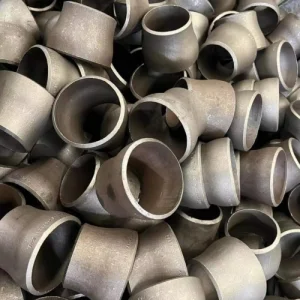
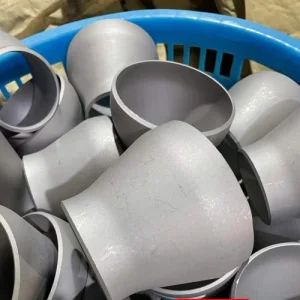
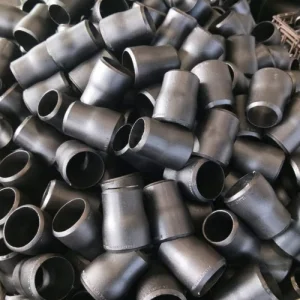
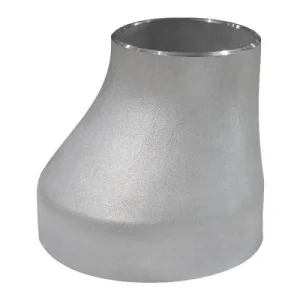
Complete Reducer & Fitting Inventory
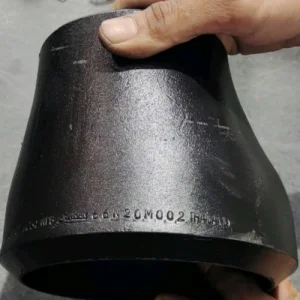
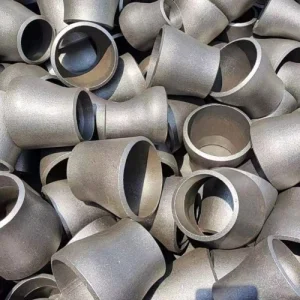
High-grade carbon, stainless, and alloy steel reducer fittings for immediate global export and project dispatch.
Require Precision Reducers for Your Omani Projects?
Connect directly with our senior pipeline engineering team to receive complete technical data sheets, Mill Test Certificates (MTC), and project quotes tailored to PDO and Middle East standards.
Send Inquiry Now