
High-Performance Welded Piping Products
Engineered to meet rigorous Canadian Standards Association (CSA) and ASTM specifications for severe cold-climate operation.
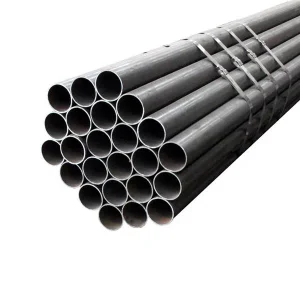
High-Strength Industrial Welded Steel Pipe for Canadian Pipeline Systems
View Product Details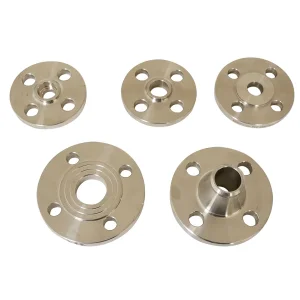
High-Pressure Orifice & Weld Neck Flanges for Canadian Energy Corridors
View Product Details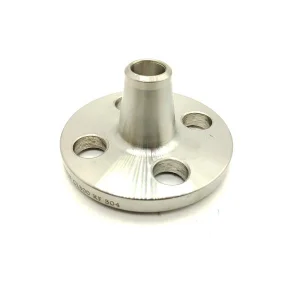
Heavy-Duty ASTM A182 304L/316L Stainless Steel Flanges for Mining & Offshore
View Product Details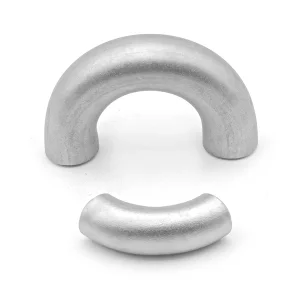
Precision Butt-Welded 90-Degree Pipe Elbows for Alberta Energy Networks
View Product DetailsCanadian Commercial & Industrial Pipeline Landscape
Analyzing the unique structural demands, extreme ambient temperatures, and regulatory frameworks governing steel pipe procurement across Canada.
Canada’s industrial landscape presents one of the most demanding operational environments in the world for tubular steel products. Spanning over 840,000 kilometers of energy pipelines, extensive municipal utility networks, deep-rock mining installations, and heavy structural foundations, the Canadian market requires welded steel pipe solutions engineered specifically for resilience, mechanical integrity, and low-temperature crack resistance.
Energy & Bitumen Transport
Alberta’s Athabasca Oil Sands and Saskatchewan’s heavy crude facilities demand Electric Resistance Welded (ERW) and Submerged Arc Welded (SAW) carbon steel pipes rated under CSA Z245.1 standards. High-pressure steam-assisted gravity drainage (SAGD) requires pipe walls capable of handling cyclical thermal stress up to 350°C paired with sub-zero external ground temperatures.
Liquefied Natural Gas (LNG)
Major coastal terminals such as LNG Canada in Kitimat, British Columbia, have spurred huge demand for large-diameter Longitudinal Submerged Arc Welded (LSAW) pipe. These transport lines require strict Charpy V-Notch (CVN) impact toughness values down to -45°C to guarantee zero brittle fracture risks under extreme sub-arctic ambient conditions.
Mining & Infrastructure
Hard-rock mining operations across Ontario, Quebec, and Northern Manitoba utilize high-grade Spiral Submerged Arc Welded (SSAW) pipes for slurry conveyance, tailings disposal, and underground dewatering networks. Furthermore, heavy civil foundations rely on ASTM A500 and ASTM A252 welded structural steel piling.
Regulatory Compliance Note: In Canada, pipeline infrastructure must strictly align with the CSA Z662 (Oil and Gas Pipeline Systems) code. Procurement officers must verify that foreign suppliers hold verified ISO 9001 and API 5L certifications, supported by EN 10204 3.1 Mill Test Reports (MTRs) detailing chemical heat numbers and low-temperature Charpy impact test values.
Global Technological Trends in Welded Pipe Manufacturing
How advancements in thermomechanical rolling, automated seam welding, and non-destructive testing are reshaping heavy industrial supply chains.
1. Advanced Thermomechanical Controlled Processing (TMCP)
Modern steel mills are increasingly moving from traditional normalized micro-alloyed steels to TMCP high-strength low-alloy (HSLA) steels. TMCP allows welded pipe manufacturers to achieve micro-structural refinement, enabling yield strengths matching API 5L X70, X80, and Grade 483 while reducing carbon equivalent (CE) values. This enhanced weldability eliminates the need for expensive field pre-heating during harsh Canadian winter installations.
2. High-Frequency ERW & Full-Body seam Heat Treatment
High-Frequency Electric Resistance Welding (HFW/ERW) has undergone a technological revolution. By employing automated solid-state high-frequency welders paired with real-time seam ultrasonic inspection, heat-affected zone (HAZ) defects are virtually eliminated. Post-weld inline full-body micro-induction annealers normalize the weld zone, matching the ductility and toughness of the parent coil metal.
3. Automated Ultrasonic Testing (AUT) & Digital Quality Control
In accordance with stringent global standard practices, top-tier welded steel pipe suppliers have integrated multi-channel AUT and real-time X-ray fluoroscopy directly into the production line. Every millimeter of longitudinal or helical seam weld is scanned for inclusions, lack of fusion, and micro-porosity. Digital twin tracking maps every joint to its exact raw coil batch, offering complete transparency for Canadian EPC contractors.
4. Low-Carbon Steel & EAF Production Pathways
With North American carbon emission compliance guidelines shifting toward decarbonization, Electric Arc Furnace (EAF) steelmaking utilizing recycled steel scrap and Direct Reduced Iron (DRI) is replacing traditional Blast Furnace-Basic Oxygen Furnace (BF-BOF) routes. EAF-produced welded pipes deliver up to a 60% reduction in embedded carbon, satisfying Canadian green building and clean technology incentives.
Cangrun Pipeline Precision Engineering Metrics
Welded Steel Pipe Manufacturing Process Comparison
Selecting the correct manufacturing methodology based on diameter, pressure rating, and project engineering requirements.
| Process Type | Outer Diameter Range | Wall Thickness (WT) | Primary Standards | Key Canadian Application Fit |
|---|---|---|---|---|
| ERW / HFW (Electric Resistance Welded) |
1/2" to 24" (15mm – 610mm) | Up to 20mm (SCH 10 to SCH 160) | ASTM A53, CSA Z245.1, API 5L B to X70 | Natural gas distribution, oil gathering lines, industrial HVAC, structural piling. |
| LSAW (Longitudinal Submerged Arc) |
16" to 60" (406mm – 1524mm) | Up to 50mm (Heavy Wall) | API 5L X52 to X80, CSA Z245.1, ASTM A672 | High-pressure mainline oil/gas pipelines, offshore marine terminals, deep cryogenic lines. |
| SSAW / HSAW (Spiral Submerged Arc) |
8" to 120" (219mm – 3048mm) | Up to 25.4mm | ASTM A252, CSA Z245.1, AWWA C200 | Municipal water transmission, mine slurry disposal, port foundation driven caissons. |
| EFW (Electric Fusion Welded) |
6" to 100" (168mm – 2540mm) | Up to 40mm | ASTM A358, ASTM A691, ASME SA358 | High-temperature chemical processing, refinery boiler lines, power generation. |
Canadian Welded Steel Pipe Pricelist & Cost Factors (2025–2026)
Benchmark pricing, raw material indices, freight dynamics, and total cost of ownership (TCO) considerations for Canadian buyers.
Steel pipe pricing in the Canadian market is governed by raw Hot-Rolled Coil (HRC) spot prices, anti-dumping duties, freight routes to ports such as Vancouver or Montreal, and specialized testing requirements (such as low-temperature Charpy tests and 3LPE/FBE external coatings). Below is an indicative reference pricelist for export-grade welded carbon steel pipe delivered to major Canadian distribution hubs.
| Nominal Size | Outer Diameter (mm) | Wall Schedule | Steel Grade Standard | Indicative Price (USD/Ton) | Indicative Price (CAD/Meter) |
|---|---|---|---|---|---|
| 2" (DN50) | 60.3 mm | SCH 40 (3.91mm) | ASTM A53 Gr. B / ERW | $880 – $1,050 | $7.80 – $9.20 |
| 4" (DN100) | 114.3 mm | SCH 40 (6.02mm) | ASTM A53 / CSA Z245.1 Gr. 290 | $860 – $1,020 | $18.50 – $22.00 |
| 8" (DN200) | 219.1 mm | SCH 40 / STD (8.18mm) | API 5L Gr. B / X52 ERW | $890 – $1,080 | $48.00 – $56.00 |
| 12" (DN300) | 323.8 mm | SCH 80 / XS (12.70mm) | API 5L X60 / CSA Z245.1 Gr. 414 | $920 – $1,150 | $110.00 – $132.00 |
| 24" (DN600) | 610.0 mm | STD (9.53mm) | API 5L X70 LSAW / DSAW | $980 – $1,220 | $185.00 – $215.00 |
| 36" (DN900) | 914.4 mm | 12.70 mm | API 5L X80 / CSA Z245.1 Gr. 550 LSAW | $1,050 – $1,350 | $340.00 – $410.00 |
Key Commercial Cost Drivers
- Anti-Dumping & Countervailing Duties: Canada Border Services Agency (CBSA) enforces SIMA tariffs on specific carbon steel welded pipe origins. Partnering with certified international mills ensures compliance and duty-optimized logistics routes.
- Protective Coating Systems: External 3-Layer Polyethylene (3LPE) or Fusion Bonded Epoxy (FBE) adds between $150 to $300 per metric ton depending on diameter and dry film thickness (DFT).
- Field Testing & Third-Party Inspection: Third-party witness inspection (SGS, BV, TUV) for hydrostatic, NDT, and metallographic grain size validation.
Request a Customized Canadian Freight Quote
Get exact FOB, CFR Vancouver, or DDP Calgary project estimates tailored to your material take-off schedule.
Get Custom Project PricelistMacro Industry Solutions & 2025–2035 Technology Vision
Preparing Canadian piping infrastructure for hydrogen blending, carbon capture and storage (CCS), and smart digital asset monitoring.
Hydrogen Readiness & Blending
As Western Canada pioneers clean energy transitions, existing natural gas lines are being adapted to transport up to 20% hydrogen blends. Welded pipes require strict control over internal surface roughness, ultra-low sulfur chemistry (<0.002%), and reduced hard zones in the weld heat-affected zone to prevent hydrogen embrittlement (HE) and micro-cracking.
Smart Pipelines with Integrated Sensing
Next-generation welded pipelines feature distributed fiber-optic cables embedded directly within the protective 3LPE coating layer. This technology allows real-time monitoring of permafrost ground movement, strain deformation, localized temperature fluctuations, and acoustic leak detection across vast Canadian territories.
Carbon Capture & Dense-Phase CO2
Carbon Capture, Utilization, and Storage (CCUS) projects in Alberta demand thick-walled LSAW pipes rated for supercritical high-pressure CO2 transport (15 to 20 MPa). Metallurgical designs focus on high arrest toughness to mitigate rapid crack propagation caused by sudden fluid decompression cooling.
Industrial Flanges, Fittings & Piping Components
Complementary high-pressure components certified to ASME B16.5, ASME B16.9, and CSA standards for project-wide material matching.
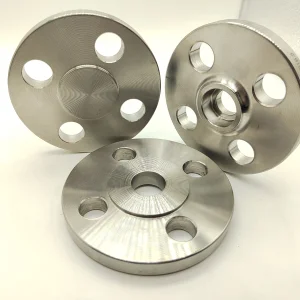
BS4504 & CSA Standard Industrial Flanges for Canadian Processing Plants
View Product Details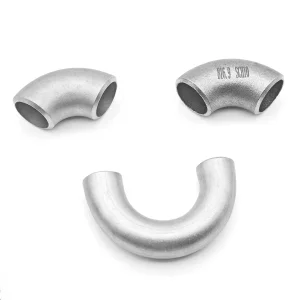
45/90-Degree Carbon & Stainless Steel Pipe Elbows for Severe Winter Service
View Product Details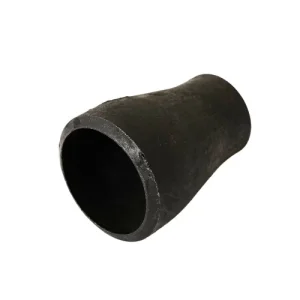
High-Pressure Butt-Weld Concentric Reducers for Oil Sands Operations
View Product Details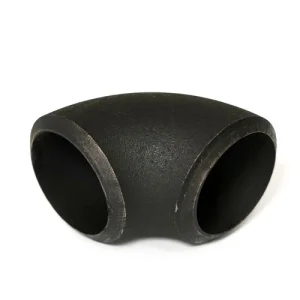
Heavy-Duty Welded Pipe Fitting Elbows for Structural & Municipal Infrastructure
View Product Details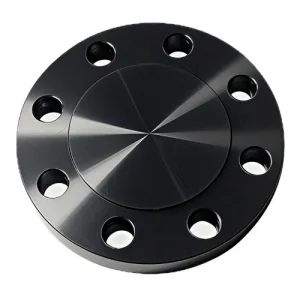
ANSI B16.5 Class 150-2500 Steel Flanges for Pipeline Compression Stations
View Product Details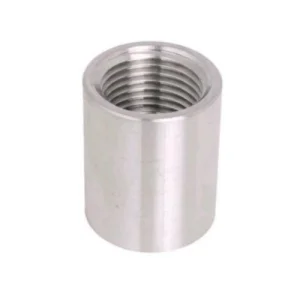
150lbs NPT/BSP Threaded Stainless Steel Fittings for Offshore & Marine Facilities
View Product Details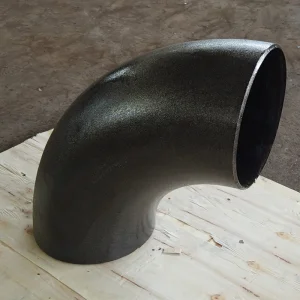
Custom ASME B16.9 2D/3D/5D Weld Bends & Large Diameter 18-Inch Elbows
View Product Details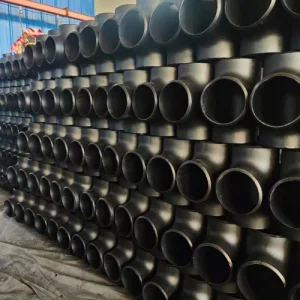
Heavy-Wall Carbon Steel Equal Tees for High-Yield Transmission Lines
View Product DetailsFrequently Asked Questions for Canadian Pipe Procurement
Expert responses regarding certification, low-temperature compliance, shipping, and custom manufacturing capability.
How do Cangrun welded steel pipes comply with CSA Z662 standards?
Our welded steel pipes are manufactured under strict ISO 9001 and API 5L quality systems. For the Canadian market, we supply pipes conforming to CSA Z245.1 steel line pipe specifications, complete with Category II and Category III low-temperature Charpy V-Notch impact testing to ensure zero brittle transition down to -45°C.
What is the typical lead time for shipping welded pipe to Canadian ports?
Standard size ERW and LSAW pipe orders in stock can be dispatched within 7–10 days. Custom mill production runs take approximately 25 to 35 days. Direct ocean shipping from China to Port of Vancouver takes 16–22 days, while transit to Montreal or Halifax via rail network routes typically averages 30–38 days total door-to-port time.
Can you supply integrated piping packages including pipes, flanges, and fittings?
Yes. Cangrun Pipeline Equipment operates three group production facilities in Cangzhou, Hebei. We manufacture matched sets of welded pipes, butt-weld elbows, equal tees, reducers, and ASME B16.5 flanges in carbon, alloy, and stainless steel grades—allowing contractors to consolidate entire piping bills of materials (BOM) under one supplier warranty and shipment.
What anti-corrosion coating options are available for underground winter burial?
We offer factory-applied 3-Layer Polyethylene (3LPE), 3-Layer Polypropylene (3LPP), Fusion Bonded Epoxy (FBE), liquid epoxy internal linings for slurry lines, and hot-dip galvanizing to ASTM A123. All coatings undergo holiday testing and peel-strength adhesion checks before dispatch.
What documentation accompanies each pipe delivery?
Every shipment includes full EN 10204 3.1 Mill Test Certificates (MTCs) detailing heat number, chemical composition analysis, tensile strength, yield strength, elongation, hydrostatic test logs, non-destructive testing (NDT) reports, and coating inspection certificates.
Ready to Optimize Your Canadian Pipeline Project Supplies?
Contact our senior pipeline engineering team today to receive a detailed technical consultation, custom CAD drawing review, or an itemized freight-inclusive project quotation.