
High-Priority Piping Components for Greek Infrastructure
Directly integrated from our ISO-certified production facilities in Cangzhou to support Greece's expanding marine, refitting, and energy transformation networks.
Greece's Industrial & Infrastructure Surge: Demand Analysis
Greece occupies a pivotal geographic position as the eastern gateway of energy, logistics, and maritime trade into the European Union. Over the past decade, driven by national modernization frameworks, the Trans Adriatic Pipeline (TAP), and major regional port expansions, the demand for high-reliability flow control equipment—specifically engineered gate valves, forged flanges, and heavy-wall pipe fittings—has experienced unprecedented growth.
Energy Corridors & LNG Expansion
With the development of the Revithoussa LNG Terminal expansion and the Alexandroupolis Independent Natural Gas System (FSRU), DESFA (Greece's Natural Gas System Operator) requires certified API 6D and EN 1984 cryogenic and high-pressure gate valves capable of handling extreme temperature cycles and zero-leakage gas transmission.
Maritime Hubs & Shipbuilding
The Port of Piraeus, alongside ship-refitting hubs in Skaramangas and Elefsina, hosts one of the world's largest commercial merchant fleets. Marine-grade gate valves (DIN 3352 / EN 1171) crafted from Nickel Aluminium Bronze (NAB) and 316L stainless steel are continuously needed for ballast water management, fuel handling, and sea cooling systems.
Refinery Upgrades & Petrochemicals
Industrial complexes like HELLENIQ ENERGY (Aspropyrgos & Elefsina refineries) and Motor Oil Hellas (Corinth refinery) are undergoing continuous modernizations to meet Euro 6 emissions and biofuel blending standard. High-temperature alloy steel gate valves (ASTM A217 WC6/WC9) are paramount for hydrocracker unit reliability.
Engineering Specifications: DIN/EN vs API Standards in Greece
Procurement engineers operating in Greece often navigate a dual-standard landscape. Municipal water utilities (EYDAP, EYATH) and marine refitting yards lean heavily on European Norms (EN/DIN), while cross-border oil and gas infrastructure dictates American Petroleum Institute (API) metrics. Understanding these structural discrepancies is vital to ensuring seamless flange coupling, bolt circle matching, and pressure-rating tolerance.
In high-salinity coastal environments like the Saronic Gulf or the Thermaic Gulf, standard carbon steel valve stems suffer from rapid pitting corrosion. We implement Stellite No. 6 hardfacing on wedge seats combined with 13Cr/UNS S31803 duplex stainless steel stems to prevent galling under high differential pressures, extending operational lifespans by up to 300%.
| Specification Parameter | European Standard (EN / DIN) | American Standard (API / ASME) | Application in Greek Sector |
|---|---|---|---|
| Design Metric | EN 1984 / EN 1171 / DIN 3352 | API 600 / API 6D / API 602 | EN for Utilities, API for Refineries |
| Pressure Rating Scope | PN 6, PN 10, PN 16, PN 25, PN 40, PN 100 | Class 150, 300, 600, 900, 1500, 2500 | Flange face alignment via ASME B16.5 or EN 1092-1 |
| Face-to-Face Dimensions | EN 558-1 Series 14/15 (DIN 3202 F4/F5) | ASME B16.10 | Crucial for drop-in valve replacements in retrofits |
| Wedge Configuration | Resilient Seated (EPDM/NBR) or Metal-to-Metal | Flexible Wedge, Solid Wedge, Split Wedge | Resilient seated for EYDAP municipal water networks |
| Fugitive Emissions | ISO 15848-1 Class AH / BH | API 622 / API 641 | Mandatory for Motor Oil Hellas refinery units |
Macro Industrial Flow Control Solutions for Hellenic Enterprises
Tailored engineering solutions targeting the three pillars of the Greek industrial economy: Maritime Engineering, Energy Corridor Pipeline Integrity, and Municipal Water Resiliency.
1. Offshore & Marine Operations
Commercial shipping operations calling at Piraeus or undergoing drydock repairs require valves resistant to seawater bio-fouling and galvanic corrosion. Our bronze and duplex alloy gate valves feature rising stem designs with external yoke threads (OS&Y), preventing seawater contact with stem actuation threads.
- Materials: RG5, C95800, SS316L, 2205 Duplex
- Certifications: DNV, Bureau Veritas, Lloyd's Register
2. Natural Gas & Thermal Power
High-pressure natural gas trunk lines, such as those operated by DESFA, require through-conduit pipeline gate valves according to API 6D. These valves feature slab or expanding wedges with internal relief valves to mitigate body cavity overpressure caused by thermal gas expansion.
- Body Grades: ASTM A216 WCB, A352 LCC (Low Temp)
- Fire Safe Design: API 607 / ISO 10497 Certified
3. Municipal Water Utilities
Greece's urban water infrastructure demands low-torque, zero-leakage resilient seated gate valves (Z45X / EN 1171). Vulcanized EPDM wedges ensure smooth operation free from tuberculation or mineral buildup under hard water conditions prevalent in island desalination projects.
- Coating: WRAS/DVGW approved Fusion Bonded Epoxy (FBE)
- Pressure Nominal: PN10, PN16, PN25
EU Compliance & Hellenic Regulatory Integration
Exporting industrial valves and pressure pipeline equipment to Greece requires absolute adherence to European Union directives. Equipment lacking mandatory CE conformity or non-compliant with environmental emissions standards risks rejection at port customs or operational shutdown by industrial safety inspectors.
Every shipment delivered from our Cangzhou factories to Greek destination ports (Piraeus, Thessaloniki, Patras) is backed by comprehensive technical documentation packages:
- Pressure Equipment Directive (PED 2014/68/EU): Full compliance under Module H / Module H1 for Category I to IV fluid handling systems.
- EN 10204 3.1 & 3.2 Material Traceability: Complete chemical analysis, mechanical tension testing, and impact testing heat traceability back to raw steel ingots.
- ATEX Directive 2014/34/EU: Mechanical spark-proof validation for valves installed in potentially explosive refinery zones.
- Third-Party Inspection (TPI): Pre-shipment verification by TÜV Rheinland, Bureau Veritas, or SGS available upon request.
Quality Control Checklist for Greek Customs
100% shell testing at 1.5x design pressure; high-pressure seat testing at 1.1x design pressure per ISO 5208 / API 598.
X-ray fluorescence (XRF) alloy verification on bodies, stems, and bonnet bolts prior to assembly.
Precision surface roughness check (Ra 3.2 to 6.3 µm for RF flanges) ensuring leak-free gasket seating.
China Industry 4.0: Modern Manufacturing Cluster Advantage
Located in Cangzhou, Hebei Province—the core hub of China's heavy pipeline equipment industry—our three group manufacturing facilities leverage advanced automation, continuous forging lines, and vertical integration to provide Greek EPC contractors and engineering procurement firms with an unmatched balance of quality and economic efficiency.
Automated Machining & CNC Robotics
High-precision multi-axis CNC machining centers guarantee strict alignment of valve seats, eliminating hand-grinding discrepancies and ensuring ultra-low operational torque for automated electric or pneumatic actuators.
In-House Metallurgy & Forging
From raw steel billet selection to closed-die forging, our integrated production chain ensures defect-free valve bodies, flanges, and pipe fittings capable of enduring extreme line pressure surges up to 400 Bar.
Direct Shipping Corridors to Greece
Leveraging direct maritime container routes from Tianjin/Qingdao ports straight to Piraeus Port, we optimize supply chain lead times, reducing transit costs by up to 22% compared to indirect European distributors.
Material Selection Matrix for Greek Industrial Conditions
Selecting the proper body and trim materials prevents premature mechanical failure, stress corrosion cracking (SCC), and severe fluid erosion. Consult our engineering matrix optimized for Greek climatic and operational zones:
| Material Grade | Equivalent EN/DIN | Recommended Operating Environment | Temperature Range |
|---|---|---|---|
| ASTM A216 WCB | 1.0619 (GS-C25) | Non-corrosive industrial water, oil, gas trunk lines | -29°C to +425°C |
| ASTM A352 LCC | 1.1131 (G20Mn5) | Low-temperature gas processing, cryogenic LNG utilities | -46°C to +345°C |
| ASTM A217 WC6 / WC9 | 1.7357 / 1.7383 | High-temperature superheated steam in power plants | Up to +593°C |
| ASTM A351 CF8M (316) | 1.4408 (G-X6CrNiMo18-10) | Coastal marine environments, chemical process lines | -196°C to +600°C |
| Nickel Aluminum Bronze (C95800) | CuAl10Fe5Ni5 | High-salinity seawater intake, offshore platforms | Sub-zero to +260°C |
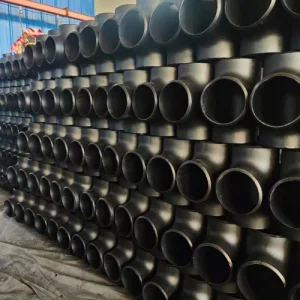
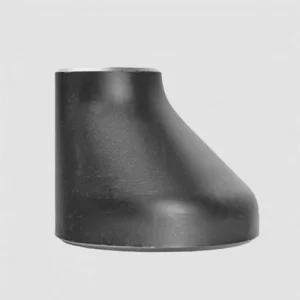
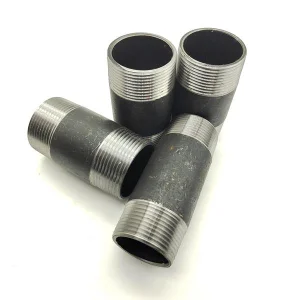
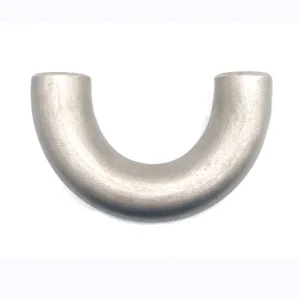
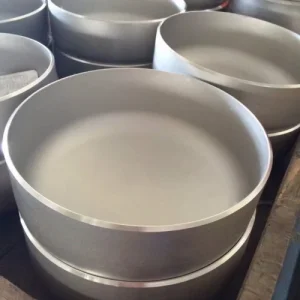
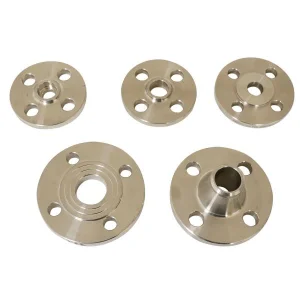
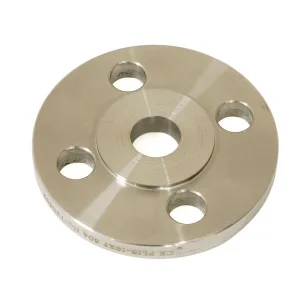
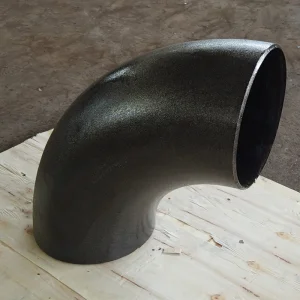
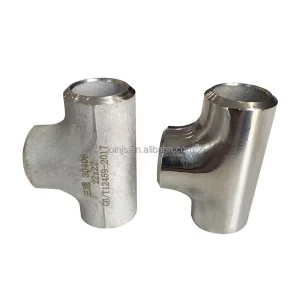
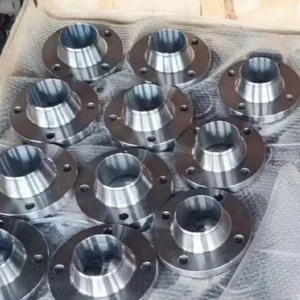
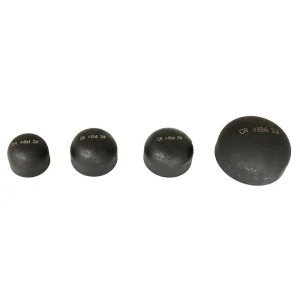
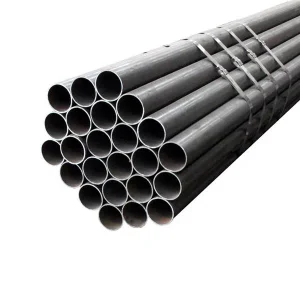
Complementary Flanges, Caps & Heavy-Wall Fittings
Complete your piping system takeover with our matched pressure-rated flanges and butt-weld components, manufactured to strict ASME B16.9, B16.5, and DIN/EN parameters.
Technical & Procurement FAQ for Greek Buyers
Expert responses to critical questions regarding valve selection, PED certification, freight logistics, and material compliance for Greek engineering contracts.
Partner with China's Premier Valve & Piping Exporter
Whether you are bidding on a DESFA natural gas tender, modernizing a marine vessel at Piraeus Drydocks, or upgrading an industrial refinery, our technical engineering team is ready to deliver compliant, PED-certified flow control solutions.