
Featured Pipeline Components: Primary Sourcing Selection
Direct manufacturer allocation for cross-border infrastructure and industrial manufacturing projects in Luxembourg.
Luxembourg’s Industrial & Energy Transition Context for Pipeline Procurement
The Grand Duchy of Luxembourg, situated at the economic crossroads of the European Union between Germany, France, and Belgium, maintains an exceptionally high concentration of advanced industrial manufacturing, steel production (headquartered by global giants like ArcelorMittal), chemical process plants, and rapidly growing clean energy logistics networks. Sourcing high-performance piping components—specifically four-way pipes (cross fittings), equal tees, high-pressure reducers, and heavy-wall forged flanges—requires an intimate understanding of both local regulatory frameworks and regional industrial requirements.
Industrial Growth Rate
Annual growth in high-value automotive, steel manufacturing, and chemical equipment replacement across Belval and Differdange zones.
PED 2014/68/EU Compliant
Mandatory pressure equipment compliance for all pressure piping installations operating within Luxembourg industrial projects.
Manufacturing Range
Comprehensive dimensional spectrum available for both seamless high-pressure and large-diameter welded cross pipe fittings.
As Luxembourg accelerates its national decarbonization roadmap, industrial facilities in zones such as Esch-sur-Alzette, Strassen, and Bettembourg are upgrading their fluid distribution and thermal handling systems. High-density industrial hubs demand four-way fittings capable of withstanding severe mechanical stresses, cyclic thermal expansion, and aggressive chemical environments. The specification of cross pipe fittings (four-way connections) allows engineering firms to optimize spatial layouts in compact processing modules, reducing the physical footprint of piping skids while enabling multi-directional fluid distribution.
Information Gain Insight: Sourcing four-way pipe fittings for Luxembourg projects requires compliance with EN 10253-2 (for unalloyed and alloyed steels) and EN 10253-4 (for stainless steels). Unlike standard equal tees, four-way fittings experience concentrated stress vectors at the center crotch point during peak hydraulic surges, demanding strict material verification via EN 10204 3.1/3.2 certification.
Technical Deep-Dive: Mechanical Integrity & Fluid Dynamics of Four-Way Fittings
A four-way pipe fitting (also designated as a cross fitting or 4-way cross) serves as a critical junction point where four fluid conduits intersect at 90-degree angles. In industrial piping installations across Luxembourg's chemical synthesis and power generation plants, four-way fittings are deployed for manifold distribution, chemical dosing lines, fire suppression loops, and thermal recovery loops.
Hydrodynamic Stress Factors at 90-Degree Intersections
When fluid streams collide or split within a four-way junction, significant turbulence and dynamic pressure drop occur. Mechanical engineers designing systems for Luxembourg operators must account for:
- Crotch Area Stress Concentration: The internal radii where the four branches converge undergo intense hoop stress elevation. For high-pressure lines (Class 600# and above), seamless forged four-way fittings or reinforced welded crosses are mandatory.
- Erosion-Corrosion Mitigation: In slurries or wet steam service, vortexing at the core junction can wear down standard wall thicknesses. Utilizing carbon steel ASTM A234 WPB with extra wall thickness (SCH 80 or XXS) or duplex stainless steels (e.g., UNS S31803 / 1.4462) extends service life significantly.
- Vibration Dampening: Multi-directional flow creates harmonic oscillations. Luxembourg plants utilize specialized piping supports adjacent to 4-way cross points to prevent low-cycle fatigue failures.
| Parameter | Seamless Cross (ASTM A234 WPB) | Stainless Cross (ASTM A403 WP316L) | Forged High-Pressure Cross (A105 / F316) |
|---|---|---|---|
| Nominal Size Range | DN15 – DN600 (1/2" to 24") | DN15 – DN600 (1/2" to 24") | DN8 – DN100 (1/4" to 4") |
| Pressure Ratings | SCH 10 to SCH XXS | SCH 5S to SCH 80S | Class 3000, 6000, 9000 LB (Threaded/SW) |
| Applicable European Std. | EN 10253-2 Type A / B | EN 10253-4 Type A / B | EN 10241 / BS3799 |
| Primary Application | District heating, gas lines | Chemical process, pharmaceutical | Hydraulic power units, high-pressure gas |
Compliance & Quality Assurance Requirements for Luxembourg Imports
Exporting industrial piping products into the Grand Duchy of Luxembourg requires strict adherence to European Union directives and local safety regulations enforced by the Inspection du Travail et des Mines (ITM). Substandard or uncertified pipe fittings pose catastrophic risks in pressurized environments.
PED 2014/68/EU CE Marking
All pressure components operating above 0.5 bar must undergo conformity assessment modules (Module H, H1, or B+D) to bear the CE mark for legitimate Luxembourg deployment.
EN 10204 3.1 Traceability
Mill Test Certificates (MTC) providing full heat-number traceability, chemical composition analysis, mechanical tensile test, and impact testing at sub-zero temperatures.
NDT Inspection Protocols
100% Radiographic Testing (RT) or Ultrasonic Testing (UT) on welded seam intersections of four-way fittings to ensure zero internal voids or lack of penetration.
Material Grade Equivalency Guide for EU Buyers
Procurement managers frequently need to bridge American ASME standards with European EN standards when submitting material take-offs (MTO) in Luxembourg. Below is an engineering reference table for material selection:
| ASME / ASTM Grade | EN / DIN Equivalent | Werkstoff Number | Key Property Profile |
|---|---|---|---|
| ASTM A234 Grade WPB | P265GH / P235GH | 1.0425 / 1.0345 | Standard carbon steel for elevated temperature elevated pressure service. |
| ASTM A403 WP304L | X2CrNi19-11 | 1.4307 | Low-carbon austenitic stainless steel; immune to intergranular corrosion. |
| ASTM A403 WP316L | X2CrNiMo17-12-2 | 1.4404 | Molybdenum-alloyed stainless; excellent pitting resistance in chloride environments. |
| ASTM A234 Grade WP11 | 13CrMo4-5 | 1.7335 | Low alloy chrome-moly steel for high-temperature steam utility headers. |
Global Sourcing Strategy & Logistics Execution for Luxembourg Enterprise EPCs
For major engineering contractors in Luxembourg managing high-stakes municipal or private plant developments, securing a continuous, risk-mitigated supply chain for specialized fittings and valves is vital. In light of fluctuating global shipping routes and raw material indices, consolidating order packages—combining four-way pipes, elbows, reducers, and valves into unified container shipments—reduces landed cost by up to 18%.
Multimodal Inland Freight
Direct container transport routing via Antwerp and Rotterdam ports, connected via Moselle river barging to the Port of Mertert in Luxembourg.
Customs Clearance & Duty
Seamless EU intra-community trade documentation, TARIC code harmonization, and VAT reverse-charge compliance for corporate buyers.
Precision Packaging
ISPM-15 compliant heat-treated wooden crates, plastic end-cap protectors, and anti-corrosion VCI foil vacuum wrapping for sea freight protection.
Future Outlook: Green Steel, Hydrogen Readiness & Digital Twin Tracking
The Luxembourg industrial sector is rapidly evolving toward zero-carbon manufacturing and green hydrogen integration. As local power generators transition from natural gas to hydrogen-blended networks, piping components are subject to new metallurgical challenges, including hydrogen embrittlement and micro-leakage at joinery points.
1. Hydrogen-Ready Metallurgy
Manufacturing four-way fittings with controlled carbon equivalent (CE) values and low-sulfur steel chemistry to resist High-Pressure Hydrogen Attack (HPHA).
2. Digital Twin RFID Embedding
Integration of high-temperature passive RFID tags onto fitting rims, allowing Luxembourg maintenance engineers to scan MTC data instantly via mobile devices.
3. Zero-Carbon Manufacturing
Adopting Electric Arc Furnace (EAF) forged billets to deliver verified low-embodied-carbon pipe fittings aligned with EU CBAM (Carbon Border Adjustment Mechanism) directives.
Complete Industrial Catalog: Expanded Piping & Valve Portfolio
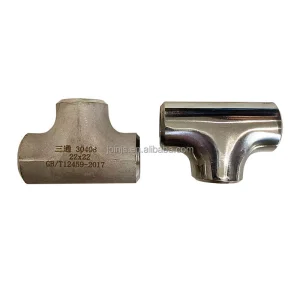
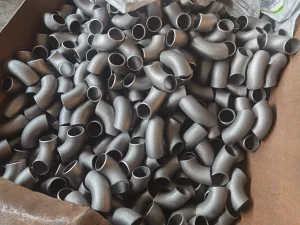
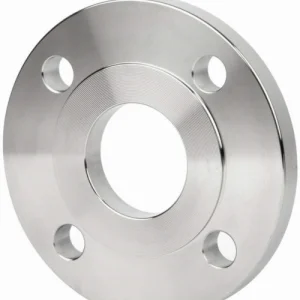
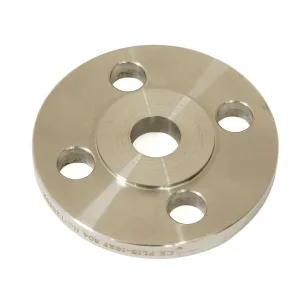
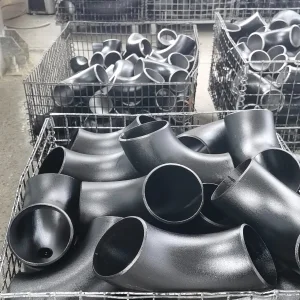
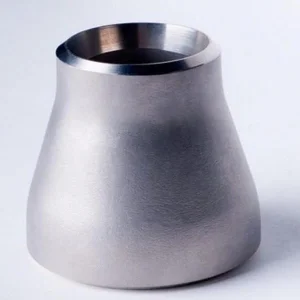
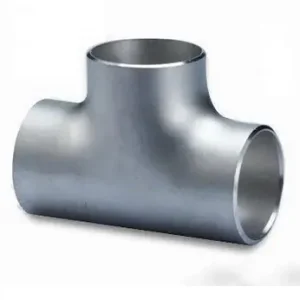
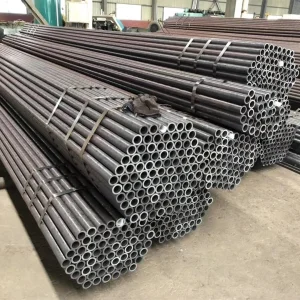
Explore our complete range of certified butt-weld fittings, forged flanges, and industrial flow control valves.
Technical & Procurement FAQ: Four-Way Pipes & Luxembourg Sourcing
Direct answers to technical queries encountered by engineering and procurement consultants in Western Europe.
Request Technical Data Sheets & Formal Quotes for Luxembourg Projects
Our engineering export department provides rapid 24-hour turnaround on Material Take-Off (MTO) estimates, PED documentation reviews, and CIF/DDP logistics quotations.
Send Inquiry Now