
Primary Industrial Reducers for the Nigerian Market
Heavy-duty, mill-certified steel pipe reducers engineered for high-pressure fluid transition in oil fields, refineries, and municipal distribution networks across Nigeria.
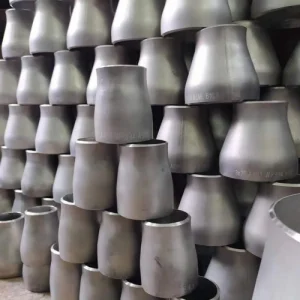
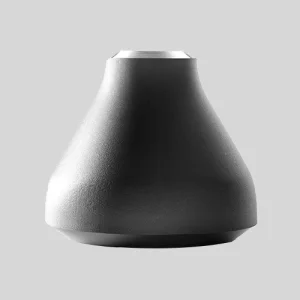
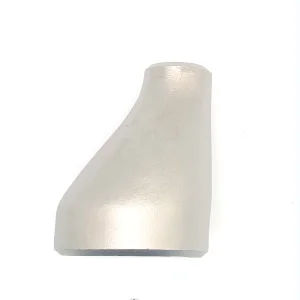
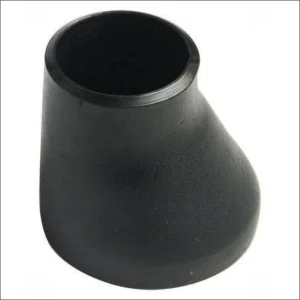
1. Industrial & Macroeconomic Landscape for Pipe Reducers in Nigeria
Nigeria stands as the largest economy and most prolific oil producer in Sub-Saharan Africa. The country's industrial backbone is undergoing a massive structural evolution driven by landmark mega-projects, domestic gas commercialization, and downstream refining expansion. Key developments such as the 650,000 barrels-per-day (bpd) Dangote Petroleum Refinery & Petrochemical Complex in Lekki, the Ajaokuta-Kaduna-Kano (AKK) natural gas pipeline project, Nigeria LNG (NLNG) Train 7, and ongoing rehabilitation of state-owned refineries in Port Harcourt and Warri have reshaped the national pipeline infrastructure market.
Within these vast energy corridors, steel pipe reducers (both concentric and eccentric) serve as indispensable flow control components. They bridge line size transitions, manage fluid velocity, maintain hydraulic head, and prevent critical flow phenomena such as erosion, surge, and pump cavitation. The operating environment in West Africa presents unique challenges: high ambient temperatures, highly corrosive marine atmospheres in the Niger Delta offshore fields, elevated sand concentrations in crude stream extraction, and strict regulatory compliance enforced by the Nigerian Upstream Petroleum Regulatory Commission (NUPRC) and the Nigerian Midstream and Downstream Petroleum Regulatory Authority (NMDPRA).
Consequently, Nigerian EPC (Engineering, Procurement, and Construction) contractors, oil majors (including NNPC, Shell, TotalEnergies, Chevron, and Seplat), and local fabricators demand factory-direct access to discount reducer suppliers who offer uncompromised metallurgical integrity, ASME/ASTM standardization, and complete Mill Test Certificate (MTC EN 10204 3.1) traceability without inflated middleman markups.
2. Engineering & Flow Dynamics: Concentric vs. Eccentric Reducers
Pipe reducers are specialized butt-weld or forged fittings designed to connect two pipes of different nominal pipe sizes (NPS) along the same pipeline axis. Selecting between a Concentric Reducer and an Eccentric Reducer requires rigorous fluid dynamic analysis based on line orientation, fluid phase (liquid, gas, multiphase), and pump proximity.
Concentric Reducers (Con-Red)
Concentric reducers feature a cone-shaped centerline where both the large and small inlet/outlet ends align symmetrically along the same central axis. They are predominantly utilized in:
- Vertical Pipeline Riser Runs: Where gravity and symmetric flow profiles prevent air pocket accumulation.
- Gas & Steam Transports: Preventing turbulence during high-velocity gas compression.
- Fluid Mixing & Manifolds: Ensuring even stress distribution across circumferential butt-welds under thermal expansion.
Eccentric Reducers (Ecc-Red)
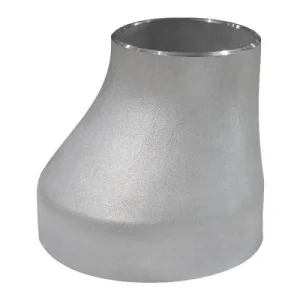
Eccentric reducers possess an offset centerline with one flat side parallel to the pipe run. They are critical in horizontal piping applications to manage fluid phase dynamics:
- Flat-Side Bottom (FSB): Applied on horizontal pipe racks to maintain constant bottom-of-pipe (BOP) elevation for easy pipe support alignment.
- Flat-Side Top (FST): Vital for centrifugal pump suction lines. Placing the flat side on top prevents entrained gas bubbles from accumulating at the fitting shoulder and entering the pump impeller, eliminating severe cavitation damage.
| Technical Parameter | Carbon Steel Reducers (ASTM A234 WPB) | Stainless Steel Reducers (ASTM A403 WP304/316) | High-Yield Alloy Reducers (MSS SP-75 WPHY) |
|---|---|---|---|
| Primary Application | Standard oil/gas lines, refinery piping, water supply | Offshore platforms, chemical processing, sour gas lines | Cross-country high-pressure gas pipelines (e.g., AKK line) |
| Tensile Strength (Min) | 415 MPa (60,000 psi) | 485 MPa (70,000 psi) | Up to 485–550 MPa (WPHY 60/65/70) |
| Corrosion Resistance | Moderate (Requires external 3LPE/FBE coating) | Superior (Pitting resistance in marine environments) | High mechanical strength with sweet/sour corrosion control |
| NACE MR0175 / ISO 15156 | Available with HIC/SSCC tested material | Standard compliance for 316L in H2S service | Mandatory for sour oil field gathering networks |
| Manufacturing Range | DN15 to DN1900 (1/2" to 78") | DN15 to DN1200 (1/2" to 48") | DN100 to DN1400 (4" to 56") |
3. Market Trends & Strategic Procurement Drivers in Nigeria
Procurement managers operating in Port Harcourt, Lagos, Warri, and Abuja face complex supply chain dynamics. Achieving a competitive edge requires balancing strict compliance with local laws while navigating volatile foreign exchange constraints.
NOGICD Act & Local Content Synergy
The Nigerian Oil and Gas Industry Content Development (NOGICD) Act mandates that offshore and onshore petroleum projects prioritize locally available or directly mill-sourced components with verified origin documentation. Sourcing fully certified reducers from established global manufacturers allows local Nigerian vendors to fulfill contract tenders seamlessly while meeting NCDMB audit mandates.
Mitigating FX Volatility via Discount Direct Sourcing
Fluctuations in the Nigerian Naira (NGN) against major trading currencies demand direct manufacturer-level sourcing. Eliminating multi-tiered distributor margins enables EPC contractors to lock in factory-gate prices for SCH 40, SCH 80, and heavy-wall XXS seamless reducers, preserving project gross margins.
Expansion of Domestic Gas Infrastructure
Nigeria's "Decade of Gas" initiative has spurred investments in Compressed Natural Gas (CNG) mother stations, Liquefied Petroleum Gas (LPG) bottling facilities, and power plant feeder lines. These systems require high-pressure seamless reducers manufactured to ASME B16.9 and tested under stringent hydrostatic standards.
4. Macro Industry Solutions & Application Framework
Our steel pipe reducers are precision-engineered to address specific operational stressors encountered across West Africa's leading industrial sectors:
Refining & Downstream Petrochemical Processing
In fluid catalytic cracking (FCC) units, hydrotreaters, and atmospheric distillation columns, pipe reducers are subjected to extreme thermal cycles and volatile hydrocarbons. We deliver hot-forged seamless concentric reducers in ASTM A234 WPB and alloy steel grades (WP11, WP22, WP91) that resist creep deformation, thermal stress cracking, and localized erosion.
Offshore E&P and FPSO Piping Systems
Offshore production in fields such as Bonga, Egina, and Erha requires piping components capable of withstanding severe marine splash zones and sour gas environment (H2S entrainment). We supply duplex (UNS S31803 / S32205) and austenitic stainless steel (A403 WP316L) eccentric reducers coated with high-build epoxy or 3LPP, fully compliant with NACE MR0175/ISO 15156.
Municipal Water Treatment & Infrastructure
Urban expansion in Lagos State (e.g., Lekki Free Trade Zone developments) and FCT Abuja demands large-diameter water transmission mains. Our large-size welded steel reducers (DN150 to DN1900 / 6" to 78") in carbon steel with internal cement mortar lining or coal tar epoxy guarantee high flow volume, low pressure friction, and multi-decade service life.
Agro-Industrial Processing & Breweries
For palm oil refining and beverage processing hubs in Ogun, Oyo, and Anambra states, maintaining sanitary hygiene and acid resistance is paramount. We furnish light-wall SCH 10S/40S stainless steel WP304L reducers with smooth interior surface finishes (Ra < 0.8 µm) to eliminate bacterial traps.
5. Localization Support, Quality Assurance & SONCAP Guarantee
Executing cross-border procurement into Nigeria requires unwavering adherence to statutory quality frameworks and port customs clearance procedures. Uncertified materials risk severe demurrage charges at Apapa Port, Tin Can Island, or Onne Port, or outright rejection by field regulators.
SONCAP Certification & Customs Smoothness
All steel pipe reducers supplied to the Nigerian market undergo rigorous evaluation under the Standards Organisation of Nigeria Conformity Assessment Programme (SONCAP). We issue Product Certificates (PC) and SONCAP Certificates (SC) to facilitate frictionless clearance through Nigerian Customs Service (NCS) under HS Code 7307.93 (Butt-weld pipe fittings).
Comprehensive NDT Testing Protocols
To ensure 100% integrity across seamless and welded reducer bodies, every batch is subjected to Non-Destructive Testing (NDT) including Radiographic Testing (RT) on welded seams, Ultrasonic Testing (UT) for wall thickness verification, Magnetic Particle Inspection (MPI), and Positive Material Identification (PMI) via XRF analyzers.
Seaworthy Export Packaging & Logistics
To protect bevel ends (conforming to ASME B16.25) during trans-oceanic transit, reducers are treated with anti-rust black varnish, fitted with plastic end protectors, and secured inside heavy-duty fumigated wooden crates or steel-framed pallets equipped with desiccant bags against West African sea humidity.
6. Technical Roadmap & Future Outlook (2025–2030)
As global energy trends shift toward hydrogen-blend natural gas, subsea deepwater developments, and digital asset tracking, pipe fitting manufacturing is evolving rapidly. Suppliers must innovate to support West Africa's next-generation infrastructure needs.
Green Hydrogen & High-Pressure Gas Readiness
With Nigeria positioning itself as a regional gas powerhouse, future reducer production integrates ultra-low carbon steel formulations and controlled hardness levels (< 22 HRC) to prevent Hydrogen Embrittlement (HE) in pure H2 and natural gas blend transmission networks.
Smart Asset Tracking & Digital Twin Integration
Modern mega-projects require real-time material traceability. Advanced manufacturing protocols now incorporate permanent laser-etched QR codes and RFID tagging on each reducer shoulder, linking directly to digital Material Test Reports (MTRs), dimensional inspection sheets, and heat treat charts accessible on the cloud.
Frequently Asked Questions (Procurement & Engineering)
Clear, definitive answers to common inquiries raised by Nigerian EPC buyers, engineers, and plant operators.
Q1: What is the main operational difference between concentric and eccentric reducers in horizontal pump piping?
In horizontal pump suction piping, an eccentric reducer with its Flat Side Top (FST) must be used. Placing the flat side on top prevents entrained gas bubbles from forming a vapor pocket at the top of the fitting, which would otherwise be sucked into the pump impeller, causing severe mechanical vibration and cavitation failure. Concentric reducers should only be used in vertical pump runs.
Q2: How do Cangrun pipe reducers comply with Nigerian SONCAP requirements?
Our pipe fittings undergo rigorous pre-shipment inspection and laboratory testing by accredited international bodies (such as SGS, Intertek, or BV) to secure a Product Certificate (PC) and SONCAP Certificate (SC). This guarantees full compliance with Nigerian Industrial Standards (NIS) and enables smooth customs release at Apapa, Tin Can, and Port Harcourt ports.
Q3: What steel material grades are recommended for sour gas service in the Niger Delta?
For sour environments containing hydrogen sulfide (H2S), we recommend ASTM A234 WPB or WPC with restricted chemical composition, controlled hardness (< 22 HRC), and mandatory HIC (Hydrogen Induced Cracking) and SSCC (Sulfide Stress Corrosion Cracking) testing conforming to NACE MR0175/ISO 15156. Alternatively, duplex stainless steel ASTM A815 UNS S31803 or A403 WP316L provides exceptional resistance.
Q4: What manufacturing standards govern butt-weld pipe reducers?
Our reducers are manufactured in full alignment with international standards including ASME B16.9 (factory-made wrought butt-welding fittings), MSS SP-75 (high-test wrought butt-welding fittings), EN 10253, DIN 2616, and ISO 3419. Dimensional tolerances, wall thickness schedules (SCH 10S through XXS), and bevel angles strictly match pipeline engineering requirements.
Q5: Can you supply heavy-wall or non-standard custom reducer sizes for specialized projects in Nigeria?
Yes. In addition to standard seamless sizes from 1/2" to 24" (DN15 to DN600), our advanced heavy-plate press forming technology allows us to fabricate welded carbon, alloy, and stainless steel reducers up to 78" (DN1900) with wall thicknesses up to 150 mm, fully supported by 100% X-ray seam testing.
Complete Reducer & Pipe Fitting Catalogue
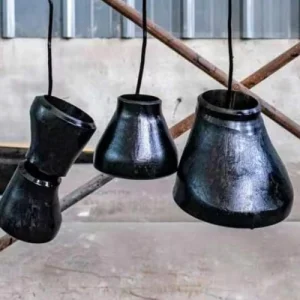
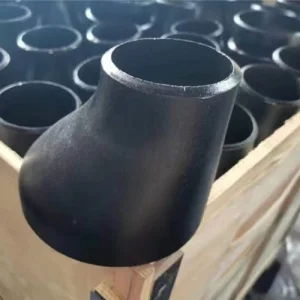
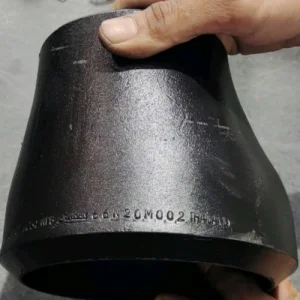
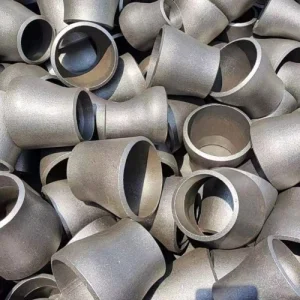
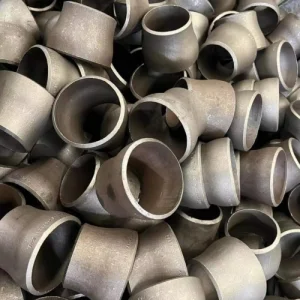
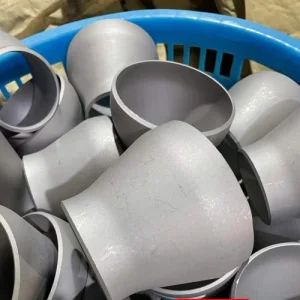
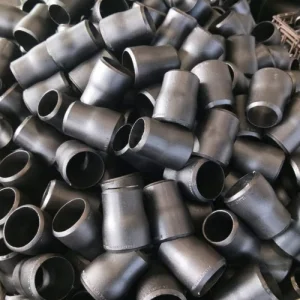
Explore our full range of wholesale steel pipe reducers, eccentric and concentric configurations, available directly from our Cangzhou manufacturing facility for quick delivery to Nigeria.
Need Factory-Direct Pipe Reducers for Nigerian Energy Projects?
Get instant factory quotes, Mill Test Certificates, and SONCAP documentation support from our senior engineering export team in Cangzhou.
Send Inquiry Now