
Primary Export Portfolio for Belgian Industrial Systems
Precision-forged and seamless high-pressure pipe fittings certified to European Pressure Equipment Directive (PED 2014/68/EU) and international engineering standards.
Belgium’s Pipeline Infrastructure & Forged Fitting Sourcing Dynamics
Belgium occupies a pivotal position in Europe's industrial processing framework. Home to the Port of Antwerp-Bruges—the second largest integrated chemical cluster in the world after Houston, Texas—the Belgian market operates a hyper-dense network of high-pressure fluid conveyance systems, cracker pipelines, cryogenic storage facilities, and pharmaceutical distillation towers. For engineering procurement contractors (EPCs), stockists, and repair & maintenance organizations (MROs) operating in Antwerp, Ghent, Feluy, and Wallonia, obtaining high-integrity forged fittings is not merely a matter of supply chain management; it is a fundamental requirement for process safety, regulatory compliance, and operational continuity.
Antwerp Chemical & Petrochemical Cluster
Encompassing world-scale steam crackers, hydrocrackers, and polymer synthesis units operated by global giants like BASF, TotalEnergies, and ExxonMobil. Piping specifications demand high-density ASTM A105N carbon steel and ASTM A182 F316L/F321 stainless steel socket weld and threaded fittings capable of handling cyclic thermal stress and corrosive hydrocarbon fractions.
North Sea Energy Transition & Green Hydrogen
Belgium’s ambitious national hydrogen strategy involves retrofitting offshore gas terminals and laying new high-pressure transport networks. Forged branch connections (Weldolets, Sockolets, Threadolets) and high-pressure Class 6000/9000 forged tees in Duplex (UNS S31803) and Super Duplex (UNS S32750) are increasingly requisitioned to mitigate hydrogen embrittlement and withstand harsh marine splash zones.
Ghent & Wallonian Bio-Pharm & Fine Chemicals
Requiring ultra-clean, corrosion-resistant fluid systems. High-precision forged socket weld fittings with controlled ferrite content and internal surface roughness values below Ra 0.4 μm ensure minimal bacterial entrapment and seamless CIP (Clean-In-Place) performance.
Information Gain: Microstructural Integrity in Forged vs. Cast Piping Components
In high-pressure Belgian processing environments, cast fittings present inherent structural vulnerabilities including gas porosity, dendritic shrinkage, and localized segregation zones. Chinese precision-forged fittings undergo closed-die forging under hydraulic press pressures up to 5,000 tons, achieving refined, uninterrupted grain flow lines that follow the physical contours of the fitting. This results in superior directional mechanical properties, higher impact strength at cryogenic temperatures (e.g., -196°C LNG service at Zeebrugge), and elevated fatigue endurance under pressure pulsation.
Forged Fitting Standards & Pressure Rating Classifications
Detailed cross-reference of manufacturing standards, dimensional tolerances, and material grades exported from Cangzhou factories to European stockists.
Forged fittings manufactured for the Belgian market are categorized by joint technology—primarily Socket Weld (SW) and Threaded (NPT / BSPT / ISO 7-1)—as well as specialized Integrally Reinforced Forge Branch Outlet Fittings (MSS SP-97). Understanding the mechanical boundaries of each class is vital for piping stress engineers working under ASME B31.3 (Process Piping) and EN 13480 (Metallic Industrial Piping) codes.
| Fitting Category | Dimensional Standard | Pressure Rating / Class | Nominal Size Range | Primary Material Grades |
|---|---|---|---|---|
| Socket Weld Fittings (Elbows, Tees, Crosses, Couplings) |
ASME B16.11 / BS 3799 | Class 3000, 6000, 9000 | NPS 1/8" – 4" (DN6 – DN100) | ASTM A105N, A182 F304L, F316L, F11, F22, Duplex F51 |
| Threaded Fittings (NPT, ISO 7-1 / EN 10226-1) |
ASME B16.11 / EN 10241 | Class 2000, 3000, 6000 | NPS 1/8" – 4" (DN6 – DN100) | ASTM A105, A350 LF2, A182 F316L, Bronze/Alloy |
| Branch Outlets (Olets) (Weldolet, Sockolet, Threadolet) |
MSS SP-97 | STD, XS, SCH 160, Class 3000/6000 | Run: 36" max / Outlet: 1/8" – 4" | ASTM A105N, A182 F316L, A182 F91, Super Duplex F53 |
| Forged Unions & Swages (Lug Nut Unions, Concentric Swages) |
MSS SP-83 / MSS SP-95 | Class 3000, 6000 | NPS 1/4" – 3" (DN8 – DN80) | ASTM A105N, A182 F316L, Low Alloy LF2 |
Material Metallurgy & Chemical Specification Metrics
To withstand aggressive chemical attack in Antwerp's olefin complexes and resist chloride stress corrosion cracking (SCC) in maritime coastal facilities, Chinese exporters maintain strict control over ladle chemistry and post-forge heat treatment:
- ASTM A105N (Normalized Carbon Steel): Heat-treated via normalization at 890°C–920°C to eliminate internal residual stresses. Carbon equivalent (CE) is strictly maintained below 0.42% to guarantee superior field weldability without risk of hydrogen-induced cold cracking.
- ASTM A182 F316/316L (Austenitic Stainless Steel): Dual-certified 316/316L with carbon content restricted below 0.030%. Molybdenum enrichment (2.0–3.0%) provides high resistance to localized pitting (PREN ≥ 25) in acidic and high-chloride process media.
- ASTM A182 F11 / F22 / F91 (Alloy Steels): Utilized extensively in high-temperature steam utility headers in power generation facilities in Flanders. F91 (9% Cr, 1% Mo, V, Nb) provides high creep-rupture strength at temperatures exceeding 550°C.
- Duplex ASTM A182 F51 (UNS S31803) / F53 (UNS S32750): Ferritic-austenitic 50/50 phase balance achieved via rapid water quenching from solution annealing temperature (1020°C–1100°C). Yield strength is more than double that of conventional 316L stainless steel.
De-Risking Chinese Forged Fitting Imports for Belgian Buyers
Global procurement directors and supply chain managers in Western Europe face a multi-faceted challenge: balancing capital expenditure (CAPEX) and operating expenditure (OPEX) targets against strict European safety standards and potential supply chain disruptions. Over the past decade, Chinese manufacturers of forged fittings have undergone a massive technological transformation, transitioning from manual forging operations to automated 5G-enabled smart forging lines, fully integrated CNC machining centers, and automated non-destructive testing (NDT) cells.
Total Quality Management & NDT Rigor
Leading exporters perform 100% Positive Material Identification (PMI) via X-ray fluorescence (XRF) or optical emission spectrometry (OES) prior to dispatch. Magnetic Particle Testing (MT) is applied to all carbon steel forged fittings to detect surface seams, while Liquid Penetrant Testing (PT) ensures zero surface defects on austenitic and duplex stainless steel components.
Cost Optimization & Quotation Transparency
Direct factory quotes from Cangzhou manufacturing hubs eliminate intermediary trading markups, yielding cost reductions of 22% to 35% compared to Western European stockist tariffs. Transparent price structuring accounts for steel raw billet indexes, forging heat cycles, CNC machining hours, and anti-corrosion packaging.
Logistics Strategy & Port Access
Consolidated shipments dispatched from Tianjin/Qingdao ports route directly to the Port of Antwerp or Zeebrugge via major maritime lines (MSC, COSCO, CMA CGM). Optimized container packing with VCI (Vapor Corrosion Inhibitor) plastic wrapping and fumigated wooden boxes protects thread roots and weld bevels against ocean salinity.
Macro Industry Solutions for High-Spec Belgian Projects
Proven engineering methodologies for challenging fluid dynamics, thermal transitions, and severe service environments.
Solution 1: High-Pressure Steam Utility Headers
Challenge: Excessive thermal expansion, water hammer, and vibration fatigue in power cogeneration plants in Wallonia operating at 120 bar and 510°C steam parameters.
Solution: Implementation of Class 6000 normalized ASTM A182 F22 Socket Weld Tees and full-penetration MSS SP-97 Weldolets. Deep socket insertion depth and controlled 1.6mm expansion gap prior to welding prevent root cracking under thermal cycling.
Solution 2: Sour Service Cracker Piping (NACE)
Challenge: Hydrogen-Induced Cracking (HIC) and Stress Corrosion Cracking (SCC) in wet H2S refining streams within Antwerp refineries.
Solution: Supply of fully normalized ASTM A105N and ASTM A350 LF2 Class 1 forged fittings strictly compliant with NACE MR0175 / ISO 15156. Hardness levels are rigorously controlled below 22 HRC (237 HBW), complemented by post-weld heat treatment (PWHT) guidelines.
Solution 3: Sub-Zero Cryogenic Gas Processing
Challenge: Brittle failure risks in low-temperature LPG and liquid nitrogen distribution piping at coastal maritime facilities.
Solution: Low-temperature alloy ASTM A350 LF2 Class 2 and austenitic ASTM A182 F316L forged fittings subjected to Charpy V-Notch impact testing at -46°C and -196°C respectively. Guaranteed minimum impact energy absorption of 27 Joules ensuring absolute mechanical fracture toughness.
PED 2014/68/EU & European Quality Compliance Framework
Exporting forged fittings into the Belgian market requires full adherence to European Union statutory frameworks. Under the Pressure Equipment Directive (PED 2014/68/EU), piping components intended for pressure applications exceeding 0.5 bar must satisfy fundamental safety requirements (ESRs).
Essential Regulatory Checklist for Belgian Buyers
1. EN 10204 Type 3.1 & 3.2 Material Test Certificates: Every heat number is accompanied by full chemical analysis, tensile testing (Yield, Ultimate, Elongation), impact values, micro-hardness data, and heat treatment charts. Third-party inspection (TPI) by independent agencies such as Vinçotte, TÜV Rheinland, or Bureau Veritas guarantees Type 3.2 certification when mandated by project specifications.
2. AD 2000-Merkblatt W0 Certification: Essential for pressure vessel and high-temperature piping systems deployed in Central European facilities, certifying that the manufacturer operates a qualified material production process.
3. Thread Standards Compatibility: Precise execution of NPT threads according to ASME B1.20.1 and Whitworth/BSPT taper threads according to EN 10226-1 / ISO 7-1, eliminating cross-threading issues during field assembly on European job sites.
Technical Roadmap: Hydrogen-Ready Forgings & Smart Traceability
As the European process sector transitions toward net-zero emissions, the technology embedded within pipeline infrastructure is undergoing rapid evolution. Key technical initiatives driving China’s premier forging mills include:
1. Hydrogen Micro-Alloyed Forging Steel
Development of specialized low-carbon, high-purity forging steels optimized for 100% gaseous hydrogen transportation up to 100 bar pressure. Inclusion control and electroslag remelting (ESR) eliminate non-metallic inclusions that serve as hydrogen traps.
2. Digital Twin Laser Thread Profiling
Deployment of high-speed 3D optical laser scanners on machining centers to measure thread pitch, taper angle, and flank geometry in real-time, enforcing zero-defect tolerances prior to protective capping.
3. QR-Code Traceability Etching
Laser engraving of high-density QR codes directly onto the body of each forged fitting. Field engineers in Belgium can scan the fitting using a tablet to instantly view the EN 10204 3.1 MTR, heat treatment charts, and CAD dimensional drawings.
Technical & Commercial FAQ for Belgian Procurement Teams
What are the key differences between Socket Weld (SW) and Threaded forged fittings?
How do you ensure compliance with PED 2014/68/EU for shipments to Belgium?
Can you supply MSS SP-97 Olets in exotic alloy materials?
What is the standard lead time for ocean freight delivery to the Port of Antwerp?
How do you prevent thread damage and corrosion during transit?
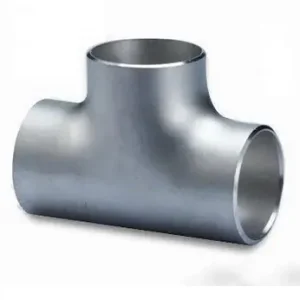
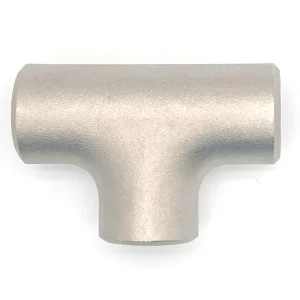
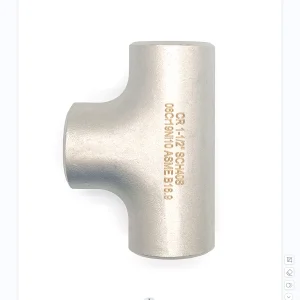
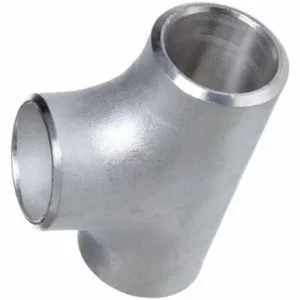
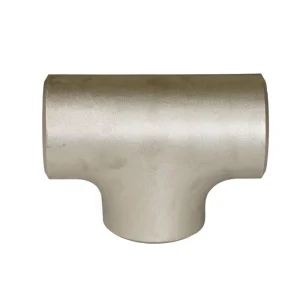
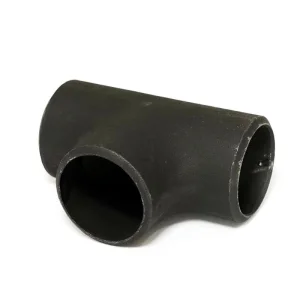
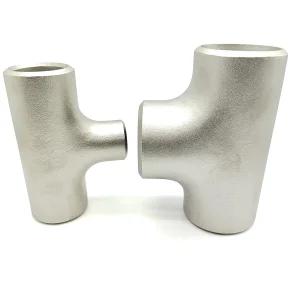
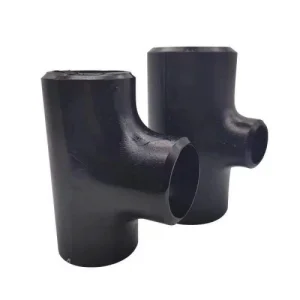
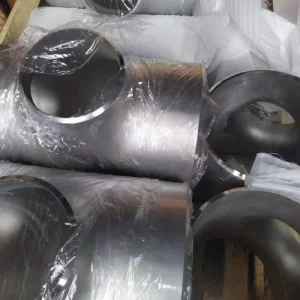
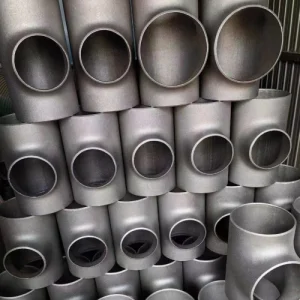
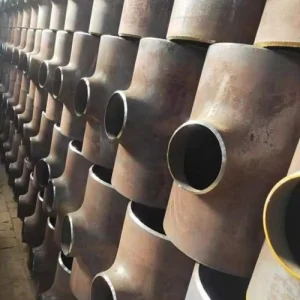
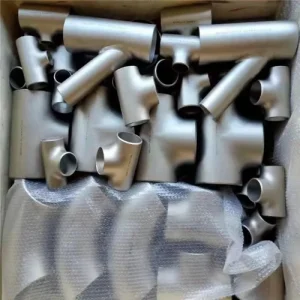
High-Performance Pipe Tees & Forged Components
Explore our full series of seamless, welded, and forged steel pipe tees designed for harsh operating environments.
Request Your Factory-Direct Quotation Today
Partner with a trusted Chinese exporter certified to European standards. Submit your bill of materials (BOM) or project datasheets to receive competitive quotes, drawing approvals, and MTR documentation within 24 hours.
Send Inquiry Now