
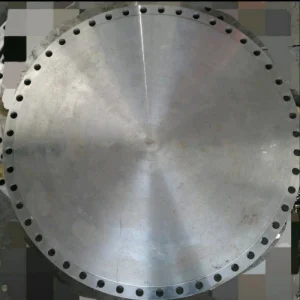
Featured Piping Solutions for Barcelona Industrial Projects
Pre-qualified pipeline components optimized for high-pressure fluid handling, petrochemical refining, and port infrastructure across Catalonia.
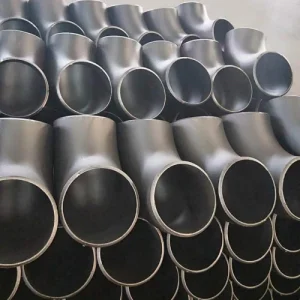
High-Quality Seamless Carbon Steel Elbow Factories & Service
View Specifications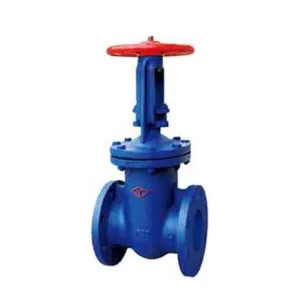
Famous Wedge Gate Valve Z41T/W-10/16Q Manufacturers Barcelona
View Specifications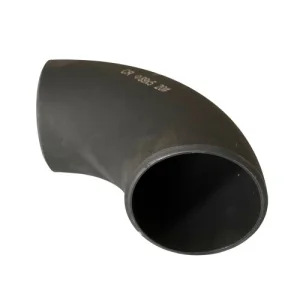
Discount A234WPB Sch40 4" Carbon Steel Elbow Supplier
View SpecificationsBarcelona Pipeline & Industrial Bends Market Landscape (2025–2030)
The Metropolitan Area of Barcelona and the broader Catalonia economic corridor represent one of Southern Europe's most dense concentrations of industrial chemical plants, energy import terminals, pharmaceutical refining facilities, and maritime engineering hubs.
Key Infrastructure Dynamics Driving Bend Demand
Navigating procurement in the Barcelona market requires an in-depth understanding of localized industrial drivers. Major infrastructure initiatives—such as the expansion of liquid bulk storage at the Port of Barcelona (Zona d'Activitats Logístiques - ZAL), green hydrogen distribution networks (H2Med corridor), and refinery modernization projects in Tarragona-Martorell—have created unprecedented demand for large-radius induction pipe bends (3D, 5D, 6D, and 10D).
- Port of Barcelona Expansion: Upgrades to LNG regasification facilities and biofuel bunkering docks require heavy-wall SS316L and Duplex 2205 bends.
- Green Hydrogen Infrastructure: The BarMar / H2Med pipeline corridor requires ASME B16.49 induction bends tested for HIC (Hydrogen-Induced Cracking) resistance.
- Chemical Belt Modernization: Plant turnarounds in Martorell and Zona Franca demand rapid-turnaround DIN/EN standard carbon steel and alloy bends.
Supply Chain Challenges & Cost Friction
Local European stockists in Spain often apply substantial markups (up to 45%–65%) on non-standard bending radii (e.g., custom 5D or 8D bends with long tangents) due to limited localized induction bending mill capacity. Pipeline contractors face extended lead times of 16 to 24 weeks when sourcing specialized alloy bends locally.
By establishing a direct factory supply corridor from Cangzhou's advanced manufacturing cluster to Barcelona, EPC contractors achieve substantial cost optimization without compromising technical compliance under EU PED 2014/68/EU guidelines.
€3.2B
Catalan Energy Investment
35%
Avg Cost Reduction vs Local Stockists
< 0.5%
Wall Thinning Ovality Control
DN4000
Max Bending Diameter Capability
Technical Engineering Guide: Pipeline Bends vs. Elbows Dynamics
In high-pressure piping design, selecting between short-radius elbows (1.0D/1.5D) and long-radius induction bends (3D, 5D, 10D) directly impacts hydrodynamic pressure drop, erosion velocity, and piggability during operational maintenance.
Fluid Dynamics & Hydrodynamic Optimization
When high-velocity fluid or gas transitions through a directional change, wall shear stress and turbulent eddy formation create a localized pressure drop ($\Delta P$). Standard 1.5D elbows induce significant turbulence, leading to accelerated internal erosion—particularly in abrasive slurry lines, offshore brine service, or high-pressure steam distribution.
Hot induction bends manufactured with continuous radii ($R \ge 3D$) preserve laminar flow profiles, reducing overall head loss by up to 62% compared to standard elbows. Furthermore, for cross-country gas pipelines and marine loading lines in Port of Barcelona terminals, 3D and 5D bends are mandatory to allow unobstructed passage of Intelligent Pipeline Inspection Gauges (PIGs).
| Engineering Parameter | Standard Elbow (1.5D) | Induction Bend (3D) | Induction Bend (5D / 6D / 10D) |
|---|---|---|---|
| Bending Radius (R) | $1.5 \times \text{Nominal Pipe Size (NPS)}$ | $3 \times \text{NPS}$ | $5 \times \text{NPS}$ to $10 \times \text{NPS}+$ |
| Pressure Drop ($\Delta P$) | Baseline (High Turbulence) | Reduced by 35%–45% | Reduced by 55%–68% |
| PIG Passage (Intelligent Inspection) | Restricted / Requires Special PIGs | Standard PIG Compatible | Optimal for Heavy Utility & Inspection PIGs |
| Wall Thinning Rate ($t_{min}$) | 12.5% to 20% Thinning on Extrados | Controlled < 8% via Induction Heating | Controlled < 5% via Advanced Push-Feed |
| Tangental Straight Ends | None (Requires Welded Pipe Spools) | Custom Tangents (300mm–1000mm+) | Custom Tangents Integrated into Single Piece |
| Applicable Manufacturing Standard | ASME B16.9 / EN 10253-2 | ASME B16.49 / ISO 15590-1 | ASME B16.49 / ISO 15590-1 / EN 10253-4 |
Wall Thinning & Ovality Control Mechanics
During the bending process, the outer radius (extrados) experiences tensile strain resulting in wall thinning, while the inner radius (intrados) experiences compressive stress leading to wall thickening. Uncontrolled thinning compromises line design pressure ($P_{max}$).
Our hot induction bending machine utilizes micro-processor-controlled induction coils with localized water quenching, calculating starting wall thickness ($t_{start}$) using the Boardman formula to guarantee minimum post-bend wall thickness ($t_{min}$) meets ASME B31.3 structural integrity thresholds.
Post-Bending Heat Treatment (PBHT) Protocols
Induction bending generates steep thermal gradients. To restore mechanical properties (Yield Strength, Tensile Strength, and Charpy V-Notch Impact Toughness at -46°C), mandatory PBHT is applied based on material chemistry:
- Carbon Steel (A234 WPB / L245N): Normalizing at 890°C–920°C.
- Alloy Steel (P11 / P22 / P91): Full Tempering & Stress Relieving up to 750°C.
- Duplex SS (UNS S31803 / 2205): Water Quenching Solution Anneal at 1040°C–1100°C to prevent Sigma phase precipitation.
Barcelona Market Bend Pricing Architecture & Cost Benchmark Guide
Transparent, direct-factory quotation metrics for project estimating teams in Spain. Price estimates below reflect FOB/CIF Barcelona port bases, adjusted for current steel plate/pipe substrate raw material indices.
| Nominal Size (NPS) | Material Grade | Schedule / WT | Bend Radius | Tangents (mm) | Estimated CIF Barcelona Price (EUR/Unit)* |
|---|---|---|---|---|---|
| 4" (DN100) | ASTM A234 WPB Carbon Steel | Sch 40 (6.02 mm) | 3D (R=305mm) | 100 / 100 | € 48.00 – € 65.00 |
| 6" (DN150) | ASTM A234 WPB Carbon Steel | Sch 80 (10.97 mm) | 5D (R=762mm) | 300 / 300 | € 125.00 – € 160.00 |
| 8" (DN200) | ASTM A403 WP316/316L SS | Sch 40S (8.18 mm) | 3D (R=610mm) | 200 / 200 | € 420.00 – € 510.00 |
| 12" (DN300) | ASTM A234 WPB / API 5L X52 | Sch STD (9.53 mm) | 5D (R=1524mm) | 500 / 500 | € 380.00 – € 490.00 |
| 16" (DN400) | ASTM A234 WP11 Alloy Steel | Sch 80 (21.44 mm) | 3D (R=1219mm) | 500 / 500 | € 1,150.00 – € 1,420.00 |
| 24" (DN600) | Duplex UNS S31803 / 2205 | Sch 40S (14.27 mm) | 5D (R=3048mm) | 600 / 600 | € 3,850.00 – € 4,600.00 |
*Note: Indicative pricing based on standard lot quantities. Final RFQ quotes vary depending on non-destructive testing (NDT) requirements (UT, RT, MT, PT), heat treatment cycles, 3LPE/FBE anti-corrosion coating, and European CBAM carbon tax documentation.
Primary Determinants in Quotation Formulations
1. Substrate Sourcing
Seamless vs. Welded raw pipe stock. Sourcing high-grade seamless parent pipe (API 5L / EN 10216-2) influences baseline material costs.
2. Induction Heating Cycle
Larger radii (e.g. 10D) and thicker walls require slower machine push rates and higher electrical power input during induction bending.
3. Testing & Inspection
100% Radiographic Testing (RT) of weld seams, Ultrasonic Thickness Gauging (UT), and Hardness Testing for H2 service compliance.
4. Surface Coating & Logistics
3-Layer Polyethylene (3LPE), Coal Tar Epoxy, or pickling/passivation for stainless steel, shipped via direct vessel line to Port of Barcelona.
China Industry 4.0: Supply Chain Resilience & Manufacturing Superiority
How Cangrun Pipeline Equipment leverages smart manufacturing hubs in Cangzhou to deliver precision-engineered pipe bends with zero lead-time compromises for overseas projects.
Automated Induction Bending Cells
Our Cangzhou facility houses double-head hydraulic induction bending machines capable of bending pipe sizes up to NPS 60 (DN1500) with wall thicknesses up to 150mm. Integrated PLC feedback loops adjust pushing speed, heating temperature (monitored via dual-wavelength optical pyrometers), and cooling water pressure in real time.
- Zero ovality degradation (<1.5% across bend arc).
- Real-time wall thinning compensation algorithm.
- Automated 3D laser arm scanning for bevel angle and tangent geometry verification.
Full Traceability & EU Standard Certification
Every bend produced for the European Union market is accompanied by comprehensive quality dossiers meeting strict regulatory frameworks:
- EN 10204 3.1 & 3.2 Material Test Certificates (MTC): Documenting chemical heat analysis and mechanical test data from independent laboratories (TÜV / SGS).
- PED 2014/68/EU Module H Compliance: Pressure Equipment Directive certification ensuring full legal integration into Spanish industrial facilities.
- CBAM Data Ready: Carbon intensity metrics calculated to meet EU Carbon Border Adjustment Mechanism compliance requirements.
Localized Application Scenarios Across Catalonia & Spain
Tailored engineering delivery for specialized operational environments within the Barcelona metropolitan area and surrounding industrial zones.
Martorell Chemical Hub
High-alloy ASTM A403 WP316L and 904L bends for chlorine, caustic soda, and polymer processing lines requiring high resistance to pitting corrosion.
Port of Barcelona Terminals
Heavy-wall seamless ASTM A234 WPB 5D bends with 3LPE external coating for cryogenic LNG offloading headers and subsea bunker lines.
Tarragona Thermal Power
Creep-resistant Alloy Steel WP11, WP22, and WP91 induction bends for high-temperature superheated steam lines up to 580°C.
BarMar Green H2 Corridor
Low-carbon API 5L PSL2 X65MS / X70MS bends tested to NACE MR0175 / ISO 15156 standards for high-pressure hydrogen blend transport.
Complete Pipe Fittings, Flanges & Valves Portfolio
Explore our complete range of certified components for matching piping packages. All products can be bundled into unified container shipments to Barcelona.
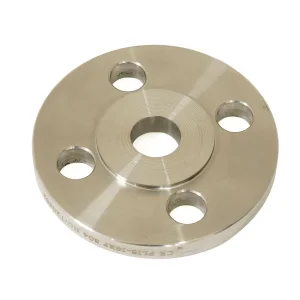
Best ANSI 6 Inch Forged Class 150 Stainless Steel Forged Flanges
View Specifications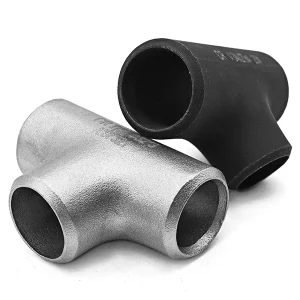
Best Stainless Steel Pipe Fittings SS316L Equal & Reducing Tee
View Specifications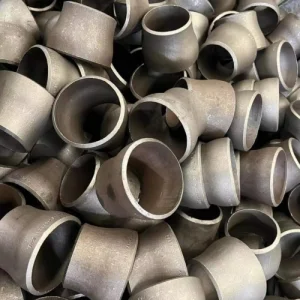
Best Concentric Reducer Factories & Pricelist for Industrial Pipelines
View Specifications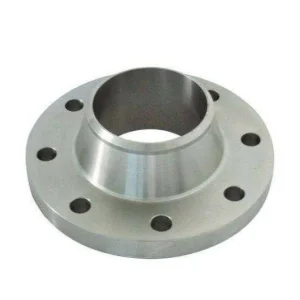
China Industrial Steel Butt Welding Flange Factories Pricelist
View Specifications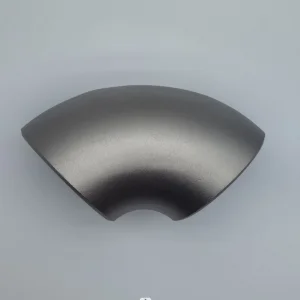
Wholesale Buttweld 90 Degree Sch40 Elbow Pipe Fittings
View Specifications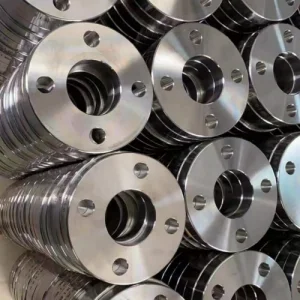
Famous ASME B16.5 Flange Factory Quotes & Supply
View Specifications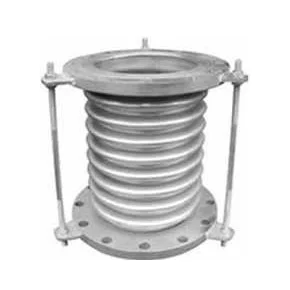
Wholesale Industrial Stainless Steel Compensator Pricelist
View Specifications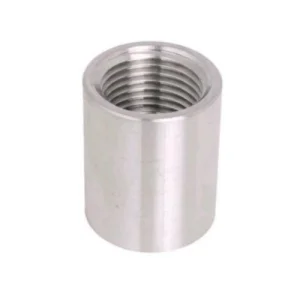
China 150lbs Stainless Steel NPT/BSP/DIN Threaded Fittings
View SpecificationsFrequently Asked Questions: Bends Procurement in Barcelona
Technical and commercial clarifications for engineers, procurement directors, and project managers importing piping equipment into Spain.
What is the standard lead time for shipping induction bends from Cangzhou to Port of Barcelona?
Standard manufacturing lead times for carbon steel and stainless steel bends range from 12 to 20 days depending on order volume and PBHT requirements. Ocean freight transit from Tianjin Port directly to Port of Barcelona takes approximately 24 to 28 days via main carrier routes (CMA CGM / MSC). Express air freight or rail options via Madrid logistics hubs are available for emergency shutdown turnarounds.
How do you guarantee that wall thinning on 5D or 10D bends will comply with ASME B31.3?
We select starting pipe stock with nominal wall thickness ($t_{nom}$) higher than the design calculated minimum wall ($t_{min}$) using the formula: $t_{start} = t_{min} / (1 - \frac{D}{4R})$, where $D$ is outside diameter and $R$ is bending radius. Post-bending wall thickness is 100% verified via ultrasonic testing (UT) grid mapping along the extrados arc.
Are your bends certified under the European Pressure Equipment Directive (PED 2014/68/EU)?
Yes. All pressure-retaining components manufactured by Hebei Cangrun Pipeline Equipment Co., Ltd. for the European Union market strictly conform to PED 2014/68/EU guidelines under Module H certification. Material Test Reports (MTC) are issued according to EN 10204 3.1, with EN 10204 3.2 third-party inspection (TÜV, Lloyd's Register, SGS) available upon request.
Can you provide custom straight tangent lengths on 3D and 5D induction bends?
Absolute flexibility. Unlike standard elbow fittings which have fixed end-to-center dimensions, our induction bending process allows integrated straight tangents from 100mm up to 2,000mm on both ends. This eliminates unnecessary circumferential girth welds in field construction, lowering overall installation labor costs for contractors in Spain.
How does Cangrun Pipeline handle EU CBAM (Carbon Border Adjustment Mechanism) reporting?
We provide fully audited embedded direct and indirect carbon emissions data for all steel pipeline components shipped to European destinations, ensuring Spanish importers can seamlessly process customs declarations without penalty under EU CBAM regulations.
Request Your Barcelona Market Bends Quote Today
Send us your material take-off (MTO) or engineering data sheet. Our senior technical sales engineers will prepare a competitive CIF Barcelona quotation within 24 hours.