High-Performance Industrial Flanges & Piping Components
Explore our certified range of blind flanges, weld necks, elbows, and tees engineered for extreme temperature and pressure applications.
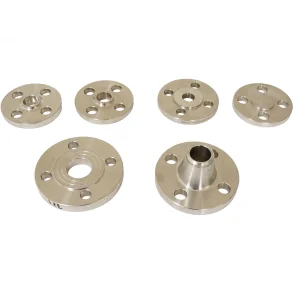
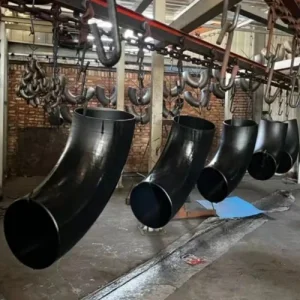
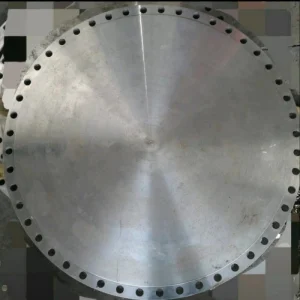
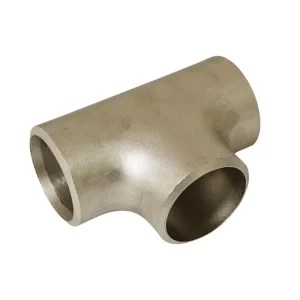
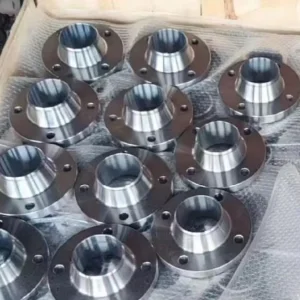
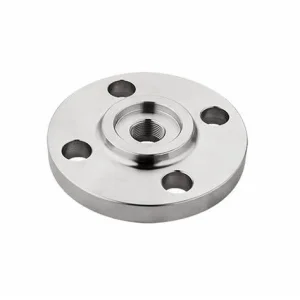
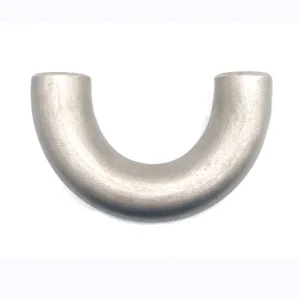
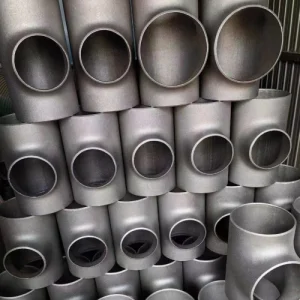
Macro Industrial Landscape: The Evolution of Blind Flanges (BL Flanges) in Modern Process Infrastructure
In the complex architecture of modern process piping systems, the Blind Flange (BL Flange) serves a critical role that extends far beyond simple line termination. As global energy systems transition toward high-pressure hydrogen transportation, deepwater oil extraction, and ultra-cryogenic Liquefied Natural Gas (LNG) processing, the engineering integrity of mechanical isolation points has become a primary bottleneck for overall system safety and zero-emission compliance.
A Blind Flange is structurally distinct from weld neck, slip-on, or socket weld flanges because it features no center bore. Designed to seal off the ends of piping systems, pressure vessel openings, and valve outlets, a BL flange must withstand the complete mechanical thrust exerted by internal fluid pressure, combined with thermal expansion loads and external piping moments. The absence of an inner bore forces the disk to absorb maximum bending stress at its center, demanding meticulous finite element stress modeling (FEA) and ultra-clean forging metallurgy.
Critical Pressure Isolation
Sealing high-pressure lines (up to Class 2500 / PN400) during maintenance turnarounds or future system expansion phases without structural deflection.
Fugitive Emission Mitigation
Meeting ISO 15848-1 and EPA Method 21 zero-leakage standards through micro-machined flange facings (RF, RTJ) and optimized gasket seated stress.
Metallurgical Integrity
Utilizing high-yield forged carbon (ASTM A105, A350 LF2), duplex stainless steel (UNS S31803), and nickel alloys (Inconel 625 overlay) to prevent stress corrosion cracking.
As a leading wholesale BL flange manufacturer and company based in Cangzhou, Hebei, Cangrun Pipeline Equipment leverages integrated forging lines, precision CNC machining centers, and comprehensive non-destructive testing (NDT) to deliver flanged isolation solutions that meet rigorous international engineering standards including ASME B16.5, ASME B16.47, EN 1092-1, and DIN specs.
Engineering Precision at Scale
Quantitative benchmarks defining our production throughput, dimensional boundaries, and quality compliance metrics.
Metallurgy, Dimensional Standards & Pressure-Temperature Rating Matrices
Manufacturing Process: Closed-Die Forging vs. Plate Machining
The manufacturing process determines the mechanical fatigue limits of a blind flange. While low-cost suppliers often cut disk blanks directly from hot-rolled carbon steel plate, true structural blind flanges manufactured for high-pressure service must be produced via hot die forging. Forging aligns the internal grain flow along the circumferential geometry of the flange, maximizing impact energy absorption and shear strength under dynamic thermal pulsing.
| Standard Category | ASME B16.5 / B16.47 | EN 1092-1 Type 05 | JIS B2220 |
|---|---|---|---|
| Regional Jurisdiction | Americas, Global Offshore & Oil/Gas | European Union, UK, Middle East Power | Japan, East Asia, Marine Shipbuilding |
| Size Range Coverages | 1/2" to 24" (B16.5) | 26" to 60" (B16.47) | DN10 to DN4000 | 10K to 63K (DN10 to DN1500) |
| Primary Sealing Facings | Raised Face (RF), Flat Face (FF), Ring Joint (RTJ) | Type A (Flat), Type B (Raised), Type C/D (Tongue/Groove) | RF, Male & Female (MF), Groove |
| Material Specifications | ASTM A105, A350 LF2, A182 F304L/F316L/F51 | P245GH, P280GH, 1.4404, 1.4462 | SS400, SFVC, SUS304, SUS316 |
| NDT Testing Protocol | UT, MT/PT, Hydrostatic, Microstructure Grain Inspection | EN 10204 3.1/3.2, Ultrasonic Level II | JIS Z2344 Ultrasonic Inspection |
Flange Facing Selection: Sealing Mechanics
Choosing the correct facing profile is paramount to preventing blowout incidents. Below is a engineering guide for specifying BL flange facings based on operational parameters:
Raised Face (RF)
The standard facing for Class 150 to Class 600. Features a 1/16" or 1/4" raised height with serrated concentric or spiral grooves (125–250 AARH finish) to grip spiral wound gaskets.
Ring Type Joint (RTJ)
Engineered for high-pressure (Class 900 to 2500) and elevated temperature service. Precision-machined oval or octagonal metal ring gaskets fit into trapezoidal grooves, providing metal-to-metal sealing.
Flat Face (FF)
Used predominantly when mating blind flanges to cast iron valves, fragile equipment casings, or low-pressure glass-lined piping systems to prevent bending stress during torqueing.
Localized Industry Applications & Case Studies
Custom engineering deployment across diverse geographical environments and specialized chemical process lines.
Middle East Offshore Hydrocarbon Rigs
Environment: Severe Sour Gas (H2S), High-Salinity Marine Atmosphere, High Pressure (Class 1500).
Engineering Solution: Blind flanges forged from ASTM A350 LF2 carbon steel with a 3mm cladding of Inconel 625 (UNS N06625) overlay on the sealing face. Fully compliant with NACE MR0175/ISO 15156 standards to prevent Hydrogen-Induced Cracking (HIC).
European Cryogenic LNG Terminal Expansion
Environment: Ultra-Low Operating Temperature (-196°C), Thermal Shock during Liquefaction Cycles.
Engineering Solution: Austenitic Stainless Steel ASTM A182 F316L BL flanges subjected to Charpy V-Notch impact testing at cryogenic temperatures, ensuring high fracture toughness and zero brittle transition risks.
North American Green Hydrogen Pipeline Hubs
Environment: High-Permeability Hydrogen Gas, Pressure Pulsing, Zero-Permeation Directive.
Engineering Solution: Super Duplex Stainless Steel (UNS S32750 / 2507) blind covers with RTJ metal ring sealing profile, undergoing mass spectrometry helium leak testing under maximum working pressure.
Technology Roadmap (2025–2035): Next-Gen Smart Flange Integration
Pioneering intelligent, predictive piping isolation networks powered by embedded sensing technologies and advanced additive metallurgy.
Embedded Piezoelectric Bolt Sensors
Integrating micro-thin strain gauges directly into the blind flange bolt ring to provide real-time monitoring of bolt preload, thermal torque relaxation, and gasket degradation.
Additive Laser Powder Bed Cladding
Transitioning from manual weld overlay to automated 3D laser powder deposition, reducing internal dilution of corrosion-resistant alloys ( Hastelloy C276, Monel 400) to under 0.5%.
AI-Driven Hydrostatic Stress Twin
Deploying digital twin software during the forging phase to simulate grain growth, residual stress, and micro-void formation, achieving a 99.999% non-destructive testing first-pass yield.
Wholesale Procurement & Quality Assurance Framework
Procuring industrial piping components for EPC megaprojects requires strict adherence to quality verification, material traceability, and logistical risk management. As an ISO 9001 certified manufacturing group, Cangrun Pipeline Equipment operates under a comprehensive quality control protocol:
Traceability & Certification
Every single blind flange is stamped with heat number, size, schedule, pressure rating, and material grade. Fully certified to EN 10204 3.1 / 3.2 with original mill test reports (MTRs) detailing chemical analysis and mechanical testing results.
Non-Destructive Examination (NDE)
100% Ultrasonic Testing (UT) per ASTM A388 for all forgings larger than Class 600. Positive Material Identification (PMI) conducted via X-Ray Fluorescence (XRF) spectroscopy before export packaging.
Export Preservation & Logistics
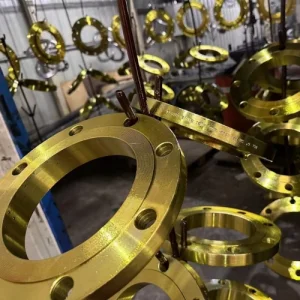
Serrated flange faces are protected with rust-preventative yellow lacquer or heavy grease, fitted with plastic end caps, and crated in ISPM-15 compliant seaworthy wooden cases.
Frequently Asked Questions on BL Flange Manufacturing & Procurement
Direct responses to critical technical and commercial queries from piping engineers and procurement officers.
A Weld Neck Flange features a tapered hub welded to the pipe wall, transferring pressure strain directly into the piping network. A Blind Flange has no hub or center bore and acts strictly as a pressure boundary wall. Consequently, a Blind Flange experiences maximum bending stress at its center disk and requires greater thickness under higher pressure classes compared to WN flanges.
Yes. Under ASME B16.5 standards, blind flanges can be supplied with tapped central or eccentric NPT connections (typically 1/2" to 2" NPT) for venting, sampling, or pressure gauge mounting. When tapped, the flange must be evaluated according to ASME Section VIII calculations to ensure structural integrity.
For sour service compliance with NACE MR0175 / ISO 15156, carbon steel materials like ASTM A105 or ASTM A350 LF2 must undergo controlled heat treatment (normalized or stress-relieved) with maximum hardness restricted to 22 HRC. Alternatively, Duplex SS (UNS S31803) or Nickel Alloys (Inconel 625 cladding) are specified for severe corrosive environments.
ASME B16.5 covers flange sizes up to 24 inches NPS. For sizes 26 inches and larger, ASME B16.47 applies. Series A (MSS SP-44) flanges are heavier, thicker, and designed for general pipeline construction. Series B (API 605) flanges are thinner, lighter, have smaller bolt circles, and are typically used in compact refinery equipment manifolds.
Standard testing includes positive material identification (PMI), surface magnetic particle inspection (MT) or dye penetrant (PT), hardness testing, and ultrasonic testing (UT). For critical high-pressure projects, hydrostatic proof testing and 3rd party witness inspections (TUV, SGS, DNV, BV) are fully supported.
Complementary Industrial Piping & Valve Solutions
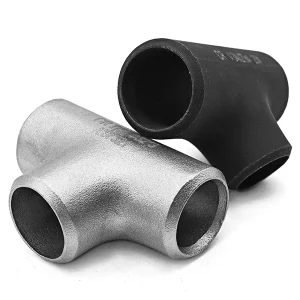
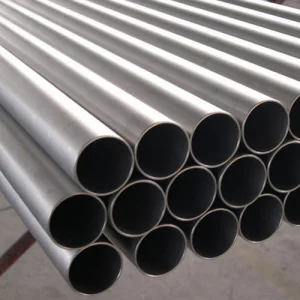
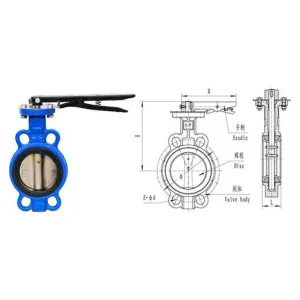
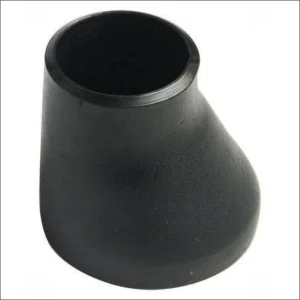
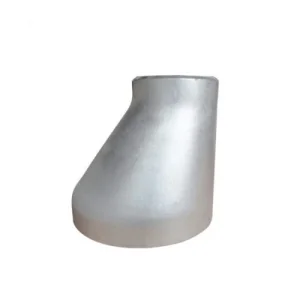
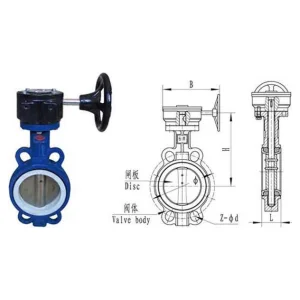
Explore matching equal tees, butt-weld reducers, resistance-welded steel pipes, and centerline butterfly valves.