
Heavy-Duty Pipeline & Valve Components Showcase
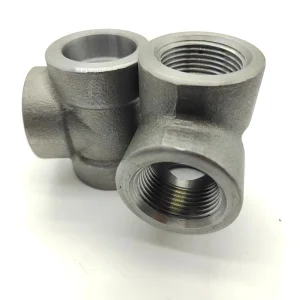
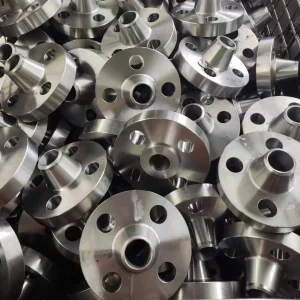
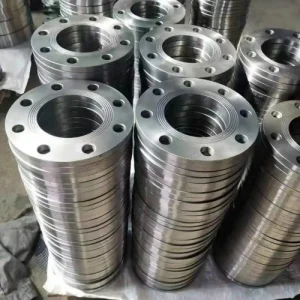
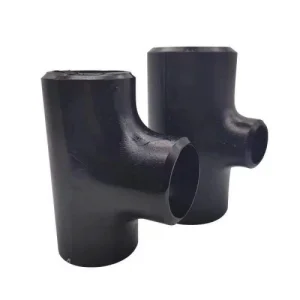
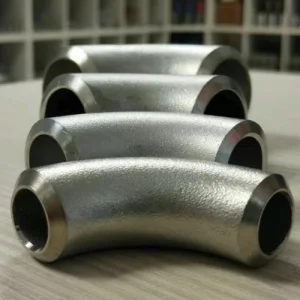
Explore our direct factory inventory of high-performance piping products engineered for extreme pressure classes, severe municipal service, and petrochemical refining. Click any item below for specification sheets and quote requests.
Global Macro-Industrial Landscape for Big Size Butterfly Valves
Large-diameter flow isolation and control infrastructure represents a critical operational cornerstone across global water management, power generation, HVAC networks, and energy transport systems. Large-diameter butterfly valves—defined within engineering parameters as nominal sizes ranging from DN600 to DN4000 (NPS 24" to NPS 160")—have largely superseded traditional gate and globe valve configurations in major industrial capital projects. This shift is primarily driven by their compact face-to-face dimensions (ANSI/ASME B16.10 & ISO 5752), significantly reduced structural weight, superior fluid control dynamics, and cost-efficient actuation profile.
The macroeconomic trajectory of the wholesale big size butterfly valve market is directly coupled with mega-scale infrastructure initiatives across key international zones. In North America and Western Europe, municipal water infrastructure modernization programs aimed at replacing aging cast-iron networks have catalyzed significant wholesale procurement of resilient-seated, AWWA C504-compliant butterfly valves. Concurrently, rapid industrial expansion, seawater desalination plant construction (SWRO), and thermal/nuclear cooling loop installations across the GCC region and Asia-Pacific have created unprecedented demand for high-performance double-eccentric and metal-seated triple-offset butterfly valves (TOBV).
Strategic Procurement Vulnerability: Large-diameter valves (DN1200+) suffer from severe global lead-time volatility due to foundry capacity constraints for massive castings (ASTM A536 ductile iron & A216 WCB steel). EPC contractors transitioning to consolidated procurement packages—combining large valves with matching flanges, butt-weld tees, and heavy-wall steel pipes—achieve up to a 14% reduction in freight costs and eliminate on-site flange face alignment discrepancies.
Kinematic Offset Classification & Hydrodynamic Mechanics
Proper selection of a big size butterfly valve requires an in-depth understanding of the mechanical offsets governing disc motion, seal friction, and hydrodynamic torque curves. Valve failure in large-diameter pipelines rarely stems from body pressure containment breakdown; it predominantly occurs due to shaft shear, seat deformation, or cavitation erosion under high-velocity flow regimes.
Zero Offset (Concentric)
The stem is centered in the valve body, passing directly through the disc centerline. Relying entirely on elastomer seat deformation (EPDM/NBR), concentric designs are primarily deployed in low-pressure water treatment, HVAC, and light municipal service up to PN16 / Class 150.
Double Offset (High Performance)
Features two distinct offsets: stem axis behind the seat plane, and stem axis offset from the pipe center. This lifts the disc off the seat immediately upon rotation, minimizing wear during operation. Rated for media up to PN40 / Class 300.
Triple Offset (TOBV Zero-Leakage)
Adds a third angular offset to the conical seating surface geometry. Eliminates all rub throughout the 90° travel, enabling bi-directional, metal-to-metal bubble-tight sealing (ISO 5208 Rate A) under high-temperature and cryogenic conditions up to Class 600.
Hydrodynamic Flow Characteristics & Cavitation Index ($K_c$)
In big size butterfly valves (DN1000 and above), fluid dynamic forces generated across the disc face create significant hydrodynamic torque ($T_h$). Unlike small-diameter valves where seating torque dominates, large valves require actuator sizing driven primarily by fluid velocity dynamics:
T_total = T_seating + T_bearing + T_hydrodynamic (C_t · ΔP · D³)
Where C_t represents the non-dimensional dynamic torque coefficient (peaking at approximately 60° to 70° disc angle), ΔP is the dynamic differential pressure, and D is the nominal valve diameter. Sourcing suppliers without rigorous Computational Fluid Dynamics (CFD) torque verification risks actuator undersizing and catastrophic structural binding under emergency shutoff conditions.
Wholesale Big Size Butterfly Valve Pricelist Benchmark (2025–2026)
Procurement costs for big size butterfly valves vary based on metallurgy, offset design, pressure rating, and automation accessories. Below is an engineering baseline pricelist matrix intended to guide enterprise procurement teams, project cost estimators, and supply chain managers during budget planning.
| Nominal Size | Design Type | Pressure Rating | Standard Materials | Est. Wholesale Price (USD) | Typical Actuation |
|---|---|---|---|---|---|
| DN600 (24") | Resilient Seated (Concentric) | PN10 / PN16 / Class 150 | Ductile Iron GGG40 / EPDM / SS316 Disc | $1,250 – $2,100 | Worm Gearbox / Electric |
| DN800 (32") | Double Offset High Performance | PN16 / Class 150 | ASTM A216 WCB / R-PTFE Seat | $3,800 – $5,900 | Pneumatic Quarter-Turn |
| DN1000 (40") | Triple Offset (TOBV) | Class 150 / Class 300 | WCB / SS316 Laminate Seal / Stellite Seat | $9,500 – $14,200 | Electric Smart Actuator |
| DN1200 (48") | AWWA C504 Flanged Water Valve | Class 125 / Class 150 | Ductile Iron / Monel Retaining Ring | $11,000 – $16,500 | Heavy-Duty Worm Gear |
| DN1600 (64") | Triple Offset Fire-Safe | PN25 / Class 300 | CF8M Stainless / Duplex 2205 Stem | $24,000 – $35,000 | Electro-Hydraulic Fail-Safe |
| DN2000 (80") | Double Eccentric Flanged | PN10 / PN16 | Fabricated Steel / Epoxy Coated / EPDM | $32,000 – $48,000 | Multi-Turn Gearbox + Motor |
| DN3000+ (120"+) | Custom Fabricated Triple Offset | Class 150 / PN10 | Super Duplex 2507 / Titanium Alloy | Request Custom Quote | Hydraulic Power Unit (HPU) |
Key Price Drivers: Base pricelists reflect standard A216 WCB body carbon steel construction. Upgrading body metallurgy to 316 Stainless Steel increases costs by 1.75x–2.2x, while Duplex 2205 / Nickel Aluminum Bronze (NAB) for marine seawater service applies a 2.8x–3.5x multiplier. Automation packages (AUMA, Rotork, or SIPOS intelligent actuators with HART/Profibus communication) typically add $2,500 to $12,000 depending on IP68/explosion-proof ratings.
Localized Application Scenarios & Macro Solutions
Big size butterfly valves operate under disparate environmental conditions across the globe. Engineering customization must align precisely with localized fluid dynamics, temperature extremes, and chemical aggressiveness.
Seawater Desalination (SWRO)
Deployed in intake lines and high-pressure reverse osmosis headers across the Middle East (Saudi Arabia, UAE). Requires Nickel Aluminum Bronze (ASTM B148 C95800) or Super Duplex 2507 to resist pitting corrosion and crevice attack in high-salinity marine environments.
District Heating & Cooling
Common across Northern and Eastern Europe. DN1000–DN1800 triple offset metal-seated valves control pressurized hot water (up to 200°C) and steam loops. Full metal seals withstand severe thermal shock and continuous cycling without elastomeric hardening.
Municipal Water Infrastructure
Main transmission lines in North & South America utilizing AWWA C504 Class 150B double-eccentric valves. Features vulcanized NSF/ANSI 61 certified EPDM seat linings to ensure zero potability contamination and low operating torque over decades.
Technology Roadmap & Future Valve Automation
The integration of Industrial IoT (IIoT), advanced metallurgical diagnostics, and computational fluid topology optimization is transforming big size butterfly valve manufacturing. Modern plants are moving beyond basic mechanical isolation toward autonomous flow control nodes.
1. IIoT Smart Diagnostic Stems
Stems embedded with strain gauges and acoustic emission sensors monitor seat wear, dynamic deflection, and packing seal degradation in real time, preventing sudden stem blowouts and enabling predictive maintenance cycles.
2. Additive Disc Topology
Utilizing finite element analysis (FEA) and 3D printing for internal core ribbing, modern disc profiles reduce flow resistance by up to 18% ($K_v$ improvement) while cutting structural weight by 22%.
3. Zero-Emission Packing Systems
Live-loaded chevron packing sets certified to ISO 15848-1 Class AH fugitives emission standards ensure complete compliance with strict global environmental protection regulations for volatile industrial media.
Quality Verification & Factory Acceptance Testing (FAT)
Procuring big size butterfly valves requires strict adherence to international non-destructive testing (NDT) and pressure verification standards. A single hidden casting flaw in a DN2000 valve body can cause catastrophic field failures and operational downtime.
| Inspection Stage | Standard Protocol | Acceptance Criteria | Engineering Objective |
|---|---|---|---|
| Hydrostatic Shell Test | API 598 / ISO 5208 / EN 12266 | 1.5× CWP for 600s (No visible leakage) | Verifies structural integrity of body casting/fabrication. |
| High-Pressure Seat Test | ISO 5208 Rate A / API 598 | Zero bubble-tight leakage (Bi-directional) | Validates geometry and alignment of seat seal ring. |
| Nondestructive Testing (NDT) | ASME B16.34 / ASTM E446 (RT/UT/MT) | Level 2 radiograph casting soundness | Detects internal porosity, shrinkage, and inclusions. |
| Torque & Travel Verification | Manufacturer Standard / AWWA C504 | Unseated torque within ±5% of CFD rating | Ensures actuator sizing alignment under full ΔP. |
Frequently Asked Questions for Big Size Valve Sourcing
Complementary Piping Fittings & Valve Inventory
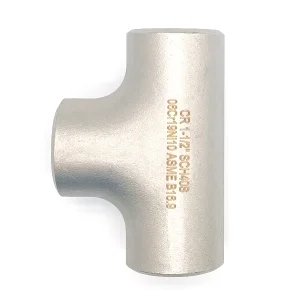
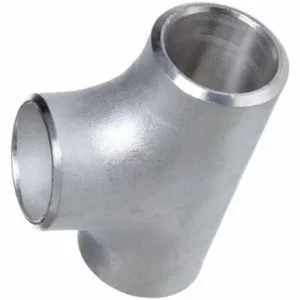
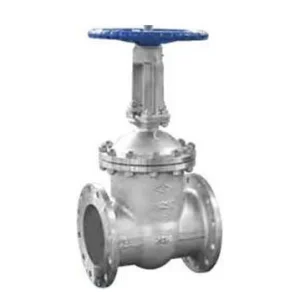
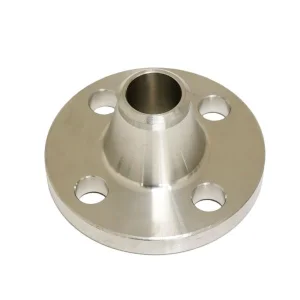
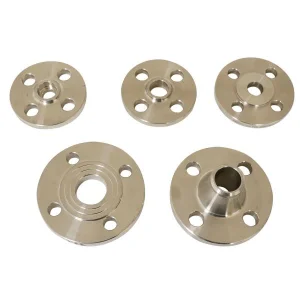
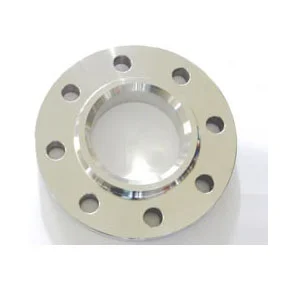
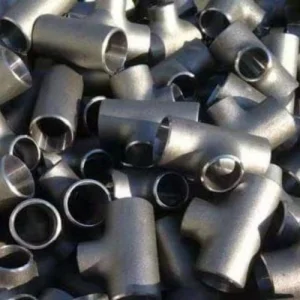
Complete your piping system procurement with our high-pressure forged tees, gate valves, ball valves, and heavy-wall flanges manufactured to ASTM, EN, and JIS standards.
Request a Customized Big Size Butterfly Valve Quotation
Submit your project material take-off (MTO) or valve datasheet. Our engineering sales team delivers comprehensive technical proposal packages—including CAD dimensional drawings, hydrodynamic torque calculations, and factory-direct pricing—within 24 hours.