
Featured Industrial Flanges & Pipeline Components (Batch 01)
Certified ASTM/ASME, DIN, EN, and JIS compliant pressure fittings direct from smart forging lines.
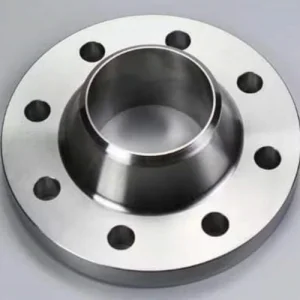
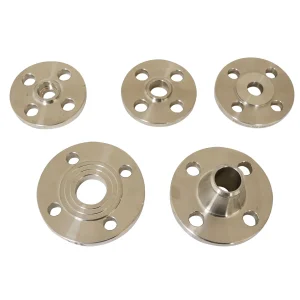
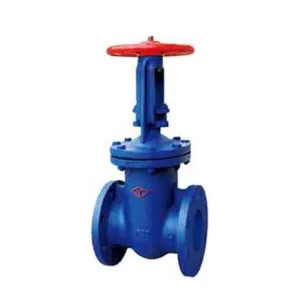
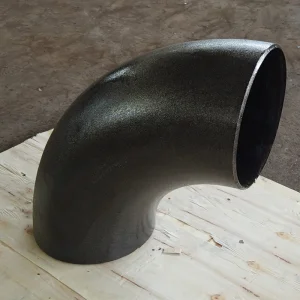
1. Metallurgical Foundations: Why Grade 316 / 316L Dominates Severe Industrial Services
An authoritative analysis of chemical composition, Pitting Resistance Equivalent Number (PREN), and mechanical strength parameters for EPC contractors and piping procurement specialists.
Molybdenum-Enhanced Chemistry
Grade 316 stainless steel differs fundamentally from standard 18/8 (Grade 304) stainless steel due to the deliberate addition of 2.0% to 3.0% Molybdenum (Mo). This alloying element substantially alters the passive oxide layer ($Cr_2O_3$), creating an ultra-dense chemical barrier that self-heals under oxygenating conditions. When evaluated for wholesale industrial purchasing, understanding the microstructural stability of ASTM A182 F316 / F316L is crucial for avoiding premature line failures caused by localized pitting and crevice corrosion.
Dual Certification (316/316L) Mechanics
Modern advanced forging facilities universally supply dual-certified ASTM A182 F316/316L flanges. By controlling the carbon content to ultra-low levels ($\le 0.030\%$), the material eliminates harmful chromium carbide precipitation ($Cr_{23}C_6$) along grain boundaries during hot welding operations. This low-carbon chemistry ensures immunity to intergranular corrosion in the Heat-Affected Zone (HAZ), eliminating the need for post-weld solution annealing in field assembly.
The resistance of 316 flanges to chloride-induced pitting is quantified by the standard metallurgical PREN formula: $PREN = \%Cr + 3.3(\%Mo) + 16(\%N)$. While standard Grade 304 yields a PREN score of approximately 19.0, ASTM A182 Grade F316 achieves a minimum PREN rating of 23.0 to 25.0. This elevation provides superior protection against seawater splash zones, acidic refining fluids, and elevated temperature chemical media.
| Specification Grade | Carbon (C) Max | Chromium (Cr) | Nickel (Ni) | Molybdenum (Mo) | Min. Yield Strength (0.2% Offset) | Min. Tensile Strength |
|---|---|---|---|---|---|---|
| ASTM A182 F316 | 0.08% | 16.0 - 18.0% | 10.0 - 14.0% | 2.00 - 3.00% | 205 MPa (30 ksi) | 515 MPa (75 ksi) |
| ASTM A182 F316L | 0.030% | 16.0 - 18.0% | 10.0 - 14.0% | 2.00 - 3.00% | 170 MPa (25 ksi) | 485 MPa (70 ksi) |
| ASTM A182 F316Ti | 0.08% | 16.0 - 18.0% | 10.0 - 14.0% | 2.00 - 3.00% | 205 MPa (30 ksi) | 515 MPa (75 ksi) |
| Duplex 2205 (F51) | 0.030% | 22.0 - 23.0% | 4.5 - 6.5% | 3.00 - 3.50% | 450 MPa (65 ksi) | 655 MPa (95 ksi) |
2. Global Industrial Trends & Strategic Procurement Dynamics
Analysis of macro-economic demand drivers shifting the wholesale 316 stainless steel flange market across energy transformation, pharmaceutical manufacturing, and marine engineering.
LNG & Green Hydrogen Infrastructure
The global transition toward liquefied natural gas (LNG) regasification and green hydrogen transport requires pipeline components capable of performing flawlessly under cryogenic temperatures down to $-196^{\circ}\text{C}$. Wholesale buyers are increasingly mandating Charpy V-Notch impact tested 316/316L flanges to guarantee structural ductility without brittle fracture under high pressure.
Biopharm & High-Purity Processing
With global expansion in pharmaceutical bio-reactors and ultra-pure water systems, demand for ASME BPE compliant 316L flanges has surged. Buyers mandate specialized surface finishes—such as mechanical polishing to $Ra \le 0.375\,\mu m$ followed by electropolishing—to prevent microbial biofilm accumulation and withstand aggressive CIP (Clean-In-Place) steam cycles.
Offshore Energy & Desalination
Desalination plants relying on high-pressure reverse osmosis (SWRO) operate under extreme hydraulic pressures in hyper-saline environments. Industrial enterprise buyers specify heavy-wall 316L Weld Neck and Ring Type Joint (RTJ) flanges to mitigate crevice corrosion under elastomeric gasket seals, maximizing plant operating life beyond 30 years.
Procurement teams shifting away from lowest-initial-bid sourcing models prioritize Life Cycle Costing (LCC). Installing lower-grade carbon or non-molybdenum stainless components in chloride-rich environments leads to catastrophic stress corrosion cracking (SCC), resulting in unbudgeted plant downtime costing upwards of $500,000 per day. Sourcing fully certified wholesale 316 flanges dramatically lowers long-term operational risk.
3. China Industry 4.0: Supply Chain Resilience & Manufacturing Velocity
How advanced smart-factory forging clusters in Cangzhou, Hebei redefine lead-time reliability, dimensional precision, and global logistics efficiency for high-volume 316 flange contracts.
Automated Closed-Die Forging & CNC Precision
The evolution of Cangzhou’s industrial piping ecosystem relies on fully automated, high-tonnage hydraulic forging presses paired with multi-axis CNC machining stations. Automated ring rolling mills deliver dense, uniform grain flow aligned perfectly with the contour of weld neck hubs. This eliminates internal voids, micro-porosity, and structural anisotropy commonly found in sand-cast or lower-tier plate-machined flanges.
Furthermore, digital direct-reading optical emission spectrometers (OES) conduct real-time heat verification before raw billet slicing, guaranteeing strict adherence to chemical tolerance windows required by international EPC clients.
- Hydraulic Forging Capacity: Up to 10,000-ton presses handling large-diameter flanges up to DN4000 (160 inches).
- High-Speed CNC Facing: Precision-machined raised faces (RF) with controlled serration roughness ($AARH\ 125-250$ finish) for optimal gasket sealing.
- Non-Destructive Testing (NDT): Standard 100% Ultrasonic Testing (UT) for Class 600+ components, alongside Positive Material Identification (PMI).
Digital Supply Chain Resilience Matrix
Global project managers require absolute schedule certainty. Strategic manufacturing integration allows seamless coordination across raw material procurement, heat treatment, precision machining, and export logistics.
Strategic warehousing of premium stainless steel round bars (Tsingshan, Baosteel heats) ensures immediate production start upon order confirmation.
Computerized continuous gas furnaces heat components to $1040^{\circ}\text{C}-1120^{\circ}\text{C}$, followed by rapid automated water quenching to lock in optimal austenitic microstructure.
Heavy-duty export plywood cases with individual plastic end caps and vapor corrosion inhibitor (VCI) wrapping prevent atmospheric salt-air degradation during ocean transit.
4. Field Engineering & Localized Application Scenarios
Cross-industry deployment guide for selecting flange facing types, pressure ratings, and pipe connection geometries.
Offshore Platform Topsides
Configuration: ASME B16.5 Class 600 / 900 Weld Neck RTJ (Ring Type Joint) Flanges.
Material: ASTM A182 F316L Dual Grade.
Application: High-pressure hydrocarbon gas headers exposed to marine salt spray. RTJ metallic ring gaskets (Soft Iron or 316) provide metal-to-metal sealing capable of withstanding severe vibration and thermal cycling.
Refining Hydrocracking Units
Configuration: ASME B16.47 Series A / B High-Pressure Weld Neck RF Flanges.
Material: ASTM A182 F316H (High Carbon variant for elevated temperature creep strength).
Application: Operating environments exceeding $550^{\circ}\text{C}$ handling hydrogen-rich sour crude feedstocks. Retains mechanical load capacity while preventing high-temperature hydrogen attack (HTHA).
Chemical Process Batch Reactors
Configuration: ASME B16.5 Class 150 / 300 Slip-On (SO) and Blind Flanges (BL).
Material: ASTM A182 F316Ti (Titanium Stabilized).
Application: Highly corrosive organic acid synthesis. Titanium additions ($Ti \ge 5 \times \%C$) stabilize carbides, making components ideal for equipment subjected to frequent thermal batching without intergranular cracking.
5. Comprehensive Technical Specification Matrix
Standard manufacturing scope for wholesale procurement engineering lists.
| Flange Category | Standard Compliance | Nominal Size Scope | Pressure Class / PN Rating | Available Facing Types |
|---|---|---|---|---|
| Weld Neck (WN) | ASME B16.5, ASME B16.47, EN 1092-1 Type 11 | 1/2" to 60" (DN15 - DN1500) | Class 150 to 2500 / PN6 to PN400 | RF, FF, RTJ, Male & Female, Tongue & Groove |
| Slip-On (SO) | ASME B16.5, DIN 2527, EN 1092-1 Type 12 | 1/2" to 48" (DN15 - DN1200) | Class 150 to 1500 / PN6 to PN100 | Raised Face (RF), Flat Face (FF) |
| Blind (BL) | ASME B16.5, ASME B16.47, EN 1092-1 Type 05 | 1/2" to 60" (DN15 - DN1500) | Class 150 to 2500 / PN6 to PN400 | RF, FF, RTJ |
| Socket Weld (SW) | ASME B16.5, BS 3293 | 1/2" to 3" (DN15 - DN80) | Class 150 to 1500 | Raised Face (RF) |
| Threaded (NPT/BSPT) | ASME B16.5, DIN 2566 | 1/2" to 4" (DN15 - DN100) | Class 150 to 2500 / PN16 to PN100 | Raised Face (RF), Flat Face (FF) |
| Lap Joint (LJ) | ASME B16.5, EN 1092-1 Type 02 | 1/2" to 24" (DN15 - DN600) | Class 150 to 300 / PN10 to PN40 | Flat Face (Used with Stub Ends) |
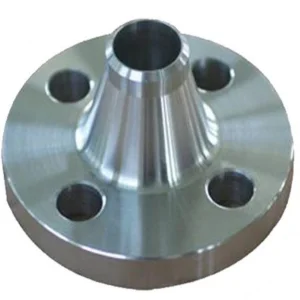
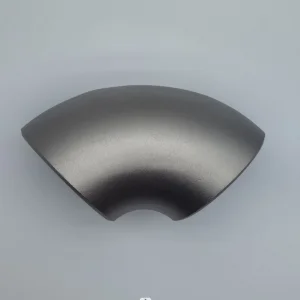
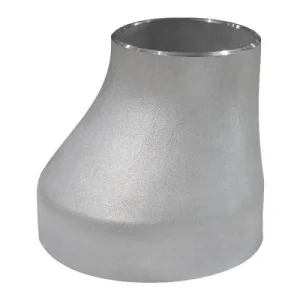
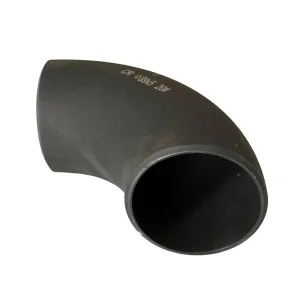
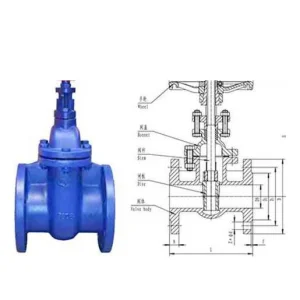
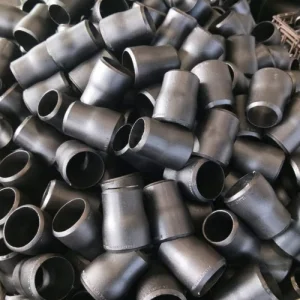
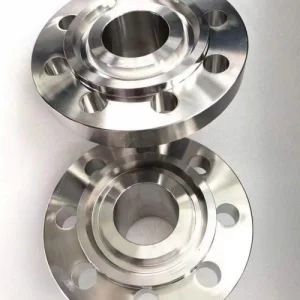
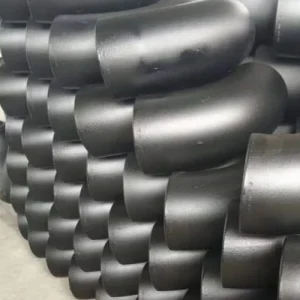
Featured Industrial Flanges & Pipeline Components (Batch 02)
Expanded catalogue of high-performance piping items available for bulk export orders.
6. Technical & Procurement FAQ (Frequently Asked Questions)
Detailed answers to critical engineering, quality assurance, and international trade questions surrounding wholesale 316 stainless steel flange supply.
What is the critical difference between 316, 316L, and 316Ti flanges for wholesale procurement?
The primary distinction lies in their carbon content and microstructural stabilization:
- Grade 316: Standard carbon grade ($\le 0.08\%$). Suitable for general corrosion resistance, but susceptible to carbide precipitation during heavy welding operations.
- Grade 316L: Low carbon variant ($\le 0.030\%$). Designed specifically for welded assemblies. It prevents intergranular corrosion in the heat-affected zone without requiring post-weld solution annealing.
- Grade 316Ti: Titanium-stabilized grade. Titanium additions ($Ti \ge 5 \times (C+N)$) bind carbon atoms, preventing chromium depletion at high operating temperatures ($550^{\circ}\text{C}-800^{\circ}\text{C}$).
For most modern industrial applications, dual-certified ASTM A182 F316/316L is supplied as standard to cover both strength and welding requirements.
How do 316 flanges perform under chloride stress corrosion cracking (SCC) compared to 304?
Grade 316 offers significantly higher resistance to localized chloride pitting due to its 2.0–3.0% Molybdenum addition. Its Pitting Resistance Equivalent Number (PREN) ranges between 23 and 25, compared to 19 for Grade 304.
However, under combined high tensile stress and elevated temperatures ($>60^{\circ}\text{C}$) in high-chloride environments, standard austenitic stainless steels like 316 can still experience SCC. For extreme conditions (e.g., concentrated hot brine), Super Austenitic (6Mo) or Duplex stainless steels (2205 / 2507) should be evaluated.
What documentation is supplied with wholesale 316 flange shipments for international compliance?
All enterprise wholesale shipments are backed by comprehensive, fully traceable documentation packages:
- EN 10204 3.1 Inspection Certificate: Issued by the manufacturer's independent QA/QC department detailing exact heat numbers, chemical ladle analysis, mechanical tensile/yield test results, hardness values, and heat treatment charts.
- EN 10204 3.2 Certification: Available upon request when third-party inspection agencies (SGS, TÜV, Bureau Veritas, DNV) witness testing and verify raw material origin.
- NDT Test Reports: Ultrasonic Testing (UT), Liquid Penetrant Testing (PT), and Positive Material Identification (PMI) verification records.
What flange facing type is recommended for high-pressure hydrocarbon service?
For pressure classes up to Class 300, Raised Face (RF) with a serrated finish ($AARH\ 125-250$) paired with a spiral wound gasket (316L/Graphite) is standard.
For high-pressure lines (Class 600, 900, 1500, and 2500) or severe cyclic thermal conditions, Ring Type Joint (RTJ) facings are recommended. RTJ flanges feature precision-machined grooves designed to seat metallic octagonal or oval ring gaskets, creating a high-integrity metal-to-metal seal.
How does China's Industry 4.0 infrastructure impact wholesale flange lead times and quality control?
Smart factory integration in manufacturing clusters like Cangzhou, Hebei, combines automated hydraulic forging, robotic handling, and multi-axis CNC turning. This infrastructure delivers three main procurement benefits:
- Dimensional Consistency: CNC machining ensures tight tolerances according to ASME B16.5, eliminating field misalignment during pipeline fit-up.
- Reduced Production Bottlenecks: Automated heat-treatment furnaces with precise temperature profiling allow rapid processing of large-tonnage orders.
- Complete Material Traceability: Integrated ERP tracking assigns QR-coded heat traceability to every billet from forging to final shipping.