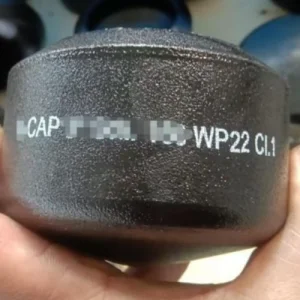
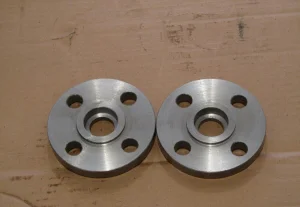
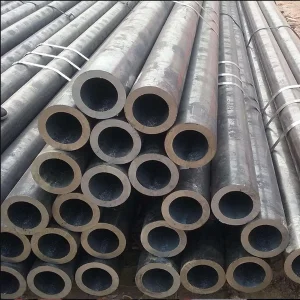
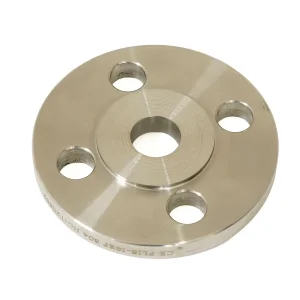
Featured Wholesale Flange & Fitting Inventory
Explore our industrial-grade forged flanges, butt-weld pipe fittings, and high-pressure flow control components direct from our certified manufacturing plants.
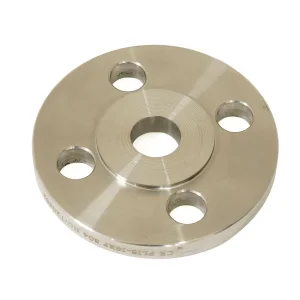
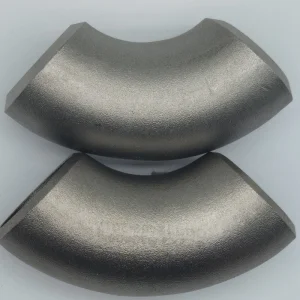
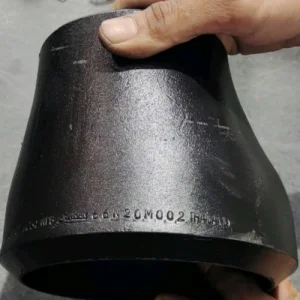
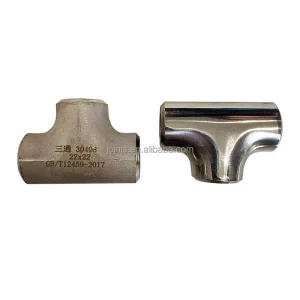
Class 300 (300#) Pressure Rating Mechanics & Engineering Design
A comprehensive examination of pressure boundaries, mechanical deformation limits, and structural integrity under ASME/ANSI B16.5 and B16.47 specifications.
Pressure Boundary Mechanics
Class 300 (commonly designated as 300# or 300 LB) flanges represent a critical intermediate pressure boundary in industrial piping networks. Governed by ASME B16.5 for nominal pipe sizes NPS ½ through NPS 24, and ASME B16.47 Series A & B for large-diameter lines (NPS 26 through NPS 60), Class 300 fittings are engineered to exceed standard Class 150 pressure envelopes without incurring the substantial weight and cost penalties of Class 600 components.
The maximum non-shock working pressure for a Class 300 carbon steel flange (ASTM A105) at ambient temperatures (-29°C to 38°C / -20°F to 100°F) is precisely 740 psig (51.0 bar). As system operating temperatures elevate, the allowable working pressure scales downward according to the material group's yield and ultimate tensile strength curves.
Yield Strength & Temperature Curves
Understanding temperature derating is paramount for plant safety and structural longevity. For instance, under ASTM A105 specification, allowable pressure drops predictably across operational thermal thresholds:
- -29°C to 38°C (-20°F to 100°F): 740 psig (51.0 bar)
- 200°C (392°F): 635 psig (43.8 bar)
- 300°C (572°F): 570 psig (39.3 bar)
- 400°C (752°F): 445 psig (30.7 bar)
- 500°C (932°F): 170 psig (11.7 bar)
This nonlinear pressure-temperature drop-off requires rigorous finite element analysis (FEA) during flange selection, particularly in combined-cycle power plants, hydrocracking loops, and thermal oil heating systems.
Class 150 vs Class 300 vs Class 600
Choosing between rating classes impacts total system weight, bolt circle dimensioning, flange thickness, and overall capital expenditure (CAPEX):
- Hub & Flange Thickness: A 6-inch Class 300 Weld Neck flange features a total thickness of 36.5 mm compared to 25.4 mm in Class 150, delivering a 43% increase in structural mass to resist bending moments.
- Bolting Configuration: Class 300 utilizes larger bolt diameters and denser bolt circle patterns. A 6-inch 300# flange uses twelve 3/4-inch studs, whereas a 150# flange uses only eight 3/4-inch studs.
- Sealing Stress Maintenance: Higher bolt loading ensures superior gasket seating stress, reducing micro-leakage risks under thermal cycling.
Metallurgical Formulations & Material Selection Matrix
Selecting the optimal alloy composition to eliminate stress corrosion cracking (SCC), pitting attack, and thermal fatigue in severe service environments.
| Material Category | Standard & Material Grade | Operational Temperature Range | Primary Industrial Applications & Environmental Suitability |
|---|---|---|---|
| Carbon Steel | ASTM A105 / A350 LF2 Class 1 | -46°C to 425°C (-50°F to 800°F) | Standard oil & gas distribution, high-pressure steam utility, municipal water networks, and general refining service. LF2 provides enhanced low-temperature notch toughness. |
| High-Yield Carbon Steel | ASTM A694 F42, F52, F60, F65, F70 | -29°C to 121°C (-20°F to 250°F) | High-pressure cross-country transmission pipelines, gas compressor stations, off-shore manifold manifolds requiring high yield strength. |
| Low-Alloy Steel | ASTM A182 F11, F22, F91 (Cr-Mo) | Up to 650°C (1200°F) | Superheated steam lines, power generation boilers, catalytic reforming units. Designed to prevent hydrogen embrittlement and creep deformation at elevated heat. |
| Austenitic Stainless Steel | ASTM A182 F304/304L, F316/316L | -196°C to 815°C (-320°F to 1500°F) | Cryogenic LNG transport, chemical processing plants, food & beverage sanitary lines, marine environments requiring high general corrosion resistance. |
| Duplex & Super Duplex | ASTM A182 F51 (S31803), F53 (S32750) | -50°C to 280°C (-58°F to 536°F) | Desalination high-pressure RO pumps, offshore subsea umbilicals, aggressive chloride processing where resistance to pitting (PREN > 40) is essential. |
| Nickel Superalloys | Inconel 625, Hastelloy C276, Monel 400 | -196°C to 1000°C (-320°F to 1832°F) | Flue gas desulfurization (FGD), hot concentrated acid processing, deep sour gas wells (H2S), aerospace test facilities. |
Forging Process Integrity vs. Cast Counterparts
All wholesale 300# flanges manufactured at our facilities undergo closed-die precision forging. Unlike cast components which risk micro-porosity, internal voids, and segregation, forging refines the crystalline grain structure of the steel along the contour of the flange face and hub. This alignment results in vastly superior directional mechanical properties, superior impact resistance, and maximum fatigue life under intense cyclic vibration and thermal shocks.
Flange Structural Configurations & Sealing Face Engineering
Matching flange structural geometries and gasket seating profiles to system pressures, fluid dynamics, and maintenance protocols.
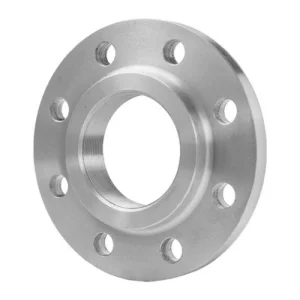
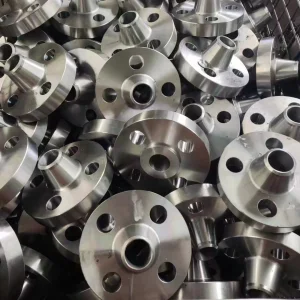
Weld Neck Flange (WN 300#)
Characterized by a long tapered hub that transfers stress smoothly to the attached pipe wall. The tapered neck provides vital reinforcement, making Weld Neck 300# flanges the industry standard for severe service, high-pressure, zero-tolerance environments where bending stresses from line expansion occur.
- Bore Specification: Precision-machined to match pipe Schedule (Sch 40, Sch 80, Sch XS, Sch 160).
- Weld Joint: Full-penetration butt weld verified via 100% Radiographic (RT) testing.
Slip-On & Blind Flanges (SO & BL 300#)
Slip-On Flanges (SO): Designed to slip over the outer diameter of the pipe, secured via dual fillet welds (internal and external). Offers installation ease and lower upfront fabrication effort, suitable for medium-stress piping loops.
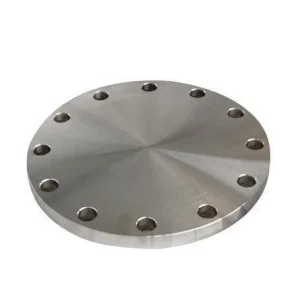
Blind Flanges (BL): Manufactured without a center bore to seal off pipe header ends, pressure vessel nozzles, or isolation valves. Subject to highest shear and bending stresses at center thickness.
Sealing Faces: RF vs. RTJ vs. Flat Face
Sealing performance depends directly on the surface finish and geometry of the flange face:
- Raised Face (RF): A 2mm (0.0625 inch) height for Class 300 with concentric serrations (125-250 AARH finish) designed to bite into spiral wound metallic gaskets.
- Ring Type Joint (RTJ): Features a precision-machined metallic groove intended for soft iron, SS304, or SS316 octagonal/oval ring gaskets. Standard for extreme pressure (>1000 PSI) and high temperatures.
- Flat Face (FF): Utilized primarily when mating to cast iron equipment to avoid bending moments during torquing.
Global Commercial Ecosystems & Industrial Application Scenarios
Deploying engineered Class 300 piping solutions across global energy corridors, processing plants, and critical infrastructure.
Upstream & Midstream Oil & Gas
In offshore production platforms, floating production storage and offloading (FPSO) vessels, and cross-country crude oil pumping stations, 300# flanges form the backbone of hydrocarbon conveyance systems. Designed to withstand wave motion deflection, soil settlement loads, and high-velocity multi-phase fluid flow, our ASTM A350 LF2 and A694 high-yield flanges deliver uninterrupted performance under rigorous conditions.
Petrochemical & Refinery Refining Units
Hydrotreating, fluid catalytic cracking (FCC), and ethylene cracking operations involve volatile organic compounds, high operating pressures, and corrosive chemical vapors. Our ASME B16.5 Class 300 SS316L and Alloy 20 flanges prevent fugitive emissions, ensuring strict compliance with EPA Method 21 and European LDAR (Leak Detection and Repair) standards.
Power Generation & Thermal Utilities
Superheated steam headers, boiler feedwater lines, and turbine bypass circuits experience severe continuous thermal cycling. Utilizing chrome-moly ASTM A182 F11/F22/F91 Class 300 Weld Neck flanges eliminates creep failure, maintaining tight gasket sealing stresses over decades of high-temperature service.
Quality Assurance, NDT Verification & Regulatory Compliance
Uncompromising inspection protocols ensuring flawless dimensional precision, material traceability, and zero-defect performance.
Non-Destructive Testing (NDT)
To guarantee internal soundness, every high-pressure flange batch undergoes stringent non-destructive evaluations prior to dispatch:
- Ultrasonic Testing (UT): According to ASTM A388 to detect internal voids, lamination, or inclusions within the forged body.
- Positive Material Identification (PMI): X-ray fluorescence (XRF) spectroscopy to verify chemical composition against mill heat certificates.
- Magnetic Particle Inspection (MPI) & Liquid Penetrant (DPT): Performed on bevel ends and raised faces to identify surface micro-fissures.
- Dimensional Inspection: CMM automated measurement confirming bolt hole pitch diameter, thickness, and face serration depth.
Global Regulatory Certifications
Our manufacturing facilities maintain accreditation with key international standardization bodies:
- PED 2014/68/EU: European Pressure Equipment Directive certified for pressure vessel installation across EU member states.
- NACE MR0175 / ISO 15156: Compliance for sour oilfield service preventing sulfide stress cracking (SSC).
- CRN (Canadian Registration Number): Approved for industrial fluid piping throughout all Canadian provinces.
- EN 10204 3.1 & 3.2: Complete material test reports (MTR) detailing chemical heat analysis, mechanical tensile strength, impact energy (Charpy V-notch), and heat treatment logs.
Manufacturing Roadmap & Next-Generation Metallurgical Innovation
Pioneering automated CNC forging, green metallurgy, and predictive joint monitoring technologies for zero-emission pipeline networks.
Automated Precision Machining & Robotic Forging
Our ongoing modernization roadmap integrates multi-axis high-speed CNC turning centers and automated robotic handling arms. By standardizing cutting speeds, tool paths, and surface roughness parameters, we achieve sub-millimeter machining tolerances across mass production runs. This guarantees that flange face serration pitch, bolt hole concentricity, and bevel ends remain 100% consistent from small 1/2-inch fittings up to massive 60-inch heavy industrial rings.
Green Manufacturing & Decarbonization
Aligned with global net-zero emissions mandates, our production facilities have transitioned to clean-burning natural gas forge furnaces equipped with waste-heat recovery systems. Heat treatment normalization processes are optimized via digital twin thermal modeling, reducing fuel consumption by up to 24% while optimizing mechanical impact values and grain size refinement.
Engineers & Procurement Specialist FAQ
Direct answers to technical queries regarding design standards, bolt torquing calculations, gasket compatibility, and ordering guidelines.
Additional High-Pressure Pipe Fittings & Flange Catalog
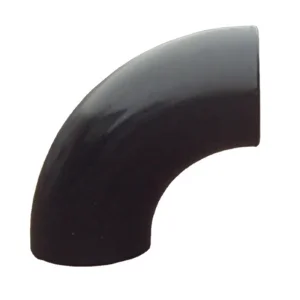
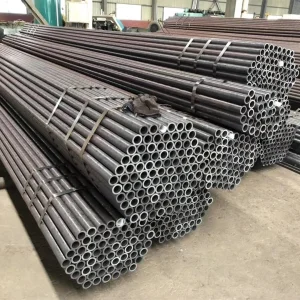
Complete your industrial piping BOM with our companion line of forged flanges, high-pressure elbows, reducers, and seamless line pipes.