
Featured Industrial 4-Inch & Companion Pipe Component Catalog
Explore our top-tier precision-forged 4-inch pipe flanges, elbows, end caps, and heavy-duty fittings certified to ISO 9001, ASME B16.5, and international pressure equipment standards.
1. Macro Industry Dynamics & Global Procurement Landscape for 4-Inch Flanges
The 4-inch pipe flange (Nominal Pipe Size 4 / NPS 4 / Metric DN100) represents one of the most critical structural nodes in global industrial fluid dynamics. Functioning as the universal interface diameter across petroleum refining, chemical processing, thermal power generation, municipal water networks, and marine engineering, 4-inch flanges balance high fluid throughput with manageable bolt-torque requirements.
Green Energy & LNG Transition
Global decarbonization initiatives have catalyzed massive demand for cryogenic 4-inch ASTM A350 LF2 and duplex stainless steel flanges in Liquefied Natural Gas (LNG) regasification terminals and hydrogen distribution infrastructure where zero zero-fugitive-emission sealing is mandatory.
Subsea & Offshore Expansion
Offshore oil extraction in harsh environments (e.g., North Sea, Gulf of Mexico, Brazil Pre-Salt) requires high-yield forged 4-inch flanges made from ASTM A694 F52/F65 and Nickel Alloy 625 cladding capable of resisting extreme hydrostatic pressure and sour hydrogen sulfide corrosion.
Strict Quality & ESG Traceability
Global Engineering, Procurement, and Construction (EPC) contractors now enforce strict supply chain compliance. Manufacturers must supply 100% heat-traceable EN 10204 3.1 Material Test Reports (MTRs), Positive Material Identification (PMI), and carbon-neutral forging documentation.
2. Engineering Specifications & Dimensional Metallurgy of 4-Inch Flanges
Precision engineering in flange manufacturing dictates strict adherence to dimensional tolerances defined by standard bodies such as ASME B16.5, EN 1092-1, DIN, and JIS B2220. Below is the master dimensional specification matrix for standard 4-inch (NPS 4) forged flanges across key ASME pressure classes.
| ASME Pressure Class | Flange Outer Dia. (OD) | Bolt Circle Dia. (BCD) | Num. of Bolt Holes | Bolt Hole Diameter | Raised Face Dia. (RF) | Thick. of Flange (Min C) |
|---|---|---|---|---|---|---|
| Class 150 | 9.00 in (228.6 mm) | 7.50 in (190.5 mm) | 8 | 0.75 in (19.0 mm) | 6.19 in (157.2 mm) | 0.94 in (23.9 mm) |
| Class 300 | 10.00 in (254.0 mm) | 7.88 in (200.0 mm) | 8 | 0.88 in (22.3 mm) | 6.19 in (157.2 mm) | 1.25 in (31.8 mm) |
| Class 600 | 10.75 in (273.1 mm) | 8.50 in (215.9 mm) | 8 | 1.00 in (25.4 mm) | 6.19 in (157.2 mm) | 1.50 in (38.1 mm) |
| Class 900 | 11.50 in (292.1 mm) | 9.25 in (235.0 mm) | 8 | 1.25 in (31.8 mm) | 6.19 in (157.2 mm) | 1.75 in (44.5 mm) |
| Class 1500 | 12.25 in (311.2 mm) | 9.50 in (241.3 mm) | 8 | 1.38 in (34.9 mm) | 6.19 in (157.2 mm) | 2.12 in (53.8 mm) |
| Class 2500 | 14.00 in (355.6 mm) | 10.75 in (273.1 mm) | 8 | 1.62 in (41.3 mm) | 6.19 in (157.2 mm) | 3.00 in (76.2 mm) |
Engineering Note on Gasket Surface Finish: For Raised Face (RF) 4-inch flanges, ASME B16.5 specifies a serrated concentric or spiral serrated finish with 125 to 250 microinches (3.2 to 6.3 micrometers) Ra roughness to ensure proper biting and seating of soft graphite or spiral wound gaskets under thermal cycling.
3. Structural Typology & Mechanical Stress Distribution in 4-Inch Flanges
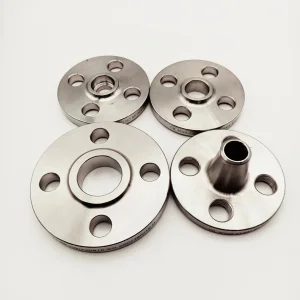
Selecting the appropriate flange type for a 4-inch nominal pipe system depends on the operating pressure, mechanical vibrations, temperature gradients, and inspection frequency. Each design offers distinct mechanical advantage and finite element stress distribution characteristics.
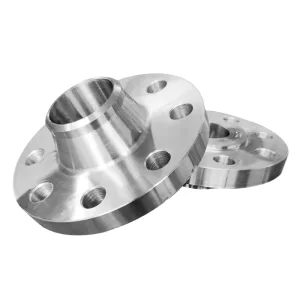
4 Inch Weld Neck Flange (WN)
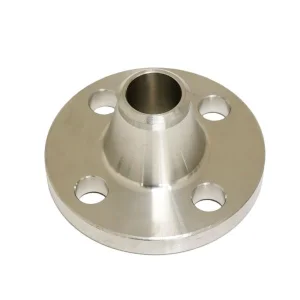
Recognizable by its long tapered hub, the 4-inch Weld Neck flange provides high structural integrity by transferring stress from the flange ring directly to the pipe wall. Ideal for high-pressure, sub-zero, or high-temperature steam lines subject to severe bending moments and thermal expansion.
4 Inch Slip-On Flange (SO)
Designed to slip over the 4-inch pipe outer diameter, this flange is secured using dual fillet welds (internal and external). Slip-On flanges offer lower initial component costs and easier alignment in field fabrication, though calculated fatigue strength under bending is lower than Weld Neck counterparts.
4 Inch Blind Flange (BL)
Constructed without a central bore, 4-inch blind flanges seal vessel nozzles or pipe ends. They endure the highest internal hydraulic hoop stress and bending loads of any flange type, requiring precise thickness design calculations under ASME Boiler and Pressure Vessel Code (BPVC) Section VIII.
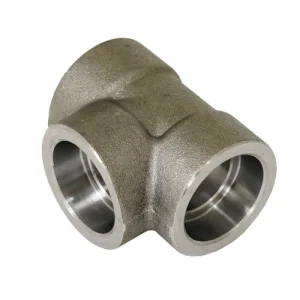
4 Inch Socket Weld Flange (SW)
Features a female socket into which the 4-inch pipe is inserted before applying a single external fillet weld. Commonly used in high-pressure small-to-medium bore utility piping where smooth internal flow bore and low turbulence are required without inner weld protrusion.
4 Inch Threaded Flange (TH)
Bored with internal NPT (National Pipe Thread) or BSPT threads, allowing joint assembly without welding. Threaded 4-inch flanges are widely utilized in volatile oil/gas distribution systems where welding presents explosion hazards or in low-pressure temporary piping manifolds.
4 Inch Lap Joint Flange (LJ)
Used in combination with a matching 4-inch Stub End pipe fitting. The flange ring rotates freely around the stub end, simplifying bolt alignment during installation in stainless steel or alloy systems where rapid disassembly for cleaning or maintenance is required.
4. Metallurgy, Material Selection & Alloy Performance Engineering
The chemical composition and heat treatment of 4-inch forged steel flanges determine their yield strength, impact toughness, fracture resistance, and chemical compatibility. Leading manufacturers select specific forge-grade ingots depending on fluid chemistry and environmental severity.
Carbon Steel Grades (ASTM A105 & A350 LF2)
ASTM A105 / A105N: The industry standard normalized carbon steel for ambient to high-temperature service (-29°C to 425°C). Normalizing heat treatment refines the grain structure, significantly increasing notch toughness and ductility under dynamic line pressure.
ASTM A350 LF2 Class 1: Formulated for low-temperature applications (-46°C). Charpy V-notch impact testing at low temperature guarantees high resistance to brittle fracture in sub-zero climate installations and cold-start chemical operations.
Stainless & Duplex Steel Alloys (ASTM A182)
F304/304L & F316/316L: Austenitic stainless steels offering outstanding resistance to atmospheric oxidation and organic/inorganic acid attack. The low-carbon "L" variants prevent intergranular carbide precipitation during welding of 4-inch neck joints.
Duplex 2205 (UNS S31803/S32205) & Super Duplex 2507 (S32750): Featuring a dual-phase ferritic-austenitic microstructure with a Pitting Resistance Equivalent Number (PREN) > 40, these alloys provide superior immunity to chloride stress corrosion cracking in seawater desalination and marine platforms.
High-Temperature Alloy Steels (ASTM A182 F11, F22, F91)
Chromium-Molybdenum (Cr-Mo) alloy flanges engineered for extreme creep-rupture resistance in high-pressure steam boilers and catalytic cracking units operating above 500°C. Grade F91 (9% Cr, 1% Mo, Vanadium modified) enables thinner wall designs while supporting extreme thermal loads.
Specialty Alloys & Exotic Metals
For highly corrosive media such as hot concentrated sulfuric acid, wet chlorine gas, or sour gas wells, manufacturers produce 4-inch flanges from Nickel Alloys (Inconel 625, Hastelloy C-276, Monel 400) or Titanium Grade 2 per ASTM B381, eliminating risk of premature chemical pitting.
5. Precision Forging, CNC Machining & Quality Assurance (QA/QC)
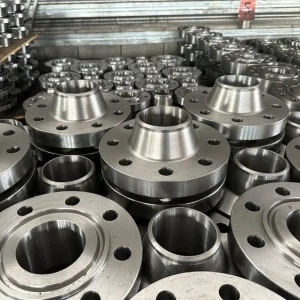
High-quality 4-inch flange manufacturing transitions raw steel billets into precision-engineered pressure components through controlled thermo-mechanical processing and rigorous non-destructive evaluation.
Closed-Die Forging
Steel billets are heated above recrystallization temperatures and forged using hydraulic presses or seamless ring rollers. Controlled grain flow alignment along the flange geometry maximizes fatigue resistance.
CNC Machine Facing
Computer Numerical Control (CNC) lathes machine the flange hub, bolt circle diameter, bolt holes, and raised face serrations within ultra-tight dimensional tolerances (+/- 0.5 mm) as demanded by ASME B16.5.
Volumetric NDT Check
100% Non-Destructive Testing (NDT) is executed, including Ultrasonic Testing (UT) for internal voids/laminations, Liquid Penetrant Inspection (LPI) or Magnetic Particle Inspection (MPI) for surface cracks.
PMI & Certification
X-ray Fluorescence (XRF) Positive Material Identification verifies exact alloy chemistry. Finished 4-inch flanges are stenciled with heat numbers and issued with EN 10204 3.1 inspection certificates.
Complete Industrial Flange & Piping System Products
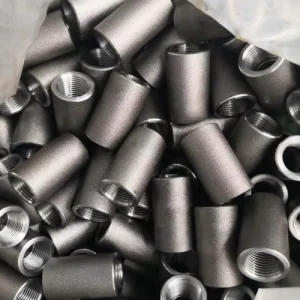
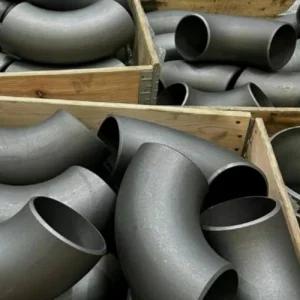
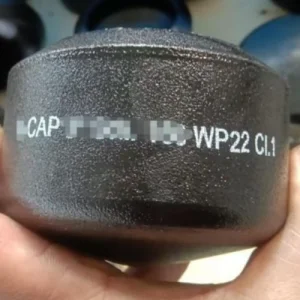
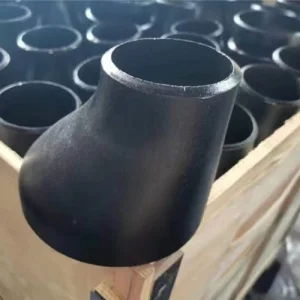
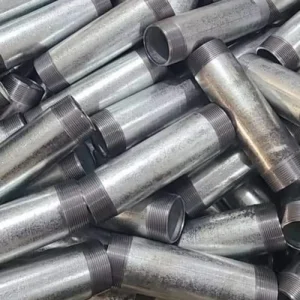
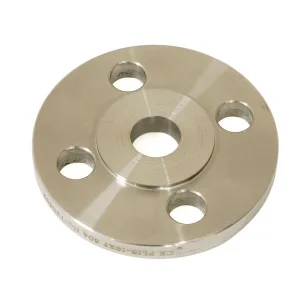
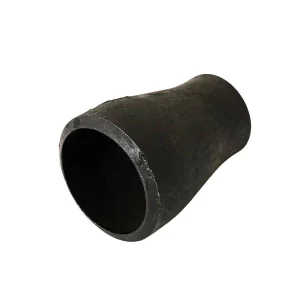
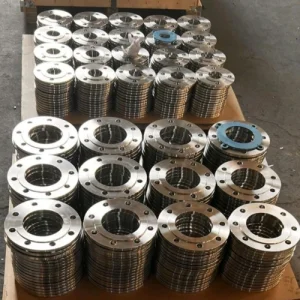
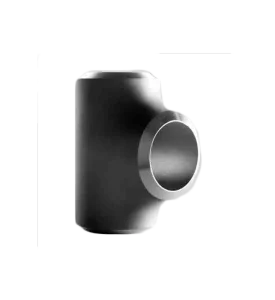
Explore the second half of our high-integrity product range, featuring specialized forged flanges, pipe nipples, alloy caps, socket weld fittings, and custom industrial pipeline connectors.
6. Global EPC Logistics, Packaging Standards & Local Compliance
Delivering 4-inch forged flanges to overseas job sites requires robust protective packaging engineering and complete regulatory compliance to prevent ocean-freight corrosion and customs delays.
Seaworthy Packaging Engineering
Every 4-inch flange undergoes rust-inhibiting oil dipping, protective plastic cap placement over machined sealing faces, VCI (Vapor Corrosion Inhibitor) film wrapping, and packing into fumigated ISPM-15 compliant hardwood crates.
Regulatory & Pressure Directives
Full compliance with the European Pressure Equipment Directive (PED 2014/68/EU), NACE MR0175 / ISO 15156 for sour oil/gas service, and ASME B31.3 process piping design rules simplifies global project audits.
Package Procurement Efficiency
Tier-1 manufacturers allow EPC buyers to bundle 4-inch flanges with matching ASTM A106/A333 seamless pipe, A234 WPB butt-weld elbows, and flanged gate/ball valves in single consolidated container shipments.
7. Technical Roadmap: Smart Flanges & Next-Gen Manufacturing
The industrial piping landscape is transitioning toward digitalized asset monitoring and low-carbon manufacturing processes. Here is how modern flange production is evolving.
IoT Leak Detection Sensors
Integration of piezoresistive film sensors and Fiber Bragg Gratings within 4-inch flange gasket assemblies enables real-time bolt stress tracking and immediate fugitive methane/hydrogen leak detection via wireless IIoT gateways.
Laser Cladding Metallurgy
Additive laser deposition of corrosion-resistant Nickel Alloy 625 onto cost-effective carbon steel A105 4-inch flange sealing faces delivers premium chemical resistance at a fraction of full-alloy component cost.
Green Hydrogen Forging
Leading forging plants are upgrading re-heating furnaces from natural gas to green hydrogen and electric induction systems, reducing Scope 1 carbon intensity per ton of finished forged steel flanges.
8. Frequently Asked Questions (Technical & Procurement FAQ)
Clear, expert answers to key engineering and purchasing questions regarding 4-inch flange selection, bolting torque, standards conversion, and quality verification.
Q1: What are the exact outer diameter and bolt hole specifications for a standard ASME B16.5 4-inch Class 150 flange?
A standard 4-inch (NPS 4) ASME B16.5 Class 150 flange has an Outside Diameter (OD) of 9.00 inches (228.6 mm), a Thickness (min C) of 0.94 inches (23.9 mm), a Bolt Circle Diameter (BCD) of 7.50 inches (190.5 mm), and contains 8 bolt holes of 0.75-inch (19.0 mm) diameter taking 5/8-inch stud bolts.
Q2: How does a 4-inch Weld Neck (WN) flange differ structurally from a 4-inch Slip-On (SO) flange?
A Weld Neck flange features a long tapered hub that is butt-welded to the 4-inch pipe, transferring stress into the pipe wall and delivering high resistance to bending and fatigue. A Slip-On flange slides over the pipe and is attached via two fillet welds (one inside and one outside). Slip-On flanges cost less to install in the field but have approximately one-third the fatigue resistance of Weld Neck flanges under high dynamic loading.
Q3: Which steel material grade should be selected for cryogenic vs high-temperature 4-inch piping applications?
For low-temperature or cryogenic environments down to -46°C (such as refrigerated ammonia or LNG utility lines), specify ASTM A350 LF2 Class 1 low-alloy carbon steel. For high-temperature steam lines or refinery hydrotreaters operating above 450°C, select Chrome-Moly alloy steels such as ASTM A182 F11, F22, or F91, or stabilized austenitic stainless grades like ASTM A182 F321/F347.
Q4: What surface finish roughness is required on Raised Face (RF) 4-inch flanges for spiral wound gaskets?
According to ASME B16.5, Raised Face (RF) flange sealing surfaces used with spiral wound metallic or graphite filled gaskets must have a serrated concentric or spiral finish with a microinch roughness average (Ra) of 125 to 250 microinches (3.2 to 6.3 micrometers). This texture prevents gasket blowout by gripping the gasket material under bolt pre-load.
Q5: Can an ASME B16.5 4-inch Class 150 flange mate directly with a European EN 1092-1 DN100 PN16 flange?
No, they cannot mate directly without modification. Although a 4-inch pipe corresponds roughly to DN100 in diameter, ASME B16.5 Class 150 uses 8 bolt holes on a 190.5 mm bolt circle, while EN 1092-1 DN100 PN16 uses 8 bolt holes on a 180.0 mm bolt circle. Connecting them requires custom adaptors or matching flange standard specs across the joint.
Q6: What Quality Control documentation should be demanded when procuring forged 4-inch flanges for sour service?
For sour H2S service, EPC contractors must request an EN 10204 Type 3.1 or 3.2 Material Test Report (MTR) verifying compliance with NACE MR0175 / ISO 15156. This includes strict hardness testing (< 22 HRC), 100% Positive Material Identification (PMI), grain size verification, and ultrasonic defect testing (UT).