Featured Industrial Pipe Fittings & Flange Solutions (Part I)
Explore precision-engineered butt-weld fittings, forged flanges, and connecting components manufactured strictly under ISO 9001 quality frameworks and global engineering standards.
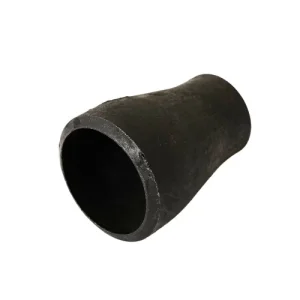
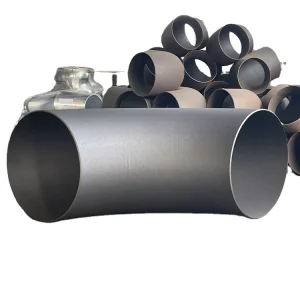
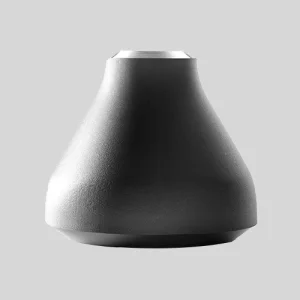
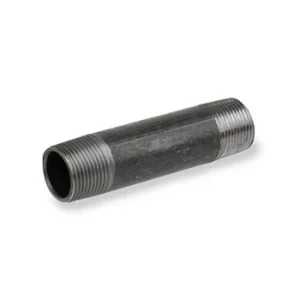
1. Executive Overview: The Global Dynamics of Steel Piping Infrastructure
In modern heavy engineering—ranging from deep-sea oil extraction and LNG processing terminals to nuclear power generation and cross-border hydrogen distribution networks—steel pipes, butt-weld fittings, forged flanges, and industrial control valves represent the critical fluid transport matrix. Selecting verified, famous steel pipe and fittings manufacturers & suppliers is not merely a commercial procurement task; it is a vital safety and structural risk management imperative.
The global industrial landscape demands robust supply chain integration. Leading manufacturing hubs, such as Cangzhou in Hebei Province, China, have consolidated raw steel forging, pipe rolling, heat treatment, and precision CNC machining into unified industrial clusters. Factories under industrial groups—such as Hebei Cangrun Pipeline Equipment Co., Ltd. along with dedicated production arms Cangzhou Feiwo Metal Products Co., Ltd. and Cangzhou Feixiang Metal Products Co., Ltd.—provide global EPC contractors with single-source supply chain assurance. By managing the end-to-end production process from billets to finished forged flanges and heavy-wall butt-weld elbows, these manufacturers guarantee chemical composition alignment, mechanical stress tolerance, and schedule reliability across international shipping lanes.
2. Metallurgical Engineering & Production Processes
Industrial piping systems rely on two distinct structural elements: the continuous tubular conduit (Seamless, ERW, LSAW, SSAW pipe) and the direction/diameter control elements (elbows, tees, reducers, caps, flanges, and valves). Understanding the thermal and mechanical processing paths is essential for engineers specifying components under harsh operating conditions.
Seamless & Welded Pipe Metallurgy
Seamless steel pipes (ASTM A106, A53, API 5L) are manufactured via hot rotary piercing of solid steel billets, eliminating longitudinal weld seams and maximizing torsional and hoop strength. For larger diameters (above 24 inches), Electric Resistance Welding (ERW) and Longitudinal Submerged Arc Welding (LSAW) utilize precision edge conditioning and automated multi-pass arc welding under flux protection to ensure 100% joint efficiency.
Butt-Weld Fitting Hot Push & Forging
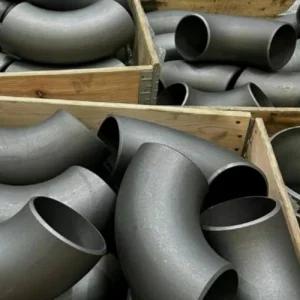
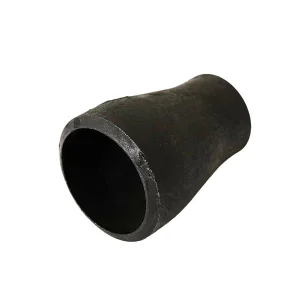
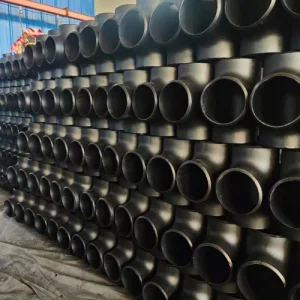
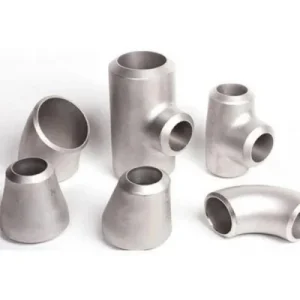
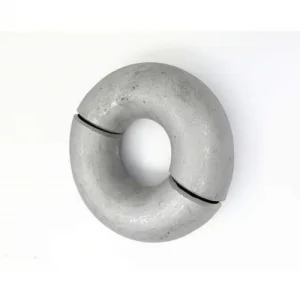
Seamless elbows (such as 1.5D Long Radius ASTM A234 WPB or A403 WP304/316) are formed using mandrel hot-pushing technology. Pipe segments are pushed over a horn-shaped mandrel under induction heating (750°C–950°C), maintaining wall thickness uniformity while expanding to the final curvature. Reducers and tees undergo hydraulic cold shaping or hot die forging, followed by full normalizing or solution annealing to relieve internal mechanical stresses.
Flange Forging & Machining Precision
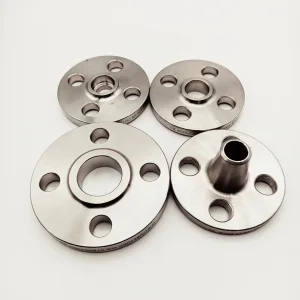
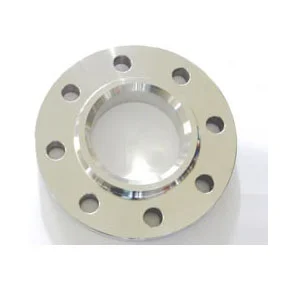
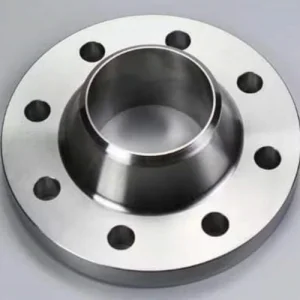
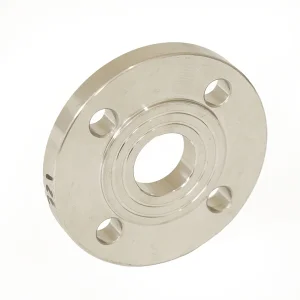
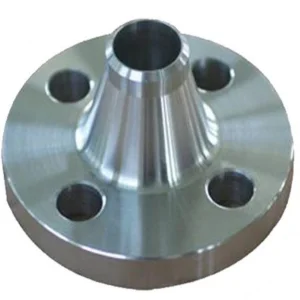
Forged steel flanges—including Weld Neck (WNRF), Slip-On (SORF), Blind (BLRF), and Socket Weld (SWRF)—are manufactured via closed-die or ring-rolling forging methods (ASTM A105 / A350 LF2 / A182 F304/F316). Forged structures eliminate internal porosity and grain boundary segregation. Sealing faces (Raised Face, Flat Face, Ring Type Joint - RTJ) are precision-machined on multi-axis CNC lathes to achieve exact roughness parameters (Ra 3.2 to 6.3 µm for serrated finishes).
3. Global Standards Compliance & Metallurgical Grade Matrix
To assist procurement engineering teams and piping designers in matching component specifications with operational pressure-temperature (P-T) ratings, the table below consolidates key international standards and material grades manufactured by top steel pipe and fitting suppliers.
| Component Group | Dimensional Standards | Material Specifications | Pressure / Schedule Classes | Typical Service Environment |
|---|---|---|---|---|
| Butt-Weld Fittings (Elbows, Tees, Reducers, Caps) |
ASME B16.9, MSS SP-75, JIS B2311 / B2312 / B2313, GB/T 12459, GB/T 13401, EN 10253 |
ASTM A234 WPB / WPC, WPL6, Alloy Steel ASTM A234 WP11 / WP22 / WP91, Stainless ASTM A403 WP304/304L / 316/316L / 317L |
SCH 10S to SCH 160, STD, XS, XXS Wall thickness up to 150 mm (DN15 to DN1900 / 1/2" to 78") |
High-pressure refinery piping, power generation steam lines, cryogenic gas plants, chemical plants. |
| Forged Steel Flanges (Weld Neck, Slip-On, Blind, Threaded) |
ASME B16.5, ASME B16.47 Series A/B, EN 1092-1, DIN 2501, GOST 12820, JIS B2220 |
Carbon Steel ASTM A105 / A350 LF2, Stainless Steel ASTM A182 F304/F304L / F316/F316L, Duplex ASTM A182 F51 (2205) / F53 (2507) |
Class 150, 300, 600, 900, 1500, 2500 PN2.5 to PN400 (DN10 to DN4000 / 3/8" to 160") |
High-pressure vessel nozzles, offshore platform manifold connections, subsea pipelines. |
| Seamless & Welded Steel Pipes | ASME B36.10M, ASME B36.19M, API 5L, EN 10216, DIN 17175 |
ASTM A106 Gr. B / A53 Gr. B, API 5L PSL1/PSL2 Gr. B X42 through X80, ASTM A333 Grade 6 (Low Temp) |
SCH 20, 40, 80, 120, 160, XXS Sizes: 1/8" to 64" OD |
Long-distance oil & gas transmission, structural piling, high-temperature boiler tubes. |
| Forged High-Pressure Fittings (Threaded NPT, Socket Weld) |
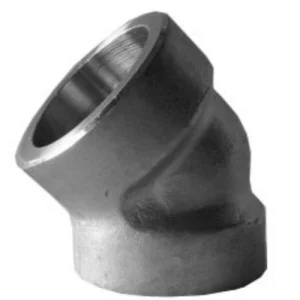
ASME B16.11, MSS SP-83 / SP-95 | ASTM A105, A182 F304/316, A350 LF2 | Class 2000, 3000, 6000, 9000 | Hydraulic lines, instrument takeoff points, chemical injection systems. |
| Industrial Valves (Gate, Ball, Butterfly Valves) |
API 600, API 6D, API 609, ASME B16.34, EN 593 |
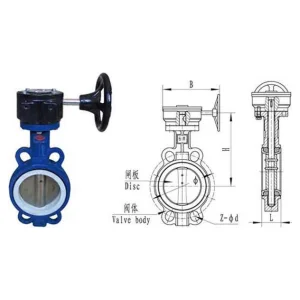
Cast Steel A216 WCB, Stainless A351 CF8/CF8M, Ductile Iron QT450 (Z41T/W, Z45X, Q41F, D342X) |
PN10, PN16, PN25, Class 150 to 600 Temperatures: -20°C to 425°C |
Municipal water utility networks, isolation control in chemical processing, steam headers. |
4. Macro Industry Solutions & System Integration
Different heavy industrial sectors impose unique environmental, mechanical, and chemical demands on piping hardware. Trusted manufacturers supply integrated packages tailored to these specific operational requirements.
Oil & Gas Refining and Petrochemical Services
Hydrocarbon processing facilities operate under elevated temperatures and high pressures, often handling sour crude containing hydrogen sulfide (H2S). Piping systems must comply strictly with NACE MR0175/ISO 15156 to prevent Sulfide Stress Cracking (SSC). Steel pipe manufacturers supply killed carbon steel (ASTM A106 Gr. B / A234 WPB) with controlled carbon equivalents (CE ≤ 0.43%) and specialized alloy fittings (WP11, WP22, WP91) capable of resisting hydrogen attack and thermal creep up to 600°C.
Power Generation & Supercritical Boilers
Ultra-supercritical (USC) thermal power plants utilize steam temperatures exceeding 600°C and pressures over 30 MPa. Under these conditions, standard carbon steel fails rapidly due to oxidation and creep degradation. Advanced alloy pipe fittings—such as ASTM A234 WP91 (9Cr-1Mo-V) and WP92—are mandatory. Precision heat treatments (Normalizing at 1040°C followed by Tempering at 760°C) ensure tempered martensitic microstructures that sustain creep-rupture strength over extended service lifespans.
Chemical Processing & Corrosive Fluid Transport
Transporting acids, alkalis, and chloride-rich media requires austenitic stainless steel (ASTM A403 WP304L, WP316L, 317L) or Duplex/Super Duplex stainless steels (UNS S31803 / S32750). Duplex fittings deliver dual-phase ferritic-austenitic microstructures providing Pitting Resistance Equivalent Numbers (PREN ≥ 40), offering superior resistance to Chloride Pitting and Stress Corrosion Cracking (SCC) in marine desalination and chemical synthesis plants.
LNG & Cryogenic Gas Infrastructure
Liquefied Natural Gas (LNG) processing occurs at cryogenic temperatures down to -162°C. Standard ferritic steels undergo ductile-to-brittle transitions at low temperatures. Suppliers furnish Nickel-alloy steels (ASTM A333 Grade 6, A420 WPL6) and austenitic stainless steel components subjected to Charpy V-Notch impact testing at -196°C to guarantee structural toughness and prevent catastrophic fracture in LNG storage tanks and loading arms.
5. Quality Assurance, NDT Inspection & Compliance Safeguards
Reliable steel pipe and fitting suppliers enforce stringent Quality Assurance (QA) and Quality Control (QC) frameworks. Prior to dispatch, components undergo rigorous Non-Destructive Testing (NDT) and chemical verification to guarantee compliance with project material data sheets (MDS).
Positive Material Identification (PMI)
Utilizing handheld X-ray Fluorescence (XRF) and Optical Emission Spectrometry (OES) analyzers, 100% PMI verification confirms that alloying elements (Cr, Ni, Mo, V, Cu) match EN 10204 3.1 / 3.2 Material Test Reports (MTR), preventing material mix-ups in stainless and chrome-moly fitting batches.
Volumetric & Surface NDT
Volumetric integrity of welds and heavy forgings is verified using Radiographic Testing (RT) and Ultrasonic Testing (UT) per ASME Section V. Magnetic Particle Inspection (MPI) and Liquid Penetrant Testing (PT) detect surface discontinuities in bevel edges and flange radius corners.
Hydrostatic & Mechanical Testing
Pipes, valves, and fabricated spools undergo hydrostatic pressure testing up to 1.5 times the design pressure limit. Destructive testing—including Tensile Strength, Yield Strength, Elongation, Hardness (HBW/HRC), and Charpy V-Notch Impact tests—is performed on sample coupons per heat lot.
6. Technical Roadmap: Smart Piping & Green Steel Transition
The industrial steel piping sector is undergoing a technology transformation driven by digital integration, predictive maintenance, and carbon-neutral manufacturing.
IoT-Enabled Smart Flanges & Leakage Sensing
Next-generation piping installations integrate smart gasket sensors and wireless piezo-electric strain gauges directly into ASME B16.5 flange assemblies. These sensors monitor bolt tension loss, thermal expansion stresses, and micro-flange misalignments in real time, transmitting predictive maintenance data to central SCADA systems before volatile gas leaks occur.
Green Steel & Low-Carbon Manufacturing
Leading manufacturing groups are adopting Hydrogen Direct Reduced Iron (H-DRI) processes and Electric Arc Furnace (EAF) smelting powered by renewable energy. This decarbonization strategy reduces the embedded carbon footprint of seamless steel pipes and heavy butt-weld elbows by up to 60%, assisting global energy companies in fulfilling Scope 3 emission targets.
7. Technical FAQ: Piping Engineering & Procurement
Expert engineering answers to common technical queries regarding steel pipe, fitting, flange, and valve specification.
Featured Industrial Pipe Fittings & Flange Solutions (Part II)
Review our extended range of high-performance seamless elbows, industrial tees, stainless steel valve units, and international standard forged flanges.