
Famous Stainless Steel Pipe Fittings Supplier & Product
Primary Industrial Piping & Flange Components
Explore our flagship, factory-direct stainless steel fittings, carbon steel nipples, and heavy-duty forged flanges engineered for high-pressure fluid control across offshore, chemical, and nuclear environments.
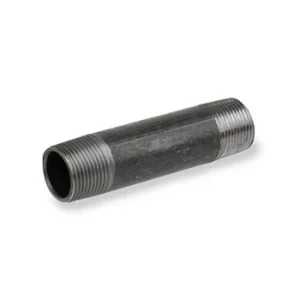
Famous NPT Thread Pipe Nipple Black Steel Factories, Companies
View Product Details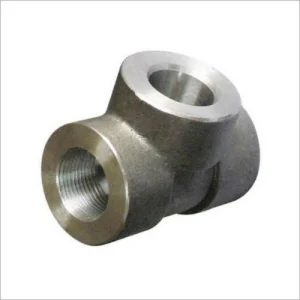
Buy Threaded Equal Tee Forged Fittings 150LB Manufacturers, Factory
View Product Details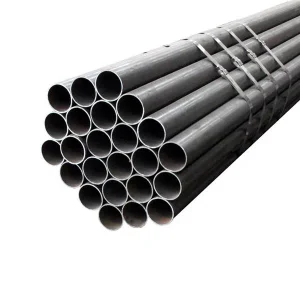
Best Industrial Welded Steel Pipe Supplier, Product
View Product Details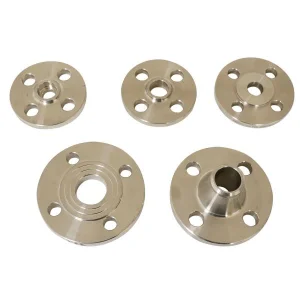
Wholesale WN SO Blind Flange ASTM A 105 Manufacturers, Company
View Product Details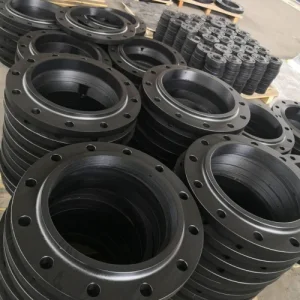
China SS304 Flange Suppliers, Company
View Product Details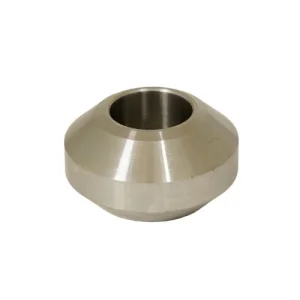
Famous SS304 Weldolet Exporter, Products
View Product Details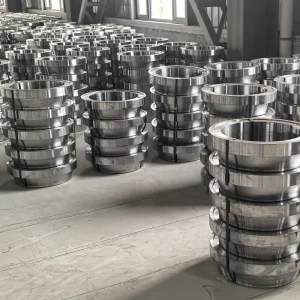
Buy Stainless Steel Flange Hubbed Slip Wn Flange Suppliers, Factory
View Product Details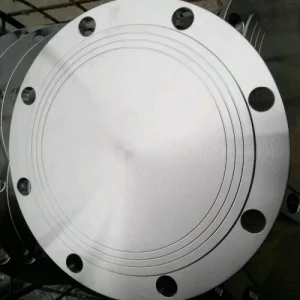
Discount Blind RF A105 Supplier, Company
View Product DetailsMetallurgical Engineering & Alloy Selection Framework
An authoritative technical analysis for piping stress engineers, metallurgists, and global procurement directors navigating complex corrosive media and high-pressure fluid dynamics.
In modern industrial fluid handling, the selection of stainless steel pipe fittings—ranging from seamless butt-weld elbows to high-pressure forged tees—is directly governed by the operational interplay of chemical exposure, thermal expansion coefficients, yield strength, and resistance to localized micro-corrosion. As a premier Famous Stainless Steel Pipe Fittings Supplier, our manufacturing protocols are founded on strict compliance with ASTM A403, ASME B16.9, ASME B16.11, and MSS SP-43 technical specifications.
Chemical Composition & Mechanical Performance Matrix
To assist engineering procurement teams in verifying material test reports (MTRs) according to EN 10204 3.1/3.2, the following technical matrix details the chemical limits and mechanical properties of our core stainless steel fitting alloys:
| ASTM Grade | UNS Designation | PREN Index | Yield Strength (MPa) | Tensile Strength (MPa) | Primary Application Environment |
|---|---|---|---|---|---|
| WP304 / 304L | S30400 / S30403 | 18.0 - 20.0 | ≥ 205 | ≥ 515 | General commercial piping, municipal water networks, food process piping. |
| WP316 / 316L | S31600 / S31603 | 23.0 - 25.5 | ≥ 220 | ≥ 520 | Marine structures, chemical processing, acidic fluid transport, pulp & paper. |
| WP321 / 321H | S32100 / S32109 | 19.0 - 21.0 | ≥ 205 | ≥ 515 | High-temperature exhaust headers, thermal power boilers (Titanium stabilized up to 870°C). |
| WP347 / 347H | S34700 / S34709 | 19.0 - 21.0 | ≥ 205 | ≥ 515 | Heavy refinery hydrocracking, petrochemical steam lines (Niobium/Columbium stabilized). |
| UNS S32205 (Duplex) | S32205 / 2205 | 32.0 - 35.0 | ≥ 450 | ≥ 655 | High-chloride brine systems, offshore oil production, seawater desalination high-pressure pumps. |
| UNS S32750 (Super Duplex) | S32750 / 2507 | ≥ 42.0 | ≥ 550 | ≥ 750 | Deep-sea subsea manifolds, aggressive chemical reactors, sour gas processing (NACE MR0175). |
The Pitting Resistance Equivalent Number (PREN) is calculated using the formula: $PREN = \%Cr + 3.3(\%Mo + 0.5\%W) + 16(\%N)$. Fittings operating in aggressive marine or acidic conditions require a minimum PREN of 32 for duplex alloys and >40 for super duplex grades to completely eliminate micro-pitting and crevice corrosion under high fluid velocities.
Global Industrial Landscape & Macro Procurement Trends
Analyzing global supply dynamics, hydrogen energy expansion, LNG infrastructure mega-projects, and localized procurement strategies.
Green Hydrogen Infrastructure
The global shift toward zero-emission energy has catalyzed unprecedented demand for high-purity, seamless stainless steel fittings. Green hydrogen transport requires internal pipe surface roughness ($R_a$) under 0.25 μm to prevent gaseous hydrogen embrittlement and micro-leakage at working pressures exceeding 350 to 700 bar.
LNG Cryogenic Expansion
Liquefied Natural Gas (LNG) processing plants operating at -162°C require specialized austenitic stainless steels (such as 304L and 316L) subjected to Charpy V-Notch impact testing at cryogenic temperatures. Standard carbon steel loses ductility, whereas austenitic fittings retain high impact toughness and structural integrity.
Ultra-Pure Semiconductor FABs
Modern semiconductor fabrication units depend on ultra-high purity (UHP) gas lines and Ultra-Pure Water (UPW) loops. Pipe fittings manufactured under cleanroom conditions with electro-polished (EP) inner surfaces prevent ion contamination, particle generation, and micro-bacterial film accumulation.
China Industry 4.0: Supply Chain Resilience & Manufacturing Precision
How Cangzhou’s industrial cluster leverages automated forging, 5-axis CNC machining, AI-driven quality assurance, and complete vertical integration to supply global markets.
Smart Automated Cold Forming & Hydraulic Extrusion
Traditional fitting production relied on manual hot-pushing techniques that resulted in inconsistent wall thickness across outer radii (extrados) and inner curves (intrados). Our smart manufacturing facilities employ automated, multi-stage hydraulic cold-extrusion presses integrated with real-time laser ultrasonic thickness measuring sensors.
This ensures that every 90° long radius elbow or reducing tee retains its strict minimum wall thickness ($t_{min}$) in accordance with ASME B16.9, completely eliminating stress concentration points during high-pressure thermal cycling.
Rigorous Quality Control & NDT Testing Standards
Quality reliability is the foundation of our engineering authority. Every batch of raw seamless stainless steel pipe stock undergoes 100% positive material identification (PMI) using handheld X-ray fluorescence (XRF) analyzers before entering production.
- Hydrostatic Pressure Testing: Up to 250 bar to verify structural tightness.
- Radiographic Testing (RT): 100% volumetric inspection on welded fittings.
- Liquid Penetrant Inspection (LPI): Surface crack detection on bevel ends.
- Solution Annealing Heat Treatment: Solid solution heat-treated at 1050°C - 1100°C followed by rapid water quenching to restore full corrosion resistance and dissolve chromium carbides.
Comprehensive Standards & Dimensional Framework
Full compliance with international engineering codes for seamless and welded pipe fittings, forged components, and industrial flanges.
Butt-Weld Pipe Fittings (ASME B16.9 / EN 10253)
Butt-weld components represent the primary method for joining heavy-wall piping networks in high-pressure applications. Weld bevel ends are precision-machined to ASME B16.25 standards (37.5° ± 2.5° bevel angle with a 1.6 mm land).
- Size Range: Seamless 1/2" to 24" (DN15 - DN600); Welded 4" to 72" (DN100 - DN1800).
- Wall Thickness Schedules: SCH 5S, SCH 10S, SCH 40S, SCH 80S, SCH 160, XXS.
- Fittings Offered: 45° / 90° / 180° Elbows (Long & Short Radius), Equal Tees, Reducing Tees, Concentric Reducers, Eccentric Reducers, Pipe Caps, Stub Ends (Lap Joint).
Forged Socket-Weld & Threaded Fittings (ASME B16.11)
Forged fittings are manufactured for compact, high-pressure piping systems where zero-leakage security is paramount, such as hydraulic lines, chemical dosing units, and instrumentation manifolds.
- Pressure Class Ratings: Threaded (NPT/BSPT) 2000LB, 3000LB, 6000LB; Socket-Weld 3000LB, 6000LB, 9000LB.
- Material Compliance: ASTM A182 F304/304L, F316/316L, F321, F347, F51, F53.
- Fittings Offered: Threaded Coupling, Half Coupling, Equal Tee, Union, Hex Nipple, Street Elbow, Weldolet, Threadolet, Sockolet.
Engineering Reference: Barlow's Formula for Internal Pressure Design
The internal design pressure ($P$) of a straight seamless stainless steel pipe fitting is calculated per ASME B31.3 Process Piping Code using Barlow’s equation: $$P = \frac{2 \cdot S \cdot E \cdot (t - c)}{D_o - 2 \cdot Y \cdot (t - c)}$$ Where $S$ = Basic allowable stress value of material (PSI/MPa), $E$ = Longitudinal weld joint quality factor, $t$ = Nominal wall thickness, $c$ = Mechanical allowances (thread depth or corrosion allowance), $D_o$ = Outside diameter of pipe, and $Y$ = Temperature-dependent coefficient (0.4 for austenitic steel at $T \le 482^\circ\text{C}$).
Localized Application Scenarios & Industrial Solutions
Proven engineering deployments of our stainless steel piping solutions across complex global operational environments.
Offshore FPSO Topside Piping
Environment: Severe marine environment with high chloride exposure and continuous structural vibration on Floating Production Storage and Offloading vessels.
Solution: We supplied Duplex UNS S31803 / 2205 seamless butt-weld tees and slip-on flanges subjected to 100% dye penetrant inspection and 22°C Critical Pitting Temperature (CPT) testing per ASTM G48 Method A.
Ethylene Steam Cracking Units
Environment: Extreme thermal cycling from ambient temperatures up to 815°C with severe thermal shock risk in petrochemical furnaces.
Solution: High-carbon stabilized ASTM A403 WP347H heavy-wall seamless elbows were deployed to resist intergranular carbide precipitation and grain boundary degradation under prolonged elevated-temperature service.
Biopharmaceutical Cleanrooms
Environment: Sterile Water-For-Injection (WFI) lines requiring total zero-dead-leg geometry and smooth internal finishes to prevent biofilm adhesion.
Solution: ASTM A403 WP316L clean-formed fittings, electro-polished to an internal finish of $R_a < 0.38\,\mu\text{m}$, fully compliant with ASME BPE hygienic standards.
Secondary Product Portfolio & Heavy-Duty Components
Explore our complementary product range, including seamless carbon and stainless reducers, blind flanges, and specialty industrial gate and ball valves.
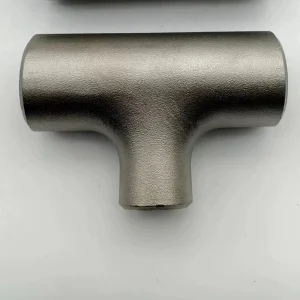
Best Seamless Stainless Steel Carbon Steel Reducer Tee Butt Welding Fitting Tee Factories, Quotes
View Product Details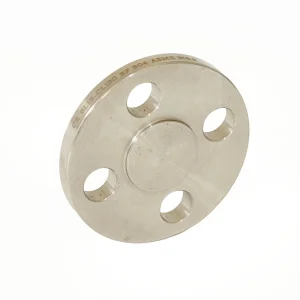
Best Manufacturer for F304 Stainless Steel Flange Blind Flange Supplier, Factories
View Product Details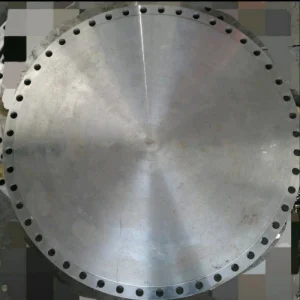
Wholesale Blind FF Flange Suppliers, Companies
View Product Details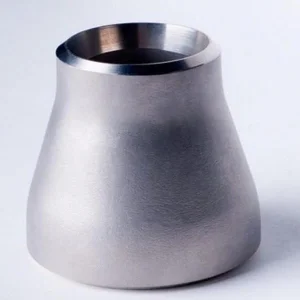
Buy Carbon Steel Elbow Black Mild Steel St20 Pipe Fittings Reducer Eccentric Concentric Reducer Factory, Exporters
View Product Details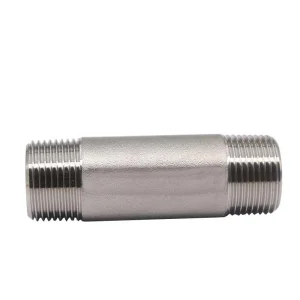
China Stainless Steel Pipe Connector Threaded Pipe Nipples Quotes, Exporter
View Product Details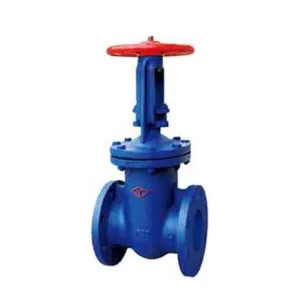
Famous Wedge gate valve Z41T/W-10/16Q Manufacturers, Exporters
View Product Details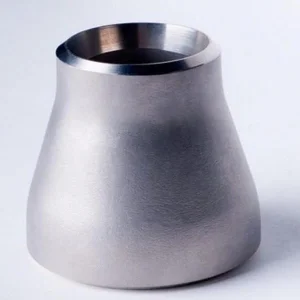
High-Quality Seamless Reducer Concentric DN 850 X DN 600 Sch 10 ASME B16.9 Company, Product
View Product Details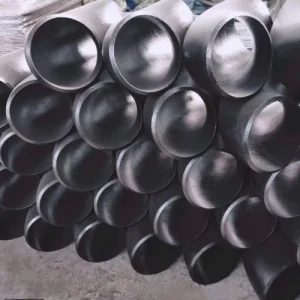
High-Quality BW Pipe Fitting Elbow Quotes, Service
View Product DetailsFrequently Asked Questions (Technical & Procurement Q&A)
In-depth answers addressing design verification, certification, quality standards, and logistics for global engineering buyers.
1. What is the difference between ASTM A403 WP304L and WP316L fitting standards?
2. How does your factory guarantee compliance with EN 10204 3.1 Material Test Reports (MTR)?
3. What pickling and passivation standards are applied to stainless steel pipe fittings?
4. Why are Duplex S32205 / 2205 fittings increasingly replacing 316L in offshore applications?
5. What weld end preparation options are available for heavy-wall fittings?
- Plain Ends (PE): Square cut ends for nominal wall sizes under 0.19 inches (DN15 - DN20).
- Standard Single Bevel: 37.5° ± 2.5° angle with a 1.6 mm root land for wall thicknesses between 0.19 in and 0.88 in (5 mm to 22 mm).
- Compound / Double Bevel (J-Bevel): Specified for extra heavy-wall fittings ($t > 22\,\text{mm}$) to optimize field welding metal deposition and reduce interpass heat input.