
Precision Engineering Flange & Piping Components (Part I)
Direct access to our factory-tested inventory of high-pressure carbon steel, stainless steel 304L, and specialty forged components manufactured under ISO 9001 quality systems.
1. Metallurgical Analysis & Mechanical Integrity of SS 304L Flanges
Stainless steel grade 304L (UNS S30403 / 1.4307 / ASTM A182 F304L) represents the low-carbon variant of the classic 18/8 austenitic stainless steel (Grade 304). In industrial piping networks, the critical distinction lies in the carbon content restriction to a maximum of 0.03%. This controlled chemistry prevents chromium carbide precipitation at the grain boundaries during high-heat exposure (such as welding within the sensitization temperature range of 425°C to 860°C), effectively eliminating the risk of Intergranular Corrosion (IGC) without requiring post-weld solution heat treatment.
Chemical Composition & Mechanical Specification Standard (ASTM A182 / ASME SA182)
| Element / Property | Grade F304 (UNS S30400) | Grade F304L (UNS S30403) | Engineering Impact of 304L Variance |
|---|---|---|---|
| Carbon (C) Max | 0.08% | 0.030% | Prevents sensitized grain boundary corrosion; eliminates weld decay. |
| Chromium (Cr) | 18.0 - 20.0% | 18.0 - 20.0% | Forms passive Chromium Oxide ($Cr_2O_3$) self-healing film. |
| Nickel (Ni) | 8.0 - 11.0% | 8.0 - 12.0% | Stabilizes austenitic FCC crystal matrix down to cryogenic temps. |
| Tensile Strength (Min) | 515 MPa (75 ksi) | 485 MPa (70 ksi) | Slight yield reduction offset by Dual Certification (304/304L). |
| Yield Strength 0.2% (Min) | 205 MPa (30 ksi) | 170 MPa (25 ksi) | Design pressure calculations follow ASME BPVC Sec VIII div 1. |
| PREN Index (Approx.) | 18.0 - 20.0 | 18.0 - 20.0 | Resistant to mild atmospheric and freshwater pitting corrosion. |
In modern industrial forging facilities, leading manufacturers utilize Dual-Certified 304/304L material. Dual certification guarantees that the chemical composition adheres to the low-carbon limits of 304L (C ≤ 0.030%), while mechanical testing satisfies the higher yield and tensile thresholds of standard 304. This dual rating provides EPC contractors with maximum design allowable stress levels alongside absolute immunity to weld sensitization.
2. Global Commercial Landscape & Market Drivers
The global demand for high-integrity stainless steel 304L flanges is experiencing structural growth, driven by energy transitions, green hydrogen infrastructure, LNG regasification hubs, and ultra-pure processing industries.
SS 304L maintains exceptional Charpy V-Notch impact energy down to liquid nitrogen (-196°C) and LNG (-162°C) temperatures. Unlike ferritic steels which undergo ductile-to-brittle transition, 304L flanges remain ductile, preventing catastrophic brittle failure in cryogenic valve manifolds and loading arms.
Weld-neck and blind flanges in 304L resist oxidizing acids (such as nitric acid up to 65% concentration at moderate temperatures) and organic compounds. Used extensively in nitric acid plants, fertilizer production, and solvent recovery columns where weld zone corrosion cannot be tolerated.
In hygienic and sanitary piping systems, 304L forged flanges undergo mechanical polishing and electropolishing (Ra < 0.4 µm). The ultra-smooth surface finish prevents bacterial entrapment and stands up to aggressive Clean-In-Place (CIP) chemical washdowns.
3. Manufacturing Standards & Dimensional Taxonomy
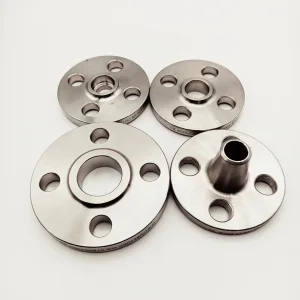
A premier supplier and factory for Stainless Steel 304L Flanges operates dedicated closed-die forging hammers, ring-rolling mills, and CNC machining centers to produce flange geometries conforming strictly to international piping codes including ASME B16.5, ASME B16.47 (Series A & B), EN 1092-1, DIN 2527/2633, and JIS B2220.
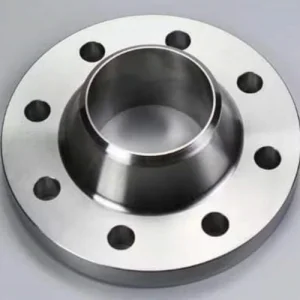
Weld Neck Flanges (WNRF / WNRTJ)
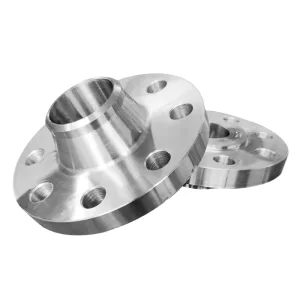
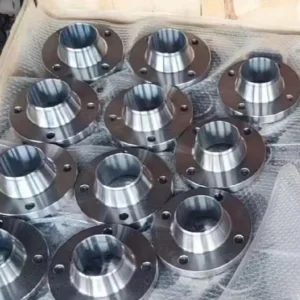
Designed with a tapered hub that transitions stress from the flange base to the pipe wall. The long hub provides structural reinforcement in high-pressure, cyclic loading, and high-temperature environments. Essential for critical refinery headers.
Slip-On Flanges (SORF / SOFF)
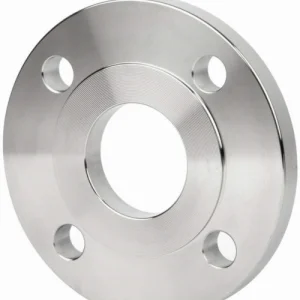
Slipped over the pipe exterior and fillet welded both inside and outside. Offers lower material cost and easier field alignment than weld neck flanges. Recommended for moderate pressure applications (Class 150 to Class 600).
Blind Flanges (BLRF / BLRTJ)
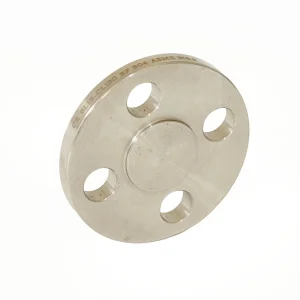
Solid disc forgings designed to seal pipe ends, pressure vessel nozzles, or valve terminations. Subject to higher bending stresses due to internal pressure loads; manufactured with maximum wall thickness safety margins.
Forging & Heat Treatment Technical Workflow
To achieve high structural integrity, void-free grain structure, and optimal corrosion resistance, famous 304L flange factories execute a controlled sequence of thermomechanical processing:
- Billet Selection & Spectrometric Verification: Tier-1 raw material ingots undergo optical emission spectrometry (OES) to ensure C ≤ 0.030%, Cr ≥ 18.0%, Ni ≥ 8.0%.
- Precision Heating & Closed-Die Forging: Billets are heated to 1150°C - 1200°C in gas-fired furnaces. Heavy hydraulic forging hammers compact the grain structure, eliminating internal porosity.
- Solution Annealing (1040°C - 1120°C): Forged blanks are reheated into the single-phase austenite range to fully dissolve any precipitated carbides, followed immediately by rapid water quenching. Quenching freezes the low-carbon matrix in a homogeneous state.
- Precision CNC Machining & Facing: Flange faces are machined with controlled spiral or concentric serrations (ASME B16.5 specifies a surface roughness of Ra 3.2 µm to 6.3 µm / 125 to 250 micro-inches) to optimize gasket seating stress.
4. Regulatory Compliance & Verification Protocol
Procuring piping infrastructure for nuclear facilities, cross-border gas pipelines, and offshore platforms requires zero-defect quality verification. Top-tier 304L flange manufacturers operate stringent testing regimes compliant with European, North American, and Asian statutory regulations.
EN 10204 3.1 & 3.2 Material Traceability
Every export shipment is accompanied by Mill Test Certificates (MTC) according to EN 10204 Type 3.1 (factory independent QA inspector) or Type 3.2 (third-party inspection agencies such as Lloyd's Register, TÜV, DNV, or SGS). Certifications report actual heat numbers, chemical heats, heat treatment logs, and mechanical test values.
Non-Destructive Examination (NDT)
Flanges undergo Positive Material Identification (PMI) using X-ray fluorescence (XRF) devices to guarantee 0.00% alloy mix-ups. High-pressure rated flanges (Class 600+) undergo 100% Ultrasonic Testing (UT) per ASTM A388 to detect internal voids, forging bursts, or inclusions.
5. Specialized Localized Field Applications
Engineering insights into how Stainless Steel 304L flanges operate under diverse environmental stresses across global industrial nodes.
Offshore Marine Terminals
304L flanges are specified in topside utility water piping, fire mains, and drainage systems where atmospheric salt spray is present. Low carbon prevents galvanic crevice corrosion under standard gasket seating stress.
Nuclear Waste Processing
In radiochemical processing, piping lines are exposed to nitric acid solvents and radiation. 304L's resistance to IGC prevents weld degradation over multi-decadal plant life cycles.
Cryogenic Air Separation
Air separation units producing liquid oxygen ($LOX$), liquid nitrogen ($LN_2$), and argon utilize 304L weld neck flanges to ensure zero thermal shock embrittlement down to -196°C.
High-Purity Water Systems
Demineralized and Deionized (DI) water lines in microelectronics plants utilize passivated 304L flanges to maintain fluid purity without ion leaching or rouge formation.
6. Technical Roadmap & Future Industry Outlook (2025-2035)
The flange manufacturing sector is undergoing a dual transformation: green steel decarbonization and digital twin integration. As global environmental mandates tighten, famous stainless steel suppliers are pioneering next-generation manufacturing practices:
Green Steel & Zero-Carbon Forging
Integration of Electric Arc Furnace (EAF) melting fed by 100% direct reduced iron (DRI) and green hydrogen fuel. Carbon footprint per ton of forged 304L steel is projected to drop by 65% by 2030.
Smart Flanges & IoT Integrity Sensors
Embedded acoustic emission and micro-strain sensor nodes within flange bolt circles. Real-time telemetry detects gasket degradation, bolt relaxation, and flange rotation prior to hazardous chemical leaks.
Additive Manufacturing Hybrids
Selective laser melting (SLM) additive techniques combined with CNC subtractive finishing. Enables custom non-standard 304L flange geometries with internal cooling channels for extreme heat exchangers.
7. Frequently Asked Engineering Questions (Q&A)
Direct solutions to common procurement, metallurgical, and installation queries raised by piping engineers and technical purchasers.
Precision Engineering Flange & Piping Components (Part II)
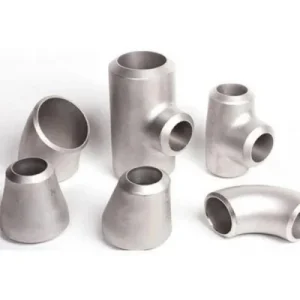
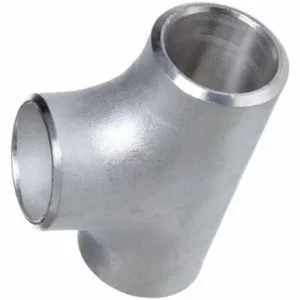
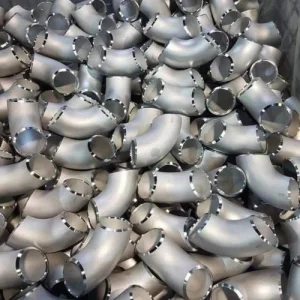
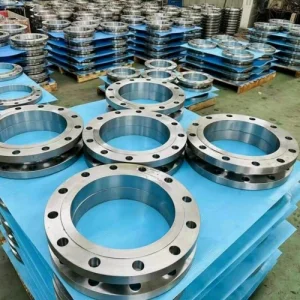
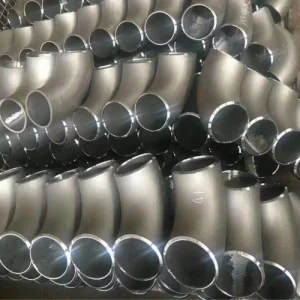
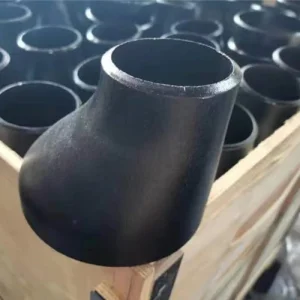
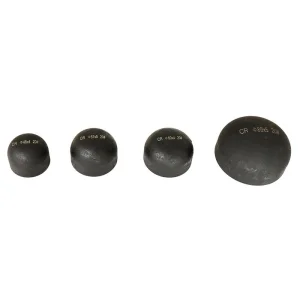
Explore additional high-grade pipe fittings, elbows, reducers, and custom stainless steel flanges available for immediate international dispatch.
Partner with a Premier Stainless Steel 304L Flange Manufacturer
Whether specifying full piping take-offs for LNG regasification plants, chemical process loops, or municipal water projects, our engineering sales team provides rapid CAD drawings, EN 10204 3.1 material certificates, and competitive mill-direct quotations.
Contact Engineering Sales Team