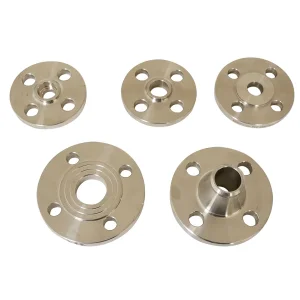
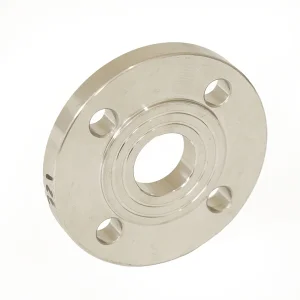
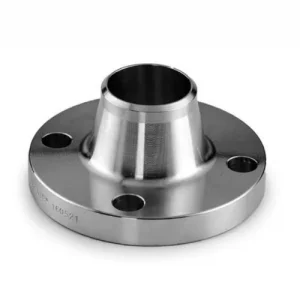
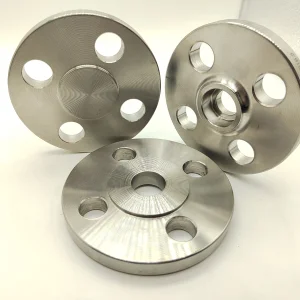
Featured Industrial Seamless Tees & Piping Components
Explore our top-tier precision-engineered seamless tees, flanges, and piping components manufactured under strict ISO 9001 and ASME quality assurance frameworks.
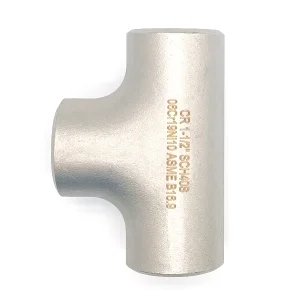
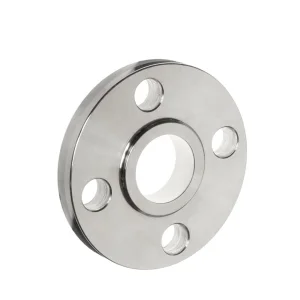
The Engineering Paradigm of Seamless Tees in Modern Piping Architecture
Understanding why leading Tier-1 EPC contractors prioritize seamless butt-weld tees over fabricated welded alternatives in extreme temperature and high-pressure fluid circuits.
Seamless Grain Continuity
Fabricated tees rely on circumferential and longitudinal welds that introduce Heat-Affected Zones (HAZ), increasing susceptibility to intergranular corrosion and stress-cracking. Seamless tees produced by cold hydroforming preserve continuous grain orientation throughout the branch junction, maximizing structural resilience under cyclic pressure pulses.
Optimized Flow Hydraulics
The interior crotch region of a famous seamless tee is engineered with a smooth, contoured radius. This fluid dynamic optimization minimizes turbulence, lowers pressure drops across 90-degree branch diversions, and eliminates localized erosion-corrosion phenomena common in sharply welded mitred branch connections.
Superior Pressure Rating
Operating strictly according to ASME B16.9 and MSS SP-75 standards, seamless tees guarantee 100% burst strength parity with the parent seamless pipe. This rating eliminates the need for weld joint efficiency reduction factors (e.g., E=0.85), allowing lightweight wall thickness selection without compromising plant safety factors.
Cold Hydroforming vs. Hot Extrusion: Manufacturing Technologies
A look into how world-famous seamless tee manufacturers achieve precision wall thickness uniformity and eliminate material defects.
Raw Pipe Selection
Ultrasonically tested, prime-grade seamless raw steel pipes (ASTM A234 WPB, A403 WP316L, or UNS S31803) undergo spectral chemical verification before entering the cold cutting line.
Hydraulic Cold Bulging
The seamless pipe cut is placed in a custom die. High-pressure liquid is injected inside while horizontal rams push both ends, forcing steel outward into the branch cavity under computer-controlled hydroforming pressure.
Thermal Heat Treatment
Formed tees undergo full normalizing, solution annealing, or quenching and tempering in digital furnace lines to relieve cold-working stresses and restore optimal mechanical tensile properties.
Beveling & NDT Testing
Computerized CNC machinery cuts weld bevel angles according to ASME B16.25. Non-Destructive Testing (NDT)—including Radiographic Testing (RT) and Magnetic Particle Inspection (MPI)—verifies zero internal flaws.
Global Seamless Tee Material Specifications & Benchmarks
Comparison matrix of primary alloy compositions, pressure design limits, and international regulatory compliance criteria for industrial piping infrastructure.
| Material Grade | Standard Specification | Yield Strength (Min.) | Tensile Strength (Min.) | Primary Sector Applications |
|---|---|---|---|---|
| Carbon Steel A234 WPB | ASME B16.9 / ASTM A234 | 240 MPa (35 ksi) | 415 - 585 MPa | Refining, Steam Lines, Oil Transmissions |
| High-Yield Steel MSS SP75 WPHY65 | MSS SP-75 / API 5L | 450 MPa (65 ksi) | 535 - 760 MPa | Cross-Country High-Pressure Natural Gas Pipelines |
| Stainless Steel A403 WP316/316L | ASTM A403 / EN 10253-4 | 205 MPa (30 ksi) | 515 MPa | Chemical Processing, Offshore Marine, Cryogenics |
| Duplex Steel UNS S31803 (2205) | ASTM A815 / EN 10283 | 450 MPa (65 ksi) | 655 - 880 MPa | Sour Gas (H2S), Desalination Plants, Subsea Umbilicals |
| Alloy Steel ASTM A234 WP91 | ASTM A234 / ASME SA234 | 415 MPa (60 ksi) | 585 - 760 MPa | Ultra-Supercritical Thermal Power Plants (560°C+) |
Enterprise Procurement & Sector-Specific Deployments
How global procurement managers mitigate risk, streamline total cost of ownership (TCO), and ensure field compliance when selecting seamless tee vendors.
Subsea & Offshore Engineering
Offshore FPSOs and deepwater manifolds demand zero hydrostatic leakage risks. Seamless tees in Super Duplex S32750 provide immunity to pitting corrosion in chloride-rich marine environments while standing up to high external hydrostatic ocean pressures.
Hydrocarbon Refining & Hydrogen Transport
In high-temperature hydrocracking and emerging hydrogen transmission infrastructure, atomic hydrogen embrittlement poses severe risks to traditional welds. Seamless tees formed with smooth internal transitions eliminate stress concentrations, safeguarding refinery integrity under H2 atmosphere conditions.
Regulatory Compliance & MTR 3.1/3.2
Famous manufacturers provide complete traceability. Every seamless tee is stamped with heat numbers corresponding to EN 10204 3.1 or independent 3.2 inspection certificates verified by Lloyd's Register, SGS, or TÜV Rheinland.
Technological Roadmap & Future Outlook for Seamless Tees
Emerging innovations transforming the manufacture, quality control, and life-cycle monitoring of seamless branch fittings over the next decade.
AI-Powered Hydroforming Finite Element Analysis (FEA)
Modern plants integrate real-time artificial intelligence models into hydraulic cold-forming presses. By simulating micro-wall thickness variations in real time, AI control systems adjust hydraulic ram forces dynamically, achieving uniform wall thickness across branch crotches to within ±0.1mm accuracy.
Green Steel & Low-Carbon Seamless Production
In alignment with global Net-Zero carbon mandates, top manufacturers are shifting raw billet supply chains to Hydrogen-Direct Reduced Iron (H2-DRI) Electric Arc Furnace (EAF) mills. This transition cuts the embodied carbon footprint of high-pressure seamless tees by up to 75% without compromising mechanical toughness.
Smart RFID & IoT Integrated Pipeline Management
Next-generation seamless tees feature embedded high-temperature micro-RFID tags and non-destructive ultrasonic sensor pads. Maintenance teams can scan tee junctions remotely to track wall thinning from internal slurry erosion without stripping external thermal insulation cladding.
Frequently Asked Questions (Technical & Procurement Q&A)
Direct answers to crucial technical questions posed by piping stress engineers and global procurement specialists.
What is the structural difference between an Equal Seamless Tee and a Reducing Seamless Tee?
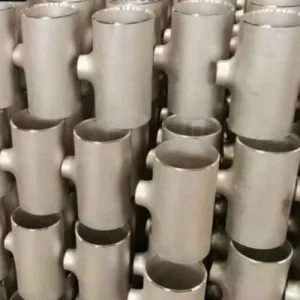
An Equal Seamless Tee features three openings of identical nominal pipe size (NPS), designed to branch fluid off equally without velocity adjustments. A Reducing Seamless Tee features a branch outlet with a smaller diameter than the run pipe headers (e.g., 8" x 8" x 4"), allowing controlled pressure transformation and fluid acceleration into secondary branch distribution lines without requiring additional line reducers.
Why is hydroforming preferred over hot extrusion forging for stainless steel seamless tees?
Cold hydroforming preserves the bright, unoxidized surface finish of austenitic stainless steels (such as 304L and 316L) and prevents high-temperature carbide precipitation (sensitization) that can occur during hot forging. Hydroforming also ensures tighter dimensional tolerances on wall thickness and ovality across the crotch zone.
How do ASME B16.9 and MSS SP-75 standards govern seamless tee testing?
ASME B16.9 governs factory-made wrought butt-welding fittings for general industrial service, mandating that fittings pass proof-burst testing equivalent to the matching pipe. MSS SP-75 specifically governs high-test wrought butt-welding fittings used in high-pressure oil and gas transmission pipelines, imposing stricter notch toughness (Charpy V-Notch impact testing) and higher yield strength requirements up to grade WPHY80.
What non-destructive examination (NDE) methods are mandatory for high-pressure seamless tees?
Standard quality protocols mandate 100% Ultrasonic Testing (UT) for wall thickness verification and internal lamination detection, Liquid Penetrant Testing (PT) or Magnetic Particle Testing (MT) for surface micro-cracks, and 100% Positive Material Identification (PMI) using X-ray fluorescence (XRF) to confirm chemical alloy compliance before export packaging.
How does NACE MR0175/ISO 15156 compliance affect material selection for seamless tees?
For oil and gas environments containing hydrogen sulfide (H2S wet sour gas), NACE MR0175 mandates strict hardness limits (typically maximum 22 HRC for carbon steels) and specific heat treatment conditions (e.g., double tempering or solution annealing) to prevent Sulfide Stress Cracking (SSC) and Hydrogen-Induced Cracking (HIC) in seamless fittings.
What logistics lead-time buffers should enterprise buyers budget for custom seamless tee orders?
Standard carbon steel seamless tees (DN15-DN300) are typically supplied from mill inventory within 7-14 days. Custom heavy-wall alloy tees (e.g., WP91, Inconel 625, or Super Duplex in sizes above DN400 requiring dedicated die forging, solution heat treatment, and 3.2 TPI inspection) require 35 to 60 calendar days for manufacturing prior to port dispatch.
Complementary Industrial Pipeline Products
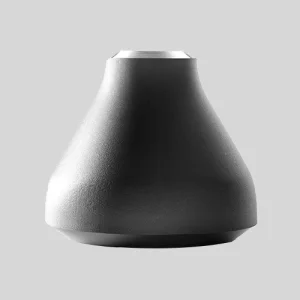
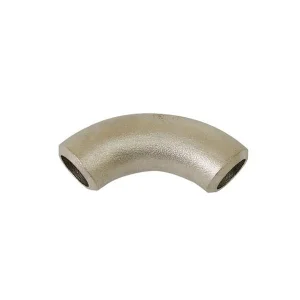
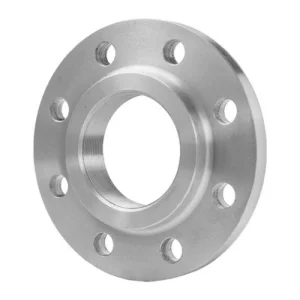
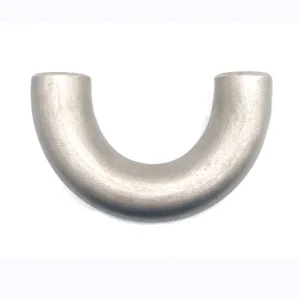
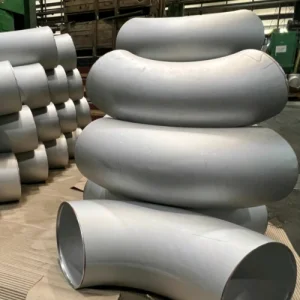
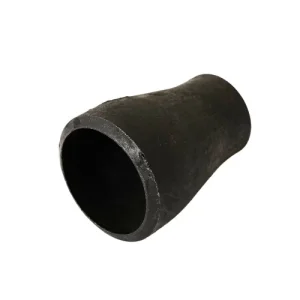
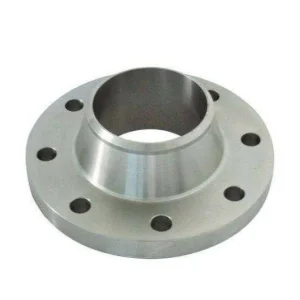
Discover our extended line of butt-weld reducers, heavy-duty forged flanges, and high-pressure pipe elbows for comprehensive fluid system assembly.