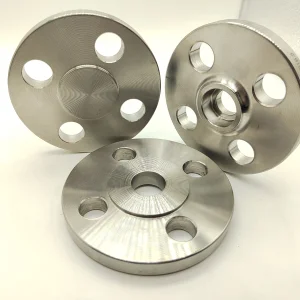
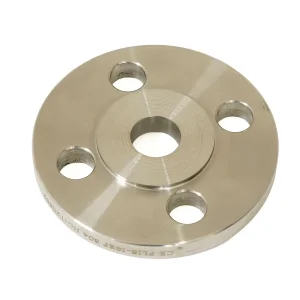
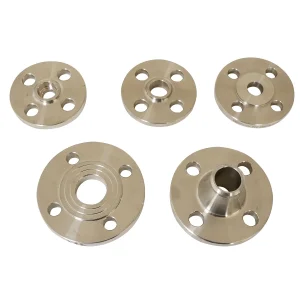
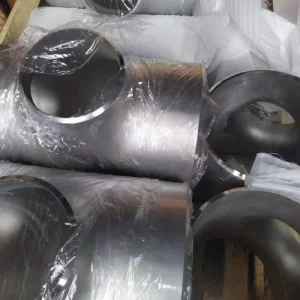
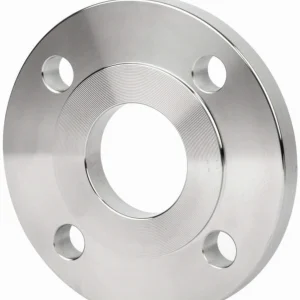
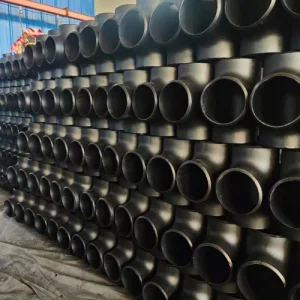
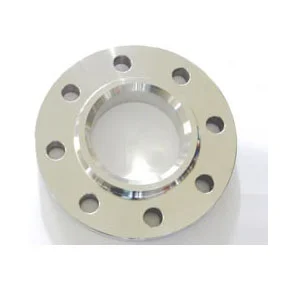
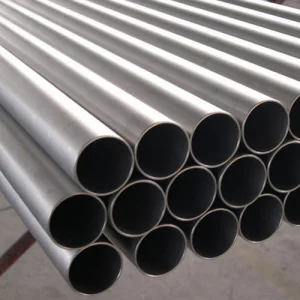
Explore high-yield, ISO 9001 certified pipe elbows, tees, reducers, and seamless fittings supplied directly from factory manufacturing lines.
Engineering Paradigms in Industrial Tube & Pipe Bending
An authoritative whitepaper breakdown on medium-frequency induction heating, cold mandrel bending, and wall thinning tolerances in high-pressure piping design.
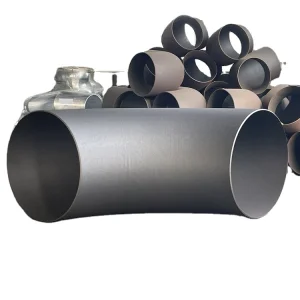
In the modern megastructure energy landscape, The Tubes Bend technology represents a pivotal evolution over traditional welded mitre joints and short-radius forged elbows. As high-pressure, elevated-temperature fluid transportation networks stretch across thousands of miles, engineers are prioritizing smooth flow dynamics, minimal hydraulic resistance, and structural integrity under cyclic thermal expansion. Sourcing bends directly from specialized tube bend manufacturers offers substantial engineering advantages and procurement cost reductions.
Industrial bending has advanced beyond rudimentary cold deformation. Today, global infrastructure projects demand precision Medium-Frequency Induction Bending (MFIB) and cold-draw CNC bending capable of handling carbon steel, alloy steel, duplex stainless steel, and nickel base superalloys. By applying localized thermal energy via an induction heating ring while pushing the pipe forward at controlled velocity, induction bending machines yield bends with radius configurations ranging from 3D, 5D, 8D, up to 10D and custom tangents, maintaining tight tolerances on wall thinning and cross-sectional ovality.
Induction bending eliminates continuous longitudinal welds, dramatically reducing localized stress concentrations. This delivers superior pressure retention, lower pressure drop (dP), and extended service lifespan in erosive and corrosive fluid transport.
Advanced induction machines control intrados thickening and extrados thinning. By calculating bending allowance via finite element modeling (FEM), extrados wall thinning is capped strictly within standard requirements (ASME B16.49 & ISO 15590-1).
To eliminate residual stress and restore mechanical ductility, post-bending thermal cycles—including normalizing, quenching, and tempering (Q&T)—are rigorously executed based on steel grade (ASTM A234 WPB, Alloy WP91, Duplex S31803).
Global Enterprise Sourcing: Navigating Discount B2B Purchasing
How EPC contractors, stockists, and industrial buyers leverage direct manufacturer partnerships to reduce landed costs while maintaining strict QA compliance.
Procurement directors managing multi-million-dollar energy, petrochemical, or marine building contracts face a complex balance: controlling Total Cost of Ownership (TCO) without compromising pipeline safety. The search term Discount The Tubes Bend Manufacturers & Factory reflects a major market shift—buyers actively bypass tier-3 trading intermediaries to establish factory-direct partnerships with verified Chinese heavy-fitting manufacturers.
When purchasing pipe bends, elbows, tees, flanges, and nipples at high volumes, a direct factory relationship yields tangible cost reductions through three key mechanisms:
Tier-1 manufacturers acquire raw steel billets and seamless mother pipes directly from state-owned steel mills (e.g., Baosteel, TPCO) in thousands of tons, passing raw material price discounts directly to international EPC buyers.
From forging, hot extruding, and induction bending to beveling, heat treatment, and Non-Destructive Testing (NDT), unified production cuts out external processing markups and drastically shortens manufacturing lead times.
Partnering with factory groups capable of supplying pipe, bends, flanges, and valves together allows buyers to consolidate full container loads (FCL), reducing port handling fees, freight surcharges, and customs processing costs.
China Industry 4.0: Supply Chain Resilience & Cangzhou Manufacturing Advantages
Understanding the industrial concentration, automated manufacturing lines, and regional advantages of Hebei's pipeline equipment hub.
Cangzhou City in Hebei Province is widely recognized as China's premier hub for pipeline equipment manufacturing. By bringing together steel forging, seamless pipe rolling, tool manufacturing, and specialized testing laboratories within a concentrated radius, Cangzhou offers an unparalleled industrial ecosystem for pipeline infrastructure production.
Modern plants operated by HEBEI CANGRUN PIPELINE EQUIPMENT CO., LTD. and its subsidiaries, Cangzhou Feiwo Metal Products Co., Ltd. and Cangzhou Feixiang Metal Products Co., Ltd., illustrate the shift to Industry 4.0 across several key areas:
| Manufacturing Vector | Legacy Production Methods | Cangrun Industry 4.0 Factory Standard | Procurement Advantage |
|---|---|---|---|
| Bending & Forming | Manual flame heating, variable radii, inconsistency | Automated CNC Induction Bending with PLC temperature feedback | Exact bend radius geometry (1.5D to 10D), zero wall collapse |
| Quality Assurance | Random offline spot sampling | 100% In-line Ultrasonic (UT), Magnetic Particle (MT), Hydrostatic Testing | Zero-defect guarantee, comprehensive MTR (EN 10204 3.1/3.2) |
| Traceability | Paper records, manual steel stamping | Laser-etched QR code matrix & digital heat code logging | Instant material origin verification from mill to jobsite |
| Supply Lead Time | Fragmentation across multiple vendors | Fully integrated pipe, fitting, flange & valve manufacturing cluster | Lead time cut by up to 35-40% for large project packages |
Metallurgical Specifications & International Compliance Reference
Technical cross-reference guide for engineering teams verifying grade selections, schedule ratings, and dimensional standards.
| Material Category | Material Standards & Grades | Applicable Fitting & Bend Standards | Primary Operating Conditions |
|---|---|---|---|
| Carbon Steel | ASTM A234 WPB, WPC; ST37.0, ST20, Q235B, A105 | ASME B16.9, ASME B16.49, GB/T 12459, JIS B2311 | General industrial steam, water supply, oil & gas transport up to 400°C |
| Alloy Steel | ASTM A234 WP11, WP22, WP91, WP911; 12CrMo, 15CrMo, ST52 | ASME B16.9, EN 10253-2, DIN 2605 | High-temperature power plant boilers, superheaters, refining units |
| Stainless Steel | ASTM A403 WP304, 304L, 304H, 316, 316L, 316Ti, 317L, 310S | ASME B16.9, MSS SP-43, EN 10253-4 | Corrosive chemicals, cryogenic fluids, LNG transport, pharmaceutical lines |
| Duplex & Super Duplex | ASTM A815 UNS S31803 (2205), UNS S32750 (2507) | ASME B16.9, ISO 15590-2 | Offshore oil & gas platforms, marine subsea, desalination plants |
Localized Application Scenarios & Engineering Field Deployment
Analyzing real-world application demands across key heavy industries relying on precision tube bends, flanges, and forged fittings.
Main steam lines, cold/hot reheat systems, and boiler feed lines require heavy-wall alloy bends (WP91/WP22) manufactured under precise induction heating. High temperature resistance prevents creep deformation under extreme operating pressures.
Hydrocracking units and fluid catalytic cracking (FCC) processes route volatile hydrocarbons through tight spaces. Custom 3D and 5D pipe bends smooth direction changes, eliminating dead zones and minimizing internal erosion.
Duplex steel (S31803/S32205) pipe bends and weld neck flanges resist severe chloride pitting in subsea riser pipes. Seamless induction bends enable mechanical pigging without danger of tool blockage.
High-Yield Carbon Steel Bends (API 5L X65/X70/X80) perform reliably across long overland cross-country pipelines, enduring seismic movement and harsh environmental stress without fracturing.
Frequently Asked Questions (FAQ) — Procurement & Technical Guide
Answers to common engineering and commercial questions when sourcing pipe bends, elbows, flanges, and fittings.
Elbows are standardized short-radius fittings (typically 1.0D for Short Radius or 1.5D for Long Radius) produced to strict ASME B16.9 specifications. Tube bends, on the other hand, are custom-formed with larger radii (3D, 5D, 8D, 10D, or custom bends) to lower fluid friction, allow internal pipeline pigging, and minimize localized pressure drops.
Direct OEM pricing stems from manufacturing scale, localized raw material sourcing in Cangzhou's industrial hub, and eliminating third-party broker markups. Material quality remains fully certified under ISO 9001 quality systems, supported by EN 10204 3.1 Mill Test Reports (MTRs) and independent third-party inspection (SGS, BV, TUV) prior to dispatch.
Standard testing includes Ultrasonic Testing (UT) for wall thickness and internal flaw detection, Magnetic Particle Testing (MT) or Liquid Penetrant Testing (PT) for surface integrity, Radiographic Testing (RT) for welded sections, dimensional checks, and hardness testing following Post-Bend Heat Treatment (PBHT).
Seamless fittings and bends span from 1/2" to 24" (DN15–DN600), while welded and induction bends reach from 4" up to 78" (DN150–DN1900) with wall thicknesses up to 150mm. Weld neck and blind flanges are manufactured up to 160" (DN4000).
All products undergo surface treatments tailored to customer requirements, including black rust-preventive paint, anti-corrosion varnish, hot-dip galvanizing, or 3LPE coating. End bevels are protected with plastic caps, and items are packed in seaworthy wooden cases or steel-framed crates.
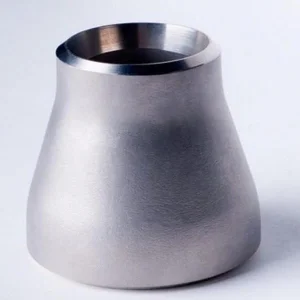
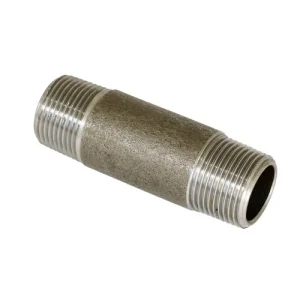
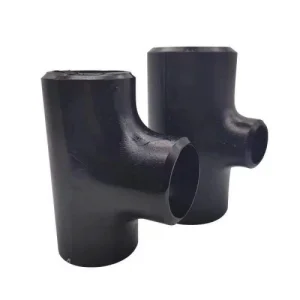
Explore high-pressure ANSI/DIN flanges, socket weld fittings, equal/reducing tees, and welded steel pipes available for factory-direct order.