
Featured Pipeline Components & Steel Fittings
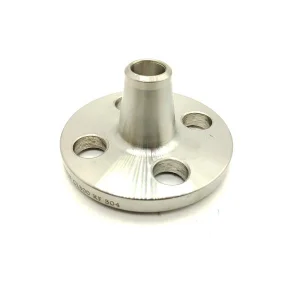
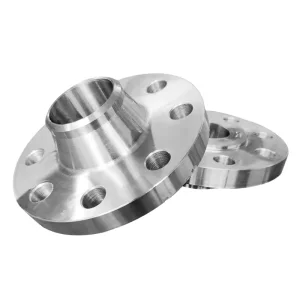
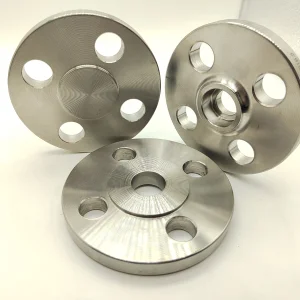
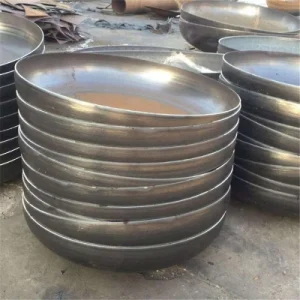
Explore our high-performance industrial fittings, engineered to ASME/ANSI, EN, and DIN specifications for high-pressure energy, chemical, and industrial piping applications.
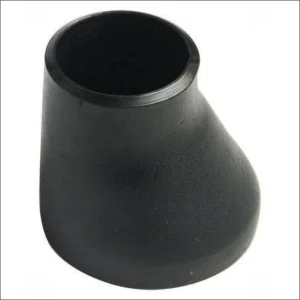
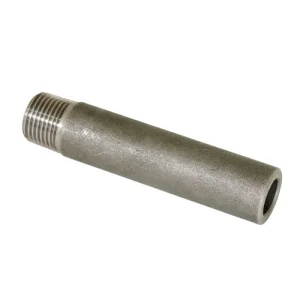
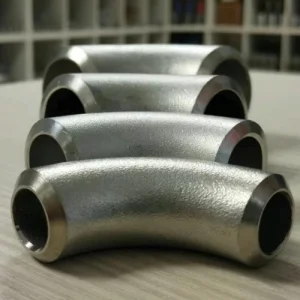
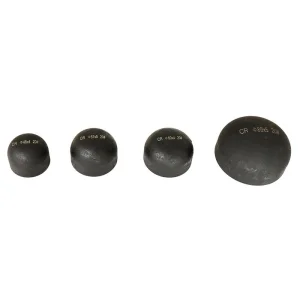
Decoding the Procurement Intent: "Discount Bends Supplier & Factory"
In global industrial procurement, searching for "discount bends suppliers" or direct-from-factory pricing does not signify a willingness to compromise on material integrity, wall thickness tolerances, or mill test certification. For engineering, procurement, and construction (EPC) professionals, project managers, and piping network operators, "discount" represents Total Cost of Ownership (TCO) optimization via direct factory sourcing, elimination of trading margins, and integrated manufacturing efficiency.
High-pressure fluid transportation, steam distribution, oil & gas transmission, and offshore platforms require pipe bends that adhere strictly to ASME B16.49 (Factory-Made Wrought Steel Butt-Welding Induction Bends for Transportation and Distribution Systems) and ASME B16.9. Securing direct factory pricing from certified Chinese manufacturing hubs allows buyers to achieve substantial cost savings while acquiring premium hot induction bends, long radius (3D, 5D, 8D, 10D) bends, and custom carbon, stainless, or alloy steel piping components.
Engineering Principles: Hot Induction Bending vs Cold Bending
Pipe bends are critical flow-diverting elements in long-distance pipelines where smooth pressure retention and minimal frictional drop are mandatory. Unlike standard short radius (1D) or long radius (1.5D) elbows, custom pipe bends are manufactured with bending radii ranging from 3D up to 10D or greater.
High-Frequency Hot Induction Bending
Induction bending utilizes a high-frequency electric induction coil to heat a narrow circumferential band of the pipe to forge temperature (850°C - 1100°C). As the pipe is pushed forward at a controlled velocity, a pivoting arm bends the pipe to the pre-engineered radius, immediately quenched by air or water. This method ensures minimal wall thinning, high ovality control, and uniform microstructural integrity.
Cold Mandrel & Compression Bending
Cold bending utilizes mechanical force at room temperature to form pipe bends, primarily up to 4 inches or for thin-walled tubing. While lower in initial setup cost, cold bending introduces significantly higher residual internal stresses, micro-cracking risks in alloy steel, and spring-back effects, making it unsuitable for high-pressure energy transmission line items.
Fluid Hydrodynamics & Friction Loss
By transitioning from a standard 90° 1.5D elbow to a 5D induction pipe bend, turbulence inside the fluid pathway is drastically reduced. Pressure loss ($h_f$) decreases exponentially as the radius ratio increases, leading to long-term operational savings in pumping station energy consumption across oil, gas, and slurry lines.
Hot Induction Bends (ASME B16.49)
- Continuous Radius Options: Custom 3D, 5D, 6D, 8D, 10D bends without weld joints.
- Wall Thinning Allowance: Controlled wall thinning on extrados (typically <10-12%).
- Ovality Tolerance: Maintained within 3% of original outer diameter.
- Stress Relieving: Post-bend heat treatment (PWHT / Normalizing) restores parent metal mechanical properties.
Standard Welded Elbow Assembly
- Frictional Resistance: Sharp directional changes induce high fluid turbulence and cavitation.
- Multiple Weld Seams: Increased Non-Destructive Testing (NDT) budget and failure risk points.
- Pressure Rating Limitations: Higher stress concentrations at elbow welded crotches.
- Piping Footprint: Limited customization for complex 3D dimensional offsets.
Dimensional & Tolerance Parameters for Industrial Pipe Bends
| Parameter | Induction Hot Bend Standard | Cold Formed Bend Standard | Quality Verification Method |
|---|---|---|---|
| Governing Standard | ASME B16.49, ISO 15590-1, EN 14870-1 | ASME B16.9, MSS-SP-75 | Dimensional inspection report & Third-party audit |
| Bend Radius Range | 3D, 5D, 8D, 10D, Custom up to 20D | 1D (Short), 1.5D (Long) | Laser tracker & mechanical template verification |
| Extrados Wall Thinning | Calculated pre-bending allowance ($\approx 8 - 12\%$) | Up to $15 - 20\%$ thinning risk | Ultrasonic Thickness Measurement (UT) grid mapping |
| Ovality / Out-of-Roundness | $\le 3\%$ at bend apex | $\le 5\%$ at bend apex | Vernier caliper / 3D laser scanner mapping |
| Heat Treatment Options | Stress Relieving, Normalizing, Quenching & Tempering | Not required / As-formed | Furnace chart recording & Microstructure hardness testing |
China Supply Chain Ecosystem: Cangzhou Industrial Piping Cluster
Understanding how a China bend factory delivers competitive "discount" pricing requires an examination of the industrial cluster effect in Cangzhou, Hebei Province—the recognized capital of steel pipeline equipment manufacturing in Asia. HEBEI CANGRUN PIPELINE EQUIPMENT CO., LTD., together with group subsidiaries CANGZHOU FEIWO METAL PRODUCTS CO., LTD. and CANGZHOU FEIXIANG METAL PRODUCTS CO., LTD., leverages deep industrial integration across raw steel procurement, hot forging technology, and direct export logistics.
Raw Material Upstream Integration
Situated adjacent to major raw steel production bases (Baosteel, Shougang, HBIS), our plants procure high-grade seamless steel pipe, ERW pipe, and heavy plate stock with zero regional freight markups and priority mill allocations. This integration yields an immediate 10-15% cost advantage over isolated global fabricators.
Advanced Forging & Bending Infrastructure
Our Boerzhuang and Bobei Industrial Zone plants operate heavy-duty 1600-Ton hydraulic pushers, 800kW high-frequency induction bending lines, and automated submerged arc welding machines capable of handling pipe diameters from 1/2" up to 78" (DN15 to DN1900) with wall thicknesses up to 150 mm.
Single-Source Package Procurement
Rather than issuing separate purchase orders for pipe bends, forged flanges, reducers, tees, caps, and industrial valves, enterprise buyers consolidate their material take-off (MTO) with our group. Packaging all items into matched material grades and single-container shipments eliminates middleman commission stacks.
Localization Support & International Quality Compliance
Enterprise procurement demands stringent compliance with regional engineering codes, pressure vessel laws, and quality control protocols. Discount pricing is only effective when backed by total technical approval across global jurisdictions.
ASME / ANSI Standard Compliance
Full conformance to ASME B16.49, ASME B16.9, ASME B16.5, and ASME B31.3 process piping codes. Materials including ASTM A234 WPB, WPC, ASTM A403 WP304/304L, WP316/316L, and alloy grades WP11, WP22, WP91.
European Union PED & EN Standards
Compliance with Pressure Equipment Directive (PED 2014/68/EU), CE marking, and European standards EN 10253, EN 14870, DIN 2605, and DIN 2615 for fluid distribution projects across European member states.
Canadian Registration Numbers (CRN)
Design registration support and detailed stress calculations required for deployment across Canadian provinces under CSA B51 pressure vessel and piping regulations.
100% Traceable Material Certification
Every shipment is accompanied by Material Test Reports (MTR) according to EN 10204 3.1 or 3.2 (certified by independent third-party agencies such as SGS, TÜV, BV, or Lloyd's Register).
Comprehensive Quality Assurance & Non-Destructive Testing (NDT)
To eliminate field failures, our factory quality management system (ISO 9001 certified) executes strict hold points during induction bend manufacturing:
- Ultrasonic Testing (UT): 100% volumetric examination of body wall thickness and laminations post-bending.
- Magnetic Particle Testing (MT) / Liquid Penetrant Testing (PT): Surface flaw detection on extrados, intrados, and bevel ends.
- Radiographic Testing (RT): Full weld seam inspection for welded pipe starting materials.
- Hardness Testing & Microstructure Audit: Verifying post-bend heat treatment to prevent stress corrosion cracking (SCC) in sour service environments (NACE MR0175 / ISO 15156).
- Hydrostatic Pressure Testing: Pressure holding verification exceeding 1.5x design operating pressure.
Global Procurement Matrix & Export Logistics Intelligence
Securing factory-direct pipe bends involves navigating international shipping, ocean freight volatility, port disruptions, and surface preservation. Our dedicated international trade department provides proactive logistics tracking and risk mitigation.
Anticorrosion & Surface Protection
Custom exterior surface preparation based on installation environment: Black varnish painting, anti-rust oiling, Hot-Dip Galvanizing (HDG), 3-Layer Polyethylene (3LPE), Fusion Bonded Epoxy (FBE), or Coal Tar Epoxy coatings engineered for underground or marine exposure.
Freight Surcharge Mitigation
Continuous monitoring of global shipping lines (MSC, CMA CGM, Maersk). We offer flexible shipping arrangements (FOB Tianjin/Jingtang, CIF, CFR, DDP) and lock in container freight rates early to protect enterprise buyers from peak season surcharges (PSS).
Seaworthy Export Packaging
Heavy-duty wooden crates, ISPM 15 compliant heat-treated pallets, bevel end protectors, and plastic end caps prevent transport impact damage and atmospheric corrosion during transit.
Industry Trends: The Next Generation of Pipeline Technology
The global energy transition is imposing new technical demands on pipe bend manufacturing. Factories must continuously innovate to support high-efficiency clean energy infrastructure.
Hydrogen-Ready Pipeline Bends
Hydrogen embrittlement poses severe structural risks to traditional steel lines. We utilize low-carbon steel chemistry, controlled carbon equivalents (CEQ $\le 0.38$), and specialized internal surface polishing to manufacture pipe bends safe for high-pressure hydrogen blending up to 100% purity.
Cryogenic LNG Infrastructure
Liquefied Natural Gas (LNG) processing at -162°C requires austenitic stainless steel bends (ASTM A403 WP304L/WP316L) and nickel alloys with proven Charpy V-Notch impact toughness down to ultra-low cryogenic temperatures.
Smart Pipeline Fiber-Optic Integration
Modern hot induction bends are designed with pre-engineered mounting brackets and channels to host fiber-optic acoustic and temperature sensors for real-time leak detection and structural integrity monitoring.
Localized Application Scenarios & Engineering Case Studies
Our pipe bends, elbows, flanges, and valves are operational across demanding global engineering sectors:
Petrochemical Refining
High-temperature cracking units, hydrocrackers, and flare lines utilizing WP91 alloy steel induction bends to withstand continuous 600°C temperatures and thermal expansion loads.
Cross-Country Oil & Gas
Long-distance transmission lines utilizing API 5L X65 / X70 PSL2 high-yield induction bends (5D & 8D) to facilitate smooth PIG (Pipeline Inspection Gauge) launcher and receiver travel.
Thermal & Nuclear Power
High-pressure main steam lines and feedwater piping using thick-wall carbon steel and alloy bends engineered for thermal fatigue resistance.
Offshore & Subsea Rigs
Duplex (UNS S31803 / 2205) and Super Duplex (UNS S32750 / 2507) pipe bends deployed in marine riser systems resistant to pitting and crevice corrosion in seawater environments.
Complementary Piping & Valve Components
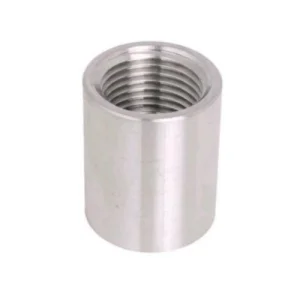
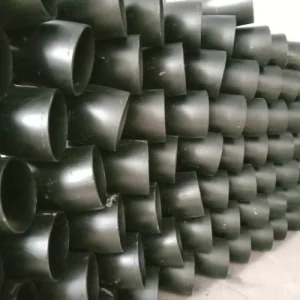
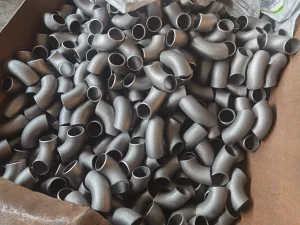
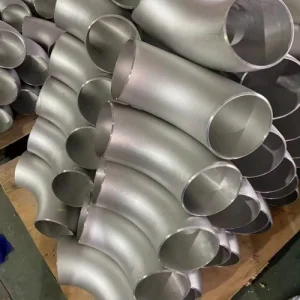
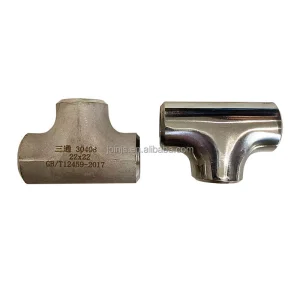
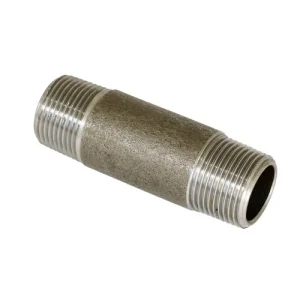
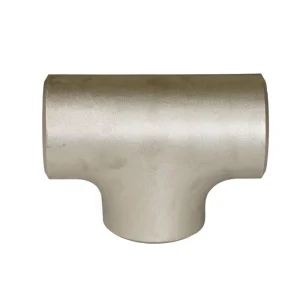
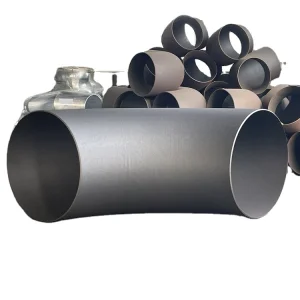
Complete your procurement package with direct factory-priced carbon steel elbows, stainless steel threaded fittings, UPVC tees, and high-pressure nipples.
Technical FAQ: Procurement & Engineering Queries
Answers to critical technical and commercial questions raised by piping engineers, quality auditors, and procurement managers before contracting.