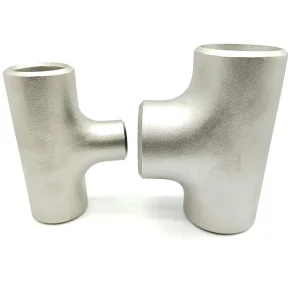
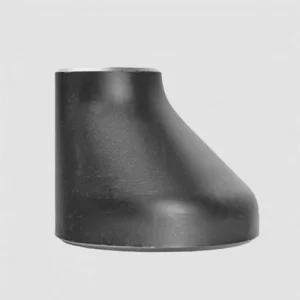
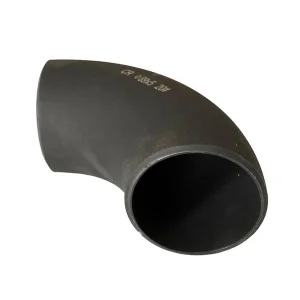
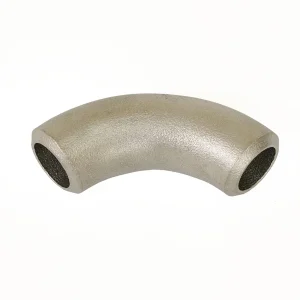
Primary Industrial & Piping Catalog (Top Range)
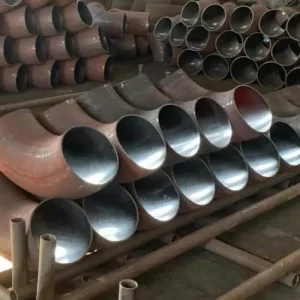
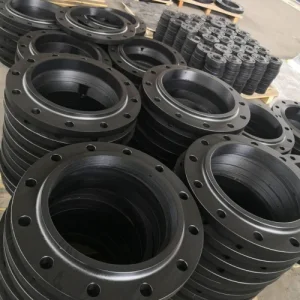
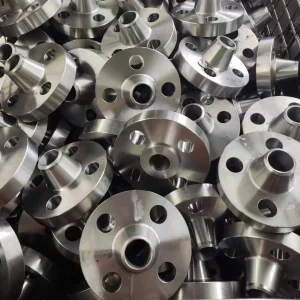
Explore our premium-engineered valve systems, high-pressure flanges, and precision-manufactured pipe components certified for global enterprise infrastructure.
Engineering Performance & Strategic Operational Metrics
Benchmarking factory precision, polymer structural stability, and international supply logistics efficiency.
1. Comprehensive Technical Foundations of ABS Pipe Fittings
Acrylonitrile Butadiene Styrene (ABS) represents a paramount milestone in modern thermoplastic polymer engineering, engineered specifically to address the demanding demands of Drain-Waste-Vent (DWV), municipal fluid transport, industrial effluent containment, and specialized conduit applications. The core superiority of ABS lies within its terpolymer composition: Acrylonitrile contributes high chemical resistance and thermal stability; Butadiene delivers exceptional ductility and impact strength even under sub-zero thermal environments; and Styrene imparts rigidity, dimensional accuracy, and superior surface aesthetic finishes.
When searching for a certified Discount ABS Pipe Fittings Company & Products, engineering procurement managers must look beyond superficial pricing to evaluate structural density, resin integrity, and dimensional tolerances. High-grade ABS fittings manufactured to ASTM D2661, ASTM D3965, and CSA B181.1 standards exhibit an unmatched resilience against physical shock, mechanical stress cracking, and aggressive chemical exposure compared to traditional legacy materials such as unplasticized PVC (uPVC) or cast iron.
The structural rigidity of ABS allows for reduced wall thickness profiles while maintaining high crush resistance and hydrostatic design basis (HDB). Unlike metallic piping systems, ABS does not suffer from galvanic corrosion, pitting, tuberculation, or interior scaling. The ultra-smooth inner bore reduces friction loss (Hazen-Williams coefficient C=150), preventing flow stagnation, solids deposition, and system pressure drops over decades of continuous operation.
2. Discount Architecture & Economic Value Engineering
In enterprise-scale fluid infrastructure and commercial construction, the term "Discount" often carries misinformed connotations of structural compromise. However, in the context of tier-one Chinese polymer manufacturing ecosystems, a authentic Discount ABS Pipe Fittings Company & Products leverages technical value engineering, raw resin consolidation, automated multi-cavity tooling, and supply chain vertical integration to deliver cost efficiency without sacrificing quality standards.
Factory-direct pricing models eliminate intermediary distributor markups, allowing municipal contractors, EPC firms, and global wholesalers to secure direct access to ISO 9001:2015 certified production lines. Cost optimization is systematically embedded within the manufacturing lifecycle via several key vectors:
Precision Mold Tooling
High-cavity CNC-machined hardened steel molds decrease cycle times by up to 28%, significantly reducing unit energy consumption and overhead cost per fitting produced.
Resin Volume Procurement
Direct bulk procurement agreements with global petrochemical suppliers stabilize virgin polymer melt flow indices (MFI) and insulate downstream pricing from market volatility.
Closed-Loop Recovery
Zero-waste sprue and runner grinding loops re-integrate un-degraded internal scrap into non-critical structural components without altering physical properties.
Through rigid statistical process control (SPC), total quality management (TQM), and dynamic wall-thickness ultrasonic verification, factory discount pricing becomes a direct reflection of structural efficiency rather than material dilution.
3. China Factory Manufacturing Advantages & Supply Chain Ecosystem
The global dominance of Chinese manufacturing in the pipeline equipment sector—ranging from carbon steel flanges, alloy elbows, and cast steel valves to advanced thermoplastic ABS fittings—is anchored within highly integrated industrial hubs such as Cangzhou, Hebei Province. This manufacturing ecosystem offers unmatched structural benefits for international buyers seeking reliable high-volume manufacturing partners.
Key strategic advantages provided by China-based manufacturing hubs include:
- Cluster Synergies: Co-location of raw chemical refining, mold engineering workshops, automated injection facilities, and third-party testing laboratories minimizes transit delays and overhead expenses.
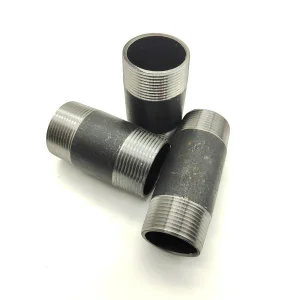
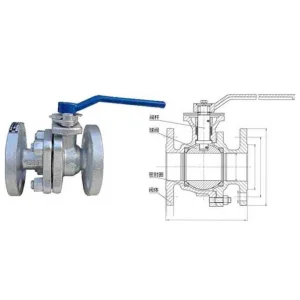
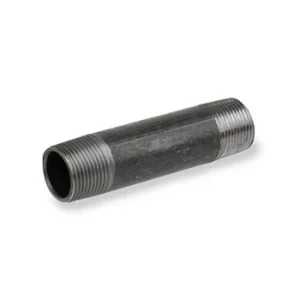
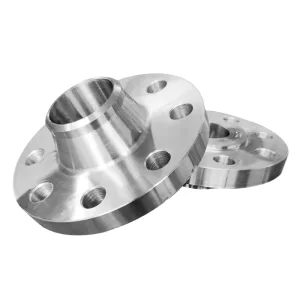
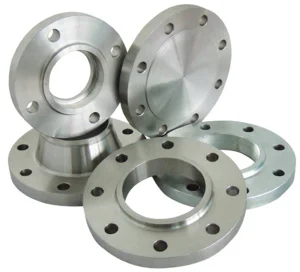
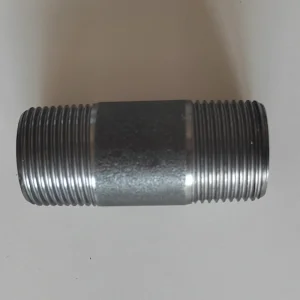
- Comprehensive Product Integration: Enterprise suppliers maintain simultaneous production of ABS DWV fittings, metal pipe nipples, forged steel flanges, and industrial ball valves, providing complete single-source project procurement.
- Custom Tooling & Rapid OEM Flexibility: In-house toolmakers can design, prototype, and validate custom fitting geometries, schedule adaptations, or thread configurations within accelerated lead times.
- Rigorous Export QA Certification: Full compliance with ISO 9001, ISO 14001, OHSAS 18001, CE, NSF/ANSI 14, and ASME B16.9 standards ensuring frictionless customs clearance and job-site compliance globally.
Comprehensive Material Performance Comparison Matrix
| Performance Metric | ABS Terpolymer | PVC (uPVC) | CPVC | Cast Iron (Legacy) |
|---|---|---|---|---|
| Impact Resistance (-20°C) | Exceptional (250 J/m) | Brittle (<40 J/m) | Moderate (50 J/m) | High Structural / Low Ductile |
| Max Operating Temp. | 80°C (176°F) | 60°C (140°F) | 93°C (200°F) | >300°C |
| Joint Bonding Mechanism | Cold Solvent Weld (Fast Fusion) | Solvent Weld / Primer | Two-Step Solvent Weld | Gasketed Flange / Lead-Oakum |
| Specific Gravity (g/cm³) | 1.02 - 1.06 (Ultra Light) | 1.38 - 1.42 | 1.50 - 1.55 | 7.20 (Extremely Heavy) |
| Chemical Resistance | Acids, Alkalis, Salts, Effluents | Broad Chemical Range | High Chemical & Chlorine | Vulnerable to Acidic Scale |
| Installed Labor Cost Index | Lowest (Speed Fusion) | Low | Moderate | Highest (Requires Rigging) |
4. Global Industry Trends & Next-Generation Polymer Innovations
The industrial piping sector is undergoing a massive shift driven by urbanization, aggressive environmental sustainability mandates, and the digital integration of Building Information Modeling (BIM). As engineers phase out energy-intensive metallic piping in favor of advanced polymers, ABS fittings are evolving rapidly through advanced formulation chemistry and manufacturing innovations.
Key macro industry trends reshaping the ABS fitting landscape include:
Recycled Compound Integration & Circular Economy: Premium manufacturers are pioneering closed-loop circular production protocols, utilizing post-industrial purified ABS regrind within multi-layer structural DWV pipe and fittings, cutting carbon emissions by up to 45% without reducing tensile properties.
UV-Stabilized & Flame-Retardant Additives: Inclusion of specialized hindered amine light stabilizers (HALS) and halogen-free fire retardants elevates ABS performance in exposed outdoor installations and high-density commercial plenums, meeting strict ASTM E84 flame spread and smoke development ratings.
BIM/CAD Digital Twin Integration: Leading suppliers provide parametric 3D CAD models and BIM libraries (Revit, AutoCAD Plant 3D), enabling mechanical engineers to seamlessly simulate fluid velocity, pressure drop, and spatial interference prior to site fabrication.
5. Localized Application Scenarios & Engineering Case Studies
ABS pipe fittings serve as critical infrastructure components across diverse geographical, environmental, and municipal contexts globally. Their unique physical characteristics make them ideal for several core application profiles:
North American Residential DWV
In cold-climate regions across the USA and Canada, ABS is favored over PVC due to its superior sub-zero impact strength. It resists cracking during freezing ground movement and winter handling.
Commercial HVAC & Chilled Water
In low-pressure secondary loop cooling systems, ABS fittings deliver condensation-resistant flow paths, reducing external insulation costs while preventing surface corrosion.
Industrial Wastewater & Effluents
Chemical processing facilities utilize ABS systems for slurry transport, chemical neutralization drains, and corrosive liquid transfer where metallic lines suffer severe erosion-corrosion.
6. Macro Industry Solutions & Comprehensive System Integration
Modern engineering projects rarely rely on a single material tier. Instead, project engineers design hybrid fluid handling systems where plastic ABS lines interface with metallic valves, carbon steel headers, and stainless steel distribution manifolds. A world-class piping partner must provide comprehensive macro solutions bridging these material boundaries seamlessly.
Through engineered transitional components—such as brass-threaded ABS adapters, forged steel flange transition assemblies, and grooved coupling adapters—contractors can establish leak-proof mechanical joints between ABS lines and cast steel gate valves or stainless steel ball valves (Q41F-150LB). This multi-material integration minimizes system weight, optimizes financial expenditure, and maximizes structural reliability across temperature and pressure zones.
7. Global Enterprise Procurement & Supply Chain Risk Management
For international procurement managers, EPC contractors, and global supply chain directors, sourcing from a Discount ABS Pipe Fittings Company & Products requires strict vendor risk mitigation protocols. Sourcing decisions must weigh total cost of ownership (TCO), port logistics, compliance paperwork, and batch consistency over simple upfront unit costs.
To ensure frictionless execution on international orders, suppliers implement standardized risk management frameworks:
- Quality Assurance & Batch Traceability: Every production batch undergoes hydrostatic pressure testing, drop-impact testing, and melt flow index (MFI) verification. Material Test Reports (MTR) and certificates of conformance are provided prior to container loading.
- Palletization & Containerization Integrity: ABS fittings are packed in heavy-duty double-corrugated cartons, heat-sealed against moisture, and shrink-wrapped onto fumigated wooden or plastic pallets to withstand transoceanic transport and rough port handling.
- Logistics Rerouting & Freight Hedging: Export teams actively monitor global shipping lanes, port congestion indexes, and carrier surcharges to optimize container loading ratios and buffer transit schedules against international shipping delays.
Frequently Asked Questions (Technical & Procurement Q&A)
Expert engineering answers to critical inquiries regarding ABS fitting specifications, installation protocols, and direct-factory procurement.
ABS (Acrylonitrile Butadiene Styrene) is a single-step solvent weld material that does not require primer, dramatically accelerating jobsite installation. Additionally, ABS retains superior impact strength at extreme low temperatures (-40°C), whereas PVC becomes brittle below freezing. PVC, however, offers slightly higher resistance to specific concentrated chemicals.
Our discount pricing structure is driven by automated multi-cavity injection molding, direct bulk polymer procurement from refining partners, closed-loop zero-waste recycling of un-degraded runner materials, and direct factory-to-ship freight handling. We eliminate third-party markup channels while maintaining strict ISO 9001 and ASTM manufacturing compliance.
Yes. Joining ABS to metallic systems is achieved using specialized threaded transition fittings (male/female adapters with metallic thread inserts) or companion flanged connections (ABS stub ends with metallic slip-on/blind flanges). Direct solvent cement bonding between metal and ABS is not permissible.
Our manufacturing facilities adhere to ISO 9001:2015, ISO 14001, and CE certifications. Fittings comply with ASTM D2661, ASTM D3965, ASME B16.9, JIS B2311-B2313, and GB/T 12459 standards, accompanied by full Material Test Reports (MTR) upon request.
Standard catalogue bulk orders are processed and containerized within 15 to 25 business days. Custom OEM mold tooling development typically requires 25 to 35 days for design, prototype milling, sample molding, and full dimensional validation testing.
Secondary Piping & Component Catalog (Bottom Range)
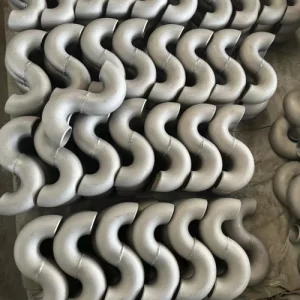
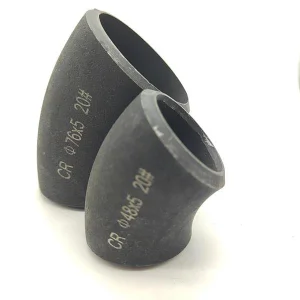
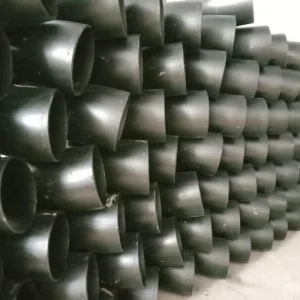
Complete your supply chain requirement list with our high-grade stainless steel tees, concentric reducers, butt-weld elbows, and heavy-duty forged flanges.