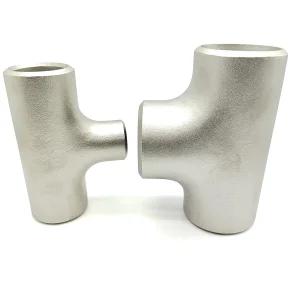
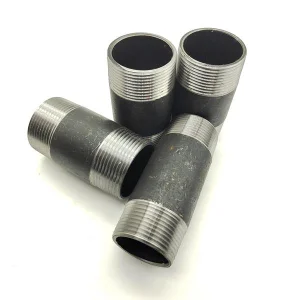
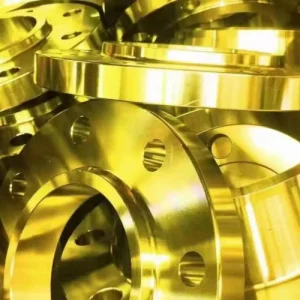
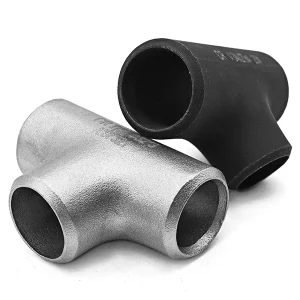
Featured Piping & Stainless Steel Components (Part I)
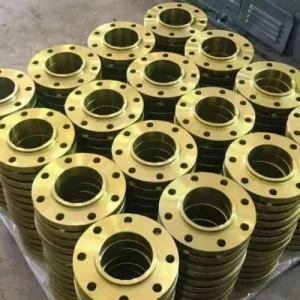
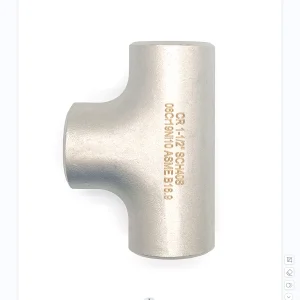
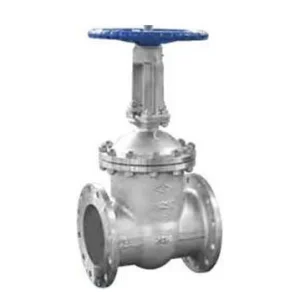
Explore our certified product range manufactured under strict ISO 9001 and ASME B16.5 protocols, serving critical infrastructure, petrochemical, and power generation markets globally.
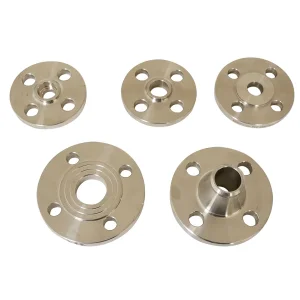
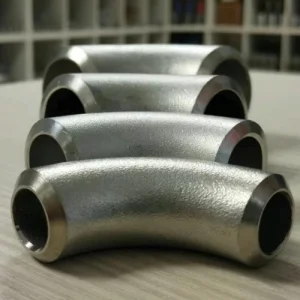
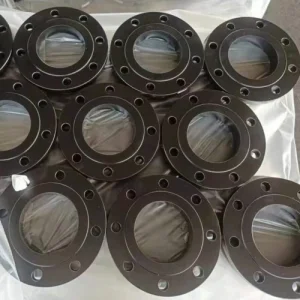
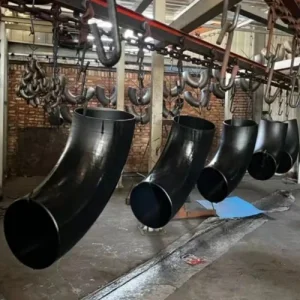
1. Executive Overview: The Architecture of China's Stainless Steel Flange Ecosystem
In the global fluid handling, energy conveyance, and heavy process infrastructure sectors, Stainless Steel Flanges (SS Flanges) serve as mission-critical mechanical connection interfaces. Designed to join pipes, valves, pumps, and pressure vessels, these components must maintain mechanical integrity under extreme thermal gradients, cyclic hydraulic pressures, and corrosive chemical environments. Over the past three decades, China has evolved from a high-volume manufacturing hub into an advanced metallurgical and engineering epicenter for high-precision forged flanges.
Today, engineering procurement leaders, EPC contractors, and global distributors source from China not merely for cost efficiencies, but for unrivaled supply chain integration, strict adherence to international standards (ASME/ANSI, DIN/EN, JIS, GOST), and sophisticated alloy chemistry manipulation. Modern Chinese flange enterprises deploy automated closed-die forging, multi-axis CNC machining, laser spectrometry, and automated non-destructive testing (NDT) to achieve zero-defect quality thresholds.
2. Metallurgy, Grade Selections, and Pressure Performance Metrics
Selecting the optimal stainless steel material grade is paramount to avoiding catastrophic field failures such as stress corrosion cracking (SCC), pitting, or crevice corrosion. Leading Chinese suppliers produce a vast array of austenitic, super-austenitic, duplex, and super-duplex stainless steel flanges per ASTM A182 / ASME SA182.
| Material Grade | UNS Designation | Key Alloy Elements (Cr, Ni, Mo, N) | PREN Rating | Primary Industrial Application Environment |
|---|---|---|---|---|
| SS 304 / 304L | S30400 / S30403 | 18% Cr, 8% Ni | ~18 - 20 | General water treatment, food & beverage, municipal piping. |
| SS 316 / 316L | S31600 / S31603 | 16% Cr, 10% Ni, 2.0-3.0% Mo | ~23 - 25 | Marine infrastructure, acidic chemical processing, pharmaceutical lines. |
| SS 321 / 321H | S32100 / S32109 | 17% Cr, 9% Ni, Ti Stabilized | N/A | High-temperature heat exchangers, furnace components, exhaust systems. |
| Duplex 2205 | S31803 / S32205 | 22% Cr, 5% Ni, 3% Mo, 0.18% N | ~32 - 35 | Oil & gas subsea flowlines, offshore platforms, high-chloride media. |
| Super Duplex 2507 | S32750 | 25% Cr, 7% Ni, 4% Mo, 0.27% N | ≥ 42 | Desalination high-pressure pumps, aggressive chemical reactors. |
Thermal Processing and Mechanical Testing Rigor
To guarantee optimal physical properties, forged raw blanks undergo strict heat treatment protocols. For austenitic grades (304L/316L), solution annealing at 1040°C to 1150°C followed by rapid water quenching dissolves chromium carbides back into the matrix, preventing intergranular corrosion. Quality manufacturers execute rigorous ASTM A262 Practice E tests to verify resistance to intercrystalline attack.
3. China Supply Chain Resilience and Manufacturing Efficiency
The dominance of Chinese flange manufacturers—exemplified by key industrial clusters in Cangzhou (Hebei Province), Wenzhou (Zhejiang Province), and Jiangsu—stems from a highly integrated industrial ecosystem. Unlike fragmented regional markets, Chinese production zones offer seamless horizontal and vertical integration.
Raw Material Cluster Proximity
Direct partnerships with mega-scale stainless steel mills (such as Tsingshan, TISCO, and Baosteel) ensure immediate access to certified round bars and ingots. This eliminates raw material lead times and buffer costs.
Advanced CNC Automation
Widespread adoption of high-speed CNC lathes and multi-axis machining centers allows high-repeatability face serration machining (RF, FF, RTJ) and bolt-hole drilling within sub-millimeter tolerances.
Port & Logistics Synergy
Strategic positioning adjacent to major sea hubs (Tianjin, Ningbo, Shanghai) permits rapid container loading, streamlined export customs clearance, and reduced maritime transit times to global destinations.
4. Localized Application Scenarios & Engineering Field Integration
Stainless steel flanges are deployed across varied geographic and operating parameters. Below are localized engineering integration cases demonstrating material selection protocols:
Offshore Oil & Gas Platforms (North Sea & Middle East)
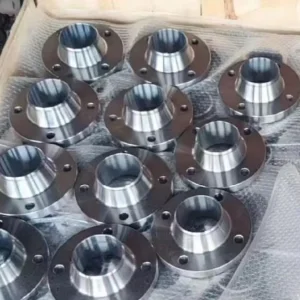
In subsea manifold systems and top-side production modules, exposure to wet H2S, high salinity, and high pressure demands Duplex F51 (UNS S31803) and Super Duplex F53 Weld Neck Flanges with Ring Type Joint (RTJ) facings. The RTJ design utilizes a metallic ring gasket that wedges into a precision-machined groove, providing a metal-to-metal seal capable of withstanding pressures up to 10,000 PSI.
Petrochemical Refining & Acid Distillation (North America)
In continuous sulfuric and nitric acid piping loops, standard carbon steel degrades within months. Refineries specify ASTM A182 Grade F316L Raised Face (RF) Slip-On and Blind Flanges. Lower carbon content (≤ 0.03%) prevents sensitisation during field welding, avoiding weld-decay failures under thermal cycling.
Cryogenic Liquefied Natural Gas (LNG) & Hydrogen Systems
At cryogenic temperatures (-196°C), conventional ferritic steels undergo ductile-to-brittle transition. Austenitic stainless steel flanges (F304/304L and F316/316L) retain superior Charpy V-notch impact toughness at sub-zero regimes, preventing brittle fractures in LNG regasification plants and green hydrogen transport headers.
Pharmaceutical & Ultra-Pure Water (EU & Asia-Pacific)
In sterile processing systems, fluid stagnation or bacterial entrapment must be eliminated. Manufacturers utilize SS316L electro-polished flanges featuring surface roughness finishes down to Ra < 0.38 μm (15 μin), fully compliant with ASME BPE standards.
5. Technical Roadmap & Future Outlook: Industry 4.0 and Sustainability
The Chinese stainless steel flange manufacturing sector is undergoing a profound paradigm shift driven by digital transformation, precision engineering, and global decarbonization mandates.
2024 - Smart Forging
Implementation of automated robotic handling in closed-die forging presses, real-time infrared thermal monitoring, and automated billet positioning for perfect grain flow alignment.
2025 - AI Defect Scanning
Integration of AI-driven ultrasonic testing (UT) and automated eddy current detection systems to identify sub-surface micro-voids without human error bias.
2026 - Digital Twin MTRs
Deployment of blockchain-verified Material Test Reports (EN 10204 3.1/3.2) providing instantaneous raw material heat number traceability from ingot melt to field installation.
2028 - Green Steel Manufacturing
Transition to electric arc furnace (EAF) steelmaking powered by renewable energy, reducing Scope 1 and Scope 2 carbon intensity per ton of finished forged flange.
6. Global Sourcing, Regulatory Compliance & Third-Party Inspection (TPI)
Navigating international procurement requires strict alignment between client engineering specifications and factory QA/QC procedures. Reliable Chinese flange suppliers maintain comprehensive international certifications and support rigorous Third-Party Inspection (TPI) frameworks.
Core Industry Certifications
- ISO 9001:2015 Quality Management Systems
- PED 2014/68/EU Pressure Equipment Directive
- AD 2000-Merkblatt W0 Pressure Vessel Certification
- CRN Canadian Registration Numbers across provinces
- API 6A / API 17D Wellhead and Subsea Equipment
Non-Destructive Testing (NDT)
To ensure zero defect occurrence, top-tier factories conduct 100% Positive Material Identification (PMI), Liquid Penetrant Testing (PT) on raised faces, Ultrasonic Testing (UT) on high-pressure forgings, and Hydrostatic pressure testing when integral with assembly components.
EN 10204 3.1 & 3.2 Traceability
Every shipment is accompanied by a mill test certificate according to EN 10204 3.1. When specified by EPC end-users, independent agency inspection (SGS, Bureau Veritas, TÜV, Lloyd's Register) is facilitated to issue EN 10204 3.2 certificates.
7. Frequently Asked Questions (FAQ) - Procurement & Technical Engineering
Detailed answers to common technical queries raised by piping engineers, quality assurance managers, and global sourcing specialists:
What is the difference between a Weld Neck (WN) and a Slip-On (SO) Stainless Steel Flange?
How do I prevent intergranular corrosion in welded SS 304/316 piping systems?
What flange facing types are available, and how do I select the right surface finish?
Why is PMI testing critical when sourcing stainless steel flanges from overseas?
What standards govern dimensional tolerances and pressure-temperature ratings?
How do lead times and shipping packaging protect flanges during ocean transport?
Featured Piping & Stainless Steel Components (Part II)
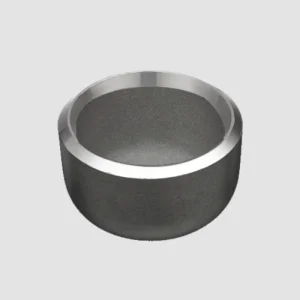
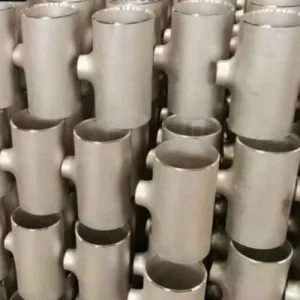
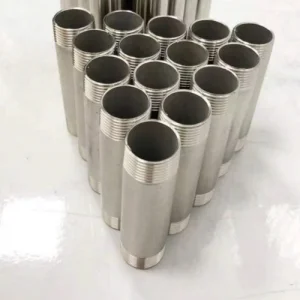
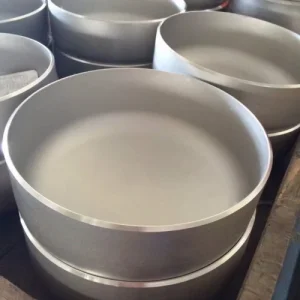
Explore additional high-grade pipe fittings, seamless tees, caps, and nipples tailored for power generation, heating, chemical process pipelines, and general industrial engineering.