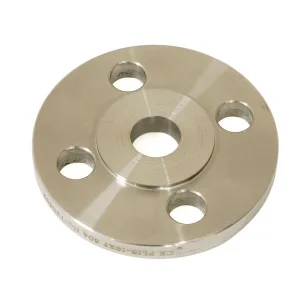
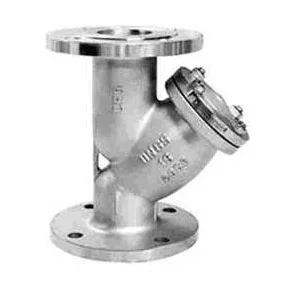
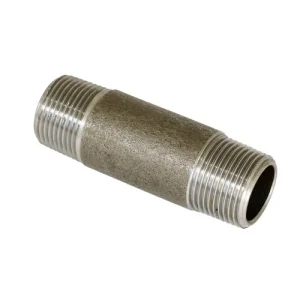
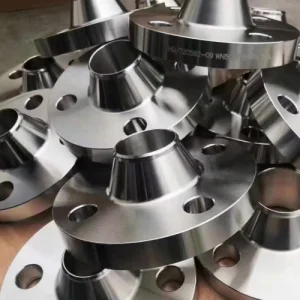
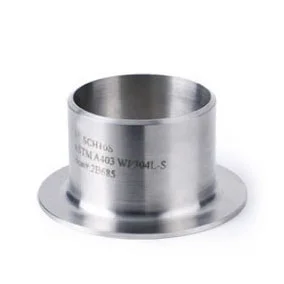
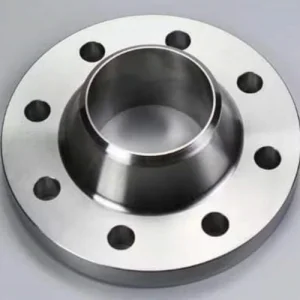
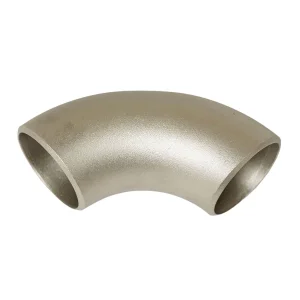
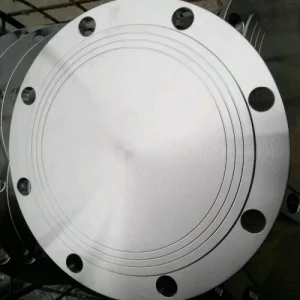
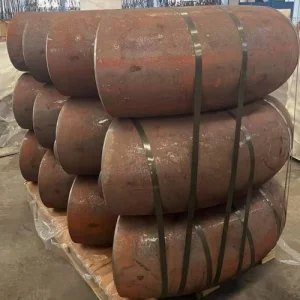
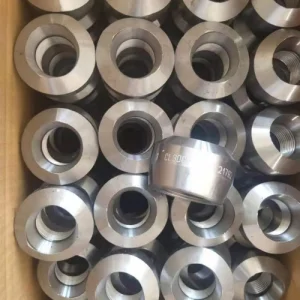
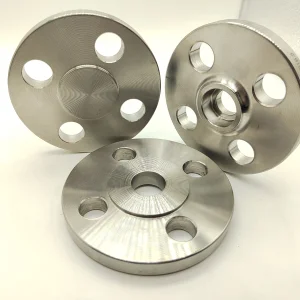
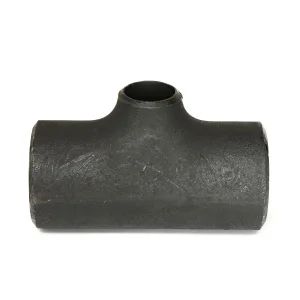
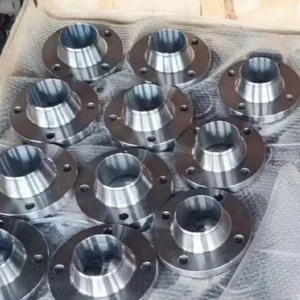
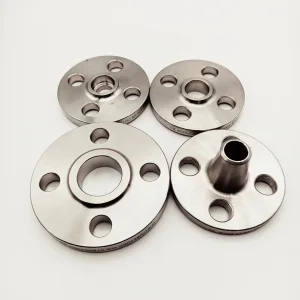
Featured High-Pressure Industrial Components (Part I)
Global Commercial & Industrial Rubber Hose Pipe Landscape
An authoritative analysis of current market dynamics, international standardization protocols, pressure ratings, and macro-economic factors influencing industrial hose procurement.
Market Volume & Growth Drivers
The global industrial rubber hose market is projected to surpass $16.8 Billion USD by 2030, propelled by rapid infrastructure expansion, offshore energy exploration, deep-sea dredging, and high-intensity automated manufacturing.
- Hydraulic Systems: Driven by heavy construction machinery demand.
- Chemical Transfer: Demanding high-purity PTFE/UHMWPE lined rubber hoses.
- Dredging & Mining: Requiring ultra-thick wear-resistant natural rubber liners.
International Standards Alignment
Leading Chinese manufacturers adhere strictly to ISO, SAE, DIN, and EN specifications to ensure complete structural interchangeability with Western original equipment manufacturers (OEMs).
- SAE J517 Standards: 100R1AT through 100R15 high-pressure hydraulic specs.
- EN 853 / EN 856: Wire braid and spiral steel wire reinforced hoses.
- DIN 20022 / 20023: European metric pressure and bending radius norms.
Price Mechanics & Raw Material Costs
Industrial rubber hose pricing is heavily governed by raw synthetic rubber synthetic polymers (NBR, EPDM, FKM), steel wire tensile strength grades, and vulcanization energy cycles.
- Elastomer Base: Fluoroelastomer (FKM) commands a 5x premium over EPDM.
- Reinforcement Media: High-tensile steel wire spirals vs synthetic textile braids.
- Coupling Materials: Carbon steel, SS304/316, or brass end-fittings.
China Rubber Hose Factory Supply Chain Resilience & Cost Drivers
Why Chinese pipeline equipment and rubber hose clusters deliver unparalleled cost efficiency, rapid scaling, and rigid quality assurance for global EPC projects.
Upstream Raw Material & Compounding Integration
China's industrial rubber hubs (such as Hebei and Shandong provinces) feature concentrated supply chains where raw NBR, EPDM, and CR elastomers are refined locally. Continuous cold-feed extruder technology paired with computer-controlled micro-dosing systems ensures compounding precision within ±0.1% tolerances.
This localized density dramatically reduces raw material transportation lag and lowers baseline polymer sourcing costs by 15% to 25% compared to European or North American facilities.
Automated High-Speed Braiding & Spiral Production lines
Modern Chinese rubber hose factories utilize 36-carrier and 48-carrier high-speed automatic wire braiding machines along with heavy-duty multi-layer steel wire spiral lines. These automated units guarantee constant pitch angle control (54° 44' neutral angle), eliminating internal stress concentrations during high-pressure pulsing.
Integrated laser diameter gauges provide real-time dimensional feedback, guaranteeing strict wall thickness uniformity across 100-meter continuous lengths.
China Rubber Hose Pipe Pricelist Matrix & Specification Reference
Comprehensive benchmark pricing for wholesale industrial buyers, engineering contractors, and OEM equipment builders. Values reflect FOB Qingdao/Tianjin port baseline pricing per meter.
| Hose Category | Inner Diameter (Inch / mm) | Reinforcement Type | Working Pressure (Bar / PSI) | Temp. Range | Est. FOB Price (USD/Meter) | Grade Tag |
|---|---|---|---|---|---|---|
| Hydraulic Hose SAE 100 R1AT / 1SN | 1/4" (6.3 mm) to 2" (50.8 mm) | 1-Layer High-Tensile Steel Wire Braid | 40 - 225 Bar / 580 - 3260 PSI | -40°C to +100°C | $1.45 - $8.80 / m | Standard Hydraulic |
| Hydraulic Hose SAE 100 R2AT / 2SN | 1/4" (6.3 mm) to 2" (50.8 mm) | 2-Layer High-Tensile Steel Wire Braid | 80 - 400 Bar / 1160 - 5800 PSI | -40°C to +100°C | $1.90 - $12.50 / m | High Pressure |
| Heavy Duty Spiral Hose SAE 100 R12 / 4SP | 3/8" (9.5 mm) to 2" (50.8 mm) | 4-Spiral High-Tensile Steel Wire | 250 - 420 Bar / 3625 - 6090 PSI | -40°C to +121°C | $4.20 - $24.00 / m | Severe Duty |
| Industrial EPDM Water / Steam Hose | 1/2" (12.7 mm) to 4" (101.6 mm) | Multi-Ply Synthetic Textile Cord | 10 - 20 Bar / 145 - 290 PSI | -30°C to +164°C | $1.10 - $14.20 / m | Thermal Utility |
| NBR Oil Suction & Discharge Hose | 1-1/2" (38 mm) to 12" (305 mm) | Textile Fabric with Helix Steel Wire | 10 - 20 Bar / 145 - 290 PSI | -20°C to +82°C | $5.80 - $85.00 / m | Petroleum S&D |
| UHMWPE Chemical Transfer Hose | 3/4" (19 mm) to 4" (101.6 mm) | Ultra-High Molecular PE + Wire Helix | 16 Bar / 232 PSI | -40°C to +100°C | $8.50 - $48.00 / m | Corrosive Acid |
| Slurry & Dredging Abrasion Rubber Hose | 4" (102 mm) to 36" (914 mm) | Heavy Tire Cord & Embedded Steel Rings | 10 - 25 Bar / 145 - 360 PSI | -20°C to +60°C | $45.00 - $650.00 / m | Mining & Dredging |
* Note: Prices fluctuate based on synthetic rubber market benchmarks, custom crimped couplings, bulk order volumes, and custom labeling requirements. Contact technical sales for direct project quotes.
Localized Industrial Application Scenarios
Engineered rubber hose pipe solutions specialized for demanding physical environments and critical fluid medium isolation across heavy industries.
1. Mining Slurry & Mineral Processing
Open-pit and underground mining operations require rubber hoses with extreme volumetric abrasion resistance. Our heavy-duty natural rubber lined hoses (NR content >65%) handle highly abrasive iron ore, copper tailings, and mineral slurries without premature liner gouging or delamination.
2. Offshore Marine & Oil Subsea Lines
Offshore oil discharge and marine bunkering hoses utilize ozone-resistant and salt-spray immune Chloroprene (CR) outer covers. Engineered to withstand continuous wave action, twisting torque, and oil swelling under strict OCIMF marine guidelines.
3. Chemical Plant Acid & Solvent Transfer
Transferring concentrated nitric acid, toluene, or caustic soda requires compound chemical hoses. Utilizing seamless UHMWPE or cross-linked EPDM liners, these hoses prevent chemical leaching, aromatic hydrocarbon permeation, and inner wall degradation.
4. High-Pressure Concrete Pumping
Boom pump trucks and stationary concrete placer lines operate under cyclic pressure spikes up to 85 bar. Wire-braided concrete placement hoses feature high-tensile steel cord structures and cut-resistant covers to prevent kinking and catastrophic burst failures.
5. Deep-Sea & Harbor Harbor Dredging
Large-bore floating suction and discharge rubber hoses (up to 36 inches / 900mm ID) are deployed in coastal harbor expansion. Built-in foam flotation layers guarantee constant buoyancy while conveying coarse sand, gravel, and sea mud.
Technology Roadmap & Future Innovations in Rubber Hose Manufacturing
Strategic development pathways transforming conventional flexible pipeline systems into intelligent, eco-friendly, and ultra-durable fluid assets.
Nano-Silica Elastomers
Integrating surface-functionalized nano-silica into NBR compounds to reduce internal friction heat buildup by 30% during continuous hydraulic flexing.
IoT Smart Strain Sensors
Embedding conductive polymer filaments inside wire spiral layers to detect micro-crack propagation and real-time wall fatigue prior to bursting.
Zero-Emission Curing
Transitioning from steam autoclaves to high-efficiency microwave continuous vulcanization lines, reducing carbon intensity per meter by 40%.
Interlock Crimping
Zero-leakage mechanically interlocked ferrule designs that bite through the outer cover directly onto the steel wire braid for maximum pull-off security.
Compliance Assurance, Testing Standards & Engineering Support
Rigorous quality control frameworks and material verification procedures guaranteeing zero defect delivery for international procurement officers.
Hydrostatic Burst Testing
Every production batch undergoes 100% proof testing at 2x working pressure and destructive burst testing at 4x working pressure in accordance with ISO 1402 guidelines.
Flame & MSHA Resistance
Underground mining hoses carry MSHA (Mine Safety and Health Administration) certification for fire resistance and anti-static electrical conductivity properties.
Third-Party Inspection
Pre-shipment inspection (PSI) coordination with SGS, TÜV Rheinland, Intertek, or Bureau Veritas (BV) for wall thickness, crimp diameter, and impulse testing clearance.
Frequently Asked Technical & Commercial Questions (Q&A)
Clear answers to crucial procurement inquiries regarding hose selection, custom coupling fittings, shipping logistics, and pricing calculations.
Featured High-Pressure Industrial Components (Part II)
Factory-direct forged fittings, socket flanges, filters, pipe nipples, and stub ends for high-temperature and high-pressure system configurations.