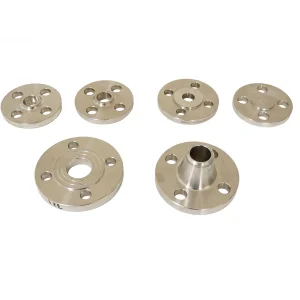
Featured Piping Components (Top Selection)
Explore factory-direct butt-weld long radius elbows, forged tees, precision flanges, and heavy-wall fittings manufactured in Cangzhou, China.
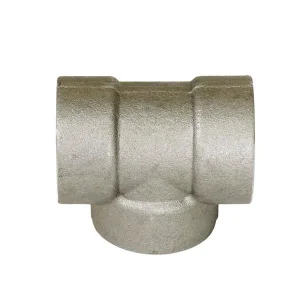
Buy Pipe Fitting Factory Original 1/2" to 36" ASTM A234 Wpb Forged Carbon Steel Butt Weld Equal Tee Factory, Factories
View Specifications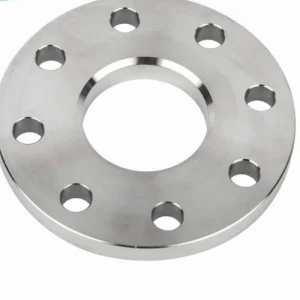
Famous BS4504 DN100 PN10 A105 Flange Quotes, Companies
View Specifications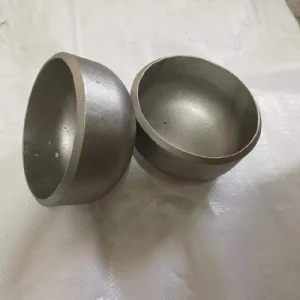
Wholesale BW Pipe Fitting End Cap Quotes, Service
View Specifications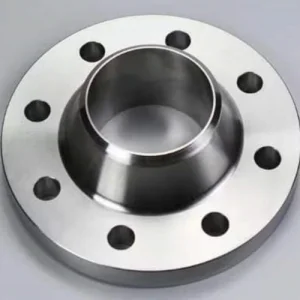
Discount DN100 600LBS ASME B16.5 WNRF Flange Exporters, Product
View Specifications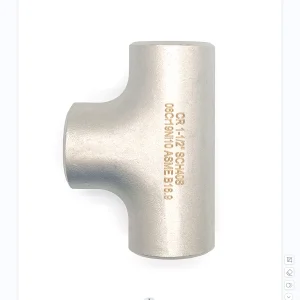
Best ANSI ASME B16.9 Carbon Steel Elbow Stainless Pipe Fitting Equal Tee Manufacturer, Suppliers
View Specifications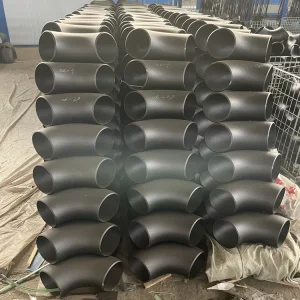
Wholesale Food Grade Sanitary Stainless Steel 304 Ss316 Tri Clamp Tee Fitting Tc 3a Ferrule Clamp Fitting Stainless Steel Grade 90 Degre Manufacturer, Products
View Specifications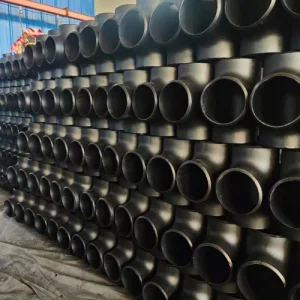
Wholesale 3"*3" Carbon Steel Equal Tee Factories, Service
View Specifications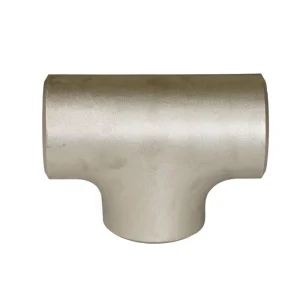
Discount Carbon Seamless Stainless Steel Pipe Fittings Reducer Tee Butt Welding Tee Supplier, Products
View SpecificationsTechnical Fundamentals of Long Radius (1.5D) Pipe Elbows
An analytical evaluation of fluid dynamics, wall thinning allowances, stress concentration factors, and forming thermodynamics in industrial pipeline engineering.
Hydrodynamic Fluid Mechanics & Pressure Drop Control
In industrial piping system design, the selection of directional flow change fittings directly dictates overall pumping efficiency, cavitation risk, and structural fatigue resilience. A Long Radius (LR) Elbow features a center-to-face curvature radius ($R$) equal to 1.5 times the nominal pipe size ($R = 1.5D$). Compared to Short Radius (SR) fittings ($R = 1.0D$), the extended curvature of an LR elbow dramatically minimizes directional momentum disruption.
According to Darcy-Weisbach fluid flow modeling, long radius bends exhibit significantly lower resistance coefficients ($K$-factor $\approx 0.20$ to $0.35$ depending on Reynolds numbers and surface roughness) versus short radius bends ($K \approx 0.45$ to $0.60$). This lower head loss prevents localized pressure spikes, suppresses turbulent boundary-layer separation, and mitigates flow-induced vibration (FIV) in high-velocity steam, gas, and multi-phase liquid lines.
Mandrel Hot-Push Forming Mechanics & Grain Refinement
The structural superiority of top-tier Chinese long radius elbows stems from advanced induction-heated mandrel hot-push forming processes. Raw seamless carbon or alloy steel tubes are pushed over a horn-shaped inner mandrel at controlled temperatures ranging from 750°C to 950°C.
This continuous thermal-mechanical deformation process distributes hoop stress uniformly during forming, preventing excessive extramural wall thinning (extrados) while accommodating intramural compression (intrados). Post-forming heat treatment—such as normalizing at 900°C followed by controlled air cooling or stress-relieving tempering—eliminates residual manufacturing stresses, restores austenitic/ferritic grain alignment, and achieves high impact toughness (e.g., Charpy V-Notch testing $\ge 27\text{ J}$ at $-46^\circ\text{C}$ for Low-Temperature ASTM A330 / WPL6 grades).
| Material Specification | Standard Standards | Size Range (NPS) | Yield Strength (MPa) | Tensile Strength (MPa) | Primary Sector Applications |
|---|---|---|---|---|---|
| ASTM A234 Grade WPB | ASME B16.9 / MSS SP-75 | 1/2" – 48" (DN15–DN1200) | $\ge 240$ | $415 - 585$ | General Refinery, Oil & Gas Pipelines, Water Treatment |
| ASTM A234 Grade WP11 / WP22 / WP91 | ASME B16.9 / EN 10253 | 1/2" – 36" (DN15–DN900) | $\ge 415$ (WP91) | $585 - 760$ | Supercritical Fossil Power, High-Temp Steam Headers |
| ASTM A403 WP304L / WP316L | ASME B16.9 / ISO 5251 | 1/2" – 60" (DN15–DN1500) | $\ge 170 - 205$ | $485 - 515$ | LNG Cryogenics, Chemical Synthesis, Offshore Topsides |
| ASTM A815 Duplex UNS S31803 / S32750 | ASME B16.9 / NACE MR0175 | 1/2" – 24" (DN15–DN600) | $\ge 550$ | $750 - 1000$ | Subsea Flowlines, Desalination, High-H2S Sour Gas |
China's Smart Manufacturing & Cluster Efficiency
How Cangzhou's world-class pipeline manufacturing ecosystem delivers unmatched lead-time stability, structural quality control, and economic value.
Automated Closed-Loop Hot Pushing
Integrated infrared thermal pyrometers regulate induction heating power in real-time. Hydraulic speed is automatically throttled to ensure uniform grain elongation and zero structural micro-cracking during 90° and 45° bend pushing.
Upstream Raw Material Traceability
Strategic stock reserves of certified seamless pipe billets directly sourced from top tier steel mills (Baosteel, TPCO, Daye Special Steel) enable complete heat-code identification, original EN 10204 3.1 MTR validation, and rapid turnaround times.
Non-Destructive Testing (NDT) Suite
Every long radius elbow undergoes rigorous Quality Control protocols: 100% Radiographic Testing (RT) on welded seams, Ultrasonic Wall Thickness Verification (UT), Magnetic Particle Inspection (MT) on bevel edges, and Positive Material Identification (PMI).
Cangzhou Port & Logistics Synergy
Located near Tianjin Port (Xingang), our manufacturing cluster integrates streamlined customs clearance, customized export ocean packaging (treated wooden crates, end caps, VCI anti-rust wrap), and direct containerized dispatch.
Industry-Specific Deployments for Global Infrastructure
From severe sour gas environments to cryogenic LNG transport, discover how specialized long radius elbows ensure zero-leak operating integrity.
Oil Refining & Petrochemical
Refinery catalytic cracking units and hydrocrackers demand ASTM A234 WPB and alloy WP11/WP22 long radius elbows capable of resisting high thermal cracking, hydrogen attack (HAZOP risk reduction), and continuous thermal cycling up to 550°C.
Supercritical Power Plants
Ultra-supercritical steam lines require heavy-wall ASTM A234 WP91 and WP911 long radius elbows with stringent creep rupture strength, tight wall thickness tolerances, and post-weld heat treatment (PWHT) monitoring to guarantee 30+ year design lives.
LNG Liquefaction & Cryogenics
Sub-zero natural gas processing demands low-carbon stainless steel (ASTM A403 WP316L) or nickel-alloy elbows certified under ASTM A333 Grade 6 standards, maintaining high impact toughness down to cryogenic temperatures of -196°C.
Mastering Global EPC & OEM Procurement Rules
A reference checklist for EPC project managers, procurement directors, and quality assurance inspectors evaluating Chinese suppliers.
-
1Dimensional & Bevel Tolerance Integrity (ASME B16.9)
Strict compliance with end-prep beveling angles ($37.5^\circ \pm 2.5^\circ$), root face dimensions ($1.6\text{ mm} \pm 0.8\text{ mm}$), and out-of-roundness (ovality) restrictions to guarantee rapid automatic field welding on offshore pipelay barges.
-
2NACE MR0175 / ISO 15156 Sour Service Compliance
For upstream crude production containing wet $H_2S$, elbows feature strict carbon equivalent ($CE_{IIW} \le 0.43\%$), hardness controls ($\le 22\text{ HRC}$), and Hydrogen-Induced Cracking (HIC) / Sulfide Stress Cracking (SSC) lab verification.
-
3Comprehensive MTR Documentation (EN 10204 3.1 / 3.2)
Full material certification accompanying each shipment, including chemical heat analysis, mechanical tensile/yield tests, impact energy values, heat treatment charts, and third-party inspection sign-offs (SGS, TÜV, Bureau Veritas, DNV).
Fast Procurement Checklist
Ensure your RFQ includes the following key variables for instant engineering evaluation and quotation accuracy:
Technology Roadmap & Next-Gen Metallurgy (2025–2035)
Adapting to global energy transition demands: Hydrogen pipeline compatibility, internal laser cladding, and digital twin manufacturing integration.
3D Laser Cladding & CRA Linings
Applying corrosion-resistant alloy (CRA) internal overlays—such as Inconel 625 or Hastelloy C276—onto high-strength carbon steel elbows via automated laser metal deposition, providing extreme chemical protection at lower material cost.
Hydrogen Embrittlement Mitigation
Developing ultra-clean micro-alloyed long radius elbows with controlled sulfur ($\le 0.002\%$) and low hydrogen diffusion coefficients tailored specifically for 100% pure hydrogen and blended natural gas transportation pipelines.
AI-Driven Ultrasonic Phased Array
Replacing manual flaw inspection with automated Phased Array Ultrasonic Testing (PAUT) and volumetric 3D modeling, capturing internal wall thinning and sub-surface anomalies down to sub-millimeter precision during high-speed production.
Global Quality Certification & Risk Protection
Ensuring full regulatory compliance across North American, European, Middle Eastern, and Asia-Pacific industrial jurisdictions.
ISO 9001:2015
Certified Quality Management System covering raw material receipt, forging, heat treatment, and shipment release.
CE - PED 2014/68/EU
Pressure Equipment Directive compliance for European Union power generation and chemical plant installations.
API 5L / ASME B16.9
Full dimensional and structural adherence to American Petroleum Institute and ASME piping standards.
EAC / GOST-R
Eurasian Conformity certification for heavy industry pipeline projects across Kazakhstan, CIS, and Eastern Europe.
Technical & Procurement FAQ
Detailed engineering answers addressing common questions regarding long radius elbow specifications, material selection, wall thickness calculation, and export logistics.
Featured Piping Components (Extended Catalog)
Browse additional factory offerings including concentric reducers, weld neck flanges, blind flanges, carbon bends, and pipe nipples.
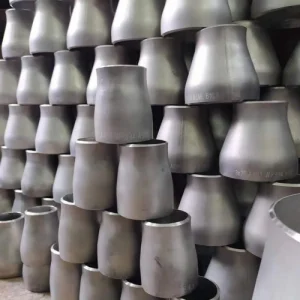
Wholesale Steel Pipe Reducer Manufacturer, Quotes
View Specifications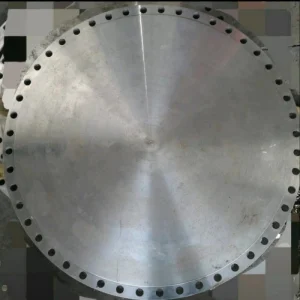
Famous Blind RF Flange Manufacturer, Suppliers
View Specifications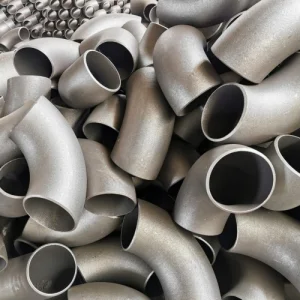
High-Quality Carbon Steel Bend 90Deg LR Products, Service
View Specifications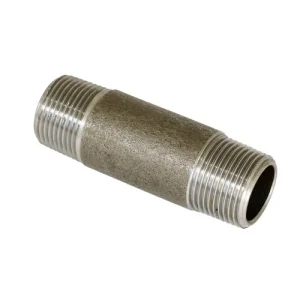
Discount NPT Black Steel Carbon Steel Pipe Nipples Manufacturers, Service
View Specifications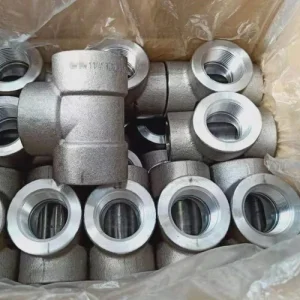
Discount 3000PSI Threaded Equal Tee Manufacturer, Products
View Specifications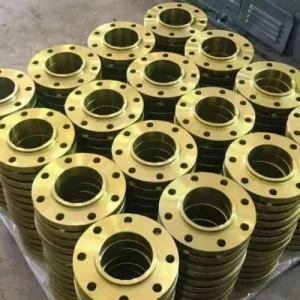
Famous ASTM A105 Weld Neck Slip On Flange Factory, Product
View Specifications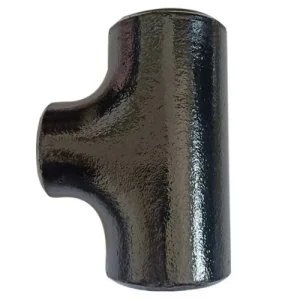
China Equal Tee , Reducing Tee Supplier, Exporter
View Specifications