
Featured Forged Flanges & Piping Components
Explore our core industrial manufacturing output certified to ASME, EN, JIS, and DIN standards for global high-pressure applications.
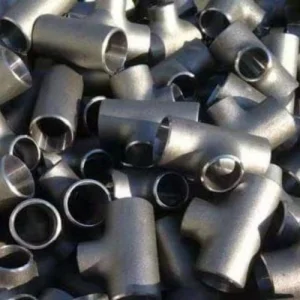
Wholesale Pipe Fitting Tee Supplier, Exporter
View Technical Specs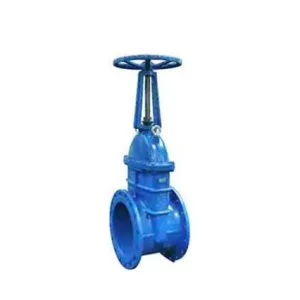
Discount Open rod soft sealing gate valve Z41X-10Q/16Q/25Q Company, Service
View Technical Specs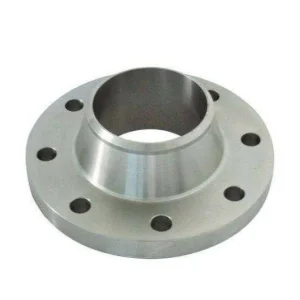
China Industrial Steel Butt Welding Flange Factories, Pricelist
View Technical Specs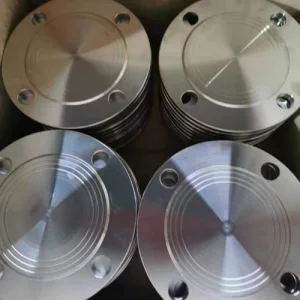
High-Quality Blind, Plate ,NPT Flange A105 Class 150 ASME B16.5 Manufacturer
View Technical Specs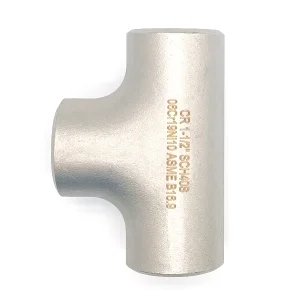
Buy Stainless Steel Thread Female Pipe Fitting Precision Casting Equal Tee
View Technical Specs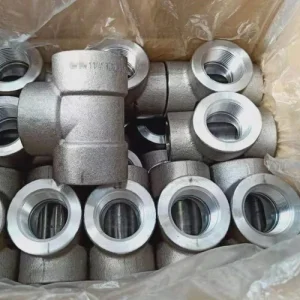
Discount 3000PSI Threaded Equal Tee Manufacturer, Products
View Technical Specs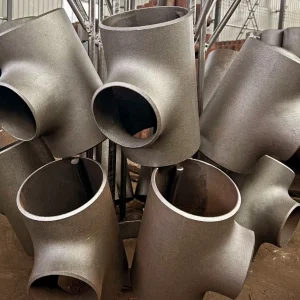
Best Carbon Steel Unqual Tee Suppliers, Factories
View Technical Specs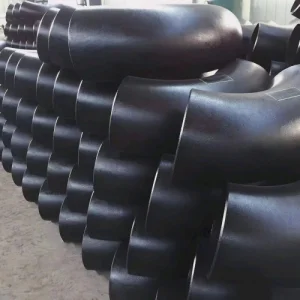
Best Butt Welded Pipe Fitting SS304L 1" Sch40 Short Radius Elbow Supplier
View Technical SpecsThe Global Industrial Landscape & The Evolution of Forged Flange Manufacturing
In high-pressure piping systems, petrochemical refineries, subsea energy extraction, and hydrogen infrastructure, forged flanges represent critical mechanical connection points. As global energy transition projects demand higher operating pressures, extreme cryogenic or elevated thermal resistance, and zero-leakage security, the technical requirements placed upon industrial forged flange manufacturers have undergone a structural paradigm shift.
Grain Refinement & Metallurgical Superiority
Unlike cast components which suffer from internal micro-porosity, shrinkage cavities, and directional weakness, hot-forged flanges undergo severe plastic deformation. This process realigns the internal grain flow along the structural contours of the flange, yielding superior impact toughness, fatigue strength, and mechanical resistance against stress corrosion cracking (SCC).
Extreme Operating Environment Resilience
Modern process plants operate under severe thermal cycling and pressure differentials (up to Class 2500 / PN400). Advanced forged flanges manufactured from ASTM A105, A350 LF2, and duplex alloys ensure structural yield strength integrity without thermal fatigue failure or micro-fissuring over decades of continuous operation.
Strict Standard Compliance (ASME / EN / JIS)
Global Engineering, Procurement, and Construction (EPC) contractors require flawless dimensional interchangeability and material traceability. Leading Chinese forging facilities align heat treatment and machining tolerances with ASME B16.5, B16.47, EN 1092-1, and ISO 7005 standards, supported by 3.1 and 3.2 inspection certificates.
China Factory 4.0: Supply Chain Resilience & Manufacturing Superiority
China’s industrial forging sector—centered in strategic manufacturing hubs like Cangzhou, Hebei—has evolved from labor-intensive forging shops into fully automated, digitally monitored Industry 4.0 production ecosystems. This transformation offers international buyers an unmatched blend of structural scale, rapid lead-time execution, and rigorous metallurgical quality control.
1. Smart Automated Forging & Ring-Rolling Mills
Modern Chinese flange facilities leverage CNC-controlled hydraulic forging presses ranging from 2,500 to 10,000 tons, synchronized with high-precision radial-axial ring rolling machines. Closed-loop optical sensors measure thermal expansion and radial symmetry during forging in real time, guaranteeing consistent grain orientation and eliminating localized structural stress concentration.
- Automatic billet loading and induction heating preventing surface decarburization.
- Precision CNC flange lathe facing achieving serrated finish tolerances within ±0.05 mm.
- Automated multi-axis drilling centers ensuring exact bolt-circle diameter alignment.
2. Integrated Raw Material Traceability & Ecosystem
China produces over 50% of the world's raw steel, providing domestic flange manufacturers with direct access to tier-1 steel mills (such as Baosteel, TPCO, and Shougang). This vertical integration insulates global buyers from raw material bottlenecks while ensuring full chemical heat-number traceability from billet melting to final flange packaging.
- Spectrometric analysis for heat chemical qualification before forging.
- Raw material buffer stocks mitigating global commodity price spikes.
- Localized heat-treatment complexes (Normalizing, Quenching, Tempering, Solution Annealing).
To avoid costly project downtime caused by freight bottlenecks or material rejection, top-tier Chinese manufacturers now offer end-to-end supply chain transparency. This includes real-time digital production tracking, pre-shipment Third-Party Inspection (TPI by SGS, TÜV, BV, or Lloyd's Register), and localized export packaging compliant with ISPM-15 heat-treated wooden crate standards.
Metallurgical Grade Selection & Manufacturing Specification Matrix
Selecting the optimal forged flange specification requires matching pressure-temperature (P-T) ratings, corrosive media dynamics, and mechanical load profiles. Below is a comprehensive engineering matrix detailing standard material grades and flange configurations offered by leading Chinese manufacturers.
| Material Category | Standard ASTM / EN Grades | Pressure Classes | Typical Service Applications | Key Metallurgical Characteristics |
|---|---|---|---|---|
| Carbon Steel | ASTM A105, A350 LF2 Class 1/2, ST37.2, P250GH | Class 150 – 2500 PN6 – PN400 |
General steam, municipal water, oil & gas transport, utility lines. | Excellent weldability, high tensile strength, cost-effective baseline material. A350 LF2 offers impact toughness down to -46°C. |
| Low-Alloy Steel | ASTM A182 F11, F22, F5, F9, F91 | Class 300 – 2500 PN25 – PN400 |
High-temperature power plant boilers, steam turbines, hydrocrackers. | Chromium-Molybdenum additions provide exceptional resistance to creep deformation and thermal degradation up to 650°C. |
| Austenitic Stainless | ASTM A182 F304/304L, F316/316L, F321, F347 | Class 150 – 1500 PN10 – PN160 |
Chemical processing, cryogenic LNG piping, pharmaceutical, food process. | High chromium and nickel content prevents oxidation and organic acid corrosion; low carbon grades ('L') prevent intergranular corrosion post-welding. |
| Duplex & Super Duplex | ASTM A182 F51 (UNS S31803), F53 (S32750), F55 | Class 300 – 2500 PN40 – PN400 |
Offshore oil platforms, subsea manifolds, seawater desalination plants. | Dual-phase ferritic-austenitic microstructure delivers double the yield strength of 316L along with extreme resistance to chloride pitting and crevice corrosion. |
| Nickel Superalloys | Inconel 625, Incoloy 825, Hastelloy C276, Monel 400 | Class 600 – 2500 API 2000 – 10000 |
Sour gas (H2S) wells, acid regeneration units, severe subsea environments. | Unmatched chemical stability against hot concentrated acids, wet chlorine, and high-stress environmental cracking under extreme pressures. |
Standard Flange Facing & Structural Variations
Weld Neck Flange (WN)
Designed with a tapered hub to transfer stress to the pipe wall. Ideal for severe bending moments, high pressure, and cyclic thermal variation.
Slip-On Flange (SO)
Slips over the pipe end and is secured by two fillet welds (inside and outside). Cost-effective and easier to align during field fabrication.
Blind & Spectacle Flange (BL)
Used to seal pipe ends or vessel openings. Engineered to withstand maximum system pressure without deflection during maintenance isolations.
Localized Application Scenarios & Global Sector Deployment
From the freezing gas fields of Northern Europe to the high-salinity offshore installations of the Middle East, Chinese forged flanges are deployed across diverse global environments demanding stringent performance criteria.
1. Subsea Oil & Gas and FPSO Modules
Offshore Floating Production Storage and Offloading (FPSO) vessels require Ring Type Joint (RTJ) forged flanges manufactured from ASTM A182 F51 duplex steel. These flanges resist harsh marine splash zones and high-pressure sour crude lines while preventing gas leakage under wave-induced structural deflection.
2. Hydrogen Storage & Green Ammonia Facilities
Hydrogen gas molecules are extremely small and cause hydrogen embrittlement in standard carbon steels. Chinese manufacturers supply specialized low-carbon, high-purity austenitic stainless flanges (such as 316L with controlled nickel equivalent) machined with smooth serrated faces to ensure zero-emission tightness under high-pressure gas storage.
3. High-Temperature Thermal Power & Refineries
In steam turbine header connections operating above 540°C, alloy steel flanges (ASTM A182 F91) undergo continuous thermal stress. Advanced heat-treatment telemetry in Chinese factories ensures precise normalized and tempered grain structures that resist long-term creep rupture.
4. Desalination & Seawater Transport Networks
Municipal reverse-osmosis (RO) plants handle hypersaline brine under high pressures. Large-diameter plate and weld neck flanges made from Super Duplex UNS S32750 prevent localized pitting corrosion (PREN > 40), offering a 30+ year design life without flange face deterioration.
Quality Assurance, NDT Testing & Technical Compliance
Mechanical failure in a flange joint can result in catastrophic environmental damage, hazardous fluid leaks, or total operational shutdown. Trusted Chinese forged flange suppliers enforce stringent quality control frameworks certified under ISO 9001:2015, PED 2014/68/EU, and API 6A specifications.
1. Ultrasonic Testing (UT)
100% volumetric examination using automated ultrasonic probes compliant with ASTM A388. Detects internal inclusions, laminations, and sub-surface forging bursts prior to final machining.
2. Positive Material Identification (PMI)
Handheld X-ray Fluorescence (XRF) alloy analyzers verify chemical composition grade compliance for every single flange before dispatch, completely eliminating material grade cross-contamination.
3. Hydrostatic & NDT Examination
Magnetic Particle Inspection (MT) and Liquid Penetrant Testing (PT) evaluate surface integrity on high-pressure sealing faces. Hydrostatic testing verifies structural tightness under 1.5x design pressure.
Preserved Catalog Index & Reference Directory
The following catalog components form part of our verified product range and manufacturing supply list:
- Wholesale Pipe Fitting Tee Supplier, Exporter
- Discount Open rod soft sealing gate valve Z41X-10Q/16Q/25Q Company, Service
- China Industrial Steel Butt Welding Flange Factories, Pricelist
- High-Quality Blind, Plate ,NPT Flange A105 Class 150 ASME B16.5 Manufacturer, Manufacturers
- Buy Stainless Steel Thread Female Pipe Fitting Precision Casting Equal Tee Manufacturers, Service
- Discount 3000PSI Threaded Equal Tee Manufacturer, Products
- Best Carbon Steel Unqual Tee Suppliers, Factories
- Best Butt Welded Pipe Fitting SS304L 1" Sch40 Short Radius Elbow Supplier, Suppliers
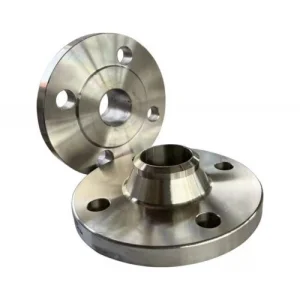 High-Quality 20# DN80 PN10 Flange Supplier, Product
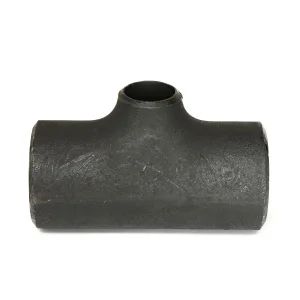 Wholesale Carbon Pipe Fittings of Equal/Straight/Reducing Tee of ASME/ASTM Exporter, Service
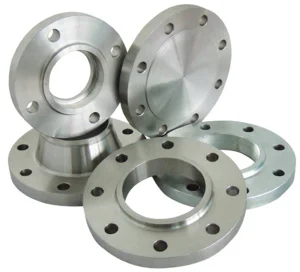 Best ASME ANSI BS En DN100 Class150 F304/304L Stainless Steel Slip on Flange Products, Service
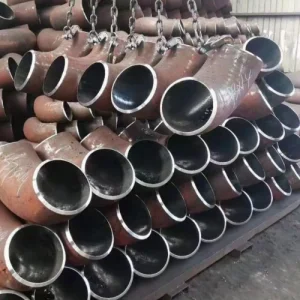 Wholesale Carbon Steel Pipe Fitting Elbow SCH120 1.5D Exporters, Companies
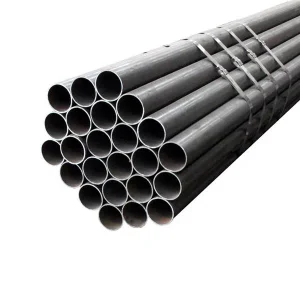 Best Industrial Welded Steel Pipe Supplier, Product
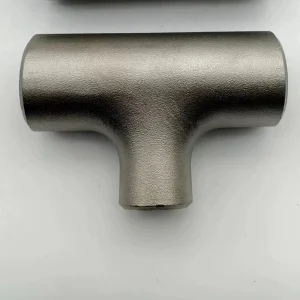 Best Seamless Stainless Steel Carbon Steel Reducer Tee Butt Welding Fitting Tee Factories, Quotes
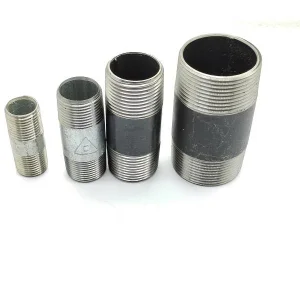 Buy DN6 DN100 Black Steel Pipe Nipples Factory Manufacturers, Companies
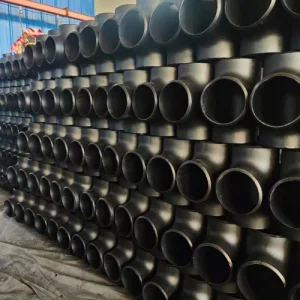 Wholesale 3"*3" Carbon Steel Equal Tee Factories, Service
Frequently Asked Questions: Technical & Procurement Insights
Clear answers to critical technical, metallurgical, logistics, and quality assurance queries commonly raised by international procurement managers and project engineers.
Why should I specify forged flanges over cast flanges for high-pressure piping systems?
What international manufacturing standards do Chinese flange manufacturers adhere to?
- American Series: ASME B16.5 (1/2" to 24"), ASME B16.47 Series A & B (26" to 60"), API 6A, MSS SP-44.
- European Series: EN 1092-1 Type 01, 02, 11, 12, 13, 21, 34; DIN standards.
- Japanese & Asian Series: JIS B2220, KS B1503.
- Material Standards: ASTM A105, ASTM A350, ASTM A182, EN 10222-2.
How is full material traceability guaranteed from steel mill to delivered product?
What facing finishes are available, and how are serration profiles controlled?
- Raised Face (RF) & Flat Face (FF): Concentric or stock continuous spiral serration with a roughness of Ra 3.2 µm to 6.3 µm (125–250 AARH).
- Smooth Finish: Ra 1.6 µm to 3.2 µm for metallic spiral wound gaskets.
- Ring Type Joint (RTJ): Precision-ground octagonal or oval grooves with surface finish Ra ≤ 1.6 µm, manufactured to ASME B16.20.
Can Chinese factories supply custom engineered flanges outside standard dimensions?
What non-destructive testing (NDT) options are conducted before dispatch?
How do Chinese manufacturers optimize freight and shipping logistics for large projects?
Additional Industrial Pipe Fittings & Flanges
Explore our broader range of industrial fittings, valves, and steel pipes manufactured for global infrastructure projects.
High-Quality 20# DN80 PN10 Flange Supplier, Product
View Technical Specs
Wholesale Carbon Pipe Fittings of Equal/Straight/Reducing Tee Exporter
View Technical Specs
Best ASME ANSI BS En DN100 Class150 F304/304L Stainless Steel Slip on Flange
View Technical Specs
Wholesale Carbon Steel Pipe Fitting Elbow SCH120 1.5D Exporters
View Technical Specs
Best Industrial Welded Steel Pipe Supplier, Product
View Technical Specs
Best Seamless Stainless Steel Carbon Steel Reducer Tee Butt Welding Fitting
View Technical Specs
Buy DN6 DN100 Black Steel Pipe Nipples Factory Manufacturers
View Technical Specs
Wholesale 3"*3" Carbon Steel Equal Tee Factories, Service
View Technical SpecsRequest Technical Data Sheets & Factory Direct Quotations
Partner with China's leading forged flange manufacturing ecosystem. Our engineering team provides detailed CAD drawings, material test compliance certificates, and competitive project estimates within 24 hours.