High-Precision Carbon & Alloy Steel Components
Direct factory supply from Cangzhou manufacturing base, engineered under ISO 9001, ASME B16.9, and EN 10253 standards for critical global infrastructure.
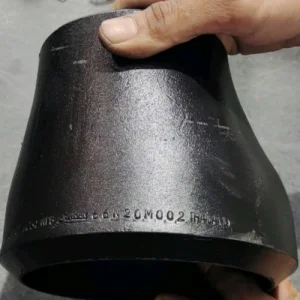
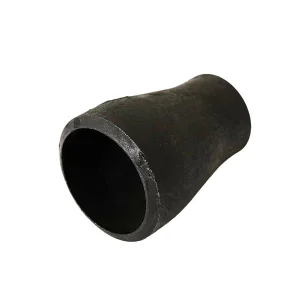
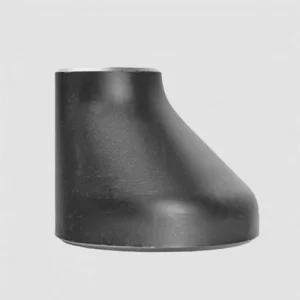
Buy Carbon Steel Pipe Fittings ASTM Carbon Steel Stainless Steel Pipe Fitting Concentric Reducer Products, Service
View Product Details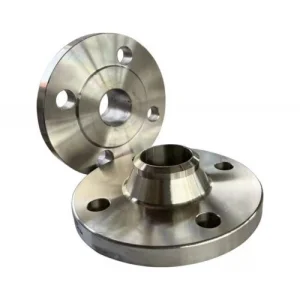
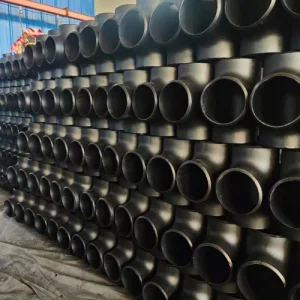
1. Technical Foundations & Material Metallurgy of Carbon Steel Elbows
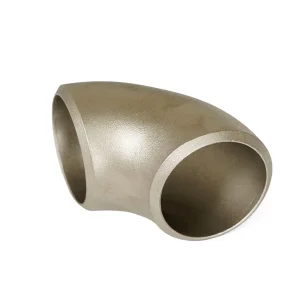
In industrial piping systems, carbon steel elbows act as crucial direction-changing fittings subjected to intense internal fluid pressures, thermal expansion cycles, mechanical vibrations, and environmental erosion. China carbon steel elbow manufacturers utilize advanced metallurgy and precision forging to engineer long radius (1.5D), short radius (1.0D), 45°, 90°, and 180° bends that satisfy stringent ASME B16.9, EN 10253-2, DIN 2605, and JIS B2311 specification standards.
The structural integrity of a butt-weld carbon steel elbow depends heavily on its raw material grade selection. Primary carbon steel grades include standard ASTM A234 WPB, WPC, low-temperature carbon steel ASTM A420 WPL6, and high-yield line pipe fittings ASTM A860 WPHY 42, 52, 60, 65, and 70. Micro-alloying elements such as manganese, silicon, vanadium, and titanium are balanced to deliver optimal tensile strength, impact energy absorption, and weldability.
| Standard & Grade | Carbon (C) % Max | Manganese (Mn) % | Yield Strength (MPa) Min | Tensile Strength (MPa) | Primary Application Environment |
|---|---|---|---|---|---|
| ASTM A234 WPB | 0.30 | 0.29 – 1.06 | 240 | 415 – 585 | General refinery, thermal power, and municipal water utilities |
| ASTM A234 WPC | 0.35 | 0.29 – 1.06 | 275 | 485 – 655 | Higher pressure piping systems requiring elevated yield strength |
| ASTM A420 WPL6 | 0.30 | 0.50 – 1.35 | 240 | 415 – 585 | Cryogenic gas processing and arctic pipelines (-46°C impact qualified) |
| ASTM A860 WPHY 52 | 0.20 | 1.00 – 1.45 | 360 | 455 – 620 | High-yield natural gas transmission & cross-country trunklines |
| EN 10253-2 P265GH | 0.20 | 0.80 – 1.40 | 265 | 410 – 570 | European pressure vessel equipment and industrial boiler networks |
2. Advanced Manufacturing Processes & Quality Control Systems
Leading China carbon steel elbow manufacturers employ three primary industrial manufacturing routes depending on outer diameter (OD), wall thickness (WT), and seamless vs. welded construction parameters:
Hot Push Mandrel Forming
Used for seamless elbows (DN15 to DN600). Raw seamless steel pipes are pushed over a horn-shaped mandrel under medium-frequency induction heating. This process ensures uniform wall thickness distribution, precise curvature radius control, and flawless internal surface smoothness.
Cold Press Forming
Applied to small-diameter or specialized thin-wall carbon steel elbows. Steel tube blanks are hydraulically pressed inside precision dies at ambient temperature, followed by mandatory thermal stress relieving or normalizing heat treatment to eliminate internal mechanical strain.
Two-Half Plate Welding
Designed for large-diameter elbows (DN600 up to DN2400). Heavy carbon steel plates are hot-pressed into semi-circular halves and joined via automatic Submerged Arc Welding (SAW) with 100% full-penetration radiographies on all longitudinal seams.
Heat Treatment & Metallurgical Assurance: Following cold or hot forming, elbows undergo normalizing heat treatment (heated to 890°C–920°C and air-cooled) to refine grain boundaries, achieve homogenous ferrite-pearlite microstructures, and maximize impact toughness. For high-strength line pipe grades (e.g., WPHY 65/70), Quenching and Tempering (Q&T) routines are applied.
3. Macro Industry Solutions & Sector-Specific Engineering Applications
China carbon steel elbows exported globally serve as core components in harsh operational environments where pipe integrity cannot be compromised.
Oil & Gas Midstream Infrastructure
High-pressure natural gas transmission lines utilize ASTM A860 WPHY high-yield elbows to withstand surge pressures up to 150 bar. Sour service applications require compliance with NACE MR0175/ISO 15156 to prevent Hydrogen-Induced Cracking (HIC) and Sulfide Stress Corrosion Cracking (SSCC).
Thermal & Fossil Power Generation
Supercritical thermal power plants rely on heavy-wall alloy and carbon steel elbows (such as ASTM A234 WP11, WP22, WP91, and WPB) capable of handling main steam temperatures exceeding 540°C under dynamic creep and fatigue loading conditions.
Petrochemical Refining & Cracking
Fluid Catalytic Cracking (FCC) units and hydroprocessing loops demand heavy-wall schedule 160 and XXS carbon steel elbows coated with anti-corrosive varnishes or 3LPE layers to endure slurry erosion and chemical corrosion.
4. Global Commercial Landscape & Supply Chain Optimization
China has established itself as the world's primary hub for carbon steel pipe fitting manufacturing, with Cangzhou City in Hebei Province serving as the central production cluster. Cangzhou manufacturers leverage fully integrated supply chains—from raw billet procurement at tier-one domestic steel mills (e.g., Baosteel, TPCO, Shougang Group) to automated hydro-forming, heat treatment, land logistics, and proximity to Tianjin Port.
Total Cost of Ownership (TCO) & Procurement Optimization: International EPC contractors and stockists reduce procurement expenditures by up to 25% to 35% when sourcing certified carbon steel elbows from established China exporters. Key procurement criteria include factory audit verification, raw material traceability (EN 10204 3.1 Mill Test Certificates), heat batch testing, and freight optimization using customized wooden crates or iron frames to prevent bevel damage during sea transit.
5. Regulatory Compliance, NDT Verification & Export Quality Assurance
Ensuring zero-defect supply in international pipeline projects requires rigorous multi-stage quality control. Qualified China carbon steel elbow manufacturers enforce quality gates aligned with global standard requirements:
| Quality Verification Stage | Testing Procedure / Standard | Acceptance Criteria | Technical Purpose |
|---|---|---|---|
| Dimensional Inspection | ASME B16.9 / EN 10253-2 | Tolerance ±1.5mm on OD; wall thickness -12.5% max | Guarantees exact fit-up and alignment during field welding |
| Bevel Angle Verification | ASME B16.25 (37.5° ± 2.5°) | Root face 1.6mm ± 0.8mm | Ensures optimal weld root penetration during GTAW/SMAW welding |
| Ultrasonic Testing (UT) | ASTM A577 / EN 10160 | Zero laminations, inclusions, or sub-surface cracks | Verifies internal steel cleanliness and structural homogeneity |
| Radiographic Testing (RT) | ASME Section V Article 2 | 100% full seam inspection on welded elbows | Detects porosity, lack of fusion, or undercut in welded seams |
| Positive Material ID (PMI) | XRF Spectrometry | Match ASTM specification chemistry | Prevents material grade mix-ups before final coating and packing |
| Surface Protection | Black Varnish / 3LPE / Galvanized | Coating thickness 50µm – 300µm | Protects against atmospheric oxidative corrosion during ocean shipping |
6. Technological Roadmap & Future Outlook (2025–2035)
The global transition toward green energy and digital industrialization is reshaping the manufacturing landscape for carbon steel elbows in China:
- Hydrogen Infrastructure Readiness: Research and development efforts focus on manufacturing carbon steel elbows with reduced carbon equivalent (CE) values and tailored microstructures resistant to hydrogen embrittlement in pure hydrogen and natural gas-hydrogen blend pipelines.
- AI-Driven Induction Forging: Integration of smart infrared thermal sensors and real-time AI feedback loops during mandrel pushing to ensure temperature variations remain within ±3°C, drastically improving wall consistency.
- Decarbonized Green Steel Feedstock: Adoption of Electric Arc Furnace (EAF) steel billets powered by renewable energy sources, significantly reducing the carbon footprint of exported piping products to comply with Europe's Carbon Border Adjustment Mechanism (CBAM).
Frequently Asked Questions by Procurement & Project Engineers
What is the difference between 1.5D (Long Radius) and 1.0D (Short Radius) carbon steel elbows?
A Long Radius (LR) elbow has a center-to-face distance equal to 1.5 times the nominal pipe size (R = 1.5D). It provides smooth fluid flow with lower pressure drop and fluid friction, making it the standard choice for high-velocity liquid and gas pipelines. A Short Radius (SR) elbow has a center-to-face distance equal to 1.0 times the nominal pipe size (R = 1.0D), used primarily in tight, space-constrained piping layouts such as offshore modules or compact equipment skids where higher pressure loss is acceptable.
Which standards govern the dimensions and manufacturing of China carbon steel elbows?
The standard dimension specification for North American and global oil & gas projects is ASME B16.9 (Factory-Made Wrought Butt-welding Fittings). European projects utilize EN 10253-2 or DIN 2605. Japanese industrial networks follow JIS B2311 and JIS B2312. High-pressure pipeline applications use MSS SP-75 or ASTM A860 specifications.
How do manufacturers ensure wall thickness uniformity during the hot mandrel push process?
During hot push forming, raw pipe stock experiences outer radius thinning and inner radius thickening. Professional China manufacturers utilize specially calculated starting tube dimensions (using thicker-walled seamless pipe stock) and computerized hydraulic push speeds so that after thermal expansion over the horn mandrel, the final outer wall thickness remains well within the ASME B16.9 allowable tolerance (-12.5% to +15%).
What documentation and certification should be requested prior to shipment?
Buyers should mandate a complete Quality Dossier containing EN 10204 3.1 Mill Test Certificates (MTRs) detailing heat number, chemical composition, tensile and yield strength, elongation, Charpy V-notch impact test values, hardness testing (e.g., HBW / HRC), 100% NDT inspection reports (UT/RT), Heat Treatment charts, and Third-Party Inspection (TPI) release notes from agencies such as SGS, BV, or TÜV.
How are carbon steel elbows protected against corrosion during ocean shipping?
Export carbon steel elbows undergo surface shot-blasting to SA 2.5 cleanliness, followed by application of protective coatings: black rust-preventative paint, transparent anti-rust varnish, hot-dip galvanizing (for municipal line pipe), or 3-layer polyethylene (3LPE) / Fusion Bonded Epoxy (FBE). Pipe ends are fitted with plastic bevel protectors to prevent mechanical denting during transport.
Explore Additional Industrial Fittings, Flanges & Caps
Factory-direct butt-weld fittings, GOST/ANSI flanges, caps, and custom pipe components manufactured to international quality benchmarks.
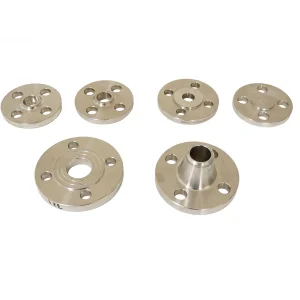
Best GOST 12820-80/12821-80 China Factory Supply Flanges Manufacturer, Pricelist
View Product Details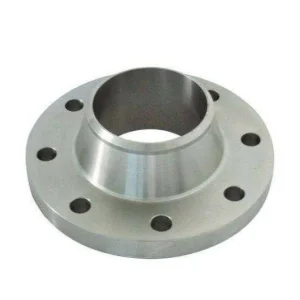
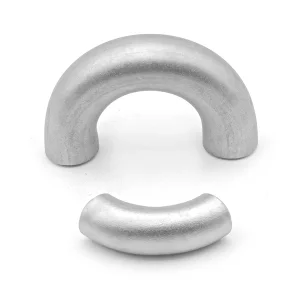
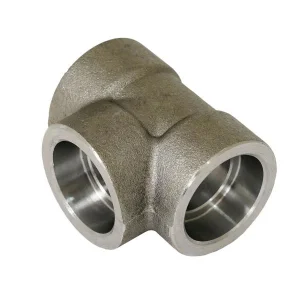
China Pipe Fittings Bend Seamless Butt Welded B/W 90 Degrees Elbows Factories, Companies
View Product Details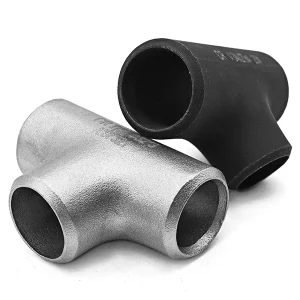
Best Stainless Steel Pipe Fittings Stainless Steel Equal Tee Bw Pipe Fittings SS316L Equal Tee Reducing Tee Transition Tee Companies, Products
View Product Details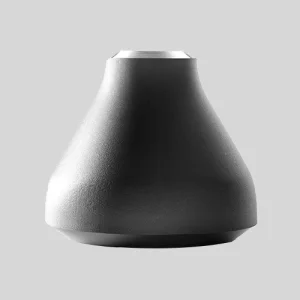
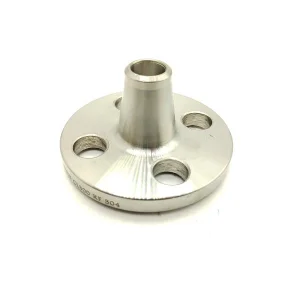
Famous Stainless Steel Butt Welding Flange Wn Flange FF RF Flange Manufacturers, Suppliers
View Product Details