
Featured Industrial Pipe Fittings & Flanges Showcase
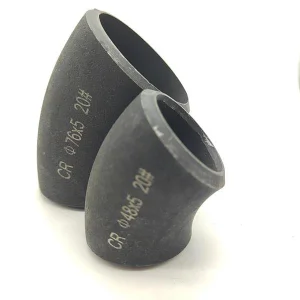
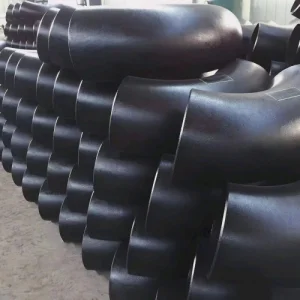
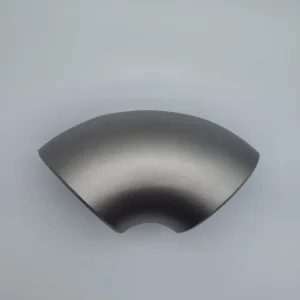
Direct from our Cangzhou manufacturing base: High-yield carbon steel, austenitic stainless steel, and nickel alloy components forged for extreme temperature and high-pressure duties.
Executive White Paper: Strategic Sourcing of Industrial Steel Pipes, Fittings & Flanges
A Comprehensive Industry Report on Metallurgical Selection, Production Standards, and Procurement Optimization for Critical Infrastructure
In modern industrial engineering, fluid conveyance infrastructure constitutes the lifeblood of energy transformation, chemical manufacturing, marine propulsion, and urban distribution systems. Choosing a qualified steel pipes and fittings manufacturer & supplier is a decision that dictates not only initial capital expenditure (CAPEX) efficiency, but long-term operational risk management, environmental containment, and plant safety across decades of service life.
Industrial piping systems operate under severe stress regimes including high cyclic pressure, thermal shocks, cryogenic fluid storage, sour gas exposure (H2S), and aggressive oxidative corrosion. Achieving total integrity across complex piping networks requires flawless alignment between seamless steel pipes, forged flanges, butt-weld elbows, tees, reducers, and flow control valves. Even a single sub-standard weld fitting or non-compliant flange facing can result in catastrophic joint failure, unplanned shutdowns, and hazardous chemical releases.
As global supply chains rebalance toward verified quality, raw material traceability, and ESG compliance, procurement managers and lead piping engineers are increasingly evaluating manufacturers based on vertical production capabilities. **Hebei Cangrun Pipeline Equipment Co., Ltd.** along with its specialized production units—**Cangzhou Feiwo Metal Products Co., Ltd.** and **Cangzhou Feixiang Metal Products Co., Ltd.**—represents the pinnacle of integrated manufacturing excellence in Cangzhou, Hebei, China.
The Cangzhou Industrial Advantage: Scale, Integration, and Precision
Why China's Primary Pipeline Manufacturing Cluster Leads the Global B2B Supply Chain
Complete Supply Chain Clustering
Situated in Cangzhou, Hebei Province, our facilities sit at the core of the world's dense pipeline manufacturing ecosystem. Immediate access to major steel mills (HBIS, Shougang) provides continuous supplies of premium steel billets, heavy plate, and seamless hollow bars, dramatically reducing raw material lead times and freight costs.
In-House Forging & Machining
Equipped with heavy hydraulic hot-pushing elbow machines, 8000-ton forging presses, automated beveling machines, and 5-axis CNC machining centers, Cangrun handles every processing stage under ISO 9001 supervision. We eliminate middleman markups while enforcing direct quality control.
Tailored OEM & Structural Engineering
Whether you require standard ANSI B16.9 butt-weld fittings or heavy-wall custom forged flanges up to DN4000 (160 inches), our engineering division customizes dimensions, wall schedules up to 150mm, compound bevels, and special surface coatings according to project specifications.
Future Development Trends in Global Pipeline Manufacturing
Technological Innovations Reshaping Pipe Fitting Production and Performance Standards
1. Hydrogen-Ready Pipeline Metallurgy
With the global transition toward clean energy, pipeline networks are being retrofitted and constructed to transport gaseous hydrogen blends. Carbon and alloy steel pipes must resist Hydrogen-Induced Cracking (HIC) and Stress Corrosion Cracking (SCC). Modern manufacturing incorporates vacuum degassed, ultra-low sulfur steel with micro-alloying elements (Niobium, Titanium) to optimize microstructural resistance against hydrogen embrittlement.
2. High-Grade Duplex & Super Alloys
Offshore deepwater, desalination, and aggressive chemical processing plants are shifting from standard austenitic grades (304L/316L) to Duplex (UNS S31803 / 2205) and Super Duplex (UNS S32750 / 2507) stainless steels. These materials deliver double the yield strength of traditional stainless steel while offering exceptional resistance to pitting, crevice corrosion, and chloride cracking in extreme marine service.
3. Digital Twin & AI Quality Tracing
Modern quality assurance demands complete electronic traceability. Every fitting, flange, and pipe section leaves our factory stamped with unique heat numbers, dimensional matrix barcodes, and digital inspection records. This integration allows EPC engineers to verify Material Test Reports (MTRs) compliant with EN 10204 3.1/3.2 instantly from field mobile devices.
4. Green Manufacturing & Low-Carbon Steel
Decarbonization initiatives are compelling steel pipe mills to adopt Electric Arc Furnace (EAF) recycling and solar-powered heat treatment operations. Our factory optimizes heating cycles during hot forging and implements closed-loop water recirculation systems, lowering embodied carbon per ton of finished piping equipment.
5. Clad & Lined Composite Piping
To reduce expensive solid alloy usage in high-corrosion applications, composite technology bonds a corrosion-resistant alloy (CRA) liner (e.g., Inconel 625, SS316L) inside a high-strength carbon steel backing pipe (e.g., API 5L X65). This provides maximum structural strength with superior chemical resistance at a fraction of solid alloy cost.
6. Automated Precision Beveling
Field welding efficiency relies directly on root face accuracy and bevel uniformity. Automated CNC beveling machines create precise single-V, compound-V, and narrow-gap J-bevels on pipe ends, reducing field welding times by up to 30% and eliminating root pass defects during automatic orbital welding.
Macro-Industry Solutions: Sector-Specific Engineering Applications
Customized Piping Assemblies and Material Selection Engineered for High-Risk Environments
Petrochemical & Hydrocarbon Refining
Operating Conditions: High temperature, thermal cycling, hydro-cracking processes.
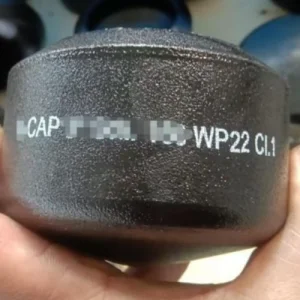
Component Requirements: ASTM A234 WPB, WP11, WP22, WP91 alloy steel butt-weld elbows, long radius bends, and Class 300 to Class 2500 Weld Neck (WN) flanges with Raised Face (RF) or Ring Type Joint (RTJ) sealing surfaces. Strict compliance with ASME B16.9 and ASME B16.5.
Offshore Oil & Gas Platforms
Operating Conditions: High-salinity atmospheric corrosion, deepwater pressures, wave vibration.
Component Requirements: UNS S31803 / UNS S32750 Super Duplex pipe fittings, forged socket-weld fittings, heavy-wall seamless pipes, and custom blind flanges. 100% Ultrasonic (UT) and Magnetic Particle (MT) non-destructive testing.
Thermal & Nuclear Power Generation
Operating Conditions: Ultra-supercritical steam, pressures above 25 MPa, temperatures exceeding 600°C.
Component Requirements: High-alloy WP91/WP92 seamless tees, heavy-wall reducers, and high-yield forged pipe components with full grain boundary refinement, Charpy V-notch impact testing at low temperatures, and positive material identification (PMI).
Cryogenic Liquefied Natural Gas (LNG)
Operating Conditions: Operating temperatures down to -196°C, thermal shrinkage stress.
Component Requirements: ASTM A333 Gr 6 low-temperature seamless steel pipes, ASTM A403 WP304L/WP316L stainless steel elbows, caps, and stub ends tested for cryogenic impact toughness and zero micro-fissure integrity.
Municipal High-Pressure Heating & Water Supplies
Operating Conditions: Underground soil corrosion, pressure surges, long service lifespan (50+ years).
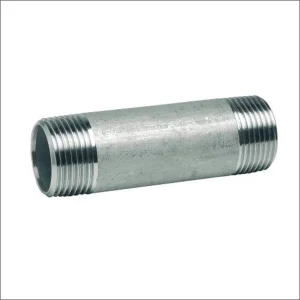
Component Requirements: Large-diameter ERW and SAW steel pipes, hot-dip galvanized steel pipe nipples, resilient-seated gate valves (Z45X series), and plate weld flanges certified to GB/T and EN 1092-1 standards.
Chemical Processing & Fertilizer Manufacturing
Operating Conditions: Nitric acid, sulfuric acid, urea slurry, highly acidic media.
Component Requirements: Stainless steel ball valves (Q41F series), titanium alloy flanges, ASTM A403 WP316Ti / 317L concentric and eccentric reducers designed to eliminate fluid accumulation and localized pitting.
Technical Manufacturing Matrix & International Standard Compliance
Comprehensive Specifications Covering Size Ranges, Wall Thicknesses, Pressure Ratings, and Material Grades
| Product Category | Dimension & Size Range | Pressure Class / Wall Thickness | Material Grades | Governing Standards |
|---|---|---|---|---|
| Butt-Weld Pipe Fittings (Elbows, Tees, Reducers, Caps) |
Seamless: 1/2" – 24" (DN15 – DN600) Welded: 4" – 78" (DN150 – DN1900) |
SCH 5S to SCH 160, STD, XS, XXS Max Wall Thickness: 150mm |
ASTM A234 WPB, WPC, WP11, WP22, WP91; ASTM A403 WP304/304L, WP316/316L, 317L; ST37, ST52, 12CrMo, 15CrMo |
ASME/ANSI B16.9, JIS B2311/B2312, GB/T 12459, GB/T 13401, SH/T 3408, EN 10253-2, HG/T 21635 |
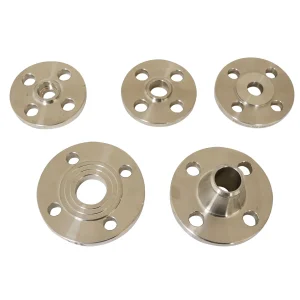
| Forged Steel Flanges (WN, SO, Blind, Threaded, Plate) |
3/8" – 160" (DN10 – DN4000) | Class 150, 300, 400, 600, 900, 1500, 2500; PN2.5 to PN400 (European Series) |
ASTM A105, A350 LF2, A182 F304/304L, F316/316L, F11, F22, F91; Carbon & Alloy Steel Forgings |
ASME B16.5, ASME B16.47 Series A & B, EN 1092-1, DIN 2527/2633, JIS B2220, BS 4504, GOST 12820 |
| Seamless & ERW Steel Pipes | 1/2" – 48" (DN15 – DN1200) | SCH 10 to SCH XXS (Up to 80mm WT) | API 5L Gr B to X80, ASTM A106 Gr B/C, ASTM A333 Gr 6, ASTM A312 TP304/316 |
API 5L PSL1/PSL2, ASTM A106, ASTM A53, DIN 17175, EN 10216-2 |
| Industrial Valves (Gate, Ball, Butterfly Valves) |
DN15 – DN1200 (1/2" – 48") | PN10, PN16, PN25, PN40; Class 150 to Class 600 |
Ductile Iron QT450, WCB Carbon Steel, CF8 (SS304), CF8M (SS316) Stainless Steel |
API 600, API 6D, ASME B16.34, EN 593, DIN 3352, GB/T 12234 |
Global Enterprise Procurement: Quality Assurance & Risk Mitigation
How International EPC Contractors and Procurement Heads Evaluate Supplier Compliance
1. Material Test Report (MTR) Integrity
Global buyers enforce EN 10204 3.1 certification as a non-negotiable minimum, with independent 3.2 third-party inspection (SGS, BV, TUV, DNV) required for offshore and nuclear projects. MTRs must document exact heat numbers, chemical ladle analysis, yield strength, tensile strength, elongation, hardness values, and Charpy impact energy levels at sub-zero temperatures.
2. Rigorous Non-Destructive Testing (NDT)
To prevent field leaks under high pressure, 100% of critical butt-weld seam fittings undergo Radiographic Testing (RT) or Ultrasonic Testing (UT). Forged flanges and threaded components undergo Liquid Penetrant Testing (PT) and Magnetic Particle Inspection (MT) to ensure complete freedom from surface cracks, inclusions, or forging laps.
3. Protective Packaging & Export Logistics
Long-distance maritime freight exposes steel products to salt spray and atmospheric humidity. Superior suppliers apply black anti-corrosion varnish, transparent rust-proof oil, or hot-dip galvanizing, while outfitting pipe bevels with heavy plastic end caps. All products are packed in ISPM 15 compliant fumigated wooden cases or steel-framed crates.
Frequently Asked Questions (Technical & Procurement Q&A)
In-Depth Answers to Vital Questions Asked by Lead Engineers, Quality Inspectors, and Supply Chain Managers
Q1: What are the primary structural differences between Weld Neck (WN) and Slip-On (SO) flanges?
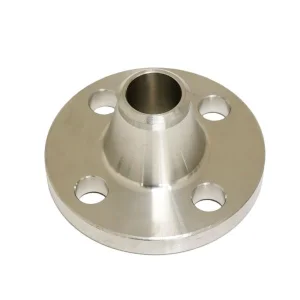
Answer: Weld Neck (WN) flanges feature a long tapered hub that transitions smoothly into the pipe wall, transferring stress directly to the pipe and reducing stress concentration at the flange base. They are ideal for high-pressure, severe temperature, and cyclic loading applications (Class 300 to Class 2500). Slip-On (SO) flanges slip over the pipe and are secured by two fillet welds (inside and outside). They offer lower initial fabrication cost and easier alignment but possess lower fatigue strength under high-stress conditions, making them suitable for lower pressure applications (Class 150 and Class 300).
Q2: How does Cangrun guarantee zero leakage and structural integrity in heavy-wall alloy fittings?
Answer: We enforce strict heat treatment protocols (Normalizing, Quenching, and Tempering) tailored to high-alloy materials like ASTM A234 WP91 and WP22. Wall thickness tolerances are tightly controlled using precision ultrasonic thickness gauges. Furthermore, 100% of our heavy-wall fittings undergo magnetic particle inspection (MPI) and ultrasonic testing (UT) along the entire body and bevel area to ensure zero internal voids, micro-cracks, or laminations.
Q3: What certifications and compliance standards accompany your overseas shipments?
Answer: Every shipment includes a comprehensive document package containing: EN 10204 3.1 Material Test Report (MTR), ISO 9001:2015 Quality System Compliance Certificate, Raw Material Mill Test Certificates, NDT Inspection Reports (RT/UT/MT/PT), Dimensional Inspection Sheets, and Heat Treatment Charts. Third-party inspection certificates from agencies such as SGS, Bureau Veritas, or Intertek can be provided upon request.
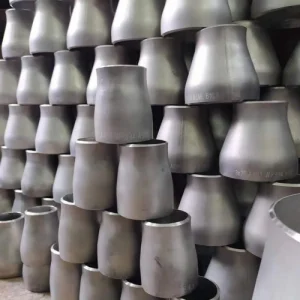
Q4: What is the difference between Concentric and Eccentric reducers in piping layout?
Answer: Concentric reducers feature a center-line alignment and are used in vertical piping runs or horizontal lines where flow symmetry is paramount. Eccentric reducers feature a flat side and an inclined side. They are essential in horizontal suction lines for pumps to prevent air pocket formation (cavitation) by keeping the flat side on top, or in steam lines where keeping the flat side at the bottom allows proper condensate drainage.
Q5: Can you manufacture custom-sized forged flanges up to DN4000 (160 inches)?
Answer: Yes. Utilizing our heavy ring rolling machine and 8000-ton forging presses, Hebei Cangrun produces large-diameter non-standard flanges, wind turbine tower flanges, and custom pressure vessel flanges up to DN4000 (160 inches) in diameter according to customer drawings, ASME B16.47, or EN 1092-1 specifications.
Q6: How does Cangrun ensure sour service compliance (NACE MR0175 / ISO 15156)?
Answer: For piping destined for sour crude or wet H2S environments, we select killed carbon steel or alloy steel with restricted carbon equivalent (CE) values, controlled hardness levels below 22 HRC (237 HBW), and low chemical impurities (Sulfur ≤ 0.002%). Components undergo Hydrogen-Induced Cracking (HIC) and Sulfide Stress Cracking (SSC) laboratory testing in strict accordance with NACE standards.
Complete Range Product Catalog & Order Direct
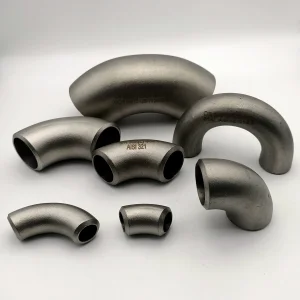
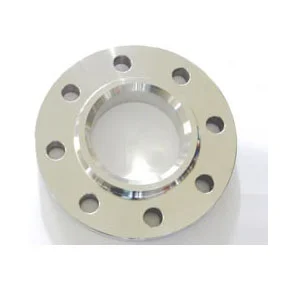
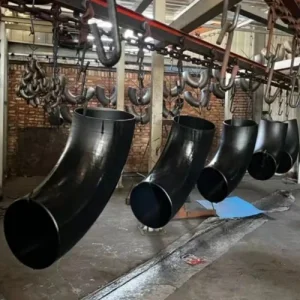
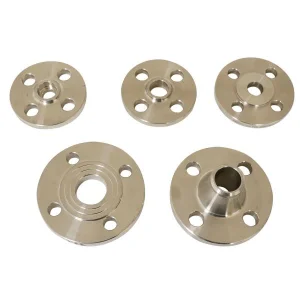
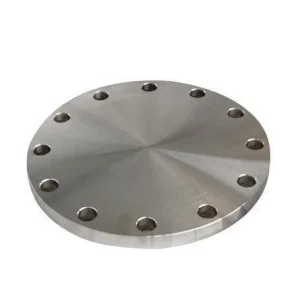
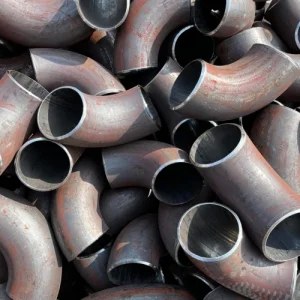
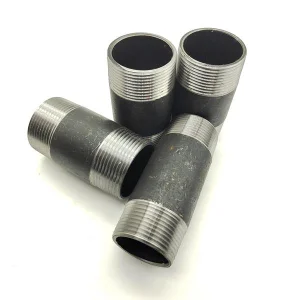
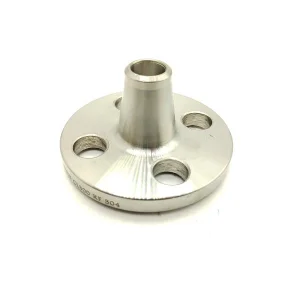
Explore additional high-demand butt-weld fittings, forged flanges, threaded nipples, and blind flanges manufactured under strict quality management.
Integrated Corporate Network & Factory Contact Information
Connect directly with our engineering sales leads to submit Bill of Materials (BOM), request 3D CAD models, or obtain factory-direct tender quotes.
Group Headquarters
HEBEI CANGRUN PIPELINE EQUIPMENT CO.,LTD
Bobei Industrial Zone, Cangzhou City, Hebei Province, China
Sales Hotline: +86-186-3384-2061
Tel: +86-311-87017717
Email: [email protected]
Fitting Production Unit
CANGZHOU FEIWO METAL PRODUCTS CO.,LTD
Boerzhuang Industrial Zone, Cangzhou City, Hebei Province, China
Direct Line: +86-139-3171-6210
Email: [email protected]
Forging & Valve Branch
CANGZHOU FEIXIANG METAL PRODUCTS CO.,LTD
Boerzhuang Industrial Zone, Cangzhou City, Hebei Province, China
Direct Line: +86-130-1202-1525
Email: [email protected]