
Featured Industrial Piping & Fitting Products (Part I)
Certified ASME B16.9, DIN, JIS, and ASTM standard components direct from primary production lines.
1. Global Commercial & Industrial Status of Stainless Steel 304 Elbows
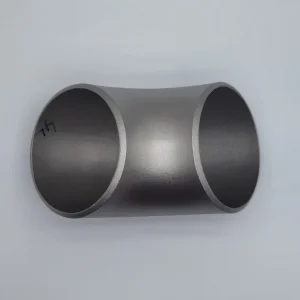
In modern industrial fluid dynamics and structural piping infrastructure, the Stainless Steel 304 Elbow (UNS S30400 / Werkstoff 1.4301) represents the single most widely deployed directional change component globally. Accounting for over 45% of total austenitic fitting demand worldwide, the SS 304 elbow serves as the vital link in direction-changing pressurized piping systems across chemical processing, oil & gas refining, cryogenic gas transport, food & beverage processing, and municipal water management.
As international industrial automation accelerates and regional energy infrastructure upgrades expand across North America, Western Europe, the Middle East, and Southeast Asia, the global market for high-performance ASME B16.9 and ASTM A403 WP304 pipe elbows has evolved into a sophisticated, multi-billion-dollar global supply chain. Enterprise buyers no longer evaluate suppliers strictly on initial FOB unit prices; instead, global procurement teams utilize advanced total cost of ownership (TCO) models that factor in metallurgical precision, dimensional tolerance consistency, compliance with non-destructive testing (NDT), and verifiable Material Test Certificates (MTC conforming to EN 10204 3.1/3.2).
The international supply ecosystem is currently shaped by strict regulatory frameworks such as the EU's Carbon Border Adjustment Mechanism (CBAM), ASME Pressure Vessel Codes (Section VIII), and Pressure Equipment Directive (PED 2014/68/EU). Consequently, identifying an established SS 304 elbow exporter capable of providing complete material traceability, cold mandrel forming integrity, and automated seam-welding precision has become a critical strategic asset for global EPC (Engineering, Procurement, and Construction) contractors.
2. Technical Metallurgy & Dimensional Specifications (ASME B16.9 / ASTM A403)
Understanding the engineering superiority of Grade 304 stainless steel requires an in-depth analysis of its chemical equilibrium and mechanical microstructure. Grade 304 is a nominal 18/8 chromium-nickel austenitic stainless steel. The presence of minimum 17.5% Chromium establishes a self-healing, passivated Chromium Oxide ($\text{Cr}_2\text{O}_3$) film across the elbow's internal and external surfaces, preventing atmospheric oxidation and localized pitting in mild acid environments.
Chemical & Mechanical Blueprint: ASTM A403 Grade WP304
| Element / Property | ASTM A403 WP304 Requirement | WP304L (Low Carbon Variant) | Engineering Impact |
|---|---|---|---|
| Chromium (Cr) | 17.50% - 19.50% | 17.50% - 19.50% | Forms passive layer; primary corrosion barrier |
| Nickel (Ni) | 8.00% - 10.50% | 8.00% - 12.00% | Stabilizes austenitic structure; enhances ductility |
| Carbon (C) | 0.08% Max | 0.030% Max | WP304L limits carbide precipitation during welding |
| Manganese (Mn) | 2.00% Max | 2.00% Max | Increases hot workability and tensile strength |
| Tensile Strength (Min) | 515 MPa (75 ksi) | 485 MPa (70 ksi) | Determines burst pressure threshold under ASME B31.3 |
| Yield Strength (0.2% Offset) | 205 MPa (30 ksi) | 170 MPa (25 ksi) | Maximum allowable design stress before permanent strain |
| Elongation in 2 inches | 28% Min | 28% Min | Ensures energy absorption during thermal expansion shock |
Geometric Classifications: Long Radius (1.5D) vs. Short Radius (1.0D)
In piping system design, directional changes introduce pressure drop ($\Delta P$) and fluid turbulence. Exporters manufacture SS 304 elbows primarily in two geometric configurations:
Long Radius (LR) 1.5D Elbows
Center-to-face distance is equal to $1.5 \times \text{Nominal Pipe Size (NPS)}$. LR elbows reduce friction loss, minimize fluid erosion-corrosion, and are recommended for high-velocity liquid lines, slurry transport, and long-distance process lines.
Short Radius (SR) 1.0D Elbows
Center-to-face distance equals $1.0 \times \text{NPS}$. SR elbows are engineered specifically for compact skid-mounted modules, tight plant layouts, and marine engine room piping where spatial clearance is strictly limited.
Wall Thickness Schedules & ASME B16.9 Tolerances
Stainless steel elbows are manufactured to match seamless and welded pipe wall schedules per ASME B36.19M and ASME B36.10M. Standard schedules include SCH 5S, SCH 10S, SCH 40S (STD), and SCH 80S (XS). Maintaining strict wall thickness uniformity at the outer arc (extrados) during hydraulic forming is a primary mark of factory expertise. Extrados wall thinning must never exceed 12.5% of nominal wall thickness under ASME B16.9 standards.
3. Industrial Manufacturing Dominance: The Cangzhou Ecosystem Advantage
When global buyers search to Buy SS 304 Elbow products at industrial scale, the supply cluster centered in Cangzhou, Hebei Province, China emerges as the worldwide center of gravity for pipeline equipment manufacturing. Factories like Hebei Cangrun Pipeline Equipment Co., Ltd., along with specialized group entities such as Cangzhou Feiwo Metal Products Co., Ltd. and Cangzhou Feixiang Metal Products Co., Ltd., leverage an unmatched industrial supply chain framework.
1. Raw Material Integration & Scale
Direct strategic partnerships with primary stainless steel master mills (such as Tsingshan, TISCO, and Baosteel) ensure high-purity mother pipes. Round billet and seamless tube stock are procured in bulk volume, protecting buyers against short-term nickel price volatility.
2. Automated Mandrel Forming Lines
Cangzhou facilities utilize advanced cold hydraulic pushing machines and medium-frequency induction hot-bending equipment. This technology guarantees exact wall thickness retention along the outer radius, eliminating ovality defects.
3. In-House Solution Annealing & QA
To eliminate intergranular corrosion risks created during cold working, 100% of SS 304 elbows undergo full solution annealing heat treatment at 1050°C followed by rapid water quenching. In-house labs execute PMI chemical verification and Hydrostatic testing.
By consolidating seamless pipe production, fitting forging, flange machining, and industrial valve assembly within a unified manufacturing geographic zone, Cangzhou exporters reduce total project procurement lead times by up to 35% compared to fragmented international supply chains.
4. Application Scenarios & Industry Operating Conditions
The versatile mechanical profile of Grade 304 stainless steel makes it suitable for diverse industrial environments. Below is an engineering analysis of how SS 304 elbows perform across five core vertical markets:
| Industry Sector | Typical Service Media | Operating Environment | Critical Fitting Standard |
|---|---|---|---|
| Petrochemical & Refining | Hydrocarbons, Naphtha, Light Crude | Continuous thermal cycles (-29°C to 425°C), moderate pressure | ASME B16.9 / ASTM A403 WP304 (Seamless SCH 40S) |
| Pharmaceutical & Biotechnology | Purified Water (PW), WFI, Process Chemical Slurries | Strict hygienic cleanability; CIP/SIP chemical exposure | ASTM A403 WP304L with Pickled & Passivated Finish (Ra < 0.8µm) |
| Cryogenic Gas & LNG | Liquid Nitrogen, Liquefied Natural Gas | Ultra-low sub-zero temperatures down to -196°C | ASTM A403 WP304 with Charpy V-Notch Impact Testing |
| Food & Beverage Processing | Dairy products, Juices, Organic Acids | Frequent exposure to cleaning agents (Nitric/Phosphoric Acid) | 304/304L Dual Certified Sanitary Butt-Weld Fittings |
| Marine & Offshore Utilities | Deck Drainage, Cooling Fresh Water, HVAC lines | Saline atmospheric exposure, vibration, spatial restrictions | ASME B16.9 Short Radius (SR) 90° Heavy Wall Elbows |
5. Future Trends: Smart QA, Green Steel & Traceability Integration
The international industrial piping market is undergoing a structural transition driven by digital quality assurance and decarbonization requirements. Exporters advancing the industry are adopting three primary technological innovations:
1. Digital Heat Traceability & Smart MTCs
Leading manufacturers now laser-engrave unique QR codes onto every SS 304 elbow body. Scanning the code links directly to digital EN 10204 3.1 inspection certificates, real-time chemical ladle analysis, and heat treatment temperature charts.
2. Decarbonized Electric Arc Furnace (EAF) Smelting
To help European and North American buyers meet strict Scope 3 carbon emission reduction goals, exporters are transitioning raw material procurement to 100% EAF-melted scrap steel, reducing embodied carbon per ton of finished fittings by up to 40%.
3. Automated Optical Dimensional Inspection
Replacing manual caliper measurements, 3D laser scanners inspect center-to-end distances, bevel angles (37.5° ± 2.5°), land thickness, and roundness in real-time, enforcing zero-defect export quality control.
6. Global Enterprise Procurement Strategy & Vendor Assessment Matrix
When enterprise procurement managers evaluate an SS 304 elbow exporter, conducting thorough vendor qualification is vital to avoiding costly job-site rework. The following evaluation matrix outlines mandatory technical verification steps:
| Evaluation Pillar | Mandatory Inspection Criteria | Red Flag Warning Sign |
|---|---|---|
| 1. Material Verification | 100% Positive Material Identification (PMI) using X-ray Fluorescence (XRF) analyzers before dispatch. | Supplier relies solely on paper mill test reports without performing batch verification. |
| 2. Heat Treatment Proof | Verified solution annealing chart at 1050°C to guarantee stress-free austenitic grain structure. | Work-hardened magnetic response in elbow body indicating omitted solution annealing. |
| 3. Beveling & End Prep | Precision CNC beveling to ASME B16.25 standards, with smooth root face land (1.6mm ± 0.8mm). | Irregular manual flame-cut bevels causing root weld burn-through during site installation. |
| 4. Export Packaging | Heavy-duty ISPM 15 compliant fumigated wooden cases, plastic end caps, and moisture barrier wrapping. | Bare bundle shipments prone to impact damage, edge denting, and sea-salt contamination. |
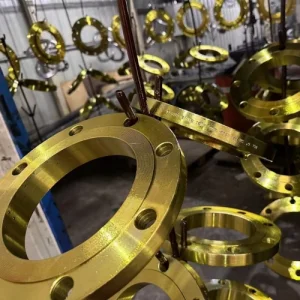
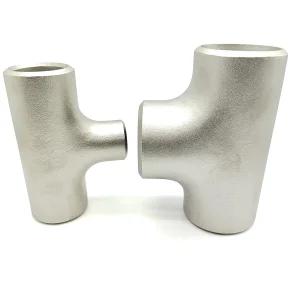
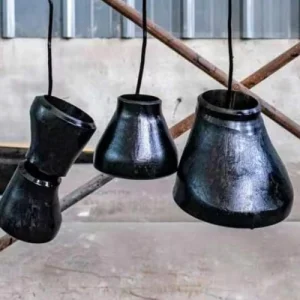
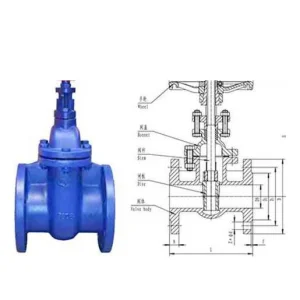
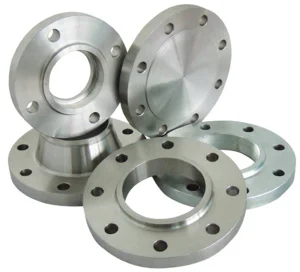
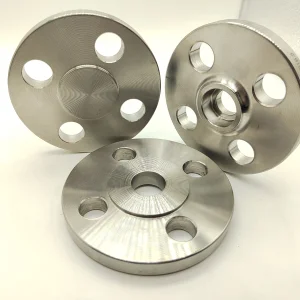
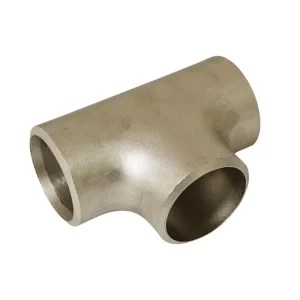
High-Performance Flanges, Valves & Fittings (Part II)
Complete your project piping bill of materials with certified companion components.
7. Frequently Asked Questions (Technical & Procurement FAQ)
Clear, detailed engineering answers addressing common questions from buyers, piping engineers, and procurement agents.
What is the key difference between SS 304 and SS 304L elbows when ordering?
The primary difference lies in the Carbon content limit. Standard SS 304 permits up to 0.08% Carbon, whereas SS 304L restricts Carbon to a maximum of 0.030%. In heavy-wall welded fitting applications, the lower Carbon level of 304L prevents Chromium Carbide precipitation along the weld Heat-Affected Zone (HAZ), eliminating susceptibility to intergranular corrosion without requiring post-weld solution heat treatment.
Which international manufacturing standards apply to SS 304 elbows?
Our SS 304 elbows are manufactured in strict accordance with ASME B16.9 (factory-made wrought butt-welding fittings), ASTM A403/A403M (wrought austenitic stainless steel piping fittings), MSS SP-43 (lightweight stainless steel fittings), EN 10253-4 (European series welded and seamless fittings), and JIS B2312/B2313 (Japanese industrial standards).
When should engineers specify Seamless vs. Welded SS 304 elbows?
Seamless SS 304 elbows (manufactured from seamless mother pipe) carry a joint efficiency factor of $E = 1.0$ under ASME B31.3, making them the default choice for high-pressure critical process lines, lethal service, and extreme thermal cycling. Welded elbows (produced from certified plate or welded pipe with 100% Radiographic Testing / RT) are cost-effective for larger diameters (NPS 14 to NPS 48) operating under low-to-medium pressure regimes.
How does Cangrun control quality and wall thickness thinning during elbow forming?
During hydraulic cold mandrel pushing, the outer arc (extrados) of an elbow naturally undergoes tensile stretching while the inner radius (intrados) compresses. Our Cangzhou manufacturing facilities utilize computerized hydraulic mandrel speed control and custom internal horn mandrels to ensure extrados wall thinning remains strictly within ASME B16.9 allowable tolerances (max 12.5% reduction below nominal wall thickness).
What Material Test Certificates (MTC) are supplied with exported SS 304 elbows?
Every export shipment is accompanied by a certified Material Test Report (MTR) conforming to EN 10204 Type 3.1. The MTC includes heat number traceability, full spectral chemical composition, mechanical tensile/yield/elongation lab results, solution annealing process charts, hydrostatic test logs, and 100% PMI non-destructive verification reports.
Can Cangrun provide complete matching piping packages?
Yes. As an integrated pipeline equipment group based in Cangzhou, Hebei, Cangrun and its specialized subsidiaries supply complete project packages combining seamless/ERW steel pipes, butt-weld fittings (elbows, tees, reducers, caps), forged flanges (slip-on, weld neck, blind), and industrial valves (gate, ball, butterfly). This allows enterprise buyers to consolidate procurement under a single Material Take-Off (MTO).