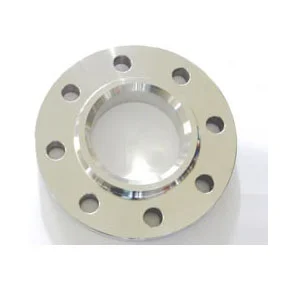
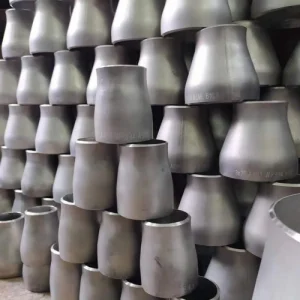
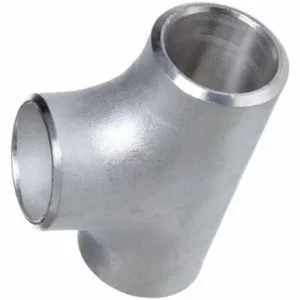
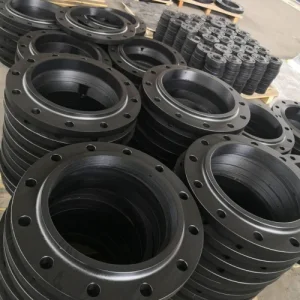
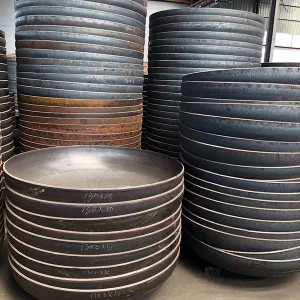
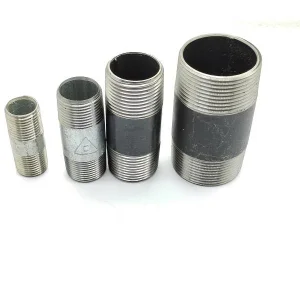
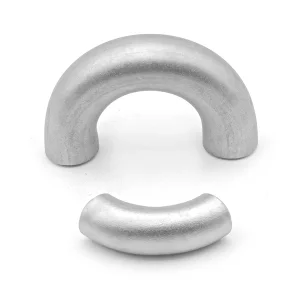
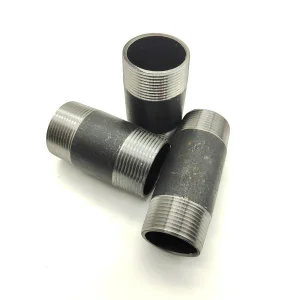
Featured Industrial Flanges & Piping Components (Catalog Selection 1)
Explore our factory-direct inventory of forged carbon steel, stainless steel, and alloy steel components engineered for extreme pressure environments.
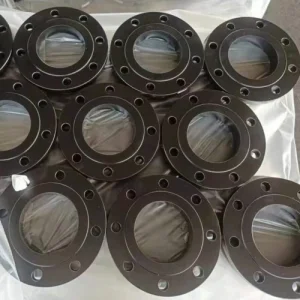
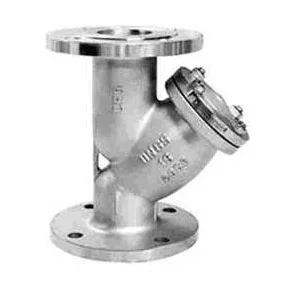
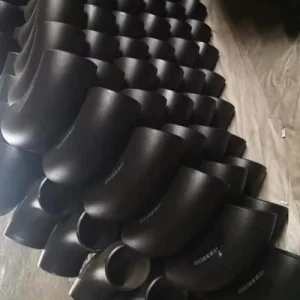
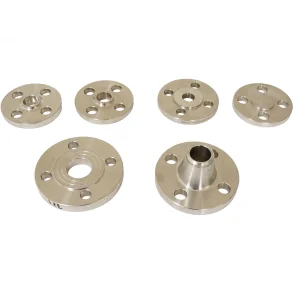
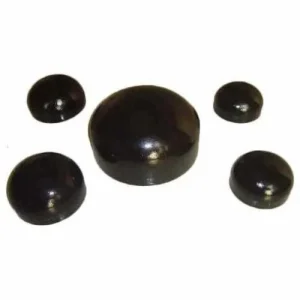
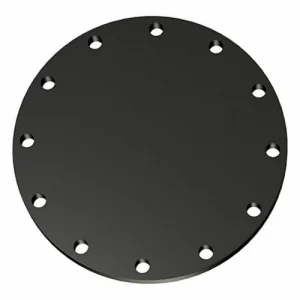
1. Global Commercial & Industrial Status Quo of SO (Slip-On) Flanges
Understanding market dynamics, operational parameters, and mechanical trade-offs across modern fluid processing networks.
In global piping infrastructure—spanning oil & gas refining, chemical manufacturing, utility power generation, and municipal water purification—the Slip-On (SO) Flange remains one of the most widely specified connection mechanisms. Characterized by its low initial purchase cost, straightforward installation alignment, and compact spatial envelope, the SO flange slides directly over the outer diameter of the pipe. It is anchored mechanically via two fillet welds: one executed on the outer hub side and another executed internally near the flange face.
Mechanical Comparison: SO Flange vs. Alternative Flange Geometries
Evaluating when to source SO flanges over Weld Neck (WN), Blind (BL), or Socket Weld (SW) configurations requires evaluating pressure retention, stress concentration factors (SCF), and thermal fatigue profile:
| Flange Type | Pressure Class Spectrum | Welding Requirement | Stress Concentration (SCF) | Primary Industrial Use-Case |
|---|---|---|---|---|
| Slip-On (SO) Flange | Class 150 - Class 1500 (PN6 - PN100) | Double Fillet Weld (Inner & Outer) | 1.5 (Moderate due to hub transitions) | General fluid transmission, low-temp chemical lines, utilities |
| Weld Neck (WN) Flange | Class 150 - Class 2500 (PN10 - PN400) | Single Full-Penetration Butt Weld | 1.0 (Optimal stress distribution) | High-pressure, extreme temperature, cyclic thermal shock |
| Socket Weld (SW) Flange | Class 150 - Class 1500 (Small Bore) | Single External Fillet Weld | 1.3 (Internal gap risk for crevice corrosion) | Small-bore high-pressure lines (DN15 - DN50) |
| Blind (BL) Flange | Class 150 - Class 2500 (PN6 - PN400) | None (Bolted Blanking Plate) | High bending stress at plate center | Piping termination, pressure vessel inspection ports |
2. Technical Deep Dive: Metallurgy, Dimensional Standards & Fabrication Integrity
Structural engineering guidelines for procurement specialists, EPC engineers, and QA/QC inspectors specifying SO flanges for global delivery.
Material Grades & International Standards Alignment
Precision procurement demands complete traceability between raw material billets, forging methods, and international standard compliance. Our SO flange production matrix encompasses:
Carbon Steel Metallurgy
ASTM A105 / A105N: Normalized carbon steel forgings for ambient to high-temperature service. Yield strength ≥ 250 MPa, Tensile Strength ≥ 485 MPa.
ASTM A350 LF2 Class 1/2: Low-temperature carbon steel engineered for sub-zero impact toughness down to -46°C (-50°F).
Stainless & Austenitic Alloys
ASTM A182 F304/304L & F316/316L: Dual-certified low-carbon stainless steels offering superior resistance to intergranular corrosion and chloride pitting.
Duplex & Super Duplex (F51 / F53 / F55): 22% and 25% Chromium microstructures yielding PREN > 40 for severe offshore and desalinization environments.
High-Temp Alloy Steels
ASTM A182 F11, F22, F91: Chrome-Moly alloy forgings designed for power plant superheaters, hydrocrackers, and high-pressure steam networks.
Resistant to hydrogen attack, creep failure, and thermal deformation up to 600°C.
Welding Execution & Double-Fillet Requirements
To guarantee leak-tight operation and mechanical compliance under ASME Boiler & Pressure Vessel Code (BPVC) Section VIII, the welding of an SO flange onto matching pipe must adhere to strict geometric constraints:
- Outer Fillet Weld: Executed at the rear hub junction. The fillet leg dimension must equal or exceed 1.4 times the nominal pipe wall thickness ($t_n$).
- Inner Fillet Weld: Executed inside the flange face. The pipe end is recessed back from the flange face by approximately $6\text{ mm}$ (1/4 in) to avoid damaging the gasket sealing face during welding.
- Thermal Expansion Gap: The recess prevents thermal stress accumulation and flange face warping during post-weld cooling.
3. China Factory Supply Chain Resilience & Manufacturing Efficiency
How Cangzhou’s industrial piping ecosystem provides unmatched scalability, cost containment, and rapid dispatch logistics for international project developers.
Located in Cangzhou, Hebei Province—the heart of China's heavy industrial pipeline manufacturing base—our manufacturing group leverages vertical integration across raw material procurement, die forging, heat treatment, precision CNC machining, and automated non-destructive testing (NDT).
Integrated Forging Clusters
By sourcing high-grade steel ingots directly from tier-1 mills (HBIS, Baosteel, TPCO), our facilities eliminate intermediary margins and guarantee 100% chemical melt heat traceability.
High-Capacity CNC Machining
Equipped with vertical CNC lathes and multi-axis machining centers capable of turning SO flanges up to DN4000 (160 inches) with surface finish tolerances matching ASME B16.5 serration standards.
Rigorous NDT Quality Control
In-house laboratories perform Ultrasonic Testing (UT), Magnetic Particle Inspection (MPI), Positive Material Identification (PMI), and Hydrostatic testing to ensure zero defect rates prior to export packing.
4. Technical Roadmap & Future Industry Outlook
Next-generation metallurgical advancements, smart piping digitalization, and sustainable steel manufacturing.
As global industries transition toward decarbonization and operational automation, the flange manufacturing sector is undergoing structural technological upgrades. Our engineering division is spearheading innovations along three core vectors:
Smart Flange Digitalization
Integrating embedded RFID tags and micro-sensor arrays into flange rims to track temperature, bolting torque relaxation, and gasket integrity in real-time. This feeds predictive maintenance models within digital twin refinery systems.
Green Steel Forging Initiatives
Adopting electric arc furnace (EAF) steel production fed by green hydrogen-reduced iron. This reduces embedded Scope 1 and Scope 2 carbon emissions per ton of finished SO flange by over 45%.
Advanced Grain Refinement
Implementing isothermal controlled cooling post-forging to optimize grain size (ASTM 7 or finer), dramatically improving low-temperature impact toughness and stress corrosion cracking (SCC) resistance.
5. Localized Application Scenarios & Field Case Studies
How engineering firms deploy slip-on flanges across diverse geographic and operating conditions.
Middle East Heavy Crude Refinery Loops
Environment: High-ambient temperature desert refinery units handling sour crude.
Solution: ASTM A105N Slip-on flanges with NACE MR0175 / ISO 15156 compliance to prevent sulfide stress cracking in medium-pressure utility and hydrocarbon transfer lines.
North Sea Offshore Platform Utilities
Environment: Corrosive marine atmosphere and dynamic structural vibration.
Solution: ASTM A182 F316L and Duplex 2205 SO flanges featuring Raised Face (RF) serrations to maintain tight seal integrity against sea-water cooling headers.
Southeast Asia Municipal Water Networks
Environment: High-volume water distribution mains requiring fast field fabrication.
Solution: Large-diameter EN 1092-1 Type 12 (Slip-On) PN16 carbon steel flanges with epoxy protective coatings, reducing installation costs across hundreds of kilometers of pipeline.
6. Localized Support, Quality Assurance & Compliance Standards
Ensuring seamless international compliance, third-party inspection alignment, and complete documentation packages.
Global EPC contracts require strict adherence to regulatory compliance frameworks. Every shipment of SO flanges, butt-weld fittings, and valves is backed by a comprehensive Quality Assurance Dossier:
EN 10204 3.1 / 3.2 Certification
Every lot is issued a 3.1 Material Test Report detailing chemical heat analysis, mechanical tensile/yield testing, Charpy V-notch impact values, and hardness numbers. Independent 3.2 certification via SGS, BV, TÜV, or Lloyd's Register is provided upon request.
PED 2014/68/EU & ASME Compliance
Full compliance with the European Pressure Equipment Directive (PED 2014/68/EU Annex III Module H) and ASME BPVC Section VIII, allowing seamless installation across European Union member states and ASME-regulated facilities.
Export Logistics & Packaging
Components are treated with anti-rust black paint, varnish, or PE plastic caps, bundled into ISPM-15 compliant heat-treated seaworthy wooden crates or palletized for containerized sea-freight optimization.
7. Exhaustive Procurement & Engineering Q&A (FAQ)
Answers to crucial technical queries sourced from pipeline procurement officers and field engineers.
Complete Pipeline Equipment Inventory (Catalog Selection 2)
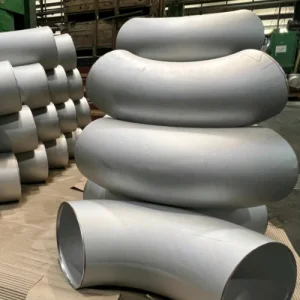
Explore our full line of reducing tees, welded flat flanges, pipe caps, elbows, and nipples engineered for severe service integration.