
Featured Cast & Forged Piping Components
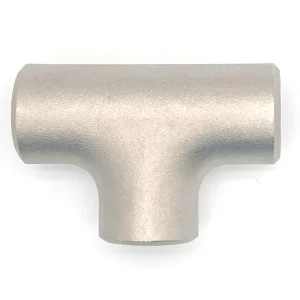
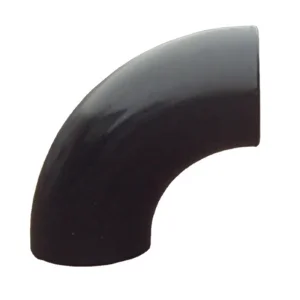
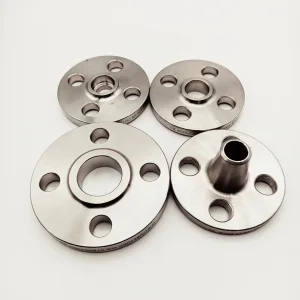
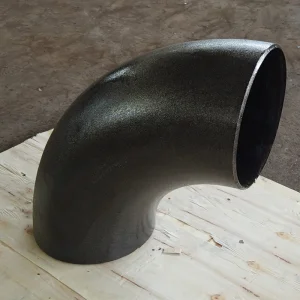
Direct access to precision-engineered industrial flanges, pipe caps, welding tees, and high-pressure elbows from our primary manufacturing lines.
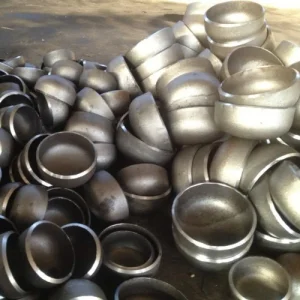
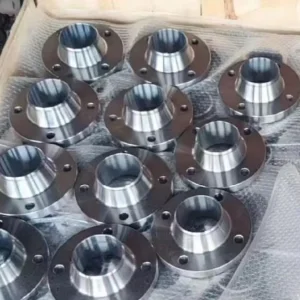
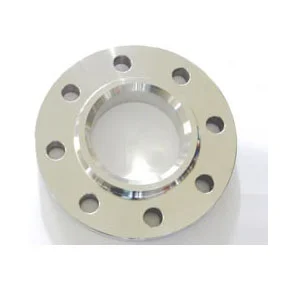
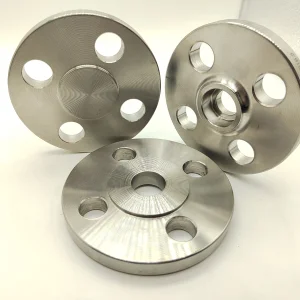
Executive Technical Overview: Cast Flanges vs. Forged Counterparts
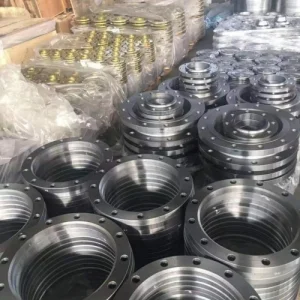
In industrial piping networks, the choice between cast flanges and forged flanges represents a pivotal compromise between structural mechanics, geometrical complexity, and total cost of ownership (TCO). A cast flange is manufactured by pouring molten metal—such as carbon steel (ASTM A216 WCB), stainless steel (ASTM A351 CF8/CF8M), or ductile iron (EN-GJS-400-15)—into a engineered mold matrix. This solidification process permits the creation of highly intricate internal geometries, integrated nozzle bosses, and variable wall thicknesses that are economically unfeasible via conventional closed-die forging.
While historically categorized strictly for low-to-medium pressure utility services, modern precision casting techniques—including silica sol investment casting and advanced resin-sand molding—have drastically reduced grain boundary segregation and microscopic porosity. Today, certified cast flanges comfortably service operational environments up to ASME Class 300 and PN40 pressure ratings, offering an optimal cost-performance ratio for large-diameter municipal waterworks, low-pressure steam loops, chemical transfer lines, and specialized OEM equipment housing.
Understanding the semantic intent of buyers sourcing cast flange products requires evaluating not merely price per unit, but metallurgical integrity, dimensional tolerance adherence (ASME B16.5, DIN EN 1092-1), non-destructive testing (NDT) verification, and international export logistics compliance.
Key Engineering Advantages
- Geometric Versatility: Capability to cast complex internal fluid channels and custom mounting hubs.
- Material Efficiency: Near-net-shape manufacturing minimizes secondary machining waste by up to 35%.
- Cost Optimization: Substantially lower tooling and capital expenditure for large diameters (>DN600 / 24").
- Broad Metallurgy: Easy alloy composition adjustments for specialized corrosive or abrasive media.
Global Cast Flange Industry Growth & Macro Trends
Urban Infrastructure Expansion
Accelerating urbanization in Southeast Asia, the Middle East, and Latin America has driven unprecedented demand for large-aperture water distribution networks, desalination facilities, and municipal wastewater treatment plants. Cast ductile iron and cast carbon steel flanges dominate these sectors due to their cost-effective scaling across high-volume pipeline contracts.
Energy Transition & HVAC Upgrades
Global decarbonization initiatives require extensive overhauls of district heating systems and industrial HVAC plants. Cast steel flat plate and slip-on flanges are extensively retrofitted into closed-loop cooling towers and geothermal fluid circuits, where pressure ratings remain stable under PN16/Class 150 thresholds.
Automated Investment Casting
The transition from manual green sand casting to robotic silica sol investment casting has redefined quality benchmarks. Modern casting facilities achieve surface rough tolerances down to Ra 3.2–6.3 µm, eliminating extensive face machining and minimizing gas porosity defects.
Global Procurement Decision Matrix for EPC Contractors
International engineering procurement contractors (EPCs) evaluate cast flange suppliers using rigorous risk mitigation parameters to avoid catastrophic line failures and project downtime.
| Standard / Code | Pressure Class Range | Material Classifications | Primary Global Application | Quality Verification Mandate |
|---|---|---|---|---|
| ASME B16.5 | Class 150 to Class 300 (Cast) | ASTM A216 WCB, ASTM A351 CF8/CF8M | North American Oil & Gas, Petrochemical Utilities | Radiographic Testing (RT), Hydrostatic Shell Test |
| DIN EN 1092-1 | PN6, PN10, PN16, PN25, PN40 | GP240GH (1.0619), GX5CrNi19-10 | European Chemical, Municipal Water & Power Lines | EN 10204 3.1 Material Test Certificate (MTC) |
| JIS B2220 | 5K, 10K, 16K, 20K | SS400, SCPH2, SCS13A, SCS14A | Asian Marine, Shipbuilding, Industrial Plant Networks | Dimensional Inspection, Ultrasonic Flaw Detection |
| GB/T 9119 / 17241 | PN2.5 to PN25 | Q235A, HT200, QT450-10, ZG230-450 | Domestic & Export Civil Water, HVAC, Heavy Equipment | Spectrographic Chemical Analysis, Tensile Testing |
1. Defect Mitigation Protocol
Procurement officers must mandate 100% Non-Destructive Examination (NDE) on cast carbon steel components. Radiographic (RT) or Ultrasonic (UT) testing identifies internal shrinkage cavities, gas blowholes, and sand inclusions before flanges enter field welding.
2. Flange Facing Precision
Sealing integrity relies on precise flange face finish. Cast flanges must undergo CNC facing to achieve concentric or spiral serrations (Ra 3.2 to 6.3 µm for stock finish), ensuring gasket seat compression under dynamic thermal cycling.
3. Total Cost of Ownership (TCO)
Evaluating total landed cost includes factoring freight surcharges, port tariffs, and pre-shipment inspections. Direct factory purchasing from consolidated hubs minimizes intermediary markups by 15–25%.
China Industry 4.0: Modern Foundry Efficiency in Cangzhou
How Hebei Cangrun Pipeline Equipment Co., Ltd. leverages smart cluster infrastructure, automated metallographic control, and vertical integration to deliver global supply resilience.
The Cangzhou Industrial Cluster
Located in Cangzhou City, Hebei Province, our production ecosystem sits at the epicenter of world pipeline manufacturing. Supported by two primary group subsidiaries—Cangzhou Feiwo Metal Products Co., Ltd. and Cangzhou Feixiang Metal Products Co., Ltd. in the Boerzhuang Industrial Zone—our facility integrates raw steel casting, precision machining, heat treatment, and hydrostatic testing within a 15-kilometer radius.
Automated Foundry Quality Control
Our Smart Industry 4.0 foundries utilize direct-reading optical emission spectrometers (OES) to verify elemental melt chemistry before pouring. Automated sand molding machines guarantee consistent mold density, dramatically eliminating wall thickness variances and off-center bolt hole drilling during final CNC machining.
Consolidated Pipeline Solutions
Rather than sourcing flanges, pipe fittings, seamless pipes, and industrial valves from fragmented suppliers, enterprise clients leverage our single-source procurement model. We match pipe schedule, flange pressure rating, and valve trim materials into unified sea-freight container bookings, reducing port handling costs and administrative friction.
Localized Application Scenarios & Engineering Fit
Municipal Water Treatment
Cast ductile iron (PN10/PN16) and flat-plate carbon steel flanges are heavily deployed in potable water distribution, filtration plants, and sewage treatment systems where pressure remains below 2.5 MPa.
HVAC & District Thermal
In building services and district cooling loops, cast slip-on and threaded flanges connect heat exchangers, circulation pumps, and chilled water risers efficiently without high material overhead.
Chemical Slurry Transfer
Cast stainless steel (ASTM A351 CF8M) flanges provide exceptional localized pitting resistance against mild acids, chemical slurries, and industrial wastewater, offering long service life.
Marine Ballast Systems
Engineered according to JIS 5K/10K standards, cast steel and iron flanges are widely installed across shipboard ballast piping, bilge pumps, and sea-water cooling loops on commercial vessels.
Frequently Asked Questions (FAQ) & Technical Insights
Piping Components, Tees, Bends & Industrial Valves
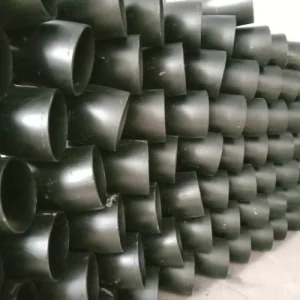
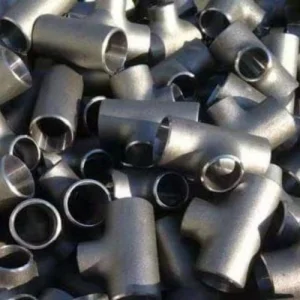
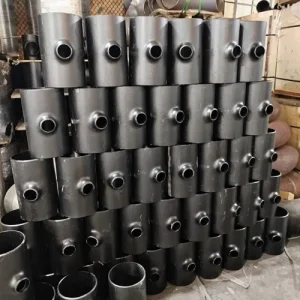
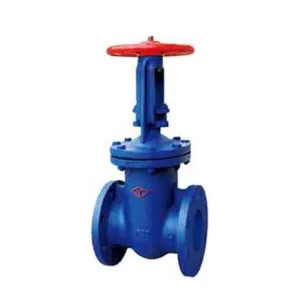
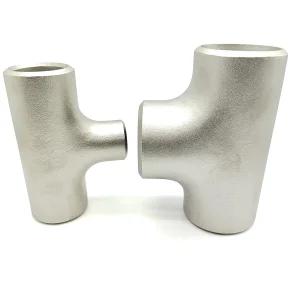
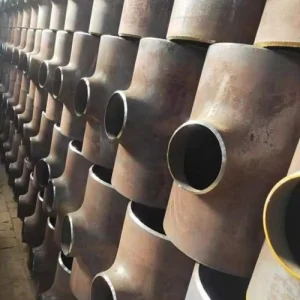
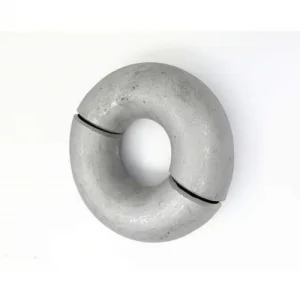
Explore additional pipeline products including seamless carbon steel elbows, reducing tees, JIS flanges, and industrial wedge gate valves.
HEBEI CANGRUN PIPELINE EQUIPMENT CO., LTD.
A premier global manufacturer and direct exporter of industrial pipe fittings, flanges, seamless & ERW steel pipes, and industrial valves since 2010. Operating from Bobei Industrial Zone and supported by strategic production facilities including Boerzhuang Industrial Zone in Cangzhou City, Hebei Province, China.
Request a Technical Quote
Send your MTO (Material Take-Off) or custom drawing specifications directly to our engineering export team.
Submit Engineering Inquiry