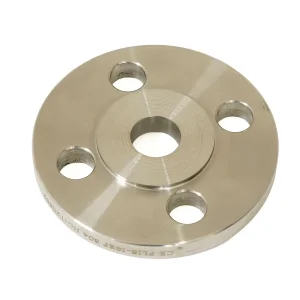
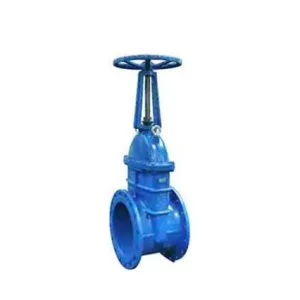
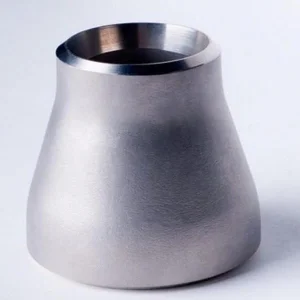
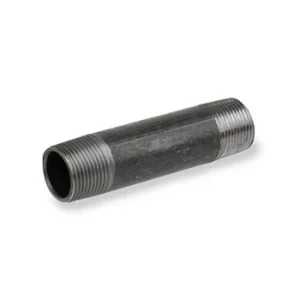
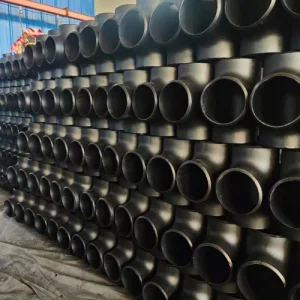
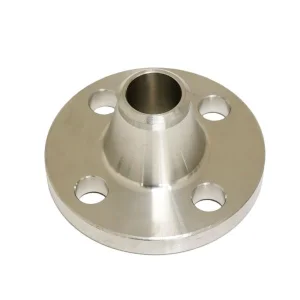
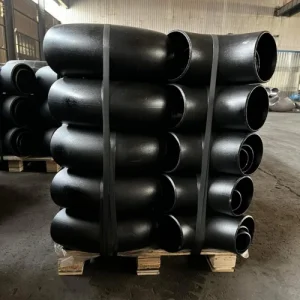
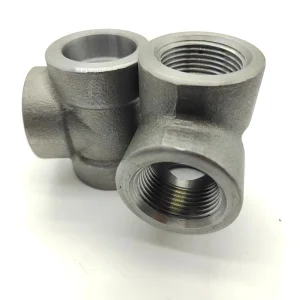
Featured ASME B16.5 Flanges & Matching WPB Fittings
Direct factory supply for high-pressure, thermal, and petrochemical applications compliant with ASME, DIN, and JIS standards.
Executive Overview: Decoding "ANSI WPB16.5 Flange" Procurement Semantics
In global industrial procurement, cross-border buyers and engineering EPC contractors frequently search for the unified term "ANSI WPB 16.5 Flange Pricelist". From a strict metallurgical and standardization perspective under the American Society of Mechanical Engineers (ASME) and American Society for Testing and Materials (ASTM), this term bridges two distinct yet interconnected piping standard domains:
- ASME/ANSI B16.5: The definitive dimensional and pressure-temperature standard governing Pipe Flanges and Flanged Fittings from NPS 1/2 through NPS 24 (Class 150 to Class 2500).
- ASTM A234 Grade WPB: The standard specification for wrought carbon steel piping fittings of seamless and welded construction for moderate and high-temperature service (primarily elbows, tees, reducers, and caps).
- ASTM A105 / A105N: The standard specification for forged carbon steel piping components, including flanges, valves, and forged fittings matched to A234 WPB pipe runs.
Understanding this technical differentiation is critical when evaluating export pricelists. A standard ANSI B16.5 Weld Neck Flange (WNF) manufactured in carbon steel utilizes ASTM A105 forgings heat-treated to match the nominal yield strength (240 MPa / 35 ksi) of ASTM A234 WPB butt-weld fittings. Below, our engineering team breaks down the physical properties, pressure tables, manufacturing workflow in China, and global export pricing models required for multi-million-dollar EPC sourcing.
Metallurgical Architecture: ASTM A105 Forgings vs. ASTM A234 WPB Fittings
To ensure zero pipeline failure under pressure cycling and thermal shock, chemical compositions and mechanical limits must adhere strictly to international codes. The table below outlines the precise chemical spectrum and mechanical performance metrics across ASME B16.5 forged carbon steel flanges (A105) and ASME B16.9 butt-weld fittings (A234 WPB).
Chemical & Mechanical Specification Comparison Table
| Material Standard | Carbon (C) Max | Manganese (Mn) | Phosphorus (P) Max | Sulfur (S) Max | Silicon (Si) | Yield Strength (Min) | Tensile Strength (Min) |
|---|---|---|---|---|---|---|---|
| ASTM A105 (Flanges) | 0.35% | 0.60–1.05% | 0.035% | 0.040% | 0.10–0.35% | 250 MPa (36 ksi) | 485 MPa (70 ksi) |
| ASTM A234 WPB (Fittings) | 0.30% | 0.29–1.06% | 0.050% | 0.058% | 0.10% Min | 240 MPa (35 ksi) | 415–585 MPa (60–85 ksi) |
| ASTM A350 LF2 (Low Temp) | 0.30% | 0.60–1.35% | 0.035% | 0.040% | 0.15–0.30% | 250 MPa (36 ksi) | 485–655 MPa (70–95 ksi) |
For high-pressure lines operating under NACE MR0175 / ISO 15156 sour service environments, carbon equivalent (CE) control is imperative to eliminate sulfide stress cracking (SSC):
CE = C + Mn/6 + (Cr + Mo + V)/5 + (Ni + Cu)/15Chinese quality mills (such as Cangrun Pipeline) maintain CE ≤ 0.42% for normalized ASTM A105 and WPB components to guarantee superior weldability during field commissioning.
ASME B16.5 Pressure-Temperature Ratings (Working Pressure in bar)
| Service Temp (°C) | Class 150 (bar) | Class 300 (bar) | Class 600 (bar) | Class 900 (bar) | Class 1500 (bar) |
|---|---|---|---|---|---|
| -29 to 38 °C | 19.6 bar | 51.1 bar | 102.1 bar | 153.2 bar | 255.3 bar |
| 200 °C | 13.8 bar | 43.8 bar | 87.6 bar | 131.4 bar | 219.0 bar |
| 380 °C | 6.5 bar | 26.0 bar | 52.0 bar | 78.0 bar | 130.1 bar |
| 425 °C | 5.5 bar | 18.1 bar | 36.3 bar | 54.5 bar | 90.8 bar |
Why Cangzhou Manufacturing Cluster Dominates Global Flange Supply
Hebei Cangzhou serves as the world's dense hub for pipeline engineering equipment. Here is how modern factory automation creates unmatched pricing power and speed.
Closed-Die Ring Rolling Tech
Utilizing 5,000-ton hydraulic press forging hammers and automated ring rolling mills to forge dense grain structures with near-zero internal voids, drastically reducing raw material waste.
Integrated Machining Centers
Multi-axis CNC lathes execute flange face serrations (Stock Finish 125-250 AARH or Smooth Finish 63-125 AARH) and bolt-hole drillings in a single setup for millimeter-perfect alignment.
Full NDT Quality Inspection
100% Ultrasonic Testing (UT) for internal flaw detection, Magnetic Particle Inspection (MPI) for surface cracks, and X-ray Radiography for critical weld seams under ISO 9001 and PED 2014/68/EU.
Economies of Scale & Raw Material Sourcing
Cangzhou manufacturers leverage localized steel billet production from major state-owned steel mills in Hebei and Shandong. By procuring round steel bars in 50,000-ton batches, raw material input costs are reduced by 12% to 18% compared to Western manufacturers. Combined with continuous electric heat-treatment furnaces (Normalizing at 900°C followed by air cooling), Chinese exporters deliver fully stress-relieved A105/WPB flanges at unmatched speed and cost-performance ratios.
Global Market Dynamics & 2026 ANSI B16.5 Flange Benchmark Pricelist
Flange pricing fluctuates based on global carbon steel ingot indices, energy surcharges, machining complexities, and specialized surface treatments (e.g., Yellow Rust-proof Vanish, Black Bitumen Coating, Hot Dip Galvanizing, or Electro-Galvanizing). Below is an export benchmark price range for ASME B16.5 ASTM A105 Weld Neck Flanges (RF) across standard pressure classes, FOB Tianjin Port.
ASME B16.5 Carbon Steel Weld Neck Flange Export Price Benchmark (USD/Piece)
| Nominal Size (NPS) | Class 150 RF (USD) | Class 300 RF (USD) | Class 600 RF (USD) | Class 900 RTJ (USD) | Class 1500 RTJ (USD) |
|---|---|---|---|---|---|
| 1/2" (DN15) | $2.80 – $4.20 | $3.90 – $5.80 | $6.20 – $8.50 | $14.50 – $19.00 | $22.00 – $28.00 |
| 1" (DN25) | $4.50 – $6.80 | $6.80 – $9.50 | $11.00 – $15.50 | $24.00 – $32.00 | $38.00 – $49.00 |
| 2" (DN50) | $9.20 – $13.50 | $14.00 – $19.80 | $24.50 – $33.00 | $52.00 – $68.00 | $85.00 – $115.00 |
| 4" (DN100) | $21.00 – $29.00 | $34.00 – $46.00 | $65.00 – $88.00 | $135.00 – $175.00 | $210.00 – $280.00 |
| 6" (DN150) | $32.00 – $44.00 | $58.00 – $78.00 | $115.00 – $155.00 | $240.00 – $310.00 | $390.00 – $510.00 |
| 8" (DN200) | $48.00 – $65.00 | $92.00 – $125.00 | $185.00 – $245.00 | $380.00 – $490.00 | $620.00 – $810.00 |
| 12" (DN300) | $88.00 – $120.00 | $165.00 – $220.00 | $340.00 – $450.00 | $720.00 – $950.00 | $1,250 – $1,650 |
| 24" (DN600) | $310.00 – $420.00 | $580.00 – $760.00 | $1,200 – $1,580 | $2,600 – $3,400 | $4,200 – $5,500 |
*Note: Prices above reflect standard ASTM A105 normalized material with standard schedule bore sizes (SCH 40 / STD). Custom wall thicknesses (SCH 80, SCH 160, XXS), NACE certification, or EN 10204 3.1 Mill Test Reports (MTR) may introduce minor premium adjustments.
Global Application Scenarios & Engineering Field Integration
Where ANSI B16.5 Flanges and WPB Pipe Fittings are deployed across critical infrastructure worldwide.
Upstream & Midstream Oil & Gas
Crude oil trunklines and natural gas metering skids utilize Class 600 and Class 900 Ring Type Joint (RTJ) flanges paired with heavy wall ASTM A234 WPB SCH 80 elbows to prevent leakage under high vibration and high pressure.
Thermal & Thermal Power Stations
Superheated steam piping requires stress-relieved ASTM A105N Weld Neck flanges connected to boiler headers. Heat treatment ensures zero micro-cracking across temperature fluctuations up to 425°C.
Refinery Cracking Units & Chemical Processing
Hydrocracking and catalytic reforming lines deploy Slip-On (SO) and Blind (BL) flanges for rapid inspection access, backed by NACE MR0175 compliant metallurgy for hydrogen sulfide resistance.
Industry Trends: Decarbonization & Smart Flange Quality Tracking
As global energy supply chains transition toward lower emissions and digital asset management, piping component manufacturing is undergoing a technological evolution:
1. Green Steel & Low-Carbon Forging
Leading Chinese exporters are transitioning heating furnaces from traditional producer gas to clean natural gas and electric induction furnaces. Furthermore, raw materials are sourced from steel mills utilizing Electric Arc Furnaces (EAF) powered by renewable energy, reducing the embodied carbon footprint of A105 flanges by up to 35% to meet European Union CBAM (Carbon Border Adjustment Mechanism) criteria.
2. Digital Twin QR Code Traceability
Modern EPC projects require complete digital material history. High-end exporters now laser-etch unique 2D DataMatrix codes onto the outer rim of each ASME B16.5 flange. Scanning the code instantly retrieves:
- Heat Number matching the physical steel billet.
- EN 10204 3.1 Digital Mill Test Certificate (MTR).
- Full Chemical Spectrometer & Mechanical Hydro-test Reports.
- Dimensional tolerance verification logs generated by automated CMM lasers.
Frequently Asked Questions (Procurement & Engineering)
Technical clarity for procurement managers, piping designers, and quality inspectors.
Complementary Fittings, Valves & Pipe Products
Explore matching piping items for seamless turnkey procurement.