
Primary Industrial Piping Components Showcase
Engineered for structural efficiency and high-pressure fluid conveyance. Certified factory-direct solutions compliant with ANSI, ASME, ISO, and DIN specifications.
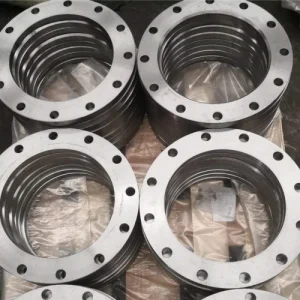
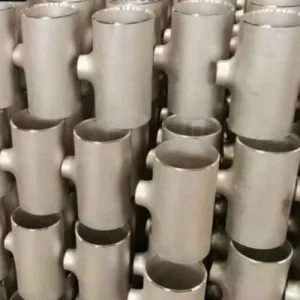
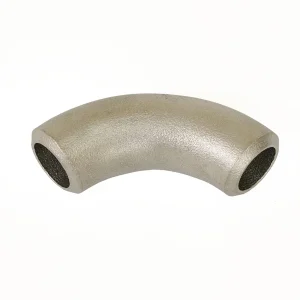
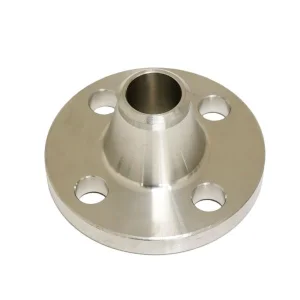
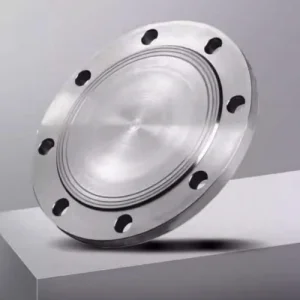
Global Commercial & Industrial Status of Aluminum Alloy Flanges
Analyzing supply chain evolution, weight-critical engineering shifts, and global manufacturing capacity.
Market Growth Dynamics
The global aluminum flange market is expanding at an accelerated CAGR driven by lightweighting mandates across aerospace, cryogenic fluid management, marine architecture, and high-speed rail systems.
- Shift from heavy forged carbon steel to high-strength 6061-T6 and 7075-T6 alloys
- Surge in LNG transport infrastructure demanding cryogenic ductility down to -196°C
- Growth in semiconductor and chemical process facilities requiring non-contaminating piping
Manufacturing Footprint
China remains the primary global production epicenter for industrial forging and precision CNC machining of non-ferrous flanges, supported by robust raw material supply chains in Hebei and Shandong provinces.
- High-capacity die-forging presses ranging from 3,000 to 10,000 metric tons
- Integrated metallurgical labs conducting real-time spectrographic verification
- Advanced automated anodizing and surface passivation treatment lines
Regulatory Framework
Global EPC contractors enforce strict compliance to international flange standards to guarantee pressure containment, sealing efficiency, and structural safety under dynamic mechanical loads.
- ASME B16.5 & B16.47 dimensional standards for pipe flanges and flanged fittings
- EN 1092-1 European standard for circular flanges for pipes, valves, and fittings
- ISO 9001:2015 and PED 2014/68/EU Pressure Equipment Directive certifications
Metallurgical Classification & Engineering Specifications
Selecting the optimal aluminum alloy grade for targeted mechanical performance, corrosion resistance, and thermal tolerance.
| Alloy Grade | Temper Condition | Tensile Strength (MPa) | Yield Strength (MPa) | Corrosion Resistance | Primary Industrial Applications |
|---|---|---|---|---|---|
| Aluminum 6061 | T6 / T651 | ≥ 310 | ≥ 276 | High (Atmospheric/Freshwater) | Structural piping, general industrial hydraulics, automotive manifolds |
| Aluminum 5083 | H111 / H116 / H321 | 275 – 350 | 125 – 200 | Exceptional (Seawater/Marine) | Marine piping systems, offshore platforms, cryogenic tanks (-196°C) |
| Aluminum 7075 | T6 / T6511 | ≥ 570 | ≥ 500 | Moderate (Requires Coating) | Aerospace fuel lines, high-stress defense equipment, hydraulic blocks |
| Aluminum 3003 | H14 / O | 140 – 190 | 115 – 165 | Excellent (Chemical) | Low-pressure chemical lines, HVAC heat exchangers, food processing |
| Aluminum 2024 | T3 / T4 | ≥ 470 | ≥ 325 | Fair (Anodizing Required) | High fatigue aerospace structural joints, military ground vehicles |
Engineering Focus: Forged vs. Cast Aluminum Alloy Flanges
In critical process piping, the choice between forged and cast aluminum flanges dictates operational integrity. Forged aluminum flanges (manufactured via precision closed-die drop forging followed by T6 heat treatment) eliminate internal porosity, gas inclusions, and micro-cracking common in cast components. This yields superior grain alignment along the stress contours of the flange hub, granting higher fracture toughness, elevated fatigue resistance, and absolute zero-leakage security in high-vacuum or pressurized fluid lines.
Localized Application Scenarios & Macro Solutions
Cross-industry operational integration roadmap for high-performance non-ferrous flanged connections.
Marine & Offshore Engineering
5083-H116 and 6082-T6 aluminum flanges are critical for lightweighting top-side naval architecture, reducing the center of gravity on high-speed ferries, patrol boats, and offshore oil platforms.
- Complete resistance to stress corrosion cracking in chloride-rich marine environments
- Galvanic isolation gaskets integrated to prevent bi-metallic corrosion with steel hulls
- Seamless integration with marine-grade 5086 piping systems
Cryogenic Energy & LNG Terminal Systems
Aluminum alloys exhibit a unique metallurgical characteristic: unlike carbon steels that become brittle, aluminum's tensile and yield strength increases at sub-zero cryogenic temperatures without losing impact toughness.
- Ideal for Liquid Natural Gas (LNG) liquefaction plants (-162°C) and Liquid Hydrogen lines (-253°C)
- Zero micro-ductility loss under extreme thermal shock cycles
- 100% X-ray and ultrasonic non-destructive testing (NDT) certified seam integrity
Semiconductor & High-Purity Gas Lines
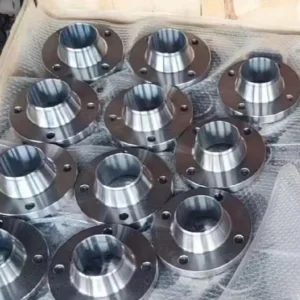
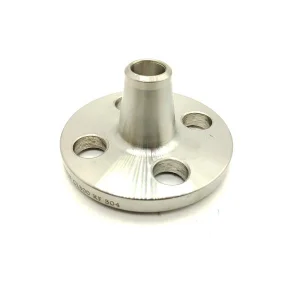
Ultra-high purity (UHP) manufacturing facilities utilize hard-anodized 6061-T6 aluminum weld neck and slip-on flanges due to low outgassing properties and smooth surface finish options.
- Precision CNC machined gasket sealing faces with Ra < 0.4 µm roughness
- Chemical passivation prevent particulate generation in cleanroom environments
- Helium mass spectrometer leak testing compliant with 1x10⁻⁹ mbar·l/s standards
Technology Roadmap & Future Industry Horizons
Pioneering advancements in smart metallurgy, additive manufacturing, and sustainable decarbonized production.
Additive Manufacturing & Hybrid Forging
Integration of Selective Laser Melting (SLM) and Direct Energy Deposition (DED) 3D printing allows complex interior cooling channels within aluminum flanges for specialized thermal exchangers.
Smart IoT Integrated Flanges
Embedding piezo-electric strain sensors and micro-RFID tags into the flange rim enables real-time monitoring of bolt torque relaxation, gasket degradation, and internal fluid pressure spikes.
Green Smelting & Decarbonization
Leading Chinese exporters are transitioning to 100% renewable hydro-powered primary aluminum smelting, offering verified low-carbon footprint certified flanges for international ESG compliance.
Complementary Piping Solutions & Export Catalog
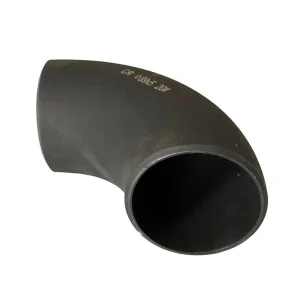
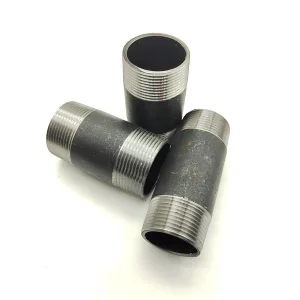
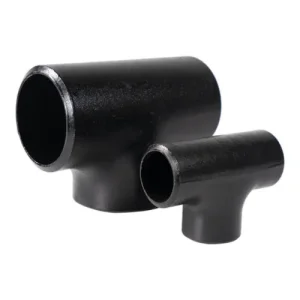
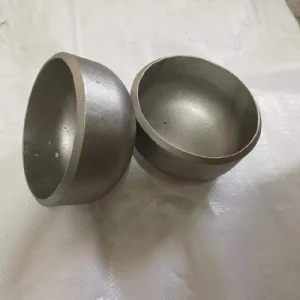
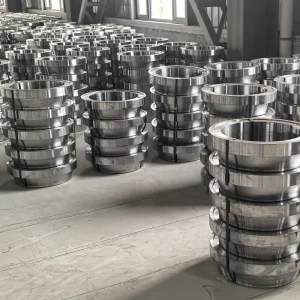
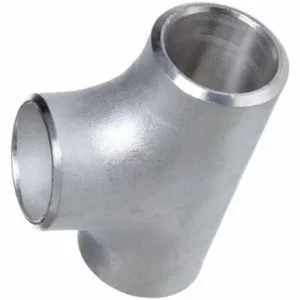
Explore our extended portfolio of carbon, stainless, duplex, and specialized pipe fittings forged for industrial integrity.
Technical & Commercial Procurement Q&A
Essential insights for engineering procurement leads, quality assurance directors, and global sourcing specialists.
How do you mitigate galvanic corrosion when joining aluminum flanges to steel piping?
Galvanic corrosion occurs when dissimilar metals are in electrical contact in an electrolyte. To prevent this, full dielectric insulation flange kits are installed, comprising a full-face NEMA grade G-10 insulating gasket, G-10 bolt sleeves, and heavy-duty phenolic insulating washers to isolate the aluminum completely.
What material test documentation is provided with factory-direct exporter orders?
All exported batches ship with EN 10204 Type 3.1 Mill Test Certificates (MTC) standard, detailing heat number chemical spectrographic analysis, mechanical tensile/yield testing, hardness testing, ultrasonic NDT reports, and heat treatment logs. Third-party inspection (TPI by SGS, TÜV, or Bureau Veritas) is available upon request (Type 3.2).
Can 6061-T6 aluminum flanges be welded directly to 5083 piping lines?
Yes, utilizing Gas Tungsten Arc Welding (GTAW/TIG) or Gas Metal Arc Welding (GMAW/MIG) with ER5356 or ER5183 filler metal. 5356 filler preserves corrosion resistance and yield strength along the Heat-Affected Zone (HAZ), preventing post-weld hot cracking.
What pressure ratings apply to ASME B16.5 aluminum alloy flanges?
Aluminum flanges are rated per ASME B16.5 pressure-temperature rating tables for Group 2.1 or 2.2 materials. While dimensions match carbon steel flanges, allowable working pressure is derated according to the lower elastic modulus of aluminum at elevated temperatures above 65°C (150°F).