Primary Piping Components & Reducer Selection
Factory-direct butt-weld fittings, forged flanges, and precision pipeline equipment manufactured to international specifications.
Evolution of Stainless Steel Reducers in Modern Process Engineering
From standard fluid handling to hyper-critical high-pressure & cryogenic applications: How metallurgical innovations redefine pipeline efficiency.
In modern industrial piping design, the Stainless Steel Reducer (SS Reducer) is far more than a simple fitting connecting two pipes of different diameters. It serves as a vital fluid dynamic node engineered to regulate flow velocity, manage pressure differentials, minimize turbulence, and mitigate destructive phenomenon like cavitation and erosion-corrosion. As global industrial initiatives push operating limits toward higher pressures, extreme temperatures, and increasingly corrosive fluid environments, the market for premium SS reducers has undergone a profound evolution.
1. Transition Toward Super Austenitic and Duplex Alloys
While traditional austenitic grades such as ASTM A403 WP304/304L and WP316/316L remain industry workhorses, rapid expansion in offshore oil & gas exploration, seawater desalination, and chemical synthesis has triggered massive demand for high-alloy variants. Engineers are progressively specifying Duplex UNS S31803 / S32205 (2205), Super Duplex UNS S32750 (2507), and 6-Moly Super Austenitic Alloys (e.g., SMO 254). These materials provide double the yield strength of conventional austenitic steels while offering superior pitting resistance equivalent numbers (PREN ≥ 40), preventing chloride stress corrosion cracking in extreme marine environments.
2. Precision Cold Hydroforming vs. Hot Compression Manufacturing
The manufacturing paradigm for stainless steel reducers has shifted from crude seam-welded segment construction toward advanced seamless cold hydroforming and automated hot die compression. High-end exporters now leverage CNC hydraulic press units capable of wall-thickness control within micro-tolerances. Cold hydroforming eliminates heat-affected zones (HAZ) during shape transition, maintaining uniform grain structures and optimal corrosion resistance across both the major and minor ends of concentric and eccentric geometries.
Global Procurement Needs & SS Reducer Pricelist Breakdown
Understanding cost drivers, raw material surcharges, dimensional pricing scales, and export logistics optimization.
LME Alloy Surcharge Impact
Stainless steel pricing fluctuates directly with London Metal Exchange (LME) Nickel and Molybdenum indexes. Grade 316L carries a premium over 304L due to 2-3% Molybdenum content. Exporters offering fixed-window pricelists hedge raw material coils to protect buyers against market volatility.
Seamless vs. Welded Cost Ratios
Seamless SS reducers (ASTM A403 WP-S) fabricated from raw pipe tubes command a 25-45% higher pricelist cost than welded types (WP-W / WP-WX) manufactured from rolled and X-rayed plates. Selection depends on system pressure rating and ASME B31.3 stress factors.
Schedule & Wall Thickness Scale
Wall thickness significantly affects weight and machining time. Transitioning from SCH 10S to SCH 40S, SCH 80S, or heavy wall SCH 160 / XXS exponentially increases material mass and heat treatment soak times, altering the base unit export cost.
| Nominal Size (Inches) | Material Grade | Type / Manufacturing | Wall Thickness (Schedule) | Est. Export Weight (kg) | Commercial Price Benchmark |
|---|---|---|---|---|---|
| 2" x 1" (DN50 x DN25) | ASTM A403 WP304L | Seamless (WP-S) | SCH 10S / SCH 40S | 0.45 kg / 0.68 kg | Base Reference ($) |
| 4" x 2" (DN100 x DN50) | ASTM A403 WP316L | Seamless (WP-S) | SCH 40S | 2.10 kg | Base + 65% Premium |
| 8" x 4" (DN200 x DN100) | ASTM A403 WP316L | Welded 100% RT (WP-WX) | SCH 40S | 7.80 kg | Base + 240% Premium |
| 12" x 8" (DN300 x DN200) | UNS S31803 (Duplex 2205) | Welded 100% RT (WP-WX) | SCH 40S / STD | 22.50 kg | Alloy Premium Matrix |
| 24" x 16" (DN600 x DN400) | ASTM A403 WP304/304L | Formed Plate Welded | SCH 20S / SCH 40S | 85.00 kg | Heavy Fabrication Quotation |
Industry-Specific Solutions & System Integration
Tailored piping configurations designed for extreme operational environments across major global engineering sectors.
Petrochemical & Refinery Complexes
In hydrotreating, catalytic cracking, and ethylene plants, reducers endure volatile hydrocarbons under high pressure. Exporters supply WP317L and WP347H reducers stabilized with Niobium to resist intergranular corrosion in elevated temperature regimes (400°C to 815°C).
Liquefied Natural Gas (LNG) & Cryogenics
Cryogenic LNG supply lines operate at -162°C. Austenitic stainless steel reducers (304L/316L) exhibit exceptional Charpy V-notch impact toughness at sub-zero temperatures without undergoing ductile-to-brittle transition, guaranteeing structural integrity.
Hygienic Pharmaceutical & Food Grade Piping
Sanitary processes require internal surface roughness (Ra) < 0.4 μm, achieved via mechanical polishing and electropolishing (EP). Concentric SS reducers certified to ASME BPE standards feature smooth transition angles that eliminate dead-legs and facilitate Clean-In-Place (CIP) sterilization.
Rigorous Inspection, Material Traceability & Global Compliance
Eliminating project risk through certified testing regimes, international standard adherence, and complete documentation packages.
PMI Verification
Positive Material Identification (PMI) via XRF analyzer on 100% of incoming raw tubes/plates and finished products to confirm Ni, Cr, and Mo alloy ratios.
Dimensional & Bevel Inspection
Laser gauge inspection of major/minor diameters, wall thickness, roundness out-of-tolerance, and weld bevel end angles (37.5° ± 2.5°) per ASME B16.25.
Non-Destructive Testing (NDT)
Radiographic Testing (RT) for welded seams, Liquid Penetrant Inspection (LPI/PT) for surface cracks, and Ultrasonic Testing (UT) for wall laminations.
MTC & Certification
Issuance of EN 10204 3.1 / 3.2 Material Test Certificates detailing heat codes, mechanical tensile/yield data, hardness tests, and intergranular corrosion test results (ASTM A262 Practice E).
The Future of Pipeline Fittings: Smart Manufacturing & Zero Carbon
Next-generation engineering paradigms shaping the manufacturing and supply chain of stainless steel reducers.
3D Topology-Optimized Flow Transitions
Advanced Computational Fluid Dynamics (CFD) integrated with AI generative design yields custom non-linear reducer wall contours. These optimized curves reduce internal pressure drop by up to 14% compared to linear conical reducers.
Additive Manufacturing for Specialized Alloys
Wire Arc Additive Manufacturing (WAAM) and Laser Powder Bed Fusion (LPBF) enable rapid creation of complex, thick-walled reducers in Nickel-Superalloys (Inconel 625, Hastelloy C276) without long lead-time forged ingot sourcing.
Digital Material Passport & Blockchain Traceability
Forward-thinking exporters embed QR laser-etched matrix codes onto each fitting body. Field engineers can scan the fitting to instantaneously pull up MTCs, raw heat numbers, 3D laser scan inspection reports, and carbon footprint tracking.
Frequently Asked Questions (FAQ) for Piping Engineers & Buyers
Expert responses to critical specification, design, and purchasing questions regarding Stainless Steel Reducers.
Q1: What is the primary functional difference between Concentric and Eccentric SS Reducers?
A Concentric Reducer features a center-line alignment on both ends, making it ideal for vertical piping runs where uniform flow acceleration is desired. An Eccentric Reducer features an offset center line with one flat side. Eccentric reducers are primarily used in horizontal lines: "Flat Top" orientation in centrifugal pump suction lines prevents vapor entrapment (cavitation), while "Flat Bottom" orientation in liquid lines allows complete drainage and prevents liquid/slurry accumulation.
Q2: Which standard governs the dimensions and tolerances of stainless steel butt-weld reducers?
The dominant international standard is ASME B16.9 (Factory-Made Wrought Buttwelding Fittings). European projects frequently utilize EN 10253-3 / EN 10253-4 or DIN 2616. Material specifications are defined under ASTM A403 / ASME SA403 for austenitic grades, and ASTM A815 for duplex grades.
Q3: How do I choose between 304L and 316L material grades for an SS Reducer export order?
Grade 304L (18% Cr, 8% Ni) provides excellent general corrosion resistance and is cost-effective for freshwater, municipal, building services, and mild industrial applications. Grade 316L (16% Cr, 10% Ni, 2% Mo) offers superior resistance to pitting and crevice corrosion in chloride-bearing, saline, or chemical environments. If budget permits, 316L provides a higher safety margin for process systems.
Q4: What parameters are required to receive an accurate SS Reducer pricelist quotation from an exporter?
To receive a precise binding quotation, specify: (1) Fitting Type (Concentric or Eccentric), (2) Nominal Pipe Sizes for both Major and Minor ends (e.g., 6" x 4"), (3) Schedule / Wall Thickness for both ends (e.g., SCH 40S x SCH 40S), (4) Material Grade & ASTM Standard, (5) Seamless (WP-S) vs. Welded (WP-W/WX), (6) Quantity, and (7) Mandatory NDT / Inspection requirements (e.g., 100% RT, PMI, MTC 3.1).
Q5: Why is Solution Annealing Heat Treatment critical for Stainless Steel Reducers after forming?
Forming operations (cold drawing or hot compression) introduce strain hardening and disrupt the microscopic austenitic grain structure, while welding alters local chemical balance. Solution annealing (heating to ~1050°C-1100°C followed by rapid water quenching) redissolves chromium carbides back into matrix, restoring full corrosion resistance, ductility, and magnetic permeability balance.
Complete Industrial Pipe Fitting & Flange Collection
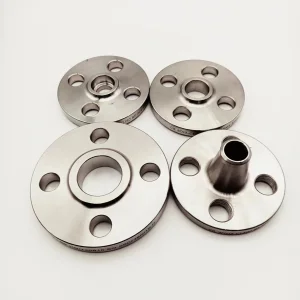
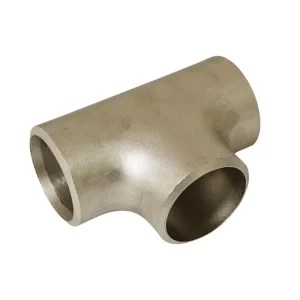
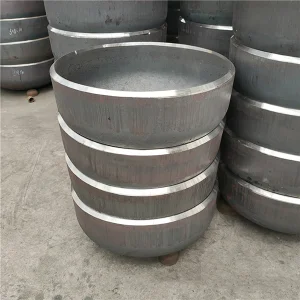
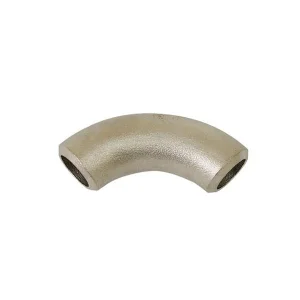
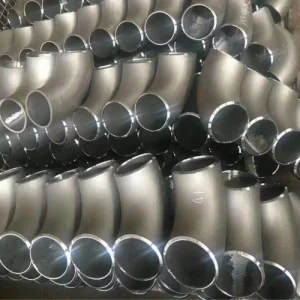
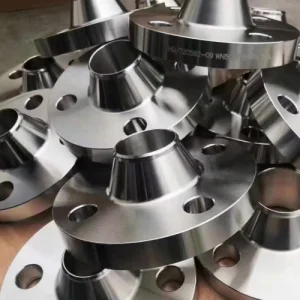
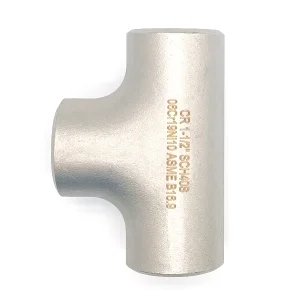
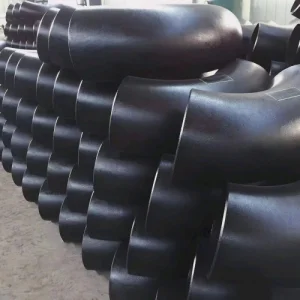
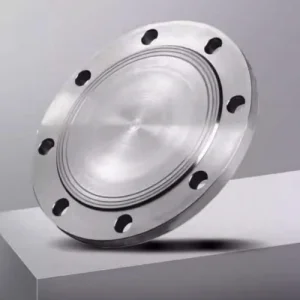
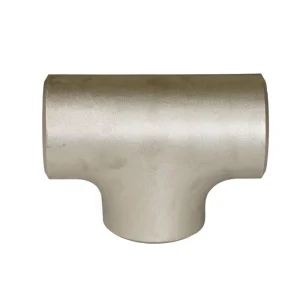
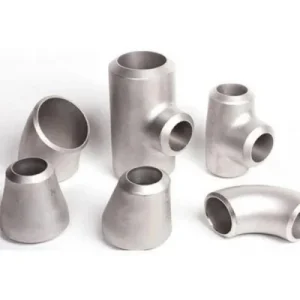
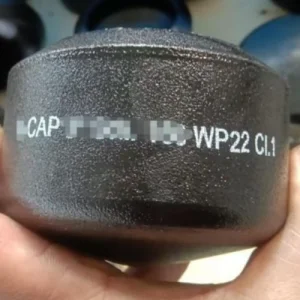
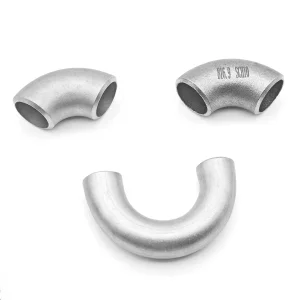
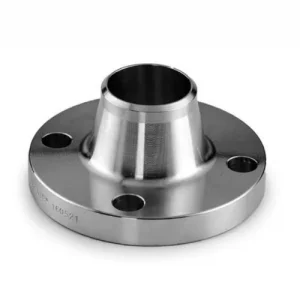
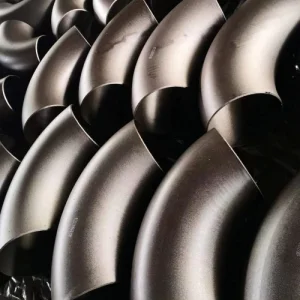
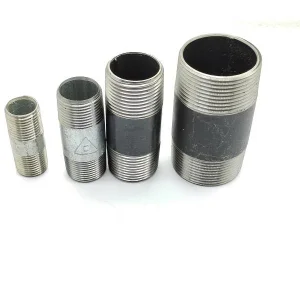
Explore our full line of export-grade forged flanges, butt-weld tees, caps, elbows, and specialty pipe nipples.