
Precision Butt Weld Flanges & Pipe Fittings (Part I)
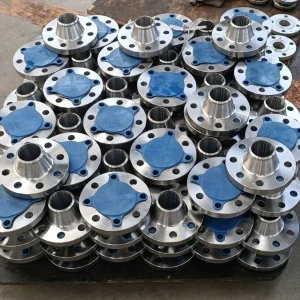
Explore our primary inventory of heavy-duty weld neck flanges, blind flanges, and forged fittings manufactured under strict ISO 9001 and ASME B16.5 protocols.
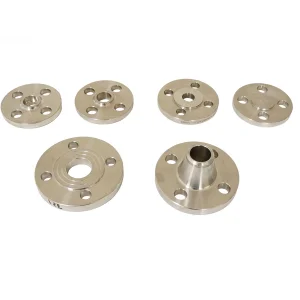
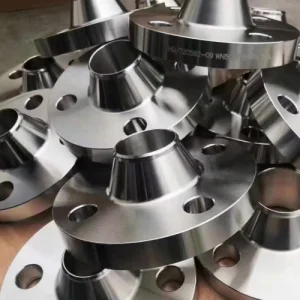
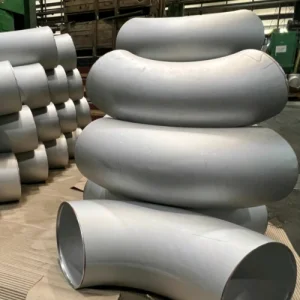
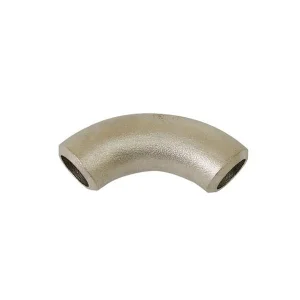
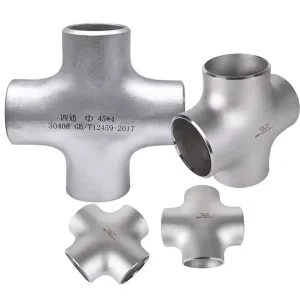
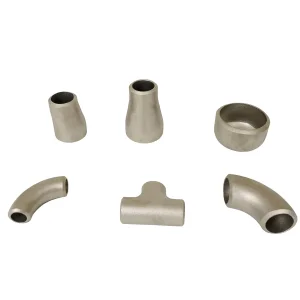
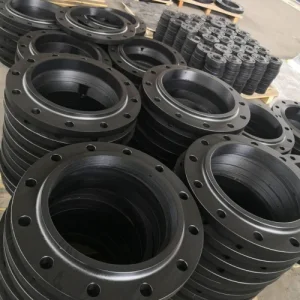
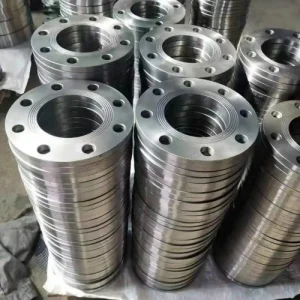
Macro Industry Landscape & Sourcing Dynamics
The global industrial piping and flange market is experiencing a profound transition driven by subsea ultra-deepwater extraction, LNG regasification expansion, and high-temperature green hydrogen transportation. Butt weld flanges (Weld Neck Flanges) remain the benchmark connection methodology for critical pressure vessels, high-stress piping mains, and extreme thermal cycling environments.
Procurement engineering teams navigating international vendor selection must balance metallurgical purity, dimensional tolerances under ASME B16.5 and B16.47, compliance certifications (EN 10204 3.1/3.2, NACE MR0175), and landed unit costs. Cangzhou (Hebei, China) has established itself as the world's most concentrated manufacturing cluster for forged carbon, alloy, and stainless steel pipeline components—producing over 40% of the world's commercial weld neck flanges.
Comprehensive Engineering Specifications & Standards Matrix
Select the correct flange configuration based on pressure class, temperature limitations, gasket sealing mechanics, and matching pipe schedules.
| Standard Protocol | Size Envelope | Pressure Class / Nominal Rating | Primary Facing Types | Metallurgical Material Grades |
|---|---|---|---|---|
| ASME B16.5 | 1/2" to 24" (DN15–DN600) | Class 150, 300, 400, 600, 900, 1500, 2500 | RF (Raised Face), RTJ (Ring Type Joint), FF | ASTM A105, A350 LF2, A182 F304L/F316L, Duplex 2205 |
| ASME B16.47 (Series A) | 26" to 60" (MSS SP-44) | Class 150, 300, 400, 600, 900 | RF, RTJ (High pressure pipeline mains) | ASTM A105, ASTM A694 F52/F60/F65/F70 |
| ASME B16.47 (Series B) | 26" to 60" (API 605) | Class 75, 150, 300, 400, 600 | RF, Compact profile configuration | ASTM A105, Low Alloy Steel F11, F22, F91 |
| EN 1092-1 (Type 11 WN) | DN10 to DN4000 | PN2.5, PN6, PN10, PN16, PN25, PN40, PN63, PN100 | Type A (Flat), Type B (Raised), Type C/D (Tongue/Groove) | P245GH, P280GH, 1.4404, 1.4462, 1.4571 |
| JIS B2220 | 10A to 1500A | 5K, 10K, 16K, 20K, 30K, 63K | RF, FF, Male & Female (MFM) | SS400, SFVC2A, SUS304, SUS316, SUS316L |
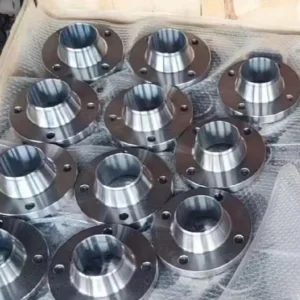
Unlike Slip-On or Socket Weld flanges, the Butt Weld (Weld Neck) flange features a long tapered hub that transitions smooth wall thickness down to the matching pipe wall thickness. This design distributes mechanical bending moments, minimizes stress concentration at the flange root, and allows complete volumetric non-destructive testing (100% Radiography / Ultrasonic Inspection) of the circumferential butt joint.
Global Pricelist Breakdown & Cost Engineering Models
Understanding wholesale pricing for butt weld flanges requires evaluating raw forged billet costs, CNC precision turning overheads, heat treatment protocols (Normalized, Solution Annealed, Q&T), and third-party inspection overheads. Below is a baseline wholesale market price matrix for FOB Port of Export (Cangzhou/Tianjin Hub).
| NPS / Size | ASME Rating | ASTM A105 Carbon Steel | ASTM A182 F304/F316L SS | Duplex 2205 (S31803) | Alloy F91 (High Temp) |
|---|---|---|---|---|---|
| 2" (DN50) | Class 150 RF | $12.50 – $18.00 | $34.00 – $48.00 | $72.00 – $95.00 | $85.00 – $110.00 |
| 2" (DN50) | Class 600 RTJ | $28.00 – $36.00 | $78.00 – $105.00 | $165.00 – $210.00 | $180.00 – $240.00 |
| 6" (DN150) | Class 150 RF | $42.00 – $58.00 | $135.00 – $185.00 | $290.00 – $370.00 | $310.00 – $420.00 |
| 6" (DN150) | Class 900 RTJ | $145.00 – $190.00 | $450.00 – $580.00 | $920.00 – $1,200.00 | $1,050.00 – $1,350.00 |
| 12" (DN300) | Class 300 RF | $180.00 – $240.00 | $560.00 – $750.00 | $1,250.00 – $1,600.00 | $1,400.00 – $1,850.00 |
| 24" (DN600) | Class 150 RF | $480.00 – $620.00 | $1,850.00 – $2,400.00 | $3,900.00 – $5,100.00 | $4,200.00 – $5,600.00 |
* Note: Prices are indicative wholesale benchmark estimates. Final pricing fluctuates based on LME raw material indices (Nickel, Molybdenum, Iron Ore), order volume, wall thickness schedule (e.g., SCH 40 vs SCH 160/XXS), and specialized coating/testing requirements.
Material Selection & Stress Analysis: Weld Neck vs. Other Flange Types
Selecting the ideal flange connection involves evaluating mechanical stress vectors, thermal expansion differentials, and fluid corrosiveness. Below is an engineering comparison of Weld Neck against alternative flange variants.
Weld Neck (Butt Weld) Flange
Stress Factor: 1.0 (Baseline Strength).
Fatigue Life: Extremely High.
Description: Tapered hub provides gradual transition of stress. The circumferential butt weld aligns 1:1 with pipe wall, eliminating internal flow turbulence and crevice corrosion risks. Ideal for cryogenic, superheated steam, and cyclic thermal shock environments.
Slip-On Weld Flange
Stress Factor: ~0.33 to 0.45 under bending.
Fatigue Life: One-third of Weld Neck.
Description: Pipe slips inside flange hub before dual fillet welding (inside and outside). Lower upfront material cost, but lacks structural resistance to internal pressure peaks and high bending moments.
Blind & Spectacle Flange
Stress Factor: Maximum Center Hoop Stress.
Fatigue Life: Variable based on pressure cycle.
Description: Used to seal line ends or isolate piping systems during maintenance. Forged blind flanges must absorb full hydrostatic line pressure, requiring thicker center web dimensions under ASME B16.5 design formulas.
Localized Application Scenarios & Heavy Industry Solutions
From deepwater offshore risers to high-temperature refining units, our butt weld flanges comply with strict regional engineering demands:
Subsea & Offshore Exploration
Deploying Class 1500 and 2500 RTJ Weld Neck flanges in Super Duplex ASTM A182 F55 (S32760). Resists pitting corrosion in hypersaline deep-sea conditions with PREN > 40 and withstands extreme external hydrostatic pressure.
LNG Liquefaction & Cryogenics
Operating at temperatures down to -196°C requires ASTM A350 LF2 Class 2 or ASTM A182 F316L stainless steel flanges. Undergoes Charpy V-Notch impact testing to prevent brittle fracture failure during cryogenic LNG loading operations.
Refining & Hydrocracking Towers
Handling high-temperature sour crude service with ASTM A182 F91 and F22 alloy flanges. Fully compliant with NACE MR0175 / ISO 15156 for H2S wet sour cracking immunity, normalized and tempered at 730°C.
Hydrogen & Green Ammonia Grid
Ultra-high tightness requirements for gaseous hydrogen pipelines require precision-machined Tongue & Groove (TG) or Compact Metal-to-Metal Seal facings to stop micro-molecular leakage under 300 Bar pressure.
Inspection Protocols & International Compliance Assurance
To ensure total reliability in critical infrastructure projects, every forged butt weld flange undergoes rigorous multi-tier testing before dispatch:
Spectrochemical PMI
X-ray Fluorescence (XRF) Positive Material Identification verifies 100% heat grade trace elements (Ni, Cr, Mo, Ti, Cu) against ASTM material standard specs.
Volumetric NDT Testing
Ultrasonic Inspection (UT) per ASME VIII Div 1 rules and Magnetic Particle Inspection (MPI) detect internal forged voids, inclusions, or sub-surface micro-cracks.
Dimensional CMM Control
Automated Coordinate Measuring Machines verify bolt circle diameters (BCD), flange thickness, hub taper angle, and facing serration pitch (125-250 AARH).
EN 10204 3.1 Certification
Full traceability with original Mill Test Reports (MTR) detailing chemical analysis, tensile strength, yield strength, elongation, and hardness test results.
Technology Roadmap & Next-Generation Piping Trends (2026–2035)
The future of industrial flange manufacturing bridges traditional heavy forging with advanced digital monitoring and sustainable steel production:
Smart IoT Flanges with Strain Sensors
Integration of piezoresistive fiber-optic sensors within the flange groove face, transmitting real-time bolt load relaxation, gasket stress, and thermal expansion data to plant control systems.
Laser Cladding CRA Overlay
Using high-speed 3D laser deposition to apply a 3mm Inconel 625 corrosion-resistant alloy (CRA) layer over economical A105 carbon steel hubs, reducing unit cost by 45% compared to solid nickel alloy flanges.
Zero-Carbon Green Steel Forging
Transitioning factory forging furnaces to direct hydrogen-reduced iron (DRI) electric arc furnaces (EAF), reducing the embedded carbon footprint of exported piping components by up to 70%.
Industrial Pipe Fittings, Steel Pipes & Flanges (Part II)
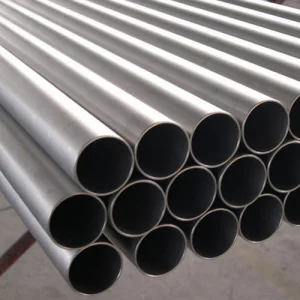
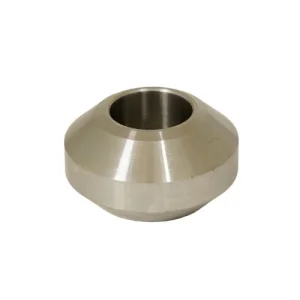
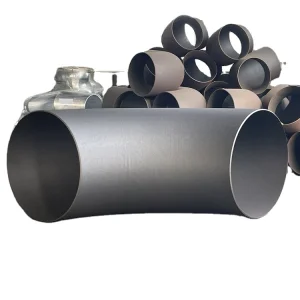
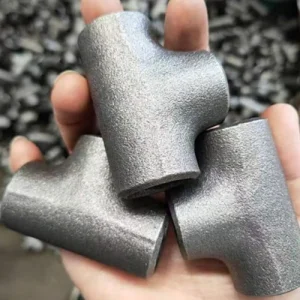
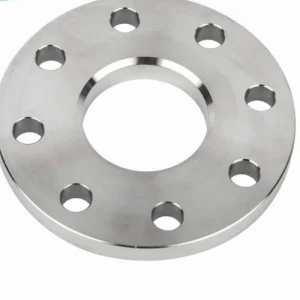
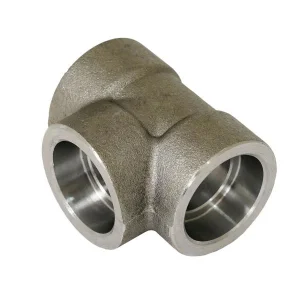
Complete your piping package with matching high-frequency resistance welded (HFRW) steel pipes, weldolets, carbon steel elbows, and forged socket fittings.
10-Point Evaluation Matrix for Butt Weld Flange Manufacturers
Use this evaluation framework when auditing tier-1 pipeline component vendors in China and globally:
1. Forging Capacity & Press Tonnage
Verify if the supplier operates hydraulic forging presses exceeding 5,000 Tons to ensure high deformation ratios and refined grain structure across large-diameter WN flanges.
2. In-House CNC Precision Machining
Check for multi-axis CNC vertical lathes that maintain strict flange face flatness tolerances, bevel angles (37.5° ± 2.5°), and spiral serration depth (AARH 125-250).
3. Heat Treatment Reliability
Confirm furnace computer thermal logging for Normalizing (A105), Solution Annealing (Duplex/Stainless), and Quenching & Tempering (LF2/F91) to guarantee design yield values.
4. Metallurgical Testing Lab
Ensure the manufacturer possesses an ISO 17025 accredited laboratory capable of tensile, Charpy V-notch impact, Brinell hardness, and ASTM A262 Practice E corrosion tests.
Frequently Asked Questions (Procurement & Technical FAQ)
Direct engineering answers addressing search queries, technical standards, flange specs, and pricing variables:
What is the structural advantage of a Butt Weld (Weld Neck) flange over a Slip-On flange?
Which dimensional standards govern industrial butt weld flanges?
- ASME B16.5: Covers Pipe Flanges and Flanged Fittings from NPS 1/2 through NPS 24 (Class 150 to 2500).
- ASME B16.47: Covers Large Diameter Steel Flanges from NPS 26 through NPS 60 (Series A / MSS SP-44 & Series B / API 605).
- EN 1092-1: European standard for circular flanges (Type 11 Weld Neck) rated from PN2.5 to PN400.
- JIS B2220: Japanese industrial standard for steel pipe flanges (5K to 63K).
How does material grade selection impact butt weld flange pricing?
What are the standard bevel angles for butt welding ends on flanges?
- For wall thicknesses between 0.19" (5mm) and 0.88" (22mm), the welding end is supplied with a plain bevel of 37.5° ± 2.5° with a root face of 0.06" (1.6mm) ± 0.03".
- For wall thicknesses exceeding 0.88" (22mm), a compound bevel (J-bevel) is frequently specified to optimize weld metal volume and limit heat-affected zone (HAZ) stress.
What is the difference between Raised Face (RF) and Ring Type Joint (RTJ) facings?
Ring Type Joint (RTJ): Features a deep trapezoidal groove machined into the flange face. A solid metallic ring gasket (Octagonal or Oval profile) rests inside the groove. Under bolt tension, the metal gasket yields into the groove, forming an ultra-reliable metal-to-metal seal ideal for high pressure (Class 900 to 2500) and volatile gas service.
Can Cangrun supply EN 10204 3.2 certified flanges with third-party inspection?
What lead time is required for custom forged butt weld flanges?
Request Your Customized Flange & Piping Quote
Need exact price quotes, CAD dimensional drawings, or project MTO estimation assistance? Contact our engineering export team directly in Cangzhou.