Industrial Whitepaper & Sourcing Directory

Best 304 Flange Factories & Companies

Global Industrial Landscape, Metallurgical Specifications, Procurement Benchmarks, and Chinese Manufacturing Efficiency Analysis

Featured Industrial Pipe Fittings & Flanges Showcase

Premium Grade 304 Stainless Steel and Alloy Piping Solutions Engineered for Global EPC Projects
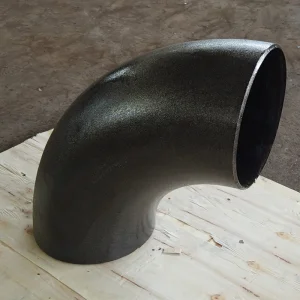
Best Customized Drawings ASME B16.9 304 316 2d 3d 5d Elbow
ASME B16.9 304/316 2D 3D 5D Weld Bend Elbows
View Details & Service
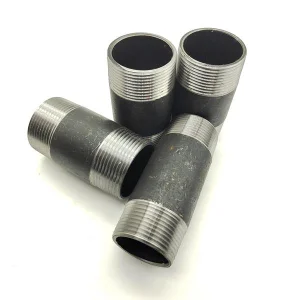
High-Quality Carbon Steel Galvanized Threaded Nipple
High-Quality Galvanized Threaded Nipple Series
View Details & Service
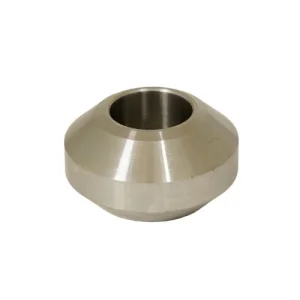
Famous SS304 Weldolet Exporter
Famous SS304 Weldolet High Pressure Outlets
View Product Line
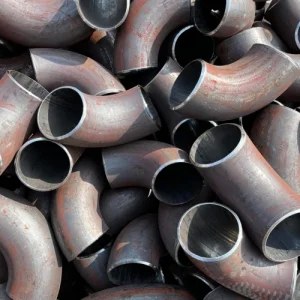
Best Mild Steel Elbow 90Deg 1.5D
Best Mild Steel 90Deg 1.5D Long Radius Elbows
View Factory Range
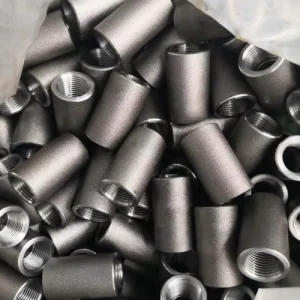
Best 6000 PSI Female Coupling
Heavy Duty 6000 PSI Female Forged Coupling
View Technical Specs
China Carbon Steel Flanges Manufacturers
Precision Carbon Steel Forged Industrial Flanges
View Manufacturer Info
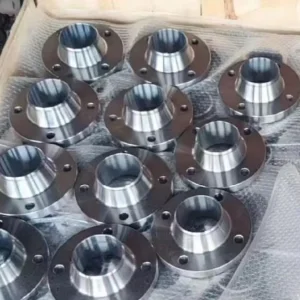
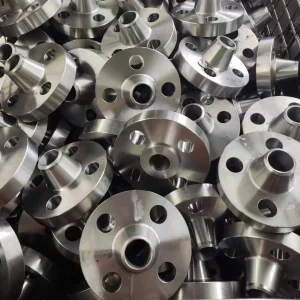
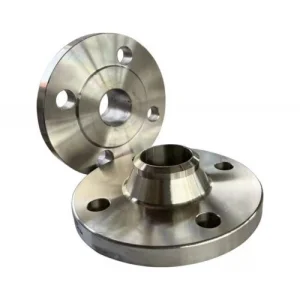
Wholesale Stainless Steel 304 Weld Neck Flange
Stainless Steel 304 Weld Neck Forged Flanges
Get Pricelist & Specs
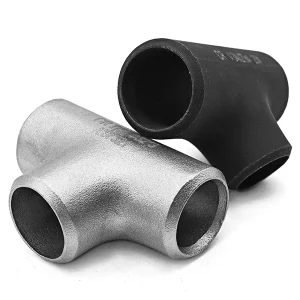
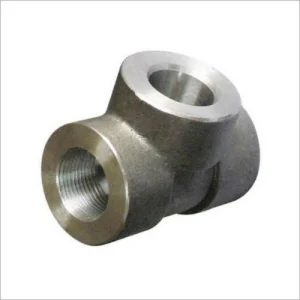
Best Stainless Steel Pipe Fittings Equal Tee
SS316L / 304 Butt-Weld Equal & Reducing Tees
View Products & Custom Drawing

1. Global Commercial & Industrial Status of 304 Stainless Steel Flanges

Analyzing Market Dynamics, Material Economics, and High-Integrity Piping Demand Across International Sectors

The global industrial piping infrastructure relies heavily on 304 Stainless Steel Flanges (UNS S30400 / Werkstoff 1.4301) as the primary connector for pressure vessels, processing pipelines, fluid transport networks, and municipal utilities. Characterized by its standard 18% chromium and 8% nickel metallurgical composition, Grade 304 stands as the most versatile and widely deployed austenitic stainless steel globally. It strikes an optimal equilibrium between superior oxidation resistance, mechanical durability, formability, and economic viability.

18/8
Cr-Ni Balance
$5.2B+
Global Flange Market
515 MPa
Min. Tensile Strength
ISO 9001
Quality Standard

In North America and Western Europe, stringent environmental mandates and aging industrial plant modernization have created sustained demand for high-integrity ASTM A182 F304/F304L forged flanges. Concurrently, rapid industrialization and urban infrastructure expansions across the Asia-Pacific region, Latin America, and the Middle East continue to drive massive volume requirements for standard ASME B16.5, ASME B16.47, and EN 1092-1 flange configurations.

Information Gain Insight: Modern engineering procurement strategies have shifted from raw unit cost evaluation to Total Cost of Ownership (TCO). High-quality 304 flanges forged with controlled carbon levels (preventing chromium carbide precipitation during welding) drastically reduce long-term stress corrosion cracking (SCC) and intergranular corrosion risks, saving millions in lifecycle maintenance.

High Thermal Resilience

Operates seamlessly in operational temperature ranges spanning from cryogenic temperatures up to 870°C (1600°F) in continuous service without scaling.

Superior Passivation

Forms a self-healing chromium oxide surface layer ($Cr_2O_3$) that offers exceptional resistance to atmospheric corrosion and moderate organic acids.

Versatile Weldability

Compatible with standard TIG (GTAW), MIG (GMAW), and SMAW welding techniques when joining to SS304/SS304L matching pipe materials.

2. Chinese Factory Efficiency & Industrial Supply Chain Advantages

Why Chinese Manufacturing Clusters Lead Global Flange Export Dynamics in Speed, Quality Control, and Cost Performance

China’s dominate standing in global flange manufacturing—particularly centered in specialized pipeline equipment clusters like Cangzhou, Hebei—is built upon decades of vertical industrial integration. Rather than operating as isolated forging shops, Chinese manufacturers operate within highly dense, specialized industrial ecosystems. Raw material sourcing, hot forging, heat treatment, CNC precision machining, non-destructive testing (NDT), surface passivation, and export logistics are co-located within tight geographical radii.

Evaluation Parameter Chinese Integrated Hubs (e.g., Cangzhou) Traditional Western Regional Producers
Raw Billet Sourcing Direct mill ties with Tsingshan, Baosteel; instant melt-batch allocations Secondary distributor purchasing, higher scrap & lead-time overhead
Forging Technology Automated ring rolling, 4000T hydraulic presses, high-speed closed-die forging Legacy open-die forging, higher labor intensity per ton
Machining Precision Multi-axis CNC vertical lathes with automated tool changer & digital gauging Semi-automated manual lathes with incremental tolerances
Lead Times (Std. ASME B16.5) 15–25 Days for full container loads (FCL) 6–12 Weeks due to fragmented sub-tier processing
Scale & Price Efficiency High yield rates, minimal material waste, 25-40% lower landed costs Higher overhead costs, limited batch size optimization
Automated Metallurgical Quality Assurance

Leading Chinese exporters have advanced far beyond simple price leadership; they are quality leaders equipped with international certifications including ISO 9001:2015, PED 2014/68/EU (Pressure Equipment Directive), AD 2000-Merkblatt W0, and CRN (Canadian Registration Number). Factory-floor Quality Assurance utilizes inline Optical Emission Spectrometry (OES) for 100% Positive Material Identification (PMI), automated ultrasonic flaw detection (UT) for internal void verification, and digital coordinate measuring machines (CMM) to guarantee strict compliance with flange raised-face (RF) serration finish standards (ASME B16.5 specifies 125–250 microinches AARH finish).

3. Localized Application Scenarios & Engineering Environments

Deploying 304 Stainless Steel Flanges Across Diverse Operational Conditions and Regional Sectors

Petrochemical & Refining Pipelines

304 Weld Neck Flanges (Class 150 to Class 900) connect high-pressure hydro-treating units, gas recovery lines, and chemical feedstocks where moderate acid corrosion resistance is mandatory.

Food, Beverage & Pharmaceutical

Sanitary PL (Flat Plate) and Slip-On SS304 Flanges featuring polished surfaces ($Ra < 0.8\mu m$) prevent bacterial adhesion and withstand aggressive Clean-In-Place (CIP) caustic washdown routines.

Power Generation & Boilers

Utilized in steam condensate return lines, feed-water heating systems, and auxiliary boiler piping circuits demanding consistent thermal cycling durability up to 450°C.

Marine & Offshore Utilities

Deployed in topside utility air lines, fresh water generation systems, and non-submerged marine piping where atmospheric salt-spray resistance is required.

Cryogenic Liquid Transport

Because Grade 304 preserves its austenitic face-centered cubic (FCC) crystal structure without undergoing a ductile-to-brittle transition, it excels in Liquefied Natural Gas (LNG) and liquid nitrogen lines down to -196°C.

Municipal & Desalination Pre-Treatment

Extensively installed in municipal water purification plants, sewage treatment works, and low-salinity intake stages of seawater reverse osmosis (SWRO) facilities.

4. Industry Development Trends & Technological Advancements

Emerging Manufacturing Methodologies Shaping the Next Generation of Stainless Steel Piping Components

A. Industry 4.0 & Smart Forging Automation

Leading Chinese flange factories are rapidly integrating Internet of Things (IoT) sensors across heating furnaces and forging hammers. Real-time temperature profiling prevents thermal degradation of raw 304 stainless billets during forging. Closed-loop infrared monitoring ensures that every billet is struck precisely within the optimal 1150°C to 900°C forging window, eliminating grain coarsening and ensuring uniform metallurgical microstructures.

B. Digital Material Traceability & QR Code MTR Integration

To combat counterfeit material certificates and streamline procurement auditing for major global EPC contractors (such as Bechtel, Fluor, Saipem, and Petrofac), modern producers laser-etch unique QR codes directly onto the flange outer rim. Scanning the code instantly resolves to an immutable, digital Material Test Report (MTR) according to EN 10204 3.1 or 3.2, detailing exact ladle chemical heats, mechanical tensile testing results, impact values, and hardness readings.

C. Sustainable Metallurgy & Green Production Initiatives

With carbon border adjustment mechanisms (such as EU CBAM) taking center stage, top-tier factories in China are transitioning heating furnaces from traditional producer gas to clean natural gas and electric induction heating systems. Furthermore, scrap recycling rates within 304 flange production loops have surpassed 92%, substantially reducing the embedded carbon footprint ($CO_2$ per ton of finished forged flange).

5. Enterprise Procurement Framework & Quality Assurance Protocols

Crucial Verification Checklists for Technical Purchasing Officers and QA/QC Inspectors

Procuring 304 stainless steel flanges internationally requires strict adherence to standardization frameworks to eliminate job-site installation failures. Enterprise buyers should enforce a five-stage quality gate verification protocol prior to batch release:

1. Chemical Heat Verification

Must strictly verify Carbon ($\le 0.08\%$), Chromium ($17.5-19.5\%$), and Nickel ($8.0-10.5\%$). For welded piping, dual-certified 304/304L is recommended ($\le 0.030\%$ Carbon) to prevent intergranular corrosion in weld heat-affected zones (HAZ).

2. Dimensional Tolerance Check

Mandatory dimensional inspection against ASME B16.5 (sizes up to 24") or ASME B16.47 (26" to 60"). Critical metrics include bolt hole circle diameter (BCD), flange thickness ($C$), raised face height ($2mm$ standard), and bevel angle for Weld Neck flanges.

3. Surface Finish & Flange Facing

Gasket contact surfaces must meet specified roughness averages ($Ra$). Serrations must be concentric or spiral (phonographic) with 45–55 grooves per inch to ensure proper gasket sealing stress deformation.

Procurement Tip for Global Enterprise Purchasing: To navigate international anti-dumping duties (ADD) or safeguard tariffs smoothly, request complete Certificate of Origin (Form E, Form F, or CO) documentation alongside factory inspection certs (EN 10204 3.1 issued directly by the forging mill, signed by an independent QA director).

Complementary High-Performance Piping Catalog

Comprehensive Supply of Stainless Steel, Carbon Steel, and Alloy Pipe Accessories Direct from Top Cangzhou Manufacturers
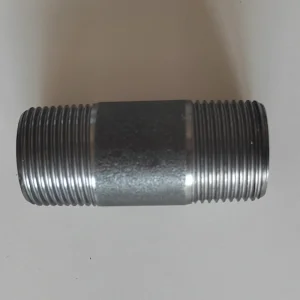
High-Quality 150# cast ss fittings with thread
Class 150 Stainless Steel Threaded Cast Fittings
View Products & Supplier
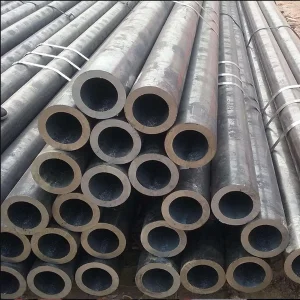
China High-strength seamless steel pipe
High-Strength Heavy Wall Seamless Steel Pipe
Get Quotes & Specs
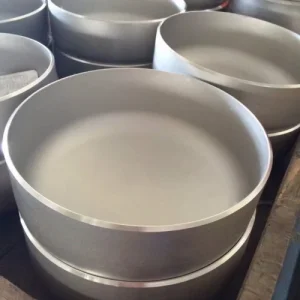
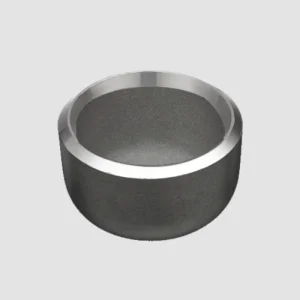
Buy ANSI B16.9 316 304 316L Cap CS Cap
ANSI B16.9 304 / 316L Stainless & CS Pipe Caps
Buy Directly & Service
Buy Threaded Equal Tee Forged Fittings 150LB
150LB Threaded Equal Tee Forged Fittings
Factory Direct Info
Buy ASME B16.9 Pipe End Cap 316 316L Sch40s
ASME B16.9 SCH40S 316/316L Pipe End Caps
View Product Catalogue
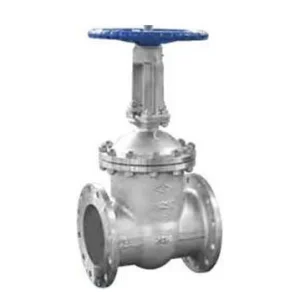
Famous Stainless steel gate valve Z41W
Stainless Steel Gate Valve Z41W-16P/25P/40P
View Exporter Details
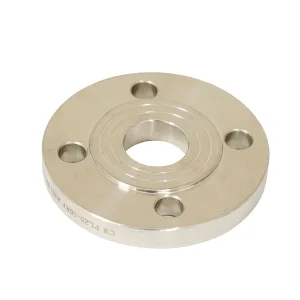
China ASME JIS ANSI factory customized flat flange
Customized Flat PL Flange DN10–DN600 PN16
View Custom Services
High-Quality 20# DN80 PN10 Flange
High-Quality 20# Carbon Steel DN80 PN10 Flanges
View Supplier Details

6. Technical Frequently Asked Questions (FAQ)

In-Depth Engineering Answers Regarding Metallurgical Performance, Pressure Ratings, and Procurement

Q1: What is the main metallurgical difference between 304 and 304L stainless steel flanges?
Answer: The critical difference lies in carbon concentration. Standard Grade 304 allows a maximum carbon content of 0.08%, whereas Grade 304L restricts carbon to a maximum of 0.030%. During welding operations, temperatures in the heat-affected zone (HAZ) reach 450°C to 850°C (842°F–1562°F), causing chromium to combine with carbon and precipitate along grain boundaries as chromium carbides. This impoverishes adjacent regions of protective chromium (sensitization), rendering standard 304 prone to intergranular corrosion. Grade 304L's ultra-low carbon level prevents carbide precipitation, allowing as-welded installation in aggressive chemical media without post-weld solution annealing. Dual-certified 304/304L flanges meet both the low-carbon requirement of 304L and the higher mechanical yield strength of standard 304.
Q2: How do ASME B16.5 Class 150 304 flanges behave under elevated operating temperatures?
Answer: Pressure-temperature ratings for ASME B16.5 Group 2.1 materials (which includes ASTM A182 F304) dictate that maximum working pressure decreases as temperature rises. While a Class 150 SS304 flange is rated for 275 psi (19.0 bar) non-shock hydraulic pressure at temperatures from -29°C to 38°C (-20°F to 100°F), its maximum working pressure drops to 190 psi at 200°C (392°F), 140 psi at 300°C (572°F), and 65 psi at 500°C (932°F). High-temperature design must account for flange thermal expansion and bolt relaxation to avoid gasket leakage.
Q3: What are the PREN and CPT values for Grade 304, and when should Grade 316 be selected instead?
Answer: The Pitting Resistance Equivalent Number (PREN) evaluates a metal's localized pitting corrosion resistance in chloride environments, calculated as: $PREN = \%Cr + 3.3(\%Mo) + 16(\%N)$. Standard 304 stainless steel contains zero added molybdenum, resulting in a PREN rating of approximately 18–19 and a Critical Pitting Temperature (CPT) of around 10°C–15°C. Grade 316 contains 2.0–2.5% Molybdenum, raising its PREN to ~23–25 and CPT to ~25°C. For marine splash zones, brackish water, or process streams containing chloride concentrations exceeding 200 ppm, Grade 316 or Duplex grades (e.g., 2205 with PREN ~35) should be selected over Grade 304 to prevent rapid pitting and crevice corrosion.
Q4: What are the principal differences between ASME B16.5 and EN 1092-1 flange standards?
Answer: ASME B16.5 is the predominant American standard covering Nominal Pipe Sizes (NPS 1/2" to 24") rated by Pressure Classes (150, 300, 400, 600, 900, 1500, 2500). EN 1092-1 is the European standard utilizing Metric Nominal Diameters (DN10 to DN4000) and Nominal Pressure ratings (PN2.5 to PN400). Bolt hole pitch circle diameters (PCD), bolt quantities, and flange facing definitions differ fundamentally between the two frameworks (e.g., ASME Raised Face is designated 'RF', whereas EN 1092-1 defines raised face as 'Type B1' or 'Type B2' depending on surface roughness). They are not directly interchangeable without custom transition adapters.
Q5: Why is solution heat treatment mandatory for ASTM A182 F304 forged flanges?
Answer: Post-forging Solution Annealing requires heating the 304 forgings to a minimum temperature of 1040°C (1900°F), holding for adequate soak time to dissolve all chromium carbides back into the austenitic solid solution, and rapidly quenching in water or air. This process restores full corrosion resistance, relieves residual internal stress from heavy forging presses, and restores maximum ductility and impact toughness required by ASTM A182/A182M standards.
Q6: Which flange face sealing finish should be specified for soft gaskets versus metallic spiral wound gaskets?
Answer: For soft elastomeric or PTFE gaskets, a smooth flange face finish with a surface roughness ($Ra$) between 3.2 $\mu m$ and 6.3 $\mu m$ (125 to 250 microinches) is required. For metallic Spiral Wound Gaskets (SWG) with flexible graphite filler, ASME B16.5 mandates a serrated concentric or spiral finish with a roughness of 3.2 to 6.3 $\mu m$ $Ra$, featuring 45 to 55 grooves/inch. The micro-serrations bite into the gasket material under bolt torque loading, preventing radial gasket blowout under high internal system pressure.
Q7: How do Weld Neck (WN) flanges compare to Slip-On (SO) flanges in mechanical stress handling?
Answer: Weld Neck flanges feature a long tapered hub that transitions thickness smoothly to the pipe wall, transferring bending moments and stress concentrations away from the flange base to the pipe butt-weld seam. They possess calculated fatigue strength nearly double that of Slip-On flanges under cyclic loads, pressure shocks, and high thermal stresses. Slip-On flanges slide over the pipe end and require two fillet welds (one internal, one external); they are more economical to align and fit up, but are limited in high-cycle or extreme pressure-temperature applications.
Q8: What non-destructive testing (NDT) methods are used to verify 304 flange internal soundness?
Answer: Key NDT procedures include:
1. Ultrasonic Testing (UT) per ASTM A388 to detect internal voids, forging bursts, or inclusions within the flange ring body.
2. Liquid Penetrant Inspection (LPI/PT) per ASTM E165 to identify surface-breaking micro-cracks, laps, or porosity on machined faces and hub radii.
3. Positive Material Identification (PMI) via X-Ray Fluorescence (XRF) spectrometry to confirm exact element percentages (Cr, Ni, Mn, Mo).
4. Hydrostatic Testing performed on completed assemblies to 1.5 times the rated design pressure.
Q9: What bolting materials should be specified when assembling 304 stainless steel flanges?
Answer: To prevent galvanic corrosion and ensure thermal expansion coefficient matching, ASTM A193 Grade B8 (Class 1 or Class 2 strain-hardened 304 SS) or ASTM A193 Grade B8M (316 SS) stud bolts with matching ASTM A194 Grade 8/8M heavy hex nuts should be utilized. When high bolt tensioning loads require alloy steel bolts (such as ASTM A193 B7), isolation gasket kits (flange isolation sleeves and washers) must be installed to prevent direct metallic contact and subsequent galvanic cell acceleration.
Q10: Why is Cangzhou, Hebei considered the optimal hub for enterprise flange sourcing?
Answer: Cangzhou (specifically Mengcun and Yanshan counties) hosts China's largest pipeline equipment manufacturing cluster, featuring over 1,500 specialized forging facilities, raw material mills, testing laboratories, and logistics hubs. This concentration allows Cangzhou manufacturers to achieve unmatched economies of scale, rapid raw material access, streamlined export containerization via nearby Tianjin Port (Xingang), and standardized quality management compliance to meet demanding global contract requirements efficiently.