
China Top Malleable Iron Pipe Fittings Suppliers

Time:2026-11-12 Author:Madeline
0%

Choosing among China’s Malleable Iron Pipe Fittings suppliers takes more than comparing prices. Buyers need to examine material consistency, thread accuracy, coating quality, and documented performance. Small details matter. A rough thread or uneven zinc coating can complicate installation and raise maintenance concerns.

For an illustrative industry voice, consider fictional sourcing specialist Daniel Wu: “A fitting is only dependable when its material, threads, and inspection records tell the same story.” This is an original, fictional quotation, not a verified statement from a real expert. It captures a practical point: supplier claims should be checked against product samples, test reports, and traceable quality records.

This introduction sets the direction for a closer look at Chinese manufacturers and exporters. It will consider product range, manufacturing capability, quality controls, customization, communication, and export experience. Buyers should also confirm that stated pressure ratings and applicable standards suit their own project requirements. Ask for clear specifications. Check the details.

A supplier may present polished brochures and attractive samples, yet actual production deserves equal scrutiny. Factory assessments, consistent batch documentation, and responsive technical support can help reveal the difference. No checklist removes every risk. Even careful buyers can miss things. Use the comparisons that follow as a starting point, then verify each shortlisted supplier directly before making a purchasing decision.
China Top Malleable Iron Pipe Fittings Suppliers

Malleable Iron Pipe Fittings: Materials, Functions, and Common Applications

Malleable Iron Pipe Fittings: Materials, Functions, and Common Applications

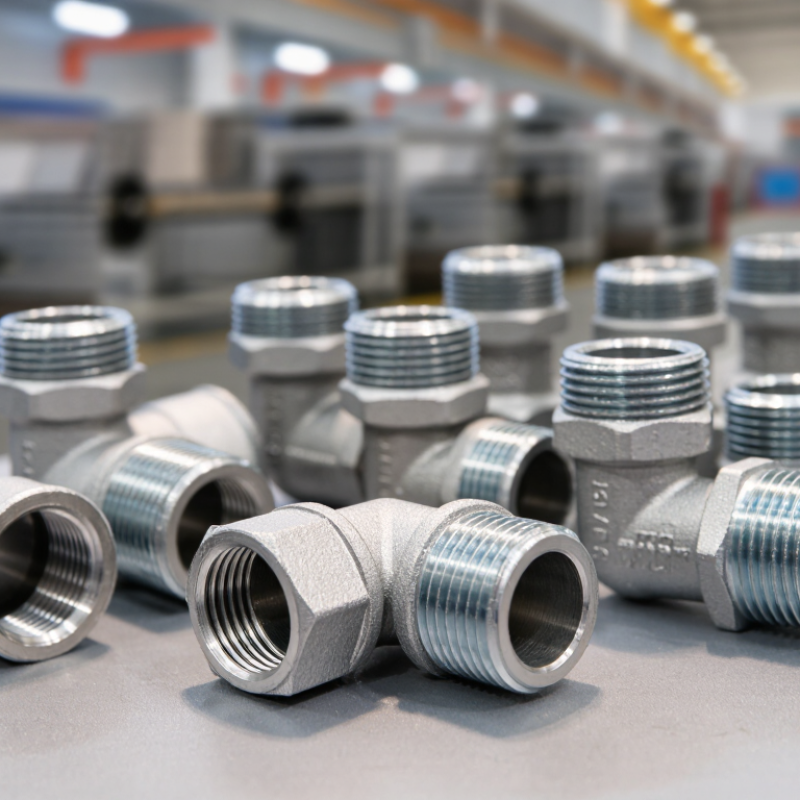
Malleable iron fittings start as castings, then undergo heat treatment to improve toughness and allow limited deformation. Common forms include elbows, tees, sockets, unions, and reducers with threaded connections. The material is not flexible like rubber, but it generally tolerates service stresses better than brittle cast iron. Small details matter.

Many fittings have a black finish or zinc coating. Galvanizing can help resist corrosion in damp settings, but it does not make every installation corrosion-proof. Check threads, coating damage, and pressure and temperature ratings before assembly. Sealant choice depends on the fluid and system requirements. A snug connection is useful; overtightening can damage threads.

These fittings commonly connect steel pipes in water distribution, compressed-air lines, building services, and selected industrial systems. Threaded ends can simplify repairs where welding is impractical, such as in crowded equipment rooms. They may be less suitable where low weight, severe corrosion, or frequent vibration is a priority. That trade-off is easy to overlook. Match the material, coating, dimensions, and ratings to the service, and confirm compatibility with a qualified professional for critical systems.

ASTM A197/A197M: Key Requirements for Malleable Iron Castings

China Top Malleable Iron Pipe Fittings Suppliers

ASTM A197/A197M: Key Requirements for Malleable Iron Castings

ASTM A197/A197M sets requirements for ferritic malleable iron castings used in general applications. For pipe fittings, the specification helps buyers assess material quality, but it does not replace checks on fitting dimensions, threads, or pressure ratings. Those details may be governed by separate specifications. Always confirm the applicable standard edition and grade in the purchase documents.

The standard addresses material and mechanical requirements, including tensile properties and heat treatment. Heat treatment develops the desired ferritic structure and helps the casting withstand normal service stresses. Buyers should request traceable inspection records and verify that test results match the ordered grade. A certificate alone is not a substitute for checking the actual product. Small differences in wall thickness or thread finish can matter during installation.

Tips: Compare the marked grade with the test certificate and purchase order. Check threads with suitable gauges, and inspect cast surfaces for cracks or obvious defects. If service conditions involve unusual temperatures, pressure, or vibration, confirm suitability with a qualified engineer. A drawing can miss real installation stresses.

ASTM A197/A197M: Minimum Tensile Strength

Key mechanical requirement for cupola malleable iron castings

ASTM A197/A197M specifies a minimum tensile strength of 40 ksi (approximately 275 MPa). The top axis shows the equivalent value in ksi; the chart does not represent supplier test results. Confirm the applicable standard edition and product requirements for procurement.

ASME B16.3: NPS 1/8–6 Threaded Fittings in Classes 150 and 300

China Top Malleable Iron Pipe Fittings Suppliers

ASME B16.3 covers threaded malleable iron fittings from NPS 1/8 through NPS 6, in Classes 150 and 300. The size range spans tiny instrument branches and larger building-service lines. Class selection should reflect the system’s pressure, temperature, fluid, and operating conditions. A class number alone is not a universal working-pressure value.

When comparing suppliers, ask for clear size and class markings, material information, and inspection records tied to the shipment. Check that threaded ends match the specified thread standard, commonly ASME B1.20.1 for NPT threads. On receipt, inspect cast surfaces for cracks or damaged threads, then verify a sample with suitable gauges. A fitting can look sound in a carton and still resist proper engagement. Catalog tables are tidy; installation conditions are less so.

Tips: Confirm NPS, class, thread type, and quantity on the purchase documents. Keep fittings clean and dry before installation, and avoid forcing misaligned threads. If service conditions are unusual, verify suitability with the responsible engineer rather than relying on a supplier’s general rating.

How China’s Suppliers Manufacture, Finish, and Inspect Pipe Fittings

China’s malleable iron pipe fittings begin as cast iron components formed in sand molds. After casting, controlled heat treatment changes the iron’s structure, improving toughness and allowing some deformation without sudden fracture. The cycle matters. Temperature and time need close control, since uneven treatment can leave inconsistent properties between parts.

Workers remove molding residue, trim gates, and machine threads to specified dimensions. A thread gauge checks pitch and fit; mismatched threads can cause leaks or difficult installation. Finishing may include a black coating or hot-dip galvanizing. Inspectors look for bare patches, rough edges, blocked openings, and visible casting defects. A smooth surface helps, but appearance alone proves little.

Reliable suppliers use inspection plans that match the fitting type and order requirements. Checks may cover dimensions, material properties, coating thickness, and pressure performance. Records should connect test results to production batches, making problems easier to trace. Still, sampling cannot reveal every flaw. That is worth remembering. Buyers can request inspection reports and clarify which tests were performed, rather than relying on a general claim of quality. A small inconsistency in thread depth or coating coverage may seem minor, yet it can complicate assembly on site.

Comparing Chinese Suppliers by EN 10242 Compliance and Product Specifications

When comparing Chinese malleable iron pipe fittings suppliers, ask for evidence against EN 10242, not a general compliance claim. The standard covers fitting dimensions, materials, tolerances, and marking. Request the declared material type, thread designation, coating thickness, and pressure-temperature limits on the product sheet. Check that the sample marking matches its inspection documents. Small gaps matter.

Thread data provides a useful cross-check. ISO 7-1:1994 lists an R 1/2 tapered pipe thread with a 20.955 mm basic outside diameter and 1.814 mm pitch, or 14 threads per inch. Confirm the specified thread form with gauges; visual inspection alone can miss pitch or taper errors. Compare test records and dimensional reports across suppliers, using the same fitting size and test conditions.

A polished certificate is not the whole story. Ask whether the documents cover the exact production site and fitting range, and whether independent tests are recent. EN 10242 compliance does not automatically confirm every coating, seal, or application requirement. One weak point in supplier comparisons is inconsistent sampling: a single hand-picked fitting may not represent routine production. Request traceable batch records and inspect several pieces before placing a large order.

China Top Malleable Iron Pipe Fittings Suppliers - Comparing Chinese Suppliers by EN 10242 Compliance and Product Specifications
Comparison dimension Supplier 1 Supplier 2 Supplier 3 What to verify / comparison benchmark
Supplier identity Anonymous profile; confirm legal entity Anonymous profile; confirm legal entity Anonymous profile; confirm legal entity Check the registered company name, factory address, and whether the quoted party is the manufacturer or a trading company.
EN 10242 compliance Not independently verified; request documents Not independently verified; request documents Not independently verified; request documents Request a current certificate or test report that identifies EN 10242, its edition, the covered product range, and the manufacturing site. Verify the document with its issuer.
Product type Confirm in quotation Confirm in quotation Confirm in quotation EN 10242 covers threaded pipe fittings made from malleable cast iron. Compare fitting types individually, such as elbows, tees, sockets, unions, and caps.
Material and designation Request material grade and traceability Request material grade and traceability Request material grade and traceability Match the material designation on the offer, product marking, inspection documents, and applicable standard requirements. Do not rely on a generic “malleable iron” description alone.
Nominal size range Request a size-by-fitting schedule Request a size-by-fitting schedule Request a size-by-fitting schedule Confirm the actual minimum and maximum size for each fitting type, plus the nominal size and thread details. Market ranges vary by product and manufacturer.
Thread standard and dimensions Request thread specification and inspection results Request thread specification and inspection results Request thread specification and inspection results Confirm the thread form, size, and tolerances required by the order and applicable standard. Ask for thread-gauge inspection records for the quoted sizes.
Surface finish / coating Specify black or galvanized finish Specify black or galvanized finish Specify black or galvanized finish State the required finish and acceptance criteria. For galvanized products, request the coating specification and inspection evidence; coating thickness and method should be stated rather than assumed.
Pressure and service conditions Request declared rating and test basis Request declared rating and test basis Request declared rating and test basis Ask for the manufacturer’s pressure rating, test method, temperature limits, and intended service. Ratings can depend on fitting type, size, material, and operating conditions.
Quality documentation Request sample inspection pack Request sample inspection pack Request sample inspection pack Compare inspection plans, dimensional reports, material records, coating checks, and any pressure-test records applicable to the order.
Product marking and packaging Confirm marking and packing requirements Confirm marking and packing requirements Confirm marking and packing requirements Approve a marking sample and packing specification, including size identification, batch traceability, corrosion protection, carton labeling, and pallet requirements.
Commercial comparison Quote required Quote required Quote required Compare like-for-like quotations by fitting type, size, material, finish, order quantity, tooling charges, lead time, delivery terms, and warranty.

Comparison note: Supplier-specific compliance, capacity, and product specifications are intentionally left unclaimed because no supplier documentation was provided. Replace each “request” or “confirm” entry with information verified against the supplier’s quotation, certificates, and sample inspection records before purchasing.

FAQS

What are malleable iron pipe fittings made from?

They begin as cast iron parts formed in sand molds. Heat treatment improves toughness and allows limited deformation. Not rubber-like flexibility.

Which fitting shapes are commonly available?

Common forms include elbows, tees, sockets, unions, and reducers. Many have threaded ends for connecting pipes.

Where are these fittings commonly used?

They connect steel pipes in water distribution, compressed-air lines, and building services. They can also suit selected industrial systems.

What should I check before choosing a fitting class?

Consider pressure, temperature, fluid, and operating conditions. A class number alone does not give a universal working-pressure value.

Does a zinc coating prevent all corrosion?

No. Galvanizing can help in damp settings, but damaged coating or harsh conditions may still cause problems. Check exposed areas.

How can I check threaded fittings before installation?

Confirm the specified thread type and inspect the threads for damage. A suitable gauge can help verify a sample. Don’t force a poor fit.

What inspections can suppliers provide?

Ask for shipment-linked inspection records and details of the tests performed. Checks may cover dimensions, material properties, coating, and pressure performance.

What are the limitations of malleable iron fittings?

They may be less suitable where low weight, severe corrosion, or frequent vibration matters. That trade-off is easy to miss.

Can appearance alone confirm fitting quality?

No. A smooth surface can still hide thread or material issues. Sampling helps, but it cannot reveal every flaw. Worth remembering.

Conclusion

Malleable Iron Pipe Fittings are valued for their strength, durability, and ability to connect threaded piping in a wide range of systems. Understanding their materials and functions helps buyers select suitable fittings for applications such as water, gas, heating, and industrial piping. ASTM A197/A197M outlines key requirements for malleable iron castings, while ASME B16.3 covers threaded fittings in NPS sizes 1/8 through 6 and Classes 150 and 300. These standards provide useful reference points for evaluating product design and performance.

China’s suppliers may differ in their manufacturing processes, surface finishes, inspection practices, and available specifications. Comparing suppliers against EN 10242 requirements, along with details such as dimensions, pressure class, thread type, and coating options, can help buyers assess whether products meet project needs. A careful review of documentation and quality-control procedures supports informed sourcing decisions and helps ensure that selected fittings are appropriate for their intended applications.

Madeline

Madeline

Madeline is a dedicated marketing professional with a wealth of expertise in our company's core offerings. With a keen understanding of the industry, she brings a unique perspective to her role, consistently delivering high-quality content that highlights the superior aspects of our products. As......