
Finding dependable Iron Pipe Fittings in China takes more than comparing prices. Buyers need to check material grades, dimensions, pressure ratings, and production consistency. A polished catalog can look convincing. The sample still matters.
Sourcing adviser Wei Chen captures the core challenge: “A fitting is only dependable when its material, dimensions, and inspection records match the buyer’s specification.” His advice points to a practical starting place: define requirements before requesting quotations. Ask suppliers for product drawings, material certificates, inspection procedures, and clear answers about tolerances. Then compare those details against the intended piping system, not just the unit price.
China has a broad manufacturing base, with suppliers serving different regions and product categories. That range can help buyers find suitable options, but it also makes careful screening essential. Request representative samples and inspect threads, coating, markings, and finish. Where possible, arrange a factory visit or an independent inspection before a large order. Check how the supplier handles rejected parts and production changes, too.
Details reveal a lot. A clean thread, legible marking, and consistent wall thickness are useful signs, but none proves quality alone. Paperwork can be incomplete. Buyers should follow up rather than assume. This guide explains where to look, what questions to ask, and how to compare suppliers without mistaking a low quote for a reliable long-term choice.
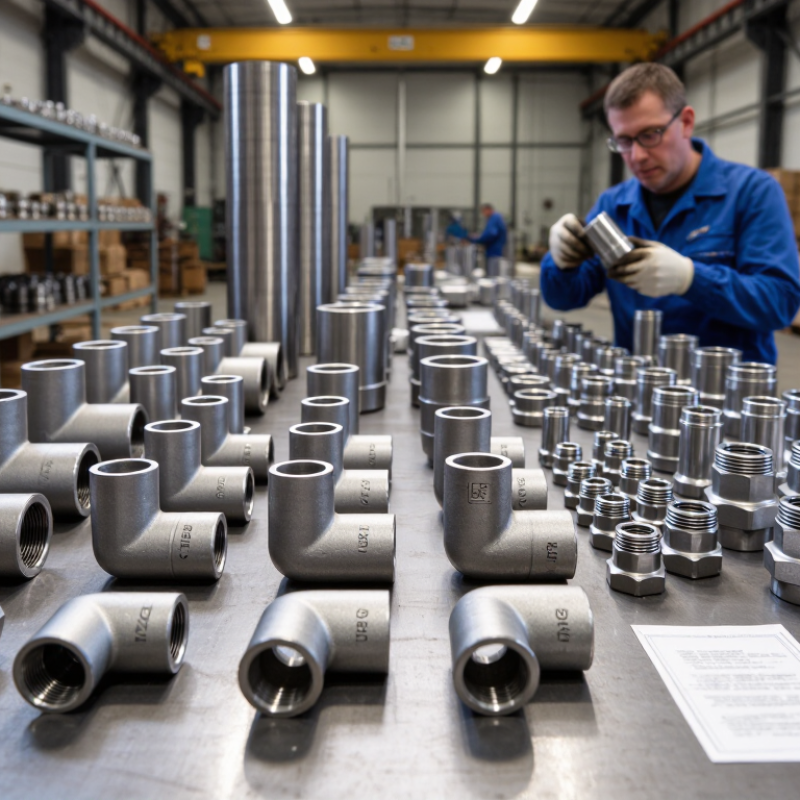
When comparing iron pipe fittings in China, ask whether the material is certified to ASTM A197/A197M, not merely described as “malleable iron.” The standard covers malleable iron castings used in pressure applications. ASTM A197 specifies a minimum tensile strength of 50,000 psi and 10% elongation. Check the current edition and request a heat- or lot-linked test certificate. It should identify the material standard and show relevant test results. Small details matter.
A certificate is only useful if it matches the shipment. Compare its heat or lot number with product labels and packing records, then inspect sample fittings for cracks, cold shuts, and clean, consistent threads. ASTM A197 addresses material; verify dimensions and thread requirements against the applicable product and thread standards too. A polished surface can look reassuring. It is not proof. The USGS Mineral Commodity Summaries 2025 estimates global iron ore mine production at about 2.5 billion metric tons in 2024. That scale reflects raw-material supply, not the quality of any particular fitting. During supplier audits, review traceability, test methods, and how nonconforming parts are handled. Even then, paperwork and appearance cannot replace independent verification when service conditions are demanding.
ASTM A197/A197M specifies chemical composition limits for malleable iron castings. Bars show permitted ranges for carbon, silicon, and manganese; for sulfur and phosphorus, they show the maximum permitted content. Use the applicable edition of the standard and material test documentation when verifying fittings.
Where to Find the Best Iron Pipe Fittings in China?
Locate Chinese Foundries and Export Hubs for Iron Pipe Fittings
China’s iron pipe fitting suppliers are often located near established casting and machinery industries. Hebei, Shanxi, and Shandong are useful starting points for locating foundries and machining workshops. In Hebei, Cangzhou and nearby industrial areas have a strong presence in pipe-related manufacturing. Shanxi has a long history of iron casting. Still, a regional reputation does not guarantee consistent quality. Ask where the fittings are actually cast, machined, and inspected.
For export coordination, Tianjin and Qingdao offer access to major ports and freight services. Shanghai can also suit shipments from eastern manufacturing areas. A nearby port may simplify transport, but it does not prove that a supplier operates its own foundry. Request recent production photos, material specifications, dimensional inspection records, and sample pieces. Check wall thickness, thread finish, and surface defects before approving a large order. Small details matter.
Tips: Ask for the casting process, test method, and packaging details in writing. Compare samples from more than one supplier. A tidy sample can still hide uneven production, so inspect more than one piece when possible. Allow time for a factory visit or independent inspection; plans can change, and schedules sometimes slip.
| Category | Location | Why It Is Relevant | Products or Logistics to Explore | Practical Verification |
|---|---|---|---|---|
| Pipe and piping-equipment cluster | Cangzhou–Yanshan, Hebei | Yanshan and the wider Cangzhou area are known for pipe and pipeline-equipment manufacturing. The cluster can be a useful starting point for sourcing related fittings. | Ask about cast-iron elbows, tees, reducers, flanges, and threaded fittings; confirm whether the supplier makes the required iron grade in-house. | Request material specifications, production-process details, dimensional drawings, and recent inspection records. Do not assume every local fitting supplier produces cast iron products. |
| Industrial manufacturing area | Tangshan, Hebei | Tangshan is a major industrial and steel-producing city in northern China, making it a practical area to investigate for metal-product supply chains. | Check the supplier’s actual product range and whether it specializes in gray iron, ductile iron, or another material before requesting a quotation. | Verify the factory address, casting capability, machining facilities, quality-control process, and material test reports. |
| Foundry sourcing area | Shanxi Province | Shanxi has an established industrial and metal-processing base. Buyers can include the province in a broader foundry search, while evaluating each supplier individually. | Suitable for supplier discovery when casting capability is a priority; confirm that the foundry produces pipe fittings rather than unrelated cast components. | Ask for product-specific samples, applicable standards, casting-method information, and evidence of experience with export orders. |
| Export port and gateway | Tianjin Port, Tianjin | Tianjin is a major northern China seaport and a convenient gateway to evaluate for shipments from Hebei and other northern manufacturing areas. | Compare container services, inland transport from the factory, shipment schedules, and destination-port routing. | Confirm the named port of loading, cargo-handling arrangements, export documents, and who is responsible for inland freight. |
| Export port and gateway | Qingdao Port, Shandong | Qingdao is a major seaport on China’s Yellow Sea coast and can be considered for suppliers in Shandong and nearby regions. | Request a shipping quotation based on the cargo dimensions, gross weight, packaging, destination, and required delivery terms. | Compare the total door-to-port cost and sailing schedule rather than selecting a port based on distance alone. |
| Export port and gateway | Shanghai Port, Shanghai | Shanghai is a major international shipping hub with extensive container services and access to a broad logistics network. | Useful for comparing international routes and consolidating cargo from eastern China. | Check whether inland trucking, cargo consolidation, customs clearance, and terminal charges are included in the supplier’s quotation. |
| Export port and gateway | Ningbo-Zhoushan Port, Zhejiang | Ningbo-Zhoushan is a major seaport in eastern China and is another option for comparing export routes and freight rates. | Evaluate container availability, route frequency, transit time, and the cost of moving goods from the factory to the port. | Ask the freight forwarder to confirm the port of loading and the full set of charges for the selected shipping terms. |
Buyer note: Regional locations are starting points for supplier research, not a guarantee that every nearby factory produces iron pipe fittings. Confirm material grade, applicable product standards, dimensions, pressure rating, coating, inspection requirements, and export experience before placing an order.
When comparing ASME B16.3 Class 150 and Class 300 iron pipe fittings, do not treat the class number as a direct pressure value. The standard covers threaded malleable iron fittings, and allowable pressure depends on temperature and the applicable rating tables. Class 300 is generally intended for more demanding service and often has heavier walls. But it is not automatically suitable for every higher-pressure line. Check the fitting material, temperature, thread type, and system design together.
Details matter. A mismatch can cause leaks.
When sourcing fittings in China, ask for the declared standard, class, material grade, and dimensional records. Confirm that threads match the pipe and inspect sample fittings for clean, consistent threads and sound surfaces. For critical service, request relevant test and traceability documents, then verify them against your project requirements. A supplier’s catalog may look precise; I would still check the actual batch. That extra step can reveal inconsistent markings or machining before installation. Have a qualified engineer confirm the pressure-temperature limits and the rating of every connected component, not just the fitting.
When sourcing iron pipe fittings in China, compare the supplier’s drawing with the standard named in your purchase specification. ASME B16.3 covers malleable iron threaded fittings, including dimensions and pressure-temperature ratings. Check the fitting type, nominal size, center-to-end dimensions, and class. Start with the drawing. A nominal size does not equal a direct measurement across the opening. Measure sample fittings with calipers and compare critical dimensions before approving a production run.
Threads need a separate check. ISO 7-1 describes pipe threads for joints made pressure-tight on the threads, including designations such as R, Rp, and Rc. For ASME B16.3 fittings, confirm whether the specified thread is NPT and verify it against ASME B1.20.1. Do not assume ISO and NPT threads are interchangeable because they may look similar. Check pitch, taper, thread engagement, and gauge results. Small differences matter. Request inspection records and a clearly identified thread standard; paperwork helps, but it is not proof by itself. A thread gauge on a physical sample can reveal a mismatch that a product photo will miss.
When sourcing iron pipe fittings in China, treat ISO 9001:2015 as a starting check, not a quality guarantee. ISO’s ISO Survey 2022 recorded more than 1.26 million ISO 9001 certificates worldwide. That figure shows broad adoption, not equal product performance. Ask for the certificate number, scope, issuing body, and expiry date; verify them with the issuer or an accreditation database. The scope should cover the actual manufacturing site and relevant production processes. Small detail. It matters.
Next, test batch traceability with records from a real order. Request material test certificates, heat numbers, production records, dimensional checks, and pressure-test results where applicable. Compare the heat number on the paperwork with the fitting’s marking and carton label. Ask the supplier to trace one carton back to its material batch and forward to shipment. ISO 9001:2015 clause 8.5.2 covers identification and traceability, while clause 8.6 addresses product release. A neat spreadsheet is not enough. Check the trail. A video walkthrough or independent pre-shipment inspection can help verify dimensions, threads, coating, and markings against your specification. Request corrective-action records for rejected batches, not only sample photos. Paperwork can be complete while production varies between shifts. I would compare records from two batches before placing a recurring order.
Hebei, Shanxi, and Shandong are practical starting points. Cangzhou has many pipe-related manufacturers, while Shanxi has a long casting history.
Tianjin and Qingdao offer major port and freight access. Shanghai may suit suppliers in eastern manufacturing areas. A nearby port proves little about factory ownership.
Ask for the casting and machining locations. Request recent production photos and consider a factory visit or independent inspection. Plans can slip.
Check wall thickness, thread finish, dimensions, and surface defects. Inspect several pieces when possible. One sample is not enough.
Not by itself. The class number is not a direct pressure value. Check the applicable rating tables, temperature, material, and system design.
Confirm the material grade, temperature range, thread type, and connected components. A qualified engineer should verify pressure limits for the whole system.
Ask for the declared standard, dimensional records, test details, and traceability documents. Verify them against your project requirements.
Compare samples from multiple suppliers and inspect more than one piece. A tidy sample can still hide uneven machining or inconsistent markings.
Finding the best Iron Pipe Fittings in China starts with confirming that malleable-iron products meet ASTM A197 material requirements. Buyers can research foundries and export hubs, then compare suppliers on production capability, quality controls, and the consistency of their documentation. A clear understanding of the intended operating conditions is also essential when selecting between ASME B16.3 Class 150 and Class 300 fittings; the class should match the system’s design needs rather than be chosen by price alone.
Before ordering, verify fitting dimensions and thread forms against the relevant ASME B16.3 and ISO 7-1 requirements, and clarify how measurements and thread compatibility are inspected. Supplier evaluation should include ISO 9001:2015 quality-management documentation and batch traceability, so materials and inspection records can be linked to each delivery. Comparing these checks helps buyers make a more informed choice and reduce the risk of mismatched or inconsistently manufactured fittings.
